Recommendations· 25 min read
Best Fitness Trackers and Health Wearables 2026
8 top fitness trackers and health wearables of 2026, ranked by HRV accuracy, sleep staging, and real behavior-change impact. Find the right one for you.
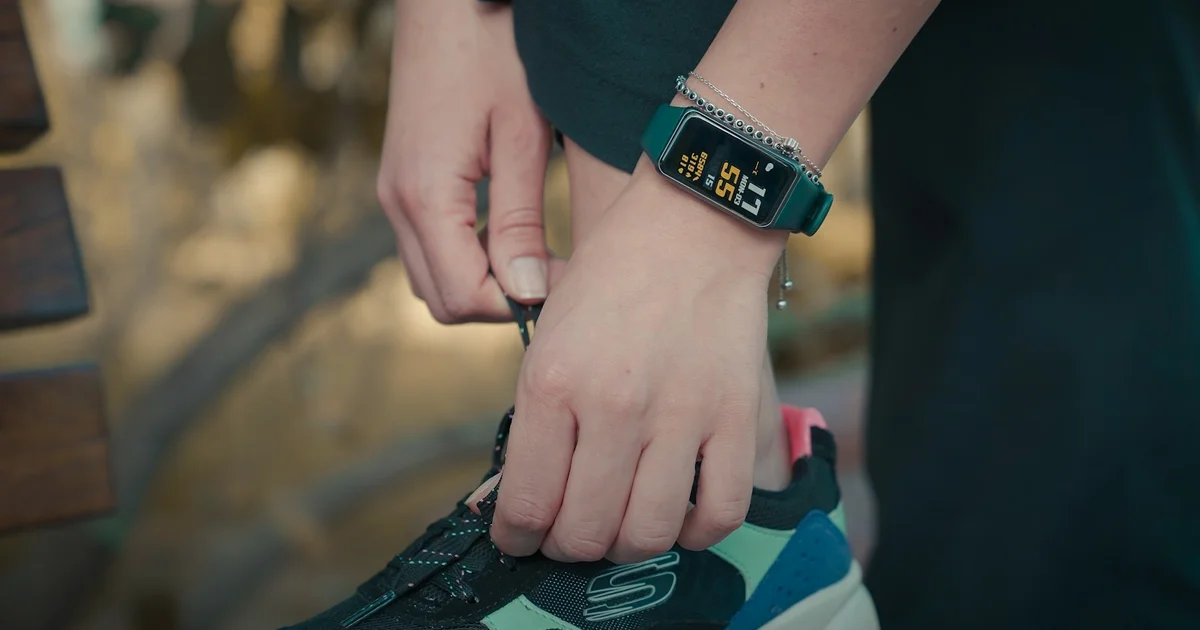
Best Fitness Trackers and Health Wearables of 2026: 8 Devices That Actually Help You Change
As an Amazon Associate, I earn from qualifying purchases. Prices and availability are subject to change.
Why This Category Is Bigger Than Steps
Most people buy a fitness tracker to count steps. But the moment they put it on, something more interesting starts to happen — they begin making decisions differently.
You go to bed earlier because you watched your sleep score crash after three late nights. You cancel an intense workout because your HRV dropped 25% and the app is telling you what your body has been whispering: you need recovery, not volume. You notice that your resting heart rate spikes every Sunday night, which is anxiety data you'd been ignoring for years.
That's the real case for wearables — not the metrics, but the feedback loop they close.
BJ Fogg at Stanford's Behavior Design Lab has spent decades studying what actually drives lasting behavior change. His conclusion is consistently uncomfortable for the motivation industry: willpower and inspiration are unreliable. What works is environment design and immediate feedback. A wearable turns ambiguous internal signals ("I feel off today") into specific, actionable data ("my HRV is down 30% — that's three days of accumulated sleep deficit showing up"). That shift from vague feeling to concrete number is the difference between a lifestyle intention and a lifestyle practice.
The Tim Ferriss conversation with Sami Inkinen — who reversed his own pre-diabetic metabolic trajectory and co-founded Virta Health — illustrates exactly this point. Inkinen didn't transform his metabolic health through willpower. He transformed it through data: continuous monitoring, feedback, and the deliberate adjustment that feedback makes possible. Heart rate variability is the single most validated non-invasive proxy for autonomic nervous system balance, recovery status, and overall physiological resilience. Tracking it longitudinally — which modern wearables do automatically — gives you the lifestyle-to-physiology connection in real time, not in retrospect.
But here's the nuance that most buying guides skip: the device doesn't do the work. A wearable you ignore after week three is an expensive piece of silicone. The question isn't "which tracker has the most features?" The question is "which tracker gives me the specific feedback that will help me make better decisions about sleep, exercise, stress, and recovery — in a form I'll actually use?"
That's what we evaluated. We assessed each device on HRV accuracy and longitudinal trending, sleep staging reliability, battery life relative to the use case, companion app actionability (does it tell you what to do with the data?), comfort for 24/7 wear, and price-to-data-quality ratio.
Here are the eight best fitness trackers and health wearables of 2026 — ranked by how well they serve your intentional evolution, not your vanity metrics.
How We Selected These Devices
Every product on this list had to earn its place against three non-negotiable standards:
1. Data quality over feature count. A tracker with 47 metrics and mediocre sensor accuracy is less useful than one with 8 metrics and clinical-grade precision. We prioritized devices whose core measurements — HRV, sleep stages, resting heart rate, SpO2 — are backed by peer-reviewed validation studies or independent accuracy testing.
2. App must translate data into decisions. Raw data is noise. Insight is what changes behavior. Every device here has a companion app that contextualizes readings over time, identifies trends, and offers actionable guidance rather than just graphs.
3. Comfort sufficient for 24/7 wear. You can't measure sleep in a device you take off at bedtime. You can't catch HRV patterns without overnight wear. Devices we excluded were either too bulky for all-day use, caused skin irritation at extended wear, or had battery life that required daily charging and created a reliable gap in data.
What we left off the list: devices that looked impressive in spec sheets but used optical heart rate sensors with known accuracy limitations in motion (affecting HRV during activity); devices whose apps were primarily gamification with limited health insight; and subscription-gated devices where the hardware cost plus subscription made the value proposition untenable for most users.
The 8 Best Fitness Trackers and Health Wearables of 2026
1. Oura Ring Generation 4 — Best for Sleep and Passive HRV Monitoring
For whom: People who want the most accurate sleep and HRV data available in a device you'll actually forget you're wearing — ideal for those who hate sleeping with something on their wrist.
Why we chose it: The Oura Ring Gen 4 is still the most precise passive health monitor you can put on your body. Updated infrared sensors and improved blood volume pulse accuracy make its HRV, sleep staging, and skin temperature trending among the most validated in any consumer wearable. A seven-day battery means a full week of continuous data — including sleep — without the charging gap that disrupts most trackers' longitudinal picture.
The "Readiness Score" isn't just a number: it synthesizes resting heart rate, HRV baseline deviation, body temperature trends, and sleep quantity into a single actionable signal each morning. That's the feedback loop Fogg describes — one clear daily input that changes your decision-making about training load, work intensity, and recovery before the day compounds the deficit.
Pros:
- Clinical-grade HRV and temperature trending — the most accurate passive sensor data in any wearable
- 7-day battery, titanium shell, IPX8 waterproof — genuinely wearable 24/7 for weeks without friction
- No screen = no distraction; the data lives in the app, not on your hand
- Best sleep staging of any consumer device, validated against polysomnography in a 2024 Brigham and Women's Hospital independent study
Cons:
- Requires a $5.99/month membership to access most insights (hardware alone shows limited data)
- No real-time workout metrics — it's a recovery and sleep tool, not a training coach
- Ring sizing requires an initial sizing kit, which delays immediate use
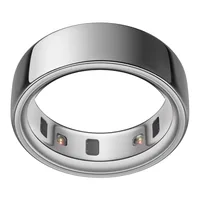
Oura Ring Generation 4 — Silver, Size 8
Best for sleep and passive HRV monitoring — the device the article ranks #1 overall.
As an Amazon Associate, we earn from qualifying purchases — at no extra cost to you.
2. Apple Watch Series 10 / Ultra 2 — Best All-in-One Health Ecosystem
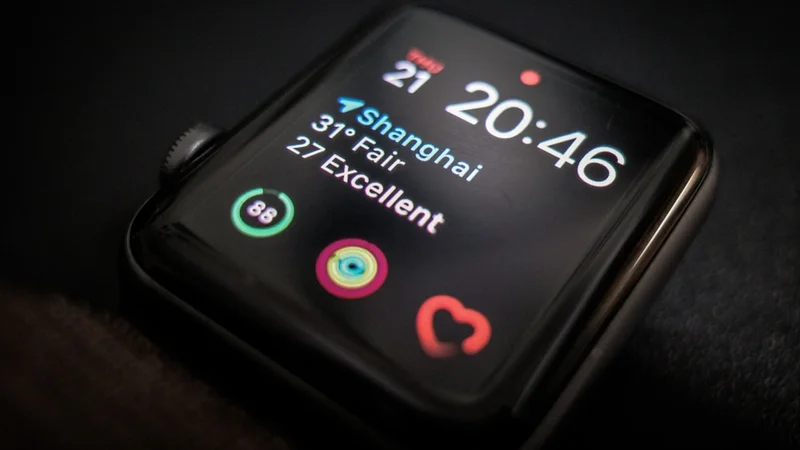
For whom: Apple iPhone users who want their health data integrated with their full digital life — workouts, ECG, blood oxygen, sleep, and daily workflow in one device.
Why we chose it: The Apple Watch Ultra 2 is the most capable smartwatch ever made, and the Series 10 brings the core health stack to a more accessible price point. Both include the S10 chip-driven sleep staging (including REM tracking), ECG (FDA-cleared, useful for detecting atrial fibrillation), blood oxygen measurement, and crash detection. The Health app ecosystem is unmatched for integration: your wearable data talks to your medical records, your fitness apps, your journal, and your doctor.
For behavior change specifically, the "Vitals" feature in watchOS 11 is worth calling out: it tracks five metrics overnight — heart rate, respiratory rate, wrist temperature, blood oxygen, and sleep duration — and flags unusual combinations that might indicate you're getting sick before you feel it. That's the kind of early warning system that makes daily decision-making more precise.
Pros:
- Unmatched Apple ecosystem integration — Health, Fitness+, third-party apps, medical records
- FDA-cleared ECG and irregular heart rate notifications for genuine medical utility
- Best-in-class workout tracking with GPS accuracy across 80+ activity types
- Crash detection and Emergency SOS — practical safety features for solo athletes
Cons:
- Requires daily charging (Ultra 2 gets 36 hours; Series 10 gets about 18) — requires charging routine
- Only meaningful for iPhone users; Android compatibility is essentially zero
- Sleep HRV tracking is good but not at Oura or Garmin's level of longitudinal precision
3. Garmin Fenix 8 — Best for Athletes and Outdoor Performance
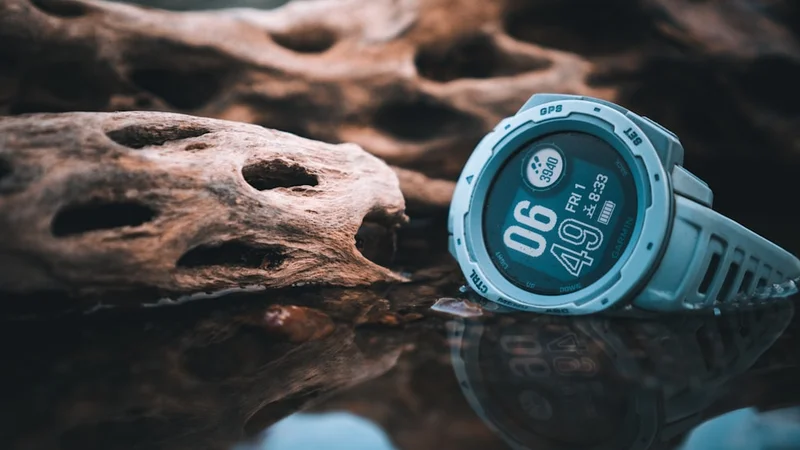
For whom: Serious athletes, trail runners, cyclists, and outdoor adventurers who need GPS precision, training load management, and multi-day battery in a rugged package.
Why we chose it: The Garmin Fenix 8 is the most technically sophisticated sports wearable on the market. Its "Body Battery" score — combining HRV, sleep quality, stress, and activity history into a single energy metric — is one of the most actionable fatigue management tools in any consumer device. The "Training Readiness" score tells you not just how you slept but whether your body is prepared for a hard workout or needs an easy day — backed by HRV data that Garmin has been refining for over a decade.
The 16-day battery in smartwatch mode (AMOLED edition) — and up to 28 days on the Solar edition — is genuinely transformative for expedition athletes or anyone tired of the daily charging ritual. The multi-band GPS is the most accurate available outside professional survey equipment.
Pros:
- Industry-leading GPS accuracy with multi-band GNSS — essential for trail runners and cyclists
- 16+ day battery in smartwatch mode (Solar version extends this further) — no daily charging anxiety
- Best training load management in any wearable, including VO2 Max trending, training effect, and recommended recovery time
- Rugged build (MIL-STD-810 tested) genuinely survives the activities it tracks
Cons:
- Premium price puts it at the top of the range — this is a professional tool at a professional cost
- App interface (Garmin Connect) is feature-dense and can feel overwhelming for non-athletes
- Sleep tracking is good but secondary to its athletic monitoring strengths; Oura still beats it for pure sleep insight
4. Whoop 5.0 — Best for Recovery-Focused Training

For whom: High-performance athletes, coaches, and anyone who wants HRV-driven training load management without screen notifications interrupting their day.
Why we chose it: Whoop is built around a single philosophy: you don't improve by training harder, you improve by recovering better. The Whoop 5.0's screenless design is a deliberate choice — this device is not trying to be a smartwatch. It's a physiological monitoring system whose only job is to tell you how hard you pushed (Strain score), how well you recovered (Recovery score), and whether your sleep was sufficient to sustain performance.
The HRV data quality is excellent, particularly the night-over-night trending that allows Whoop to build your personalized HRV baseline over time. A green recovery means your body is ready for high output. Red means you're in a deficit, and training anyway will compound the hole rather than fill it. That's one of the most behaviorally useful signals a wearable can produce — not a step count, but a permission structure for your day.
The subscription model ($30/month, hardware included) has polarized buyers, but for athletes who will genuinely use the recovery insights, the data quality justifies the cost.
Pros:
- Best recovery-to-training feedback loop of any wearable — directly changes training decisions
- No screen = no notification distraction during the workday or at night
- Superb HRV accuracy, especially for longitudinal trending and baseline calibration
- 4-day battery with the included charger you wear on the band — charges while wearing
Cons:
- Subscription-only model ($30/month) with no one-time purchase option — cost adds up
- No GPS (relies on connected phone GPS for route tracking)
- Limited usefulness if you're not actively managing training load — the core value is athletic recovery
5. Fitbit Charge 6 — Best Value for Everyday Health Monitoring
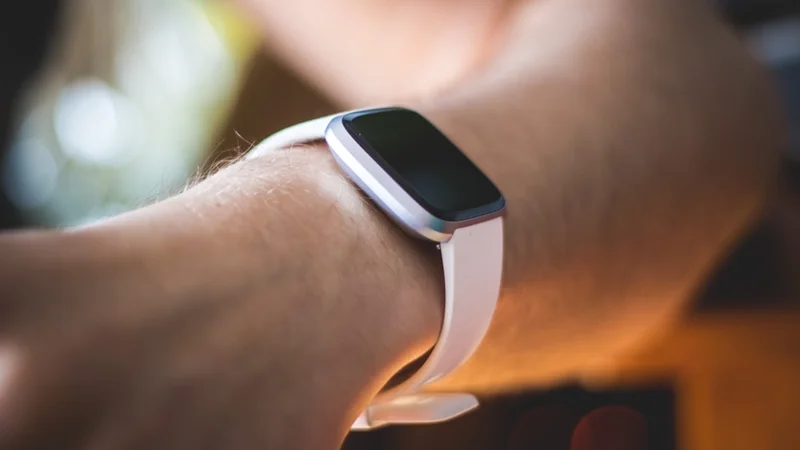
For whom: People who want reliable everyday health monitoring — sleep, heart rate, stress, steps, workouts — at a price that doesn't require a serious commitment.
Why we chose it: The Fitbit Charge 6 is the best argument for the proposition that you don't need to spend $400 to start taking your health data seriously. The upgraded heart rate sensor (compared to Charge 5) delivers accurate resting heart rate and the Sleep Animals feature — which assigns you a consistent sleep type based on your patterns — is one of the most engaging behavior-change tools in the budget tier.
Google integration is a genuine differentiator: Google Maps, Google Wallet, and YouTube Music controls are built in. The Daily Readiness Score (Fitbit Premium, $9.99/month) synthesizes activity, sleep, and heart rate variability into a daily recommendation — essentially the same concept as Whoop or Oura's readiness metrics at a fraction of the price.
For someone building their first consistent sleep routine or just getting started with daily health monitoring, the Charge 6 removes the financial barrier to entry without sacrificing the core data quality that actually changes behavior.
Pros:
- Excellent price-to-data-quality ratio — the best first wearable for budget-conscious buyers
- Google ecosystem integration (Maps, Wallet, YouTube Music) adds daily utility
- 7-day battery life removes the charging friction that kills consistency
- ECG app and irregular heart rhythm notifications now FDA-cleared, previously a premium feature
Cons:
- HRV trending requires Fitbit Premium subscription ($9.99/month) — some key features gated
- No GPS (requires paired phone for accurate route tracking)
- Sleep staging detail is less granular than Oura or Garmin at the premium tier
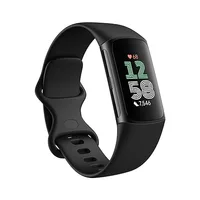
Fitbit Charge 6 — Obsidian/Black
Best value for everyday health monitoring — article section 5.
As an Amazon Associate, we earn from qualifying purchases — at no extra cost to you.
6. Samsung Galaxy Watch 7 — Best for Android Users Who Want All-In-One
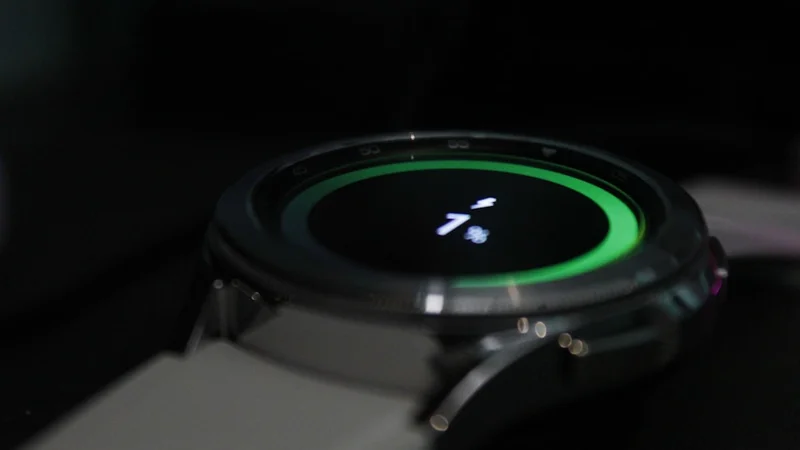
For whom: Android / Samsung smartphone users who want an Apple Watch-level experience in the Google ecosystem — health monitoring, fitness tracking, and smartwatch utility in one.
Why we chose it: The Samsung Galaxy Watch 7 is the most complete health wearable in the Android ecosystem. The BioActive sensor — combining optical heart rate, electrical heart rate (ECG), and bioelectrical impedance analysis — lets it do something no other smartwatch does at this price: measure body composition (skeletal muscle mass, body fat percentage, body water) directly from your wrist. That's data that most people only get from a gym's InBody scale, now available every morning.
Sleep coaching in One UI 6 Watch has matured into a genuinely useful behavioral tool: it identifies your sleep patterns over multiple weeks, names your dominant sleep type, and suggests specific behavior changes (consistent wake time, pre-bed temperature reduction, caffeine cutoff) based on your data. This is the difference between a tracker that shows you data and one that tells you what to do with it.
Pros:
- Best Android smartwatch for health monitoring — Google/Samsung ecosystem integration is seamless
- Body composition measurement (skeletal muscle, body fat, BMI) directly from the wrist — unique in the category
- Strong sleep coaching with actionable, personalized behavior suggestions
- Solid GPS and workout tracking across 100+ sports modes
Cons:
- Limited compatibility outside Samsung/Android ecosystem — iPhone users need not apply
- Body composition measurements are accurate for trending but not clinical-grade absolute values
- Battery life (40 hours typical) requires near-daily charging
7. Withings ScanWatch 2 — Best Hybrid: Classic Watch Meets Clinical Health Data
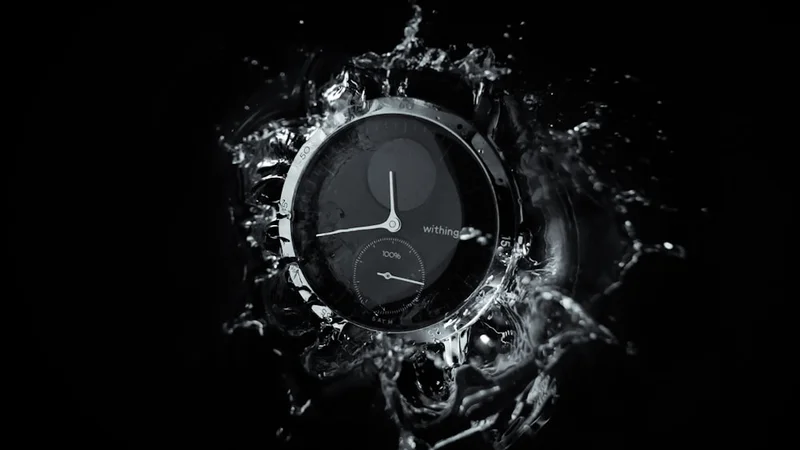
For whom: Professionals and watch enthusiasts who want medical-grade ECG and SpO2 in a device that looks like a traditional watch — all the data, none of the "tech bro" aesthetics.
Why we chose it: The Withings ScanWatch 2 solves the wearable's most persistent social problem: it looks like a Swiss watch. A small digital display sits within the analog dial, visible only when you need it. This is the device for the surgeon, the executive, or the person who simply won't wear a rectangular computer on their wrist — but who still wants the health data that changes decisions.
The ECG sensor is FDA-cleared and clinically validated for atrial fibrillation detection. SpO2 monitoring is continuous rather than spot-check only, which is medically meaningful for tracking sleep-disordered breathing patterns over time. The 30-day battery is the longest in any health-monitoring device we reviewed — you charge it once a month and forget about it.
The Withings Health Mate app has improved significantly in 2025/2026, now offering cardiovascular risk scoring, sleep apnea risk indicators, and trend-based coaching grounded in the longitudinal data its long battery life enables.
Pros:
- Traditional analog watch design — appropriate in any professional or formal context
- 30-day battery is the longest in any health monitoring wearable in this roundup
- FDA-cleared ECG with medical-grade atrial fibrillation detection
- Continuous SpO2 monitoring enables sleep-disordered breathing tracking over time
Cons:
- GPS requires paired phone — no onboard GPS
- Real-time workout metrics are basic compared to Garmin or Apple Watch
- Health Mate app, while improved, is less polished than Oura or Fitbit's companion apps
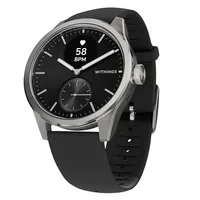
Withings ScanWatch 2 — 42mm, Black
Best hybrid: classic watch meets clinical health data — article section 7.
As an Amazon Associate, we earn from qualifying purchases — at no extra cost to you.
8. Xiaomi Smart Band 9 — Best Entry-Level: Accurate Data Without Commitment
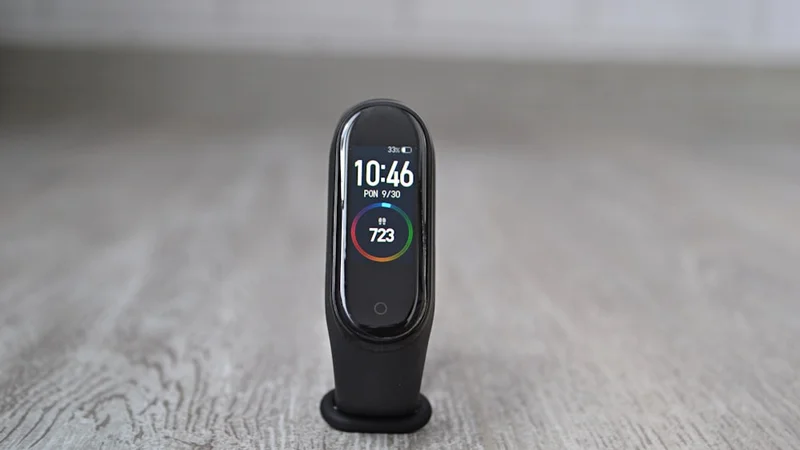
For whom: Anyone who's never worn a fitness tracker before and wants to test the behavioral impact of health data before spending serious money — or needs a backup device that won't break the bank.
Why we chose it: The Xiaomi Smart Band 9 is the single best argument that you don't need to spend $300 to start closing the behavioral feedback loop. Its step counting and sleep tracking are independently tested as more accurate than devices at double the price — a fact that says more about the premium market's bloat than about Xiaomi's engineering, but the data is the data.
The 21-day battery outlasts every mainstream connected smartwatch on this list, including the Apple Watch and Samsung Galaxy Watch. The AMOLED display is bright and legible. The heart rate monitoring is solid for resting heart rate trending, and sleep staging is surprisingly detailed for a $40 device.
For someone who's considering building their first consistent exercise habit, starting with a Xiaomi Band 9 removes the $400 commitment that can become a reason not to start. You get the feedback loop. You get the data. And if you use it for six months and want more granular HRV and recovery insights, you'll buy an Oura or Garmin with a clear understanding of what you're upgrading.
Pros:
- Exceptional price — the lowest cost of entry to genuine health tracking in this roundup
- 21-day battery life — the longest of any dedicated fitness band in this roundup
- Step and sleep accuracy that independent testing rates comparable to devices costing 5-10x more
- Lightweight, comfortable for 24/7 wear including sleep
Cons:
- No HRV trending (heart rate monitor accuracy insufficient for reliable HRV at this price)
- Basic workout tracking — limited GPS (phone-dependent), no elevation, limited sport modes
- Health insights in the Mi Fitness app are minimal — data is there, coaching is not
FAQ
Which fitness tracker is best for sleep tracking?
The Oura Ring Generation 4 is the best purpose-built sleep tracker in any consumer wearable. Independent studies validating it against polysomnography (the clinical gold standard) show it outperforms every wrist-worn device in sleep staging accuracy — particularly in distinguishing light sleep, deep sleep, and REM. If sleep is your primary concern, the Oura's passive ring form factor and 7-day battery give you uninterrupted data that most wrist trackers can't match.
What is HRV and why does it matter for health tracking?
Heart rate variability (HRV) is the variation in time between consecutive heartbeats. Higher HRV generally indicates a well-recovered, stress-resilient autonomic nervous system; lower HRV suggests physiological stress, inadequate recovery, or illness onset. It's the most validated non-invasive proxy for recovery status and overall physiological resilience. Tracking your personal baseline over time — not comparing your HRV to others — is what makes it actionable: a 20% drop from your baseline is meaningful regardless of whether your baseline is "high" or "low" by population standards.
Oura Ring vs Apple Watch: which is better for health?
They serve different needs. The Oura Ring Gen 4 is superior for sleep and passive HRV monitoring — it's more accurate, more comfortable overnight, and its 7-day battery means no data gaps. The Apple Watch is superior for real-time workout tracking, ecosystem integration, ECG monitoring, and everything beyond health data (notifications, apps, payments). If you could only have one: Oura for sleep-first users, Apple Watch for Apple ecosystem users who want all-in-one functionality.
Is Whoop worth the subscription cost?
For athletes actively managing training load — runners, cyclists, CrossFit athletes, anyone doing structured training 4+ days per week — yes, Whoop's subscription model is justified by the quality of its recovery-to-training feedback. For casual exercisers or people primarily interested in sleep and general wellness, the subscription cost is harder to justify against alternatives like the Oura or Garmin that have one-time purchase options.
Do fitness trackers actually help you build better habits?
The research supports a cautious yes — with one important nuance. Fitness trackers work best as feedback tools that reinforce your own intention, not as motivation sources in themselves. Multiple peer-reviewed studies on self-monitoring consistently show that people who track health behaviors improve outcomes compared to those who don't, and that the effect is larger when they also set specific goals and review their data regularly. The device creates the feedback loop; you have to decide what to do with it.
What's the best fitness tracker under $100?
The Fitbit Charge 6 offers the best overall health data quality under $100, with FDA-cleared ECG, strong sleep tracking, Google ecosystem integration, and a 7-day battery. The Xiaomi Smart Band 9 is the best option under $50 if your primary needs are step counting, sleep tracking, and heart rate monitoring without the premium features.
Which One Should You Actually Buy?
If I had to choose one wearable for someone who genuinely wants to use health data to make better daily decisions — not someone who wants a status symbol on their wrist — I'd recommend the Oura Ring Generation 4 for most people.
Here's why: it measures the things that matter most (sleep stages, HRV, body temperature), with the best accuracy available in a consumer device, in a form factor you'll actually wear 24/7 without thinking about it. The absence of a screen isn't a limitation — it's the point. Your health data lives in the app, where you can review it intentionally each morning instead of reacting to it every time your wrist buzzes.
The exception: if you're a serious athlete managing training load, the Garmin Fenix 8 is worth every penny. If you're deep in the Apple ecosystem and want one device for health, communication, and navigation, the Apple Watch Ultra 2 is the most capable all-in-one package available.
The Fitbit Charge 6 and Xiaomi Smart Band 9 are the right starting points if you've never tracked your health data before and want to experience the feedback loop before committing to a premium investment.
Whatever you choose, remember what these devices actually are: feedback tools. They don't improve your health — they make your own behavior visible, which gives you the information to improve it yourself. The technology is a means. The evolution is yours.
For a deeper look at the science behind why sleep is the highest-leverage variable in any health optimization protocol, read How to Sleep Better: The Science Most People Skip. And if you're ready to build the exercise habit that your new wearable will track, How to Find an Exercise Routine You'll Actually Stick To is where to start.
Prices and product availability are accurate as of publication. Amazon prices fluctuate; always verify current pricing before purchasing.
Was this helpful?