Habits· 10 min read
How to Find an Exercise Routine You'll Actually Stick To
The best exercise routine is the one built around your personality and real preferences — not someone else's. Here's how to find it.

How to Find an Exercise Routine You'll Actually Stick To
I've quit more workout programs than I care to admit.
There was the 5AM CrossFit phase that lasted eleven days. The running streak that ended on a rainy Tuesday when I decided "I'll make it up tomorrow" — and didn't. The YouTube HIIT channel I followed for exactly one week before the instructor's relentless enthusiasm started to feel like a personal attack. Each time, I told myself the same story: I just don't have the discipline.
That story was wrong. And if you've cycled through fitness programs without anything sticking, yours probably is too.
The real problem isn't willpower. It's design. Most people borrow someone else's workout — a friend's routine, a trending app, a celebrity's training split — and then wonder why their body and brain keep rebelling. Discipline feels impossible when the system you're trying to run is fundamentally incompatible with who you are.
Here's what actually changes everything: building an exercise routine around your actual personality, your real schedule, and your genuine preferences rather than some idealized version of who you think you should be.
Why Generic Workout Programs Set You Up to Fail
The fitness industry has a vested interest in selling you the "best" program. Twelve-week transformations. Proven systems. Celebrity-endorsed splits. The problem is that these programs are designed for a mythical average person — not you specifically.
Research published in the British Journal of Health Psychology found that exercise intention and actual behavior are often wildly misaligned. People intend to work out consistently, but the gap between intention and action yawns open the moment any friction enters the equation — a long commute, a hard day at work, a gym that's fifteen minutes out of the way.
The gap isn't a character flaw. It's a systems problem.
Behavioral researcher Gretchen Rubin spent years studying why habits stick for some people and fail for others. Her book Better Than Before explores how personality shapes the way we build — or break — habits, and her follow-up The Four Tendencies formalizes a framework for understanding how we respond to expectations — our own or other people's. Some people thrive with external accountability. Others wilt under it. Some people are energized by novelty. Others need ritual and sameness. These aren't preferences you can override by trying harder. They're features of your psychological makeup that should inform how you design your habits.
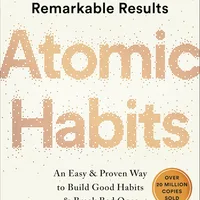
Atomic Habits — James Clear
The single most practical guide to environment-based habit design — the book that proves behaviour follows systems, not willpower. Every principle in this article traces back to it.
As an Amazon Associate, we earn from qualifying purchases — at no extra cost to you.
Jim Rohn used to say that you can't hire someone else to do your push-ups for you. He was right. But he also understood that getting the philosophy right — understanding why you're doing what you're doing and how it fits your life — is the real work. The physical part follows.
Know Your Tendency First
Before you choose a single exercise, you need to understand one thing about yourself: how do you respond to expectations?
Rubin's Four Tendencies framework — detailed in The Four Tendencies (2017) — is the most practical lens I've found for this. You can take the free quiz on her website in about three minutes; the result should directly shape how you build your accountability structure. In short:
Upholders meet both external and internal expectations. They're the people who sign up for a 6AM spin class, show up, and genuinely enjoy the structure.
Questioners resist external expectations but honor internal ones. They don't care what anyone else thinks — but if they research a training protocol and decide it makes logical sense, they'll follow it obsessively.
Obligers — the largest group — meet external expectations readily but struggle to honor their own. They need accountability built in. A training partner, a paid coach, a class where someone will notice their absence.
Rebels resist all expectations, external and internal alike. They work out when they feel like it, and telling them they have to is the fastest way to ensure they never will. For rebels, the key is reframing exercise as an expression of identity rather than an obligation.
Most fitness programs are designed for Upholders. They assume you'll stick to a schedule because the schedule exists. If you're an Obliger or a Rebel, that approach will fail you every single time — and you'll blame yourself instead of the system.
Match Your Workout to Your Chronotype
There's a scene in most fitness transformation stories where the hero wakes at 5AM, laces up their sneakers in the dark, and goes out to conquer the world. It's compelling. It's also irrelevant if you're not a morning person.
Chronobiology — the science of how your internal clock shapes your performance — has made it very clear that there is no universally optimal time to exercise. What matters is when your body and brain are primed to move.
Morning types (larks) genuinely do better with early workouts. Their cortisol peak happens early, their motivation is highest before noon, and locking in a workout before the day's chaos arrives works perfectly with their natural rhythm.
Evening types (owls) have the opposite profile. Muscle strength, reaction time, and cardiovascular efficiency are all higher in the late afternoon and early evening for people whose circadian rhythms skew later. A 6PM session isn't a compromise for these people — it's actually optimal.
If you've been trying to force early morning workouts and failing, stop calling it laziness. You may simply be an owl in a lark's program.
A heart rate monitor can help you see this in action. Track your perceived effort and actual performance across different times of day for two weeks. The data won't lie.
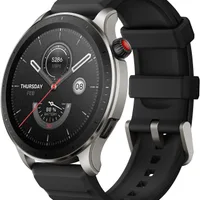
Amazfit GTR 4 Fitness Smartwatch
Tracks heart rate, GPS, and workout data across 150+ sports modes — the tool that closes the loop when you're testing which time of day genuinely works best for your body. Up to 14-day battery life.
As an Amazon Associate, we earn from qualifying purchases — at no extra cost to you.
The Environment Equation
Your workout environment shapes your behavior more than you probably realize.
B.J. Fogg, the Stanford behavioral scientist behind Tiny Habits, argues that motivation is unreliable but environment is manipulable. If your gym requires a twenty-minute drive, you've built enormous friction into a habit that already requires effort. If your running shoes are buried at the back of a closet under winter coats, you've designed against yourself.
The most consistent exercisers I know haven't found some secret reserve of discipline. They've made their workout the default, the path of least resistance.
Some approaches worth considering:
Home training eliminates commute friction entirely. A set of adjustable dumbbells and a few square metres of floor space can get you surprisingly far. The consistency gains often outweigh any equipment limitations.
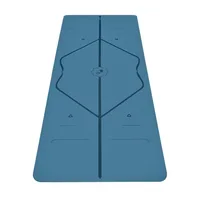
Liforme Original Yoga Mat
For anyone building a home training setup, a quality mat is the first piece of equipment that removes friction — bodyweight, stretching, mobility, and floor work all happen on it. Liforme's patented alignment system a…
As an Amazon Associate, we earn from qualifying purchases — at no extra cost to you.
Resistance bands are possibly the most underrated piece of kit in existence. They're compact, travel everywhere, and can load virtually every movement pattern. If the barrier to your workout is "I can't get to the gym," a quality set solves that.
The two-minute rule from James Clear's Atomic Habits applies perfectly here: make it easy to start. Put your workout clothes out the night before. Set your gym bag by the door. Keep your yoga mat unrolled. The start is where most people quit. Make the start effortless.
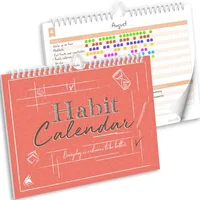
Clever Fox Habit Tracker Journal
James Clear's identity-based habit formation works better when consistency is made visible. This 24-month circular tracker turns each workout into a concrete vote you can see building over time.
As an Amazon Associate, we earn from qualifying purchases — at no extra cost to you.

Solo vs. Social: Finding Your Fit
Here's a question most workout programs never ask: do you actually want to be around other people when you exercise?
For Obligers, the answer is almost always yes. Social accountability is what makes the habit real. Classes, training partners, group challenges — these aren't just motivational add-ons. For this personality type, they're structural necessities. Without them, the workout exists only as intention.
But for introverts, Questioners, or people who process the day inwardly, a group fitness environment can feel like an energy drain rather than a boost. Solo training — running with headphones, lifting in a quiet gym, cycling on a trail — becomes a form of recovery as much as exercise.
This isn't a weakness. It's information. I spent two years trying to force myself to love group fitness because everyone around me seemed to thrive in it. Once I accepted that I'd rather train alone with a podcast in my ears, I stopped dreading workouts and started actually doing them.
The Activity Itself: Preference Is Not Laziness
Here's the most underrated principle in all of behavioral psychology: enjoyment predicts adherence.
Ratey documents in Spark that the evidence is consistent: the affective experience during exercise — how much you enjoy it — predicts long-term adherence more reliably than health goals or initial motivation. Harvard Health research echoes this finding, noting that exercise you sustain produces dramatically better outcomes than exercise you abandon.
This seems obvious until you look at what most people do: they choose the most effective-sounding exercise on paper (usually HIIT or running) and ignore the fact that they hate it.
Harvard psychiatrist John Ratey, in his book Spark, makes the case that any sustained aerobic activity transforms your brain — improving focus, reducing anxiety, building cognitive resilience. The specific activity matters far less than the consistency of doing it. A twice-weekly swim you love beats a daily run you dread every single time.
So: what movement have you actually enjoyed in your life? A sport you played as a kid? Dancing? Hiking? Martial arts? Those aren't lesser options. They're the options most likely to become permanent fixtures in your life.
The fitness journal question no one tells you to answer: not "what's the best workout?" but "what am I willing to do badly, happily, for years?"
How to Start Today
You don't need a perfect plan. You need a tested hypothesis.
Step 1: Identify your tendency. Are you an Upholder, Questioner, Obliger, or Rebel? Rubin's free quiz takes about three minutes. Your result should directly shape your accountability structure.
Step 2: Pick your window based on your chronotype. If you have flexibility, experiment for two weeks in the morning and two weeks in the evening. Note your energy, enjoyment, and completion rate. The data will tell you more than any fitness guru can.
Step 3: Audit your friction. What's the most common reason you've skipped workouts in the past? Distance to gym? No equipment? Tired after work? Design against that specific obstacle — not the generic version someone else has solved.
Step 4: Choose one enjoyable activity. Not the most effective-sounding one. The one you'd actually do at 70% effort because you don't hate it.
Step 5: Start smaller than feels significant. Twenty minutes, three times a week, consistently, outperforms an intense five-day program that lasts two weeks. James Clear makes this precise point in Atomic Habits: your identity is built through repeated small actions, not grand gestures — each workout is a vote for the kind of person you're becoming. You are not someone who "sometimes works out." You are someone who moves their body every week. That's the identity to build first.

The Real Goal Isn't a Better Body
I want to say something that might sound counterintuitive: the point of finding a sustainable exercise routine isn't primarily physical.
Yes, the health benefits are real and substantial. John Ratey describes exercise as "Miracle-Gro for the brain" — and the research on cognitive benefits, mood regulation, and stress resilience is genuinely extraordinary. Regular movement reduces anxiety, sharpens focus, and builds emotional regulation in ways that no supplement can replicate.
But the deeper outcome is identity.
When you find a form of movement that fits who you actually are — and you show up to it consistently, week after week — something shifts. You stop being someone who is "trying to get fit." You become someone who takes care of their body. That identity becomes a foundation everything else rests on. Your sleep improves. Your energy stabilizes. Your relationship with stress changes.
Tony Robbins has made the point for decades that the state of your body shapes the state of your mind. That's not a metaphor. It's physiology. The way you carry yourself, breathe, and move sends constant signals to your nervous system about who you are and what you're capable of.
Designing your physical evolution isn't about finding the perfect workout. It's about building the kind of relationship with movement that becomes non-negotiable — like brushing your teeth or eating lunch. Something you do because you're the kind of person who does it, not because you're forcing yourself.
The right routine for you is probably not the one your fitness-obsessed colleague does. It's probably not the one the algorithm recommended. It's the one you'd show up to when you're tired, when the weather is bad, when motivation has completely abandoned you — because somewhere along the way, it became part of who you are.
What does movement look like for the person you're becoming? That's worth thinking about.
Was this helpful?