Mindset· 10 min read
ADHD and Executive Function: Why Willpower Fails
ADHD is an executive function disorder, not a willpower problem. What neuroscience reveals about the ADHD brain — and how to design around it.
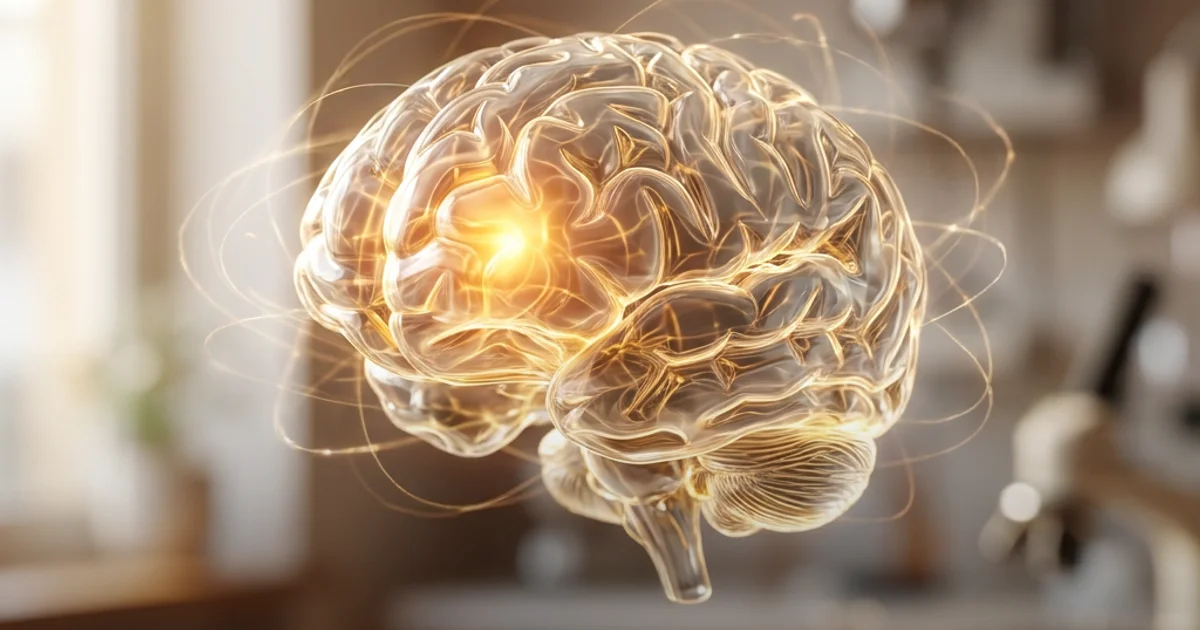
ADHD and Executive Function: Why Willpower Fails
The third time my coffee went cold before I'd drunk half of it, I started wondering if something was genuinely wrong with me. Not because I was busy — I was sitting at my desk. I'd been there for 90 minutes, intending to write a report that needed maybe 45 minutes of focused attention. What I'd actually produced was four half-read browser tabs, one very organized to-do list I'd never look at again, and a thorough investigation into whether blue whales sleep.
You might recognize that particular flavor of frustration. Not the distracted kind, where chaos pulls you away from your work. The worse kind — where you're sitting in silence, fully aware of what you should be doing, feeling like you're wading through concrete to actually do it. The kind where "just try harder" is both the only advice anyone gives you and the advice that makes everything worse.
For most of the last century, the default response to attention and focus problems has been some version of discipline: set a timer, build better habits, commit more fully to your priorities. And if you have an ADHD diagnosis, the same prescription — just delivered with a sidelong implication that you're somehow more responsible for overcoming something neurological through sheer force of will.
The article that sparked this piece — from Addicted2Success on the brutal truths of ADHD and entrepreneurship — made a claim the behavioral science backs up precisely: standard ADHD advice isn't just ineffective. It's actively counterproductive. Because it treats an executive function neurological difference as if it were a motivation or character problem.
It isn't either of those things.
Russell Barkley, retired clinical professor of psychiatry most recently at Virginia Commonwealth University Medical Center, and among the most prolific ADHD researchers of the past four decades — more than 270 published papers — has been making this case since the 1990s, largely to an audience too overwhelmed by their own executive function deficits to read his papers in full. His core position: ADHD is not, at its core, an attention disorder. It is a disorder of executive function — specifically, the neural architecture that lets you hold goals in mind while doing something boring, inhibit the immediate and interesting in favor of the future and necessary, and bridge who you are right now to who you're trying to become.
When that system is impaired — and in ADHD it consistently, measurably is — willpower isn't the solution. Willpower is generated by the system that's underperforming. Telling someone with ADHD to try harder is like telling someone with a broken leg to run faster.
The science has a genuinely different prescription. And it starts with understanding what's actually happening in the ADHD brain.
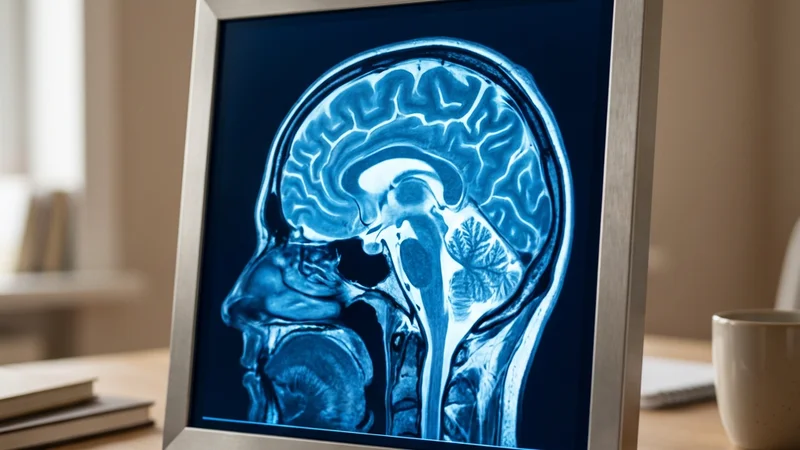
Your ADHD Brain Isn't Lazy — It's Under-Regulated
The prefrontal cortex is the seat of what neuroscientists call executive function — the cognitive processes that allow you to plan, prioritize, inhibit impulse, and sustain effort toward goals that don't immediately reward you. In ADHD, this system matures roughly three to five years more slowly than in neurotypical brains. This was documented by Shaw and colleagues at the NIH in a landmark study published in PNAS (2007), using longitudinal cortical thickness mapping of 223 children with ADHD (and 223 typically developing controls) across multiple years of scanning. The prefrontal cortex isn't missing. Its regulatory capacity is delayed, variable, and heavily dependent on conditions the environment doesn't reliably provide.
Barkley identified five executive function domains that are specifically impaired in ADHD:
-
Working memory — the ability to hold information in mind and work with it simultaneously. ADHD brains show working memory performance consistently 30% below chronological age norms in research measures. You're not forgetting because you don't care. You're forgetting because the cognitive scratchpad is smaller and wipes faster.
-
Verbal self-regulation — the inner speech that guides problem-solving. Most children complete the transition from talking aloud to thinking internally by age 8 to 10. In ADHD, this process is delayed. The internal coach that says "stop, think, is this actually what I want to do?" shows up late, quietly, or not at all.
-
Self-regulation of emotion and motivation — the capacity to maintain effort toward future goals when the present moment offers no immediate reinforcement. Thomas Brown at Yale calls this "chronic underactivation." The ADHD brain doesn't fail to care about goals. It fails to feel their pull when they aren't immediately visible and pressing.
-
Reconstitution — the capacity to break down past behaviors and recombine them in new ways for problem-solving. This is the creative flexibility piece — and also part of why ADHD frequently comes with genuine creative strengths that the pathology-focused framing misses.
-
Nonverbal working memory, or "hindsight and forethought" — Barkley's term is "blindness to time." For the ADHD brain, all reward is either now or not now. The abstract future carries almost no emotional weight.
Kitchen Safe kSafe Time Locking Container
Removes the phone from arm's reach during focused work — simple external scaffolding for the ADHD brain that struggles to self-inhibit digital distraction.
As an Amazon Associate, we earn from qualifying purchases — at no extra cost to you.
That last point explains the video game paradox — the one every parent of an ADHD child and every ADHD adult has encountered. How can someone who can't hold focus for 10 minutes on a task spend six straight hours engaged with a game? The answer isn't inconsistency of character. It's neurochemistry.
The Dopamine Problem — and Why Interest Isn't Optional
The ADHD brain has reduced dopaminergic neurotransmission in the mesocortical and mesolimbic pathways — the circuits that attach salience, motivational pull, and importance to future rewards. The result is a dramatically steeper temporal discounting curve: future rewards lose their motivational weight far more quickly per unit of delay than they do for neurotypical brains. Not because the ADHD person is short-sighted. Because the signal is physiologically weaker.
What the ADHD brain can do is generate adequate dopamine from novelty, urgency, genuine challenge, and personal interest. Video games deliver all four at a constant rate. Expense reports deliver none.
This is why the standard advice — set a timer, work for 25 minutes — sometimes works and often fails completely. It works when the task is sufficiently interesting that mild artificial urgency tips it over the engagement threshold. It fails when the task is genuinely unstimulating, because no timer can manufacture the dopamine signal the task itself isn't producing.
There's also a Default Mode Network component that makes this harder to ignore. The DMN — the resting-state brain network associated with mind-wandering and self-referential thought — is insufficiently deactivated during cognitive tasks in ADHD. Research by Damien Fair at the University of Minnesota and Joel Nigg at Oregon Health and Science University establishes this clearly: in neurotypical brains, the DMN quiets when focused work begins. In ADHD brains, it keeps firing. So while you're attempting to write the report, the network responsible for generating competing inner thoughts is still running at partial capacity in the background. The distraction isn't coming from outside. It's coming from inside your own brain.
LectroFan Classic White Noise Machine
Creates a steady non-looping sound floor that reduces the ambient stimulation the under-deactivated ADHD brain keeps chasing — turning background noise into structured quiet.
As an Amazon Associate, we earn from qualifying purchases — at no extra cost to you.
The practical implication is uncomfortable for anyone who's built their professional identity on discipline: the ADHD brain cannot sustain engagement on demand. It can only sustain engagement when conditions are right. That's not a character failure. It's a feature of the system's dopamine architecture. The question — the useful one — is what conditions you can engineer to make engagement more likely.
The Strengths Nobody Mentions in the Diagnosis
Here's where most writing about ADHD corrects the narrative in one paragraph and then moves on. That's not enough time.
Holly White at the University of Michigan has documented that ADHD is associated with genuine advantages in creative divergent thinking — specifically because the reduced cognitive inhibition that creates the focus problem also widens associative range. The ideas that the neurotypical brain filters out as irrelevant before they reach consciousness are available to the ADHD brain as creative raw material.
Hyperfocus — the intense, sustained absorption in a personally compelling problem that seems to contradict everything else about ADHD — is real and neurologically consistent. When a subject is genuinely novel and interesting, the dopamine signal is sufficient to sustain the kind of deep engagement that flow state researchers call "flow." The person who couldn't sustain 20 minutes on an assignment can sometimes spend six hours in a state of productive absorption that most people never touch.
Scott Barry Kaufman at the Center for Human Potential at Barnard College has synthesized evidence that ADHD traits — novelty-seeking, tolerance of ambiguity, constant environmental scanning — are associated with entrepreneurial achievement, creative production, and pattern recognition precisely because these are the traits that environments demanding novelty and rapid adaptation reward. The problem has never been the traits. It's the mismatch between those traits and environments designed for neurotypical sustained compliance.

Kindle Paperwhite (2024, 16GB, Without Ads)
A single-purpose reading device that channels ADHD hyperfocus into deep reading — without the dopamine slot-machine of notifications and social feeds that a tablet brings.
As an Amazon Associate, we earn from qualifying purchases — at no extra cost to you.
This matters practically, because the most effective ADHD management approach isn't about suppressing ADHD traits. It's about building an environment where those traits can be productive rather than destructive — and providing scaffolding for the executive function gaps that the traits can't compensate for on their own.
Designing Around Your Brain, Not Against It
This is where the science stops being interesting and becomes actually actionable.
Barkley's central practical principle is what he calls external scaffolding: because the ADHD brain has insufficient internal working memory and self-regulatory architecture, the environment must externalize what the prefrontal cortex cannot internally maintain. The goal is to offload to physical space and structure the regulatory work that most brains do invisibly in their own neural architecture. His fact sheets at russellbarkley.org translate this principle into daily practice.
In practice, external scaffolding translates into five concrete directions:
Make time visible, not abstract. The ADHD brain doesn't feel time passing. It experiences time as a binary of "now" and "not now." A clock that says 3:47 means very little. A visual timer that shows remaining time as a shrinking disk you can actually see diminishing is a different cognitive experience entirely. The Time Timer — a visual countdown tool designed around exactly this principle — gives the time-blind brain something it can actually perceive. It's not a productivity trick. It's a perceptual aid.
Control the sensory environment. The ADHD brain is continuously scanning for stimulation, because stimulation means dopamine, and dopamine is what it runs short on. An open-plan office, a café, a home with ambient background noise — all of these are dopamine competitors. The noise your brain half-attends to is attention that isn't available for your work. Noise-canceling headphones aren't a comfort item in this context. They're closer to an accessibility tool.

Sony WH-1000XM5 Noise Cancelling Headphones
Named directly in the article: not a comfort item but an accessibility tool for the ADHD brain — removing the dopamine-competing sensory noise that breaks concentration.
As an Amazon Associate, we earn from qualifying purchases — at no extra cost to you.
Use body doubling. This is one of the oldest and most consistently reported ADHD strategies — working in the presence of another person, even a stranger working silently on their own tasks. The mechanism isn't fully understood, but the social accountability signal appears to provide sufficient additional arousal to sustain attention on otherwise insufficiently stimulating work. Virtual co-working platforms operationalize this at scale. It shouldn't work as well as it demonstrably does.
Plan with implementation intentions. Peter Gollwitzer's research — foundational to the behavior change literature — shows that the gap between "I intend to do X" and actually doing X closes significantly when the intention is specified as "when Y happens, I will do X." For ADHD, this is less about motivation and more about removing the executive function requirement to decide, in the moment, what to do next. If the plan already specifies the trigger and the action, the prefrontal cortex doesn't have to generate that decision under load.
Use structured external planning tools. A blank notebook requires executive function to use. An ADHD-specific planner — designed around time-blocking, visual organization, priority selection, and structured daily review — provides the scaffold rather than requiring you to build it yourself every day.
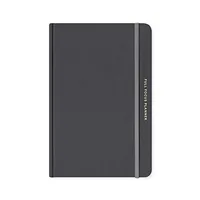
Full Focus Planner by Michael Hyatt
A structured external planning scaffold so the prefrontal cortex doesn't have to generate the structure under cognitive load — built-in time-blocking and daily review.
As an Amazon Associate, we earn from qualifying purchases — at no extra cost to you.

How to Start Today
If any of this resonates — whether you carry a diagnosis or simply recognize the pattern — here's where to actually begin. Not a system. Not a complete overhaul. Five points of entry.
Audit your environment before you audit yourself. Before concluding that your focus problems are about character, look at your workspace. How much ambient stimulation does it contain? How visible is your time? How easily can you be interrupted? The environment is often doing most of the work — in the wrong direction.
Read the primary source. Russell Barkley's Taking Charge of Adult ADHD is the most evidence-grounded self-help guide written by the field's leading researcher. It's not a motivational book. It's a practical translation of four decades of neuroscience into usable daily strategy.

Atomic Habits — James Clear
The definitive guide to building systems that work with your brain's constraints rather than against them — practical habit design for real-life executive function gaps.
As an Amazon Associate, we earn from qualifying purchases — at no extra cost to you.
Make one environmental change this week — just one. Add a visual timer to your desk. Move your phone to a different room during your most important work hours. Set up one virtual body-doubling session. Small environmental changes frequently produce larger behavioral shifts than large motivational efforts, because they change the conditions rather than asking the system to override them.
Stop fighting the interest dependency. If the ADHD brain requires interest to function well, the practical response isn't to be ashamed of that and try harder. It's to engineer your most important work to be as intrinsically interesting as possible — more novelty, clearer stakes, tighter feedback loops — rather than expecting yourself to perform indifferently interesting work with the same consistency as deeply engaging work.
Add physical movement before demanding cognitive work. John Ratey at Harvard has compiled the most comprehensive account of exercise as an executive-function intervention available anywhere. Twenty minutes of aerobic movement before cognitively demanding work raises dopamine, norepinephrine, and BDNF in exactly the neural circuits that ADHD depletes. It's not a lifestyle choice. It's neurochemistry.
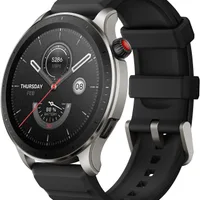
Amazfit GTR 4 Fitness Smartwatch
Tracks the 20-minute aerobic routine before focused work that Ratey's research endorses — turning the exercise-as-dopamine-primer prescription into a measurable, cued daily routine.
As an Amazon Associate, we earn from qualifying purchases — at no extra cost to you.

The conversation about ADHD has been dominated for decades by the wrong framing: an attention problem requiring more attention, a willpower deficit requiring more willpower. Both framings ignore the neurological account and both have produced the same result — people trying harder at strategies that address the wrong problem.
The science points somewhere more useful: toward the understanding that the ADHD brain isn't a damaged version of the neurotypical brain, but a different configuration of the same hardware, with genuine strengths and specific structural gaps that environmental design can accommodate far more reliably than discipline alone.
Design Your Evolution doesn't mean becoming someone else. It means understanding your actual operating system before you try to upgrade it.
So the question worth sitting with this week: if you stopped explaining your brain's limitations through the language of character and started explaining them through the language of engineering — what would you build differently?
Was this helpful?