Mindset· 10 min read
Why Your Brain Invents Reasons for Your Feelings
Research on confabulation reveals your brain invents facts to justify feelings it already has. Here's the reasoning-after-feeling loop, explained.
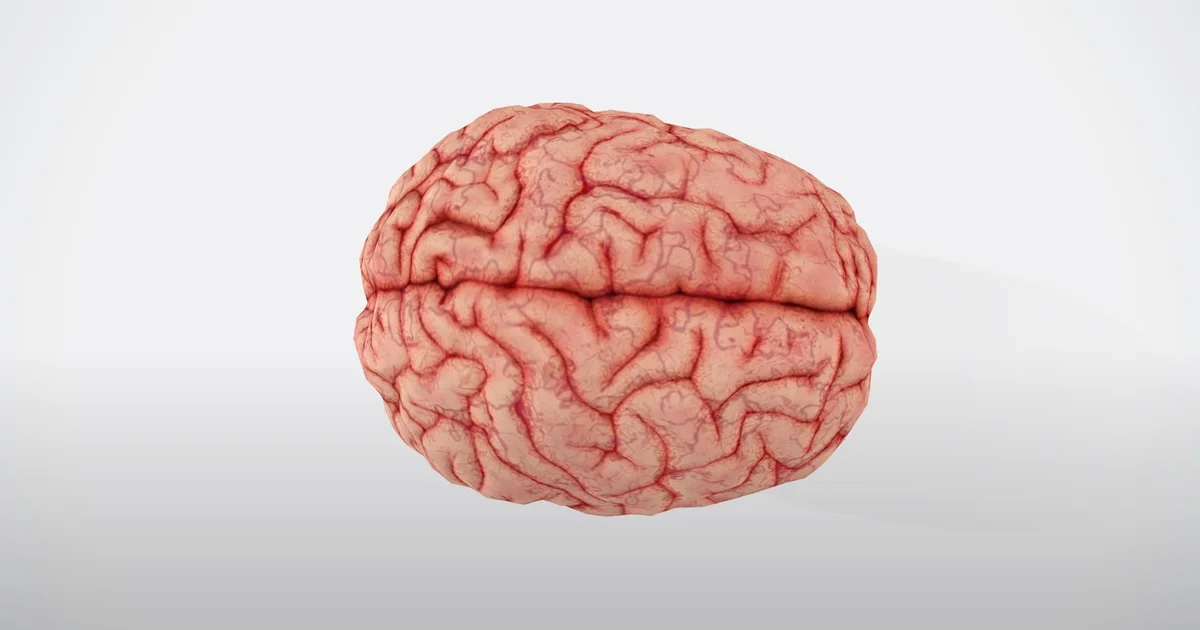
Facts and Feelings: Why Your Brain Invents Reasons for What You Already Feel

The meeting ended twenty minutes ago, and you're still sitting at your desk, slightly unsettled.
The decision felt wrong the moment it was announced. You knew it in your gut — the immediate, wordless kind of knowing that arrives before you've had time to process anything. When your colleague pushed back and asked why you objected, you said something about the data being incomplete, the timeline unrealistic, the sample size too small.
Here's the question that might actually bother you more than the meeting did: did you feel the wrongness first — and then reach for those objections afterward?
Because if you did, you're not being dishonest. You're not rationalizing. You're doing something the human brain does constantly, automatically, and with extraordinary confidence — psychologists call it confabulation. And the research on what's actually happening inside your skull when you make a judgment — any judgment — is likely to change how you read your own certainty.
The Rider and the Elephant: Haidt's Model of How Moral Judgment Actually Works
Jonathan Haidt, a social psychologist who now teaches at NYU's Stern School of Business, proposed one of the more uncomfortable models of human reasoning in a 2001 paper published in Psychological Review, titled "The Emotional Dog and Its Rational Tail." He called it the social intuitionist model. Five years later, in his 2006 book The Happiness Hypothesis, Haidt gave the same idea an image that's become almost impossible to forget once you've encountered it: the rider and the elephant.
The elephant is your emotional intuition — fast, automatic, fully formed before you were aware it was forming. The rider is your conscious, deliberate reasoning — verbal, slower, and genuinely convinced it's steering. Haidt's argument, drawn from a careful synthesis of decades of experimental psychology, is that the rider doesn't actually steer the elephant in the moment a judgment is made. The elephant picks the direction first, driven by an intuitive response that arrives before language does. Then the rider — who sincerely believes he's guiding the whole operation — scrambles to construct a plausible-sounding route that ends exactly where the elephant already decided to go.
This is not an argument against intuition. Intuitions are often tracking something real. The elephant has experience. Sometimes it perceives patterns your verbal mind hasn't assembled into language yet. Haidt's point isn't that feeling is unreliable — it's that the sequence matters enormously and almost nobody notices it.
When you felt that something was wrong in the meeting, that was the elephant moving. The data concerns you raised, the timeline objections, the sample size complaints — those were the rider, articulate and fully convinced of its own reasoning, building a post-hoc justification for a conclusion that was already made.
The Happiness Hypothesis — Jonathan Haidt
This is the source for the rider-and-elephant model quoted in the section above — Haidt's own book-length treatment of why intuition moves first and reasoning follows.
As an Amazon Associate, we earn from qualifying purchases — at no extra cost to you.
The particular danger in this isn't the intuition itself. It's what happens when you don't know that the reasoning came second — when you treat the reasons you constructed as the original cause, and then use those reasons to insulate the underlying feeling from any further examination. The justifications become a wall around the intuition, and the wall is made of logic, which means it feels like it doesn't need to be questioned.
The Interpreter: Why Your Brain Invents Stories Without Telling You
If Haidt's social intuitionist model describes the sequence, Michael Gazzaniga's decades of split-brain research show you the physical architecture that makes it inevitable.
Starting in the 1960s and continuing through the 1980s, Gazzaniga worked with patients who had undergone corpus callosotomies — a surgical procedure that severs the thick band of nerve fibers connecting the brain's two hemispheres, performed in severe cases of epilepsy to prevent seizures from spreading. These patients, because their hemispheres could no longer communicate directly, gave neuroscience a rare and astonishing window into what each half of the brain actually does on its own.
In one of Gazzaniga's experiments, the word "walk" was flashed to a patient's right hemisphere only — the side that can direct motor behavior but has no direct verbal output. The patient stood up and began walking across the room. When asked why — a question directed at the verbal left hemisphere, which had received no instruction and had no knowledge of the command — the patient didn't report confusion or uncertainty. The left hemisphere immediately provided a clean, confident answer: "I wanted to get a Coke."
It was entirely made up. The left hemisphere had zero access to the actual cause of the behavior. But rather than flag this as unknown, it generated the most available plausible story and presented it as fact — with no detectable sense of fabrication, because as far as the interpreter was concerned, it wasn't fabricating. It was explaining.

Kindle Paperwhite (2024, 12th Gen, 16GB)
A distraction-free device for reading the actual research — Gazzaniga, Haidt, the primary literature — rather than the self-help distillations of it.
As an Amazon Associate, we earn from qualifying purchases — at no extra cost to you.
Gazzaniga called this module the interpreter, and he argued it runs continuously in all of us, not just in split-brain patients. Its function is to construct causal narratives that make sense of whatever the rest of the brain is doing — assembling behavior, emotion, and perception into a coherent, linear story where causes precede effects and intentions precede actions. The interpreter doesn't wait for complete information. It doesn't flag gaps. It finds the nearest plausible explanation and presents it as memory, as reasoning, as fact.
The clinical term for what this module produces when it's working on insufficient or absent data is confabulation. It's not lying, because there's no intent to deceive. It's the brain's story-generation system doing exactly what it was built to do — making meaning — with the material that's actually available, which is sometimes nothing but a feeling and a blank.
Weather, Mood, and the Mispriced Fact

If you want to see what this looks like outside of a neuroscience laboratory, there's a 1983 study by Norbert Schwarz (then at the University of Heidelberg) and Gerald Clore (University of Illinois at Urbana-Champaign) that is almost comically simple and almost impossibly useful.
Schwarz and Clore had researchers call people on either sunny days or rainy days and ask them a single question: "Taking all things together, how satisfied are you with your life as a whole these days?" People reached significantly more positive conclusions on sunny days than on rainy days. Not because anything had changed in their actual circumstances — their jobs were the same, their relationships were the same, their bank accounts hadn't moved. The warmth and brightness of a sunny day had generated a mild positive affect, and that affect got silently attached to the question being considered, misattributed to life overall, and converted into a "fact" about life satisfaction.
But here's the part that matters most: when Schwarz and Clore told a second group of participants to pay attention to today's weather before asking the satisfaction question, the weather effect essentially disappeared. The act of naming the actual source of the feeling — "I feel good right now because it's sunny" — was enough to break the misattribution. People could suddenly distinguish ambient mood from genuine assessment.
That's the mechanism in one clean experimental finding. A feeling arrives. It attaches to whatever you happen to be thinking about. The brain builds a fact around it. The fact feels completely real. And naming the origin of the feeling is the intervention that disrupts the whole process.
That same naming-the-source move is the core mechanism behind how to regulate your emotions without suppressing them — precision defuses misattribution, whether the feeling came from weather or from a meeting.
Why This Isn't Cognitive Dissonance (and Why the Distinction Actually Matters)
There's a related concept that gets conflated with this regularly enough that it's worth separating them cleanly, because the two require different responses.
Cognitive dissonance — Leon Festinger's 1957 theory — describes the discomfort that arises when you hold a belief that contradicts an action you've already taken. You believe you're disciplined, but you just ate the entire bag of chips. The two things are in conflict, and your mind works to reduce the tension: maybe the chips were smaller than usual, maybe discipline doesn't apply to treats, maybe you'll run tomorrow. You're resolving a contradiction between a pre-existing belief and a past behavior.
What Haidt, Gazzaniga, and Schwarz describe is structurally different. There's no contradiction to resolve. There's no prior belief bumping against a conflicting action. There's just a feeling that arrives before reasoning begins, and then an interpreter that constructs a plausible causal story around it — one that presents feeling as conclusion and constructed explanation as evidence. No conflict. No tension. Just sequence, invisible and complete.
The Happiness Trap (2nd Edition) — Russ Harris
Confabulation is easier to catch once you can watch a thought arrive without immediately believing it — the cognitive-defusion skill at the centre of Harris's ACT-based book.
As an Amazon Associate, we earn from qualifying purchases — at no extra cost to you.
Knowing the difference matters because the intervention changes. Cognitive dissonance typically responds to examining the contradiction directly — holding the belief and the behavior in view simultaneously until the tension resolves honestly. Confabulation, the feeling-first-reason-invented-second process, responds to a completely different question: did I feel this before I had a reason for it, or did the reason generate the feeling? One question examines the content of your beliefs. The other examines the order in which your mind produced them.
The Real Cost of Not Knowing
Here's what actually happens when you don't know your brain works this way.
You make a judgment based on a feeling — and that's not inherently wrong, because the feeling may be tracking something real. But then your interpreter immediately constructs a set of reasons so specific and coherent that the feeling disappears under the architecture built on top of it. You stop examining the original signal. The reasons get rehearsed, shared with others, and hardened into evidence. By the time you're defending a position in week three, you've completely lost access to what you actually felt in week zero and whether that feeling was tracking something worth trusting.
Jim Rohn had a line he returned to often: "You cannot change your destination overnight, but you can change your direction overnight." What he didn't add is that if you can't see which direction your intuition is already pointing you — and which direction your reasons were constructed to justify — you don't actually know where you're headed.
The more consequential the domain — a hiring decision, a business pivot, a relationship — the more elaborate the post-hoc reasoning tends to be. High stakes generate high-quality justifications. This isn't a sign of sophistication. It's the interpreter working overtime.
How to Start Today: Four Moves That Actually Work
You can't stop the interpreter from running. But you can create enough friction to catch it before you've built an entire worldview on top of a mood.
1. Record the feeling before you record the reason.
This is what decision journals are actually for. Before you write down why you made a call, write down what you felt at the moment you first encountered the situation. The date, the feeling, the body sensation if there was one. This creates a record of the affective signal that arrived before the reasoning began — which means weeks later, you can look back and ask whether the reasoning that followed was an accurate read of the initial signal or a creative explanation for a pre-existing certainty.
2. Ask "Did I feel this before I thought of the reason?"
It's a simple question, and most people never ask it. Apply it specifically to positions you found yourself defending with unusual energy, to opinions you felt immediately certain about before anyone challenged them, to decisions where you had a strong reaction before you had a single piece of supporting data. The answer won't always indicate the feeling was wrong — but it'll tell you what you're actually dealing with.
3. Name the source of the feeling with as much precision as you can.
Schwarz and Clore's finding shows that naming the source disrupts the misattribution. A feelings wheel — which sounds like something for a therapy session but works equally well as a cognitive tool — forces precision. "Uncomfortable" or "off" doesn't tell you much. "Apprehensive" tells you there's perceived threat. "Contemptuous" tells you there's a status evaluation running in the background. "Disappointed" tells you an expectation was violated. Each of those points to a different origin and a different question worth asking about whether the origin is relevant to the situation at hand.

Habit Tracker / Reflection Journal (Clever Fox)
A structured place to name the source of a feeling with precision — the intervention Schwarz and Clore showed disrupts misattribution — instead of leaving it at 'off' or 'uncomfortable'.
As an Amazon Associate, we earn from qualifying purchases — at no extra cost to you.

4. Build the external record before you lock in.
The interpreter constructs narratives so quickly and so plausibly that you genuinely can't distinguish them from actual reasoning from the inside. This is Gazzaniga's key finding — the split-brain patient wasn't aware he was confabulating. He was reporting what felt like memory. A trusted second opinion — specifically someone who asks "what did you feel before you had a reason?" rather than someone who simply evaluates the justifications you've already built — is one of the few external checks that actually penetrates the architecture the interpreter has assembled.
A daily writing habit built for clearer thinking gives you exactly that kind of second opinion, on paper, whenever you need it.
Designing Your Evolution Through This Research
The goal isn't to distrust your intuitions. Haidt's elephant isn't stupid. It has experience, pattern recognition, and often a far faster read of a social or relational situation than your verbal mind will ever catch up to. The goal isn't to override the elephant. The goal is to stop being the rider who is completely convinced they're steering.

Liforme Original Yoga Mat
'Designing your evolution' is a quieter, embodied practice — a mat for the kind of unhurried reflection where you can notice a feeling arrive before the mind writes its story around it.
As an Amazon Associate, we earn from qualifying purchases — at no extra cost to you.
What "designing your evolution" looks like through the lens of this research is something quieter and more specific than most self-improvement frameworks describe. It means building the habit of asking, after a strong feeling, whether the reasons you're reaching for are evidence or decoration. It means keeping a dated record of your felt reactions before you develop your explanations, so you have something to compare later. It means treating your own confident explanations with a fraction more curiosity than you currently do — not suspicion, not dismissal, just curiosity.
Bruce Lipton has spent years arguing that the programs running below conscious awareness shape far more of our behavior than we realize. He's right, and the confabulation research from social psychology gives that claim a concrete mechanism: the interpreter doesn't just run without your awareness, it actively produces the awareness, moment by moment, as a story it's already finished writing.
The last time you felt completely certain about something — absolutely sure of your reasons — there's a question worth sitting with tonight: did those reasons come first? Or did you feel the certainty, and then watch your mind fill in the blanks?
That question, held honestly, is one of the more precise instruments you can bring to understanding your own thinking. Not because it'll always tell you that you were wrong. But because it'll tell you what you're actually working with.
Related read: Why You Don't Actually Know Your Own Reasons
Want to go deeper on how emotional patterns shape decision-making? Browse our mindset archive for the research-backed pieces on cognitive bias, emotional regulation, and what the psychology literature actually recommends — not the self-help distillations of it.
Was this helpful?