Productivity· 10 min read
The Mere Urgency Effect: Why Urgent Beats Important
The 2018 mere urgency effect study explains why urgent tasks always beat important ones — even when you know better. Here's the science and the fix.
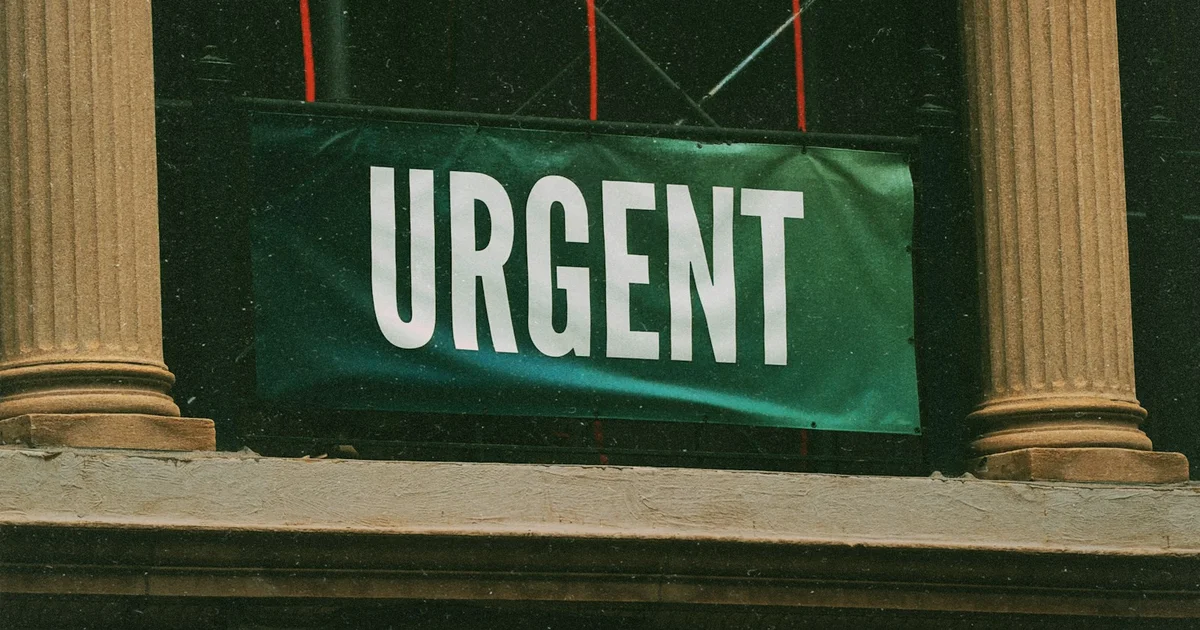
You Keep Skipping Your Most Important Task. A 2018 Study Explains Exactly Why.
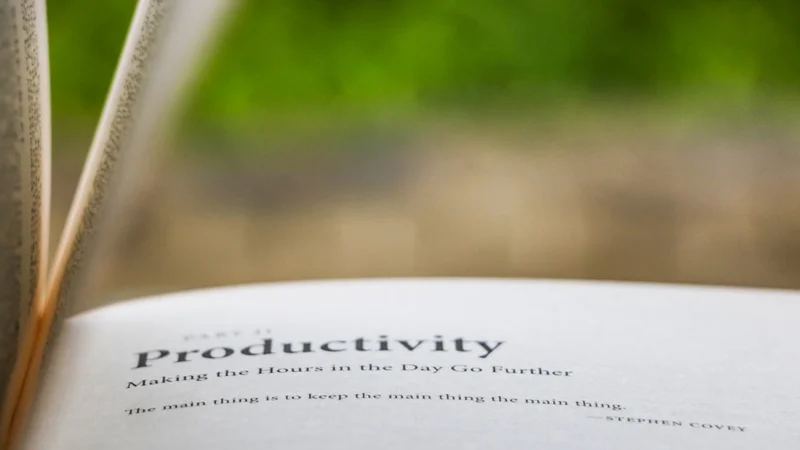
Three o'clock on a Tuesday afternoon. You've answered 40-something emails, sat through two back-to-back calls, reshuffled a meeting, and contributed to a Slack thread that probably didn't need you at all.
You've been busy every minute since 8am. But the thing you actually needed to move forward — the thing you told yourself last Sunday night you would work on this week — hasn't been touched. And there's a specific, slightly deflating feeling that comes with that realization. You were productive. You just weren't productive on what mattered.
Here's what's actually happening — and it's not a willpower problem. Psychologists call it the mere urgency effect.
The Experiment That Named the Problem
In 2018, Meng Zhu, Yang Yang, and Christopher Hsee published a paper in the Journal of Consumer Research that gave a precise name to something most people recognize but rarely examine: the mere urgency effect.
The setup sounds almost too simple to be illuminating. Across a series of experiments, participants were offered a choice between two tasks: one with a higher payoff and no time pressure, and one with a lower payoff attached to a short deadline — a flashing countdown rather than a distant one.
You already know which one most people chose.
The urgent one, in striking numbers. In one trial, only 7.3% of participants picked the lower-value task under a distant, low-pressure deadline — but when the exact same lower-value task was given a short, urgent deadline instead, that number jumped to 48.1%. Across the full run of the study, 58.8% of participants chose the lower-payoff, urgent task at least once, even though the higher-payoff task was, by the researchers' own description, the objectively better choice every time.
What makes this finding stick isn't that people sometimes choose urgent tasks over important ones. We've known that happens for decades. What's striking is the mechanism Zhu and colleagues identified: urgency itself functions as an independent selection criterion. It's not that people weighed the two options and got confused. It's that the urgency cue hijacked the weighting process almost entirely — before a rational comparison even took place.
The researchers ran multiple variations. They changed the reward structure. They made the important task easier. They told participants upfront that the urgent task paid less. None of it substantially changed the result. The urgency cue kept winning.
Stephen Covey described something like this in The 7 Habits of Highly Effective People, in the famous quadrant that separates urgent from important. But even people who've read that book, sketched the matrix on a napkin, and genuinely believe the logic still walk into Friday having spent the week in the urgent quadrants. Now there's a controlled experiment explaining exactly why.
Sony WH-1000XM5 Noise Cancelling Headphones
The experiment showed urgency cues hijack attention before reason engages. A physical barrier to the ambient urgency of an open-plan / notification-heavy environment is the first line of structural defence for the imp…
As an Amazon Associate, we earn from qualifying purchases — at no extra cost to you.
Why Closure Is the Real Culprit
Zhu and colleagues traced the mechanism to something specific: urgent tasks offer closure.
They come with a clear, near-term endpoint — a deadline, a countdown, a ticket to close, a message waiting for a reply. Your brain registers a discrete reward signal when you finish them: done. The loop closes cleanly.
Important-but-non-urgent goals don't offer that. "Build the business." "Write the proposal that could change your year." "Work on your health." These are open horizons, not finish lines. There's no countdown. There's no bell that rings when you've moved it forward enough. There's just a vague, uncomfortable awareness that more could be done — and unlike the urgent task, it never fully goes away.
Jim Rohn used to say the things that are easy to do are also easy not to do. This is the neurological version of that observation. The emotionally easy thing — not the logically correct thing — is to close the loop that's flashing at you, rather than the one sitting quietly and patiently in your calendar.
This is why productivity systems that rely on motivation rather than structure fail over time. You can know the theory perfectly. You can have the quadrant memorized. But if your most important task lives in a flat to-do list next to fourteen tasks that carry due dates and badge counts, the urgency cues are going to win on most mornings — not because you're undisciplined, but because your brain is running a documented bias that you haven't explicitly counteracted with design.
Greg McKeown, in Essentialism, puts it this way: if you don't prioritize your life, someone else will. Most productivity writing stops there. The mere urgency effect research adds a colder observation underneath: if you don't deliberately build structural urgency around your essential work, the day's ambient urgency does the prioritizing for you — and it doesn't know what you'd choose.
This Isn't Parkinson's Law. It Isn't Decision Fatigue. It's Something Else.
The research literature has a few concepts that get blurred with the mere urgency effect, and separating them is useful because each one has a different fix.
Parkinson's Law — the principle that work expands to fill the time available — is about task duration. Once you've decided what to work on, the time container you assign shapes how long it takes. That's a constraint problem: you solve it by shrinking time boxes, not by reconsidering which task you selected.
Decision fatigue — the finding that repeated choices deplete a finite cognitive resource, producing worse decisions as the day progresses — is about resource depletion across a sequence of decisions. The fix is front-loading your most demanding choices, protecting early energy, and simplifying low-stakes calls.
The mere urgency effect operates upstream of both. It's about which task gets selected in the first place, before duration or depleted energy enter the picture at all. You can have a perfectly protected morning, full cognitive reserves, a clear schedule — and still sit down and spend forty-five minutes on something that pinged rather than on the one thing that needed moving forward.
That's why these three phenomena are worth keeping separate. A day structured to beat decision fatigue but not the urgency effect will still drift toward the inbox. A time-boxed schedule that doesn't protect which task fills the box will produce Parkinson's Law on every important project. Understanding the distinct mechanism is what makes the fix actually stick.
Decision fatigue is the related — but distinct — mechanism draining your afternoons
Your Tools Are Actively Manufacturing Urgency
Here's the part most productivity advice skips past: your communication tools are designed to create urgency feelings.
Every notification, every unread badge, every pulsing red dot is an urgency cue — engineered to feel as though something needs your immediate attention, not because the content is actually important, but because urgency compels action and action generates engagement. This isn't speculation; it's the documented incentive structure of platforms optimized for time-on-app, not for your output quality.
The mere urgency effect is the human cognitive vulnerability those design choices are built on top of.
Cal Newport's Deep Work makes a structural argument that most people have heard but underweighted: you cannot willpower your way past an environment that's continuously generating urgency signals. Motivation is not the variable. Environment is. A motivated person in an urgency-saturated environment will, on average, produce the same drift toward unimportant-urgent tasks as everyone else — because the bias is situational, not dispositional.
Kitchen Safe kSafe Time Locking Container (Medium)
Sits under 'Your Tools Are Actively Manufacturing Urgency'. The most literal way to remove live urgency cues (the phone) from the environment during the protected deep-work block — the exact structural intervention th…
As an Amazon Associate, we earn from qualifying purchases — at no extra cost to you.
Which is where the actual design question begins.
How to Override the Effect (It's Structural, Not Motivational)
The research points toward a specific class of solution: make your important work feel urgent — by deliberate design.
Here's what that looks like in practice.
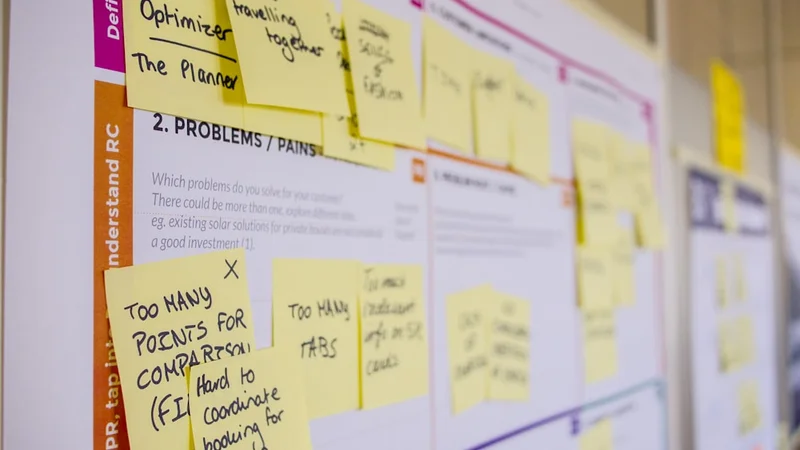
1. Decide your most important task the night before, not the morning of. Most people assess their to-do list in the morning and make a fresh decision about what to start with. That decision is made in the presence of urgency cues: overnight notifications, pending messages, early emails. By the time you're choosing, the urgency effect has already loaded the dice. Decide your one most important task the previous evening. Block it in your calendar as a named appointment for the first 60–90 minutes of the day. You're not deciding in the morning — you're executing a decision you already made.
2. Give your important task an external urgency cue. A deadline is an urgency cue. An accountability partner is an urgency cue. Even telling someone you'll share a draft by Thursday functions as an urgency cue. Set one — even an artificial one — for your most important project. You're not changing the work; you're adding the signal your brain responds to. This is the exact structural intervention the mere urgency effect research implies.
3. Batch your urgent-but-unimportant tasks into discrete windows. Email, Slack, admin responses — most of these are genuinely low-importance despite feeling urgent. Rather than leaving them available as live urgency cues throughout the day, batch them into two or three designated windows. When urgent tasks live in their own container, they're not competing against your important work in real time. The comparison never happens.
4. Use a physical planner that forces explicit prioritization. A digital to-do list with 20 items, no deadlines on the important ones, and a connected notification layer is structurally set up to amplify the urgency effect. A dedicated paper planner used offline creates a different decision environment entirely — one without live urgency cues, where the hierarchy is built in. The most effective formats have dedicated space for your single most important commitment, visually separated from everything else.
5. Do a ten-second importance check before opening any inbox. Before opening email or messages, write down: What is the most important thing I need to move forward today? Just writing it. Then open the inbox. This pre-commits your comparison baseline before urgency cues arrive. Research in related domains shows that an explicit prior commitment substantially reduces how easily an ambient cue can override it.
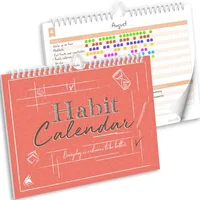
Clever Fox Habit Calendar Circle (24-Month)
Follows action step #5 (the ten-second importance check before opening any inbox). A dedicated offline tracker makes the daily 'most important thing' commitment visible and recurring — no live urgency cues attached.
As an Amazon Associate, we earn from qualifying purchases — at no extra cost to you.
The Feeling the Busy Day Gives You Is a Lie
There's a specific sensation at the end of a day packed with urgent tasks: the feeling that you were productive because you were responsive. Everything that pinged got answered. Nothing fell through the cracks. You closed loops. You kept people moving.
That feeling is accurate about the urgent tasks. It is completely silent about the important ones.
Seth Godin, writing about what he calls the urgency paradox, observed that responding to urgency tends to perpetuate urgency — each thing you close generates more things that feel equally pressing. The resolution, in his framing, isn't to move faster through the urgent pile. It's to notice that clearing the urgent pile was never the actual goal in the first place.
The research Zhu and colleagues published in 2018 gives that observation its mechanism: urgency isn't just a feature of tasks. It's a filter your brain runs automatically and independently of importance. Trying harder to ignore it doesn't work — the effect operates largely outside of conscious awareness. The only reliable way to override a filter is to design around it before it runs.
Atomic Habits — James Clear (Paperback)
Closes the article at 'Design Your Urgency'. Atomic Habits is the definitive companion for turning the structural insight into repeatable daily systems — the 'design over willpower' thesis the piece lands on.
As an Amazon Associate, we earn from qualifying purchases — at no extra cost to you.
a morning routine built around this exact principle
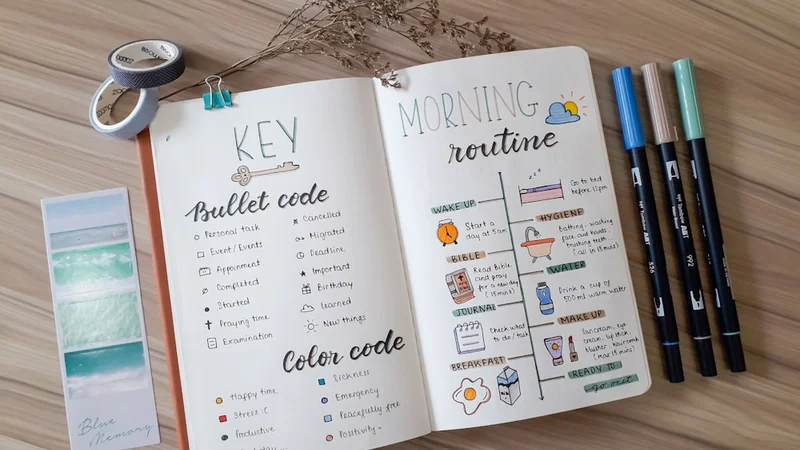
Design Your Urgency
Vanulos is built on a single premise — the one behind Design Your Evolution: intentional design, applied consistently, produces a different life than drift does. The mere urgency effect is one of the clearest demonstrations of what drift looks like at the daily level — the day's ambient urgency becomes your de-facto priority system, and it selects for everything except the things that compound.
The good news from the 2018 research isn't subtle. The effect can be counteracted. Not through more discipline, not through a different motivational framework, but through a different structure. Put urgency cues around your important work. Remove urgency cues from your important distractions. Decide which task wins the morning before the morning arrives with its own agenda.
Your inbox doesn't know what matters most to you. Your notification center doesn't. The mere urgency effect doesn't.
You do. The question is whether you've built that knowledge into the architecture of your day — before the blinking clocks cast their vote.
What's the one task on your list right now that keeps losing to the urgent ones, the thing that genuinely matters but hasn't moved in weeks? Put it in the comments. Sometimes the first urgency cue a truly important task ever receives is the moment someone writes it down and commits to it in public.
Was this helpful?