Productivity· 10 min read
Csikszentmihalyi's Flow State Map: Read Your Boredom
Csikszentmihalyi's research on flow state reveals boredom and anxiety as calibration data, not character flaws. Here's how to build focus on demand.
Your Boredom at Work Is a Clue, Not a Character Flaw (What Csikszentmihalyi's Research Actually Says)
I'd done everything right. Phone in another room. Inbox closed. Two hours blocked on the calendar. Coffee made. I sat down to write a difficult section of a proposal that had been hanging over me for days — and forty-five minutes later I was reorganizing my desktop and googling something I didn't actually need to know — the very antithesis, I later learned, of what researchers call the flow state.
It wasn't distraction. I'd removed the distractions. The problem was something else entirely, and it took me a long time to name it: the task was slightly too vague, slightly too large, and slightly beyond what I knew how to do that day — which meant my brain quietly refused to fully commit to it, even with no interruptions available.
The flip side happened the following week. I was updating a spreadsheet I'd built a hundred times before, same structure, same columns. I finished it in twenty minutes, felt nothing, and spent the next hour hovering at my desk waiting for something to feel worth doing.
That back-and-forth — the hollow efficiency of tasks too easy and the stalled paralysis of tasks too hard — is the exact territory that psychologist Mihaly Csikszentmihalyi spent thirty years mapping. And his map is far more specific and useful than any "just eliminate distractions" advice you've read before.
What the Experience Sampling Method Actually Revealed
In the 1970s, Csikszentmihalyi was working at the University of Chicago and noticing something odd. When he asked people to describe their most satisfying moments — not their happiest, but their most deeply engaging — the descriptions had an eerie consistency across wildly different activities. A chess player describing a match. A surgeon describing a complex operation. A rock climber mid-route. A factory worker who had invented a game to make his repetitive task more interesting.
Time distortion. Complete absorption. The sense that the activity itself was the reward.
He wanted to study this systematically, so he designed what he called the Experience Sampling Method: participants carried pagers that beeped at random intervals throughout their day. When the beep sounded, they wrote down what they were doing and how absorbed they felt, in real time rather than relying on memory. He ran this with thousands of people across dozens of occupations over several decades — surgeons, artists, assembly-line workers, teenagers, retirees.
The pattern that emerged, published in Flow: The Psychology of Optimal Experience (1990), is remarkably specific. Peak absorption didn't happen when a task was easy. And it didn't happen when a task was overwhelming. It happened at a precise intersection Csikszentmihalyi called the flow channel: where your perceived challenge sits just slightly ahead of your perceived skill level.
Too far below that line: boredom. The task doesn't need your full attention, so your attention wanders.
Too far above it: anxiety. The gap between where you are and where you need to be is too wide for your brain to bridge in real time, so it fragments rather than commits.
Right at the intersection — challenge slightly ahead of skill — the research showed deep focus became nearly automatic. The brain had exactly enough to work with that it committed fully rather than either coasting or panicking.
This is mechanistically different from willpower, motivation, or discipline. You don't grind through flow. When the conditions are calibrated correctly, it's actually the path of least resistance for a brain given the right input.
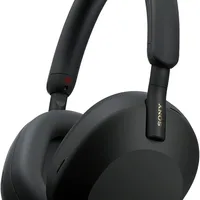
Sony WH-1000XM5 Noise Cancelling Headphones
Industry-leading noise cancellation for building the genuinely distraction-free workspace flow requires — the physical barrier that keeps your attention on one channel.
As an Amazon Associate, we earn from qualifying purchases — at no extra cost to you.
Boredom Is a Signal, Not a Personal Failing
Here's the reframe that changed how I approach almost every working session: boredom isn't a sign you're lazy, underdisciplined, or that the work is beneath you. It's precise diagnostic information about the relationship between the task and your current skill level.
If you're bored — genuinely flat, not distracted — the challenge is too low for where your skills currently sit. Your brain has assessed the task, concluded it requires less than full engagement, and allocated the surplus attention elsewhere. This isn't a failure of character. It's your nervous system running optimally and looking for a better use of its resources.
The fix isn't to "focus harder." The fix is to raise the challenge.
Practically, that means introducing a real constraint: a shorter time window for the same output, a higher quality bar on one specific dimension, a more complex variation of the task. Professional chess players don't keep replaying opponents they reliably beat — they specifically seek stronger competition precisely because the flow channel requires genuine uncertainty about the outcome.
Jim Rohn had a version of this: "Don't wish it were easier. Wish you were better." The Csikszentmihalyi prescription is actually slightly different — don't just build the skill, also raise the challenge. Both levers matter, and you can pull either one to move back into the channel.
The habit I've built is a 90-second check-in at the start of a focused session: am I flat, or am I tight? Flat means the challenge needs raising. Tight means something else is happening — which brings us to the other side.
Anxiety at Your Desk Is Also a Signal — A Different One
Anxiety before a task feels like a verdict: you're not capable, you're not ready, you shouldn't be attempting this. It's the same psychological territory as the impostor experience, and it carries the same instinct to avoid rather than engage.
But through the lens of Csikszentmihalyi's research, task anxiety is equally diagnostic — it just points in the opposite direction. The challenge-skill gap is too large. Your brain has assessed the distance between where you are and where the task requires you to be, concluded it can't form a clear enough map of the terrain, and fragmented your attention as a protective response rather than a commitment.
The fix here isn't to calm down and push through. It's structural: either break the task into smaller sub-problems until the gap to the next step feels bridgeable, or explicitly build the missing skill component before attempting the whole task.
That second option — building the skill first — is one most people skip because it feels like delay. But attempting a task that sits well above your current ability doesn't just produce anxiety; it also produces the least useful form of learning, because the feedback you get is too diffuse to act on.
Cal Newport builds an entire methodology around creating the conditions for this kind of deep engagement in Deep Work, and it's worth knowing that Newport credits Csikszentmihalyi's flow research as one of the core frameworks his system rests on.
The Autotelic Secret: You Don't Have to Love the Work
One of the more surprising findings in Csikszentmihalyi's Experience Sampling data was this: some people consistently reported flow in conditions where their coworkers in identical roles reported boredom or drudgery. An assembly-line worker doing the same task as the person beside him — but reporting genuine absorption, week after week.
Csikszentmihalyi called this the autotelic personality, from the Greek auto (self) and telos (goal). An autotelic experience is one where the activity itself is the reward, not the output it produces. The interesting thing is that autotelic personality traits are not fixed or innate — they're developed through a specific practice of intentionally finding what's genuinely interesting or craftlike within a task, rather than treating it as a box to check.
This is where the research cleanly separates from "follow your passion" advice. You don't need to feel passion for the activity in advance to enter flow. You develop the taste through engaging at the right challenge level and paying deliberate attention to the craft of the thing — the micro-decisions, the small judgment calls, the places where it could be done better.
Csikszentmihalyi's interviews with surgeons captured this same signature: many described losing awareness of their own bodies mid-operation, fully absorbed in the specific problem in front of them rather than running through a routine. That's the autotelic pattern showing up in a high-stakes profession — attention pulled toward the craft of the case at hand, not toward finishing it.
Csikszentmihalyi's framework pairs naturally with the broader science of entering flow state on demand.
My Complete Setup for Making Flow Predictable
Understanding this mechanism changed how I structure every working session. Here's the full setup — the specific tools and protocol I've landed on after treating flow as a design problem rather than a mood.
The workspace condition
The first prerequisite is eliminating competing attentional demands. Csikszentmihalyi's research consistently showed that flow requires what he called "psychic energy" — cognitive resources — concentrated on a single channel. Split that attention and the flow channel collapses before you've entered it.
For auditory distraction specifically: not silence necessarily — research by consumer psychologists Ravi Mehta, Rui Zhu, and Amar Cheema, published in the Journal of Consumer Research in 2012, found that a moderate ambient noise level around 70 decibels — comparable to steady background chatter or traffic — can actually enhance performance on creative tasks compared to near-silence, while noise above about 85 decibels impairs it — but language-bearing audio (lyrics, conversation, variable-volume content) draws on the same cognitive bandwidth as the work itself. Brown noise or a simple ambient track eliminates that competition without creating the deadness of total silence.
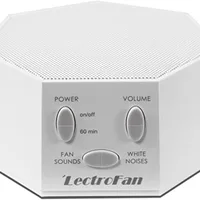
LectroFan Classic White Noise Machine (Global Power Edition)
A steady white-noise source tuned to the ambient-sound sweet spot the research points to — no lyrics, no conversation, nothing to compete for your attention.
As an Amazon Associate, we earn from qualifying purchases — at no extra cost to you.
The task calibration step
Before each focused session, I spend 60 seconds writing down the specific challenge — not "work on project X" but something precise enough that it sits at the challenge-skill intersection: "Write the opening 500 words of section two, each paragraph to a single clean idea, before the timer sounds." Specific enough to calibrate the level. Just ahead of my reliable pace, but not so far ahead that the gap becomes unbridgeable.
This one step — converting a vague task into a calibrated challenge — has more impact on whether I enter flow than any other single adjustment.
A structured focus timer isn't the point here; the structural principle is. A 25-minute bounded session against a specific output target makes the challenge-skill ratio visible in real time. If the output came too fast and felt trivial, the challenge was too low. If the output stalled and the session felt like resistance, the challenge was too high or the skill gap was too large. That feedback recalibrates the next session.
The skill-maintenance piece no one talks about
Here's the side of flow that almost every practical guide ignores: you have to actively maintain the skill side of the challenge-skill ratio. If you stop deliberately building your skills in a domain, the tasks you once found absorbing become flat — not because you've lost anything, but because you've plateaued and the challenge has stopped pushing against the edge of your ability.
I keep a paper notebook — not an app, an actual paper notebook — where I log what I practiced deliberately each week and where I felt genuine resistance or uncertainty. It's a crude version of what Csikszentmihalyi's Experience Sampling beepers captured in real time: a feedback mechanism that tells you whether your challenge-skill ratio is drifting.
Without some version of this log, the slow drift is nearly invisible until boredom has become the default state of your work.
How to Start This Week Without Rebuilding Your Entire Setup
You don't need to redesign how you work to start experiencing this differently. Three specific adjustments are enough to begin.
1. Run a five-day signal audit
For the next five working days, pay attention to whether you feel flat or tight at specific moments in specific tasks. Write it down — not a journal, just a word. Flat means the challenge is too low. Tight means the challenge is too high or the skill gap is too large. At the end of five days you have a calibration map of your own work, which is more useful than any generic productivity advice.
2. Convert one vague task to a calibrated challenge
Pick one task on your list right now — just one — and spend 60 seconds turning it from a category ("work on the presentation") into a specific challenge at the right level: what output, to what standard, in what time window. That specificity is the dial. Turning it correctly is all that's required to invite the flow channel to engage.
Flow: The Psychology of Optimal Experience — Mihaly Csikszentmihalyi (Paperback)
The original research behind everything in this article, for readers who want to go straight to the source.
As an Amazon Associate, we earn from qualifying purchases — at no extra cost to you.
3. Protect the first 90 minutes
Csikszentmihalyi described attention as a finite resource — "psychic energy" — that depletes as the day fills up with decisions, interruptions, and social processing. That's a practical reason mornings tend to work well for a calibrated session: less of that reserve has been spent yet. This isn't about being a morning person. It's about recognizing that focus draws on a limited pool, and the flow channel requires enough of it available to ignite.
The one adjustment that protects this: no meetings, no messages, no decisions before you've completed your first calibrated session. What you do with the first 90 minutes of the day shapes the quality of attention available for every hour that follows.
If your mornings currently work against this, building a morning routine that actually sticks is the place to start.
The Practical Upside of Taking Your Boredom Seriously
Csikszentmihalyi spent thirty years studying what makes people genuinely, deeply engaged with their lives — not surface-happy, not comfortable, but alive the way a surgeon mid-operation is alive. His answer wasn't money, status, or the right passion. It was a specific neurological condition, reliably triggered, at the intersection of appropriate challenge and adequate skill.
The practical upside of this research isn't just better productivity. It's that it hands you a completely different relationship with two of the most common experiences in modern work: boredom and anxiety. You stop interpreting them as verdicts about your character or your fit for the work, and you start reading them as precise instruments pointing toward a specific calibration problem you can actually solve.
"Design your evolution" describes a concrete act. It means treating your responses to your work as data rather than identity — adjusting the challenge, building the skill, protecting the conditions. Not hoping you're the type of person who falls into focus. Engineering the conditions where focus becomes almost inevitable.
The question worth sitting with tonight: which task in your life right now is sitting in the boredom zone because you've outgrown the version of it you've been doing — and what would a slightly harder version of it look like?
Was this helpful?