Habits· 10 min read
Stop Blaming Yourself — Redesign the System Instead
Poka-yoke proves error-proofing beats willpower. Redesign your environment — backed by Norman, Shingo, and Reason — so failure is the harder path.

Stop Blaming Yourself — Redesign the System Instead
For four months I tried to take a daily vitamin. And for four months I failed. Not occasionally — almost every single day.
I tried guilt. I tried phone reminders. I taped a sticky note to the bathroom mirror that read, in my own handwriting, VITAMINS. Nothing worked. And every morning when I realized I'd forgotten again, the same thought arrived right on schedule: What is wrong with me?
The vitamins lived in the bathroom cabinet, behind a door I opened in the dark at 6am before my brain was online. The phone reminder went off when I was half-asleep and I silenced it on autopilot. The sticky note became wallpaper within a week — the kind of visual noise your eyes slide right past. Nothing about the setup I'd built was designed to make success easy. I'd constructed multiple efficient pathways to failure and then blamed myself for taking them.
The day I moved the vitamin bottle to the kitchen counter, six inches from the coffee maker, I didn't forget again. Not once. Not in three years since.
I didn't change. The environment changed. And that distinction — between "try harder" and "design smarter" — is, according to some of the most rigorous research in human performance, the entire ballgame.

The Door That Blames You (And Why That's Backwards)
In 1988, cognitive scientist Don Norman published a book that starts with doors and ends up explaining nearly everything about human failure. He first titled it The Psychology of Everyday Things; when he revised it in 1990, he retitled it The Design of Everyday Things — the name by which it's widely known today. Norman's central provocation is deceptively simple: when you push a door that needs to be pulled, the problem isn't you. It's the door.
He called them "Norman doors" — doors with push bars on the pull side, or unmarked glass panels that offer no hint about which way they open. Every building in the world has at least one, and every day, thousands of perfectly competent, intelligent adults fail to operate them. So designers add a sign: PULL. People still push. A bigger sign goes up. A sticker in a different font. More signage.
Norman pointed out that the sign is an admission of failure — the designer's failure, wearing the user's name.
His argument wasn't really about doors. He was making a structural claim: what we call "operator error" — the category of mistake assigned to the human at the receiving end of a system — is almost always better understood as a design error. The system was built without accounting for how people actually work under realistic conditions of fatigue, distraction, and cognitive load. The human performing the error isn't the root problem. The design that made the error easy is.
You've felt this. You keep checking your phone during deep work and you've blamed your focus. You keep overspending and you've blamed your discipline. You keep skipping the gym and you've blamed your motivation. But here's the question Norman's work demands: Has anyone actually looked at the system you're operating inside?

Sony WH-1000XM5 Noise Cancelling Headphones
Norman's point about being blamed for a badly designed system lands hardest on deep work: you keep checking your phone and blame your focus. A physical barrier that removes ambient distraction is environment design, n…
As an Amazon Associate, we earn from qualifying purchases — at no extra cost to you.
What Toyota Figured Out That Most Self-Help Books Haven't
Decades before Norman was writing about badly designed doors, a Japanese industrial engineer named Shigeo Shingo had already applied an almost identical insight to the factory floor — except his stakes were considerably higher than a forgotten supplement.
Shingo was working to eliminate manufacturing defects from the Toyota Production System, and he formalized a discipline he called poka-yoke. The translation is almost comically direct: "mistake-proofing."
The operating principle: instead of training workers to be more careful, make the specific error structurally impossible.
Shingo's implementations were physical and elegant. Car parts were designed to fit together in only one orientation, so backward assembly became mechanically impossible before human attention was ever required. Machines were fitted with sensors that stopped the line automatically if a required step was skipped — no discipline needed, because the machine enforced the sequence. Assembly jigs required a specific force, making incomplete fastening immediately obvious rather than something a distracted worker might miss. Workers weren't asked to concentrate harder. The design removed the need to concentrate at all.
This wasn't about making workers lazy. It was about accepting a fact that industrial psychology had been establishing for decades: even expert humans, under normal conditions, make predictable errors. The intelligent response to that reality is design, not more exhortation.
Now apply this to your evening. You want to stop scrolling social media after 9pm. The current design: phone charges on your nightstand, apps installed and one tap away, notifications still arriving. Every evening is a willpower contest between a device engineered by rooms full of behavioral scientists to capture your attention, and a personal resolution you made to yourself in a hopeful moment.
The poka-yoke version: phone charges in the kitchen. A physical book on your nightstand instead. The app has a one-minute friction delay you added deliberately. The good behavior is now easier. The bad behavior requires actual effort to initiate.
You haven't developed discipline. You've made the error harder than the desired behavior.
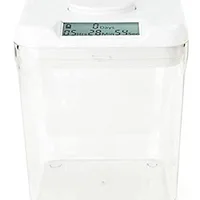
Kitchen Safe kSafe Time Locking Container (Medium)
The literal poka-yoke for evening scrolling: the phone charges out of reach, the bad behaviour now requires real effort to initiate. Makes the error harder than the desired behaviour.
As an Amazon Associate, we earn from qualifying purchases — at no extra cost to you.
Why One Fix Is Never Enough — The Swiss Cheese Problem
Here's where it gets more nuanced, and more useful.
James Reason, a psychologist who spent his career studying catastrophic failures in aviation, medicine, and nuclear power, published his Swiss Cheese Model of accident causation in his 1990 book Human Error. The core insight: serious failures almost never have a single cause. They happen when the holes in multiple independent layers of defense happen to align at the same moment — like holding up several slices of Swiss cheese and looking for a shaft of light to pass all the way through.
A plane doesn't crash because the pilot made one error. It crashes because the pilot's error, an equipment check that was skipped, an ambiguous instrument reading, and a controller who was momentarily distracted all happened to align. Each layer had a gap. The gaps lined up. Light passed through.
In your habits, this is exactly what happens when you "fall off the wagon" — usually accompanied by the conviction that you simply lack willpower. You didn't fail a single defense. You failed several simultaneously, most of them invisible. The gym session you skipped wasn't just laziness: it was the late meeting that ran over, the gym bag that still needed packing, the parking situation that required an extra ten minutes you didn't budget, and an internal conversation that reopened instead of staying closed. Multiple holes. Perfect alignment.
The implication is practical and important: one fix rarely holds on its own. The person who starts waking up at 6am but only buys a new alarm clock — without addressing why they're scrolling until 1am — has patched one hole while leaving four others wide open. The Swiss cheese still lets light through. The habit still fails. And every failure gets filed under the wrong heading: character, not architecture.
Related: how the cue-routine-reward loop actually works — and how to break it
Reason's model has been adopted by every serious safety-critical industry on the planet precisely because it redirects the investigative instinct away from finding a single guilty party and toward finding the full chain of system vulnerabilities. When applied to personal habits, it does the same thing: it replaces the question "what's wrong with me?" with the more productive "which holes need closing, and in which order?"

Philips SmartSleep Wake-Up Light HF3520
Swiss cheese in action: the person who buys an alarm clock but keeps scrolling till 1am patched one hole and left four open. A sunrise light closes the wake-up-layer gap without relying on a jarring phone alarm.
As an Amazon Associate, we earn from qualifying purchases — at no extra cost to you.
Your Environment Is Already Designed — Just Not for You
Here's the uncomfortable truth underneath all of this: your environment isn't neutral. It's never neutral.
Every space you inhabit has been designed — by architects, manufacturers, product teams, app developers, grocery store layout consultants, and the accumulated choices of everyone who lived or worked there before you — to produce specific behaviors. Those behaviors weren't chosen for your benefit. They're the default outputs of systems built for someone else's commercial purposes.
The pantry is designed to make eating easy. The phone is designed to make scrolling compulsive. The couch faces the television by default. The wine is at eye level; the sparkling water requires bending down. The chips require only an open hand; the salad requires washing, chopping, and equipment. The social media app opens in one tap; closing a tab requires three actions and a confirmation.
None of that is your fault. But if you haven't deliberately counterdesigned your environment, you are living inside someone else's poka-yoke — optimized for outcomes you didn't choose, every hour of every day.
Jim Rohn is widely credited with the idea that "you are the average of the five people you spend the most time with." The equally true companion statement, which behavioral science has spent fifty years validating, is that you are also the product of the five environments you spend the most time inside. The people and the places are both inputs. Most people design neither.
Counterdesigning your environment isn't complicated. It's mostly a question of friction — identifying where the desired behavior is harder than the undesired alternative, and inverting that relationship one specific point at a time.
BJ Fogg's Stanford Behavior Design Lab studies this same mechanism through his research on behavior design, which he built into what he calls the Fogg Behavior Model. James Clear calls it "environment design." The underlying mechanism is the same: small changes in your physical architecture produce outsized and lasting changes in behavior because they operate beneath the level of conscious decision-making. You don't have to choose the right thing every time if the right thing is already the thing that requires the least effort.
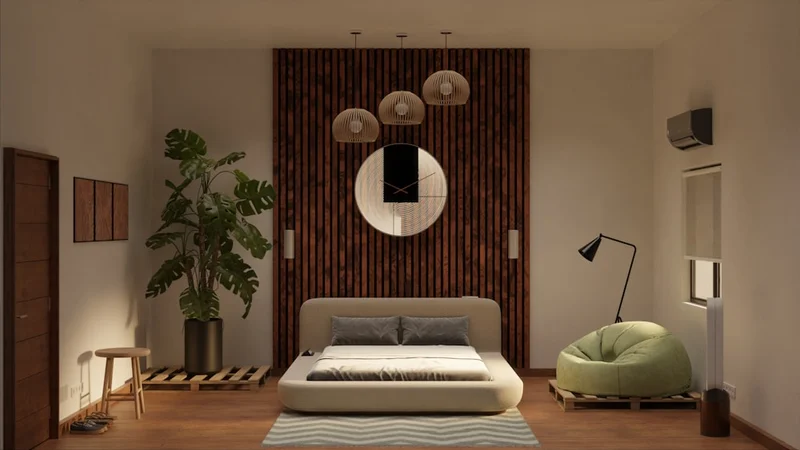
How to Redesign Your Day Without Relying on Willpower
Here's a practical framework drawn directly from the research above. Five steps. No vision boards required.
Step 1: Audit your environment as a designer, not a judge. Walk through a typical day and note every moment where you do something you don't want to do, or fail to do something you intended. Don't ask "why did I do that?" Ask: "What in this environment is making this the path of least resistance?" You're looking for friction asymmetries — places where the unwanted behavior is easier than the desired one.

Clever Fox Habit Calendar Circle (24-Month)
Step 1 asks you to audit your day 'as a designer, not a judge.' A visible habit tracker externalises that audit — it surfaces the friction asymmetries you keep filing under 'what's wrong with me?'
As an Amazon Associate, we earn from qualifying purchases — at no extra cost to you.
Step 2: Make one poka-yoke change per habit. Don't redesign your life in a Sunday-afternoon overhaul. Pick one habit. Find the single biggest friction asymmetry. Fix it physically and concretely. Move the object. Change the charge location. Pre-portion the food. Lay out the exercise clothes the night before. Set the savings transfer to automatic. These are not metaphors — they are literal changes to the physical world.
Step 3: Add a second independent layer. Once the first change holds for a week, identify the next most vulnerable gap in your defense system. A second layer doesn't need to be complicated. A second phone lock screen with your goal on it. A calendar block that treats your workout like a meeting. A friend who expects a daily check-in. Each layer is another slice of cheese — and you're closing the holes, not betting everything on one.
Step 4: Remove the moral conversation entirely. When a habit fails despite your redesign, your job isn't to feel bad — it's to run a postmortem. What hole aligned? What did the design miss? This is not permission to be passive about your choices. It's an instruction to direct your effort where the research says it pays off: on the architecture, not the shame cycle.
Atomic Habits — James Clear (Paperback)
The article explicitly names 'environment design' as Clear's framing of the same mechanism Norman and Shingo describe. Natural bridge from theory to the reader's own bookshelf. (1 of max 2 books.)
As an Amazon Associate, we earn from qualifying purchases — at no extra cost to you.
Step 5: Design for your worst-case self, not your best-case self. This is the one most people get wrong. They build habits assuming the version of themselves who shows up tomorrow will be rested, motivated, and feeling good. Shingo didn't build Toyota's error-proofing for the engineer who slept eight hours and drank their coffee. He built it for the engineer at hour nine of a shift in February. Build your systems for 6pm-on-a-Thursday you, not Sunday-morning-after-a-good-run you. That's the version who actually operates most of your habits.
Related: how to build a morning routine that actually sticks
The most counterintuitive realization in all of this: designing your environment feels passive but functions like leverage. You do the work once — move the charger, reorganize the kitchen, automate the transfer, invest in the right physical tools — and the environment keeps doing that work for you, silently, every subsequent day.
The Design Is the Discipline
Here's where "Design Your Evolution" stops being a tagline and becomes a literal instruction.
Most self-improvement advice asks you to be more — more consistent, more focused, more motivated, more resolved. It treats your character as the variable to improve and your environment as a fixed backdrop. The research says that's precisely backward. Your character is actually quite stable across similar situations. What changes outcomes is the situation itself.
When you build an environment where your desired behavior is the path of least resistance, you're not avoiding discipline. You're directing it intelligently. Discipline spent on redesigning a system is multiplied every time that system operates. Discipline spent on white-knuckling through a badly designed environment is spent fresh, in full, every single time — and human beings always eventually run out.
Don Norman spent a career proving that the door isn't the user's fault. Shigeo Shingo built it into the machines themselves. James Reason showed us that serious failures need multiple holes, which means serious defenses need multiple layers. And one of the most widely repeated pieces of self-help wisdom — often credited to psychiatrist Viktor Frankl, though his institute has confirmed he never actually wrote or said it — captures the point that remains underneath all of it: between stimulus and response, there is a space. What you do with that space — whether you fill it with self-blame or with deliberate design — is where evolution actually lives.
What habit have you been silently blaming yourself for that might actually be a design problem in disguise? Leave it in the comments. I'd genuinely like to hear what you find when you look at the system instead of the mirror.

Was this helpful?