Mindset· 10 min read
The Toxic Positivity Trap: What Science Says Instead
Forcing yourself to 'stay positive' can backfire, research shows. Here's what emotional acceptance does better — and why it isn't about faking happiness.
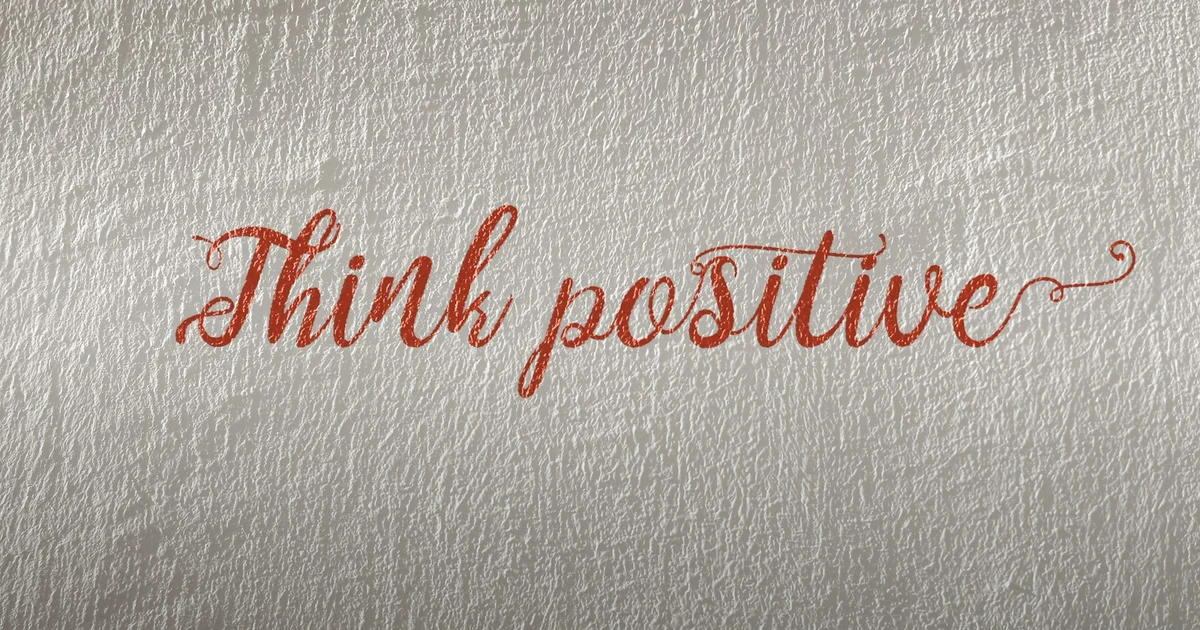
The Toxic Positivity Trap: What Science Says Instead
Think about the last time something genuinely hurt. A rejection letter. A relationship that quietly fell apart. A morning where you woke up feeling a specific, heavy kind of sadness and couldn't quite name why.
Now think about what you told yourself — or what someone around you said. Just focus on the good stuff. Everything happens for a reason. You've got so much to be grateful for. Maybe you even tried it. Tried to reroute your brain toward gratitude, affirmations, silver linings. Psychologists call this pattern toxic positivity.
Here's the question nobody asks afterward: did it actually help? Or did trying to force positivity about it make the feeling stranger — more persistent, more intrusive, somehow louder? If your honest answer is the second one, you're not weak. You're running into one of the most documented paradoxes in psychology, and the science behind it is more useful than anything a motivational poster will ever tell you.

The White Bear That Proves Everything
In 1987, a social psychologist at Trinity University named Daniel Wegner ran a deceptively simple experiment. He asked participants to spend five minutes not thinking about a white bear. Every time the thought intruded anyway, they rang a bell.
The bell rang constantly.
Then, in a second phase, Wegner told a different group to first suppress the white bear thought and then actively think about it. Compared to a control group who just thought about the bear freely from the start, the people who had first tried to suppress the thought showed a dramatic rebound — the bear came back harder and more frequently than it ever would have if they'd simply let themselves think about it from the beginning. The original 1987 paper remains one of the most cited works in social psychology.
Wegner called this the ironic process theory: the act of monitoring for a forbidden thought requires holding that exact thought active in your working memory to check against. Which means suppression doesn't eliminate the thought. It keeps it on patrol.
Now apply that to emotions instead of an arbitrary image of a bear. When you're grieving, angry, frightened, or quietly resentful — and you consciously tell yourself just be positive, just be grateful, don't feel this — you're running exactly the same mental process. You're putting the difficult feeling on active watch-duty. You're guaranteeing that it circles, interrupts, resurfaces. The very mechanism of suppression keeps the thing you're suppressing alive.
This is not a fringe finding. It's been replicated in dozens of contexts across four decades of research. And it has a name in the popular literature that you've probably already heard, even if you didn't know this was the science behind it.
The Upside of Stress — Kelly McGonigal (Paperback)
The white-bear rebound shows suppressing a hard feeling backfires — this book reframes the science of why stress and difficult emotions are usable data, not defects to erase.
As an Amazon Associate, we earn from qualifying purchases — at no extra cost to you.
What "Toxic Positivity" Actually Means
Whitney Goodman, a therapist whose 2022 book gave the cultural pattern its precise name, defines toxic positivity as "the overgeneralization of a happy, optimistic state that results in the denial, minimization, and invalidation of the authentic human emotional experience." That sounds clinical. In practice, it looks like this:
Someone tells you they're struggling. You say, "At least you still have your health." Someone loses their job. You say, "Everything happens for a reason — something better is coming." Someone confesses they're scared about a decision they've already made, and you say, "Just trust the process. Stay positive."
The intent is kind. The effect, according to both Goodman's clinical work and Wegner's laboratory findings, is that the person feels worse: not only are they dealing with the original difficult emotion, now they're also dealing with the implicit message that what they're actually feeling is wrong and should be replaced. They've been handed a white bear problem.
Goodman's work maps to Susan David's research at Harvard Medical School on what David calls emotional agility — the capacity to relate to emotions with curiosity and openness rather than reflexive control. David draws a sharp distinction between genuine optimism (choosing a hopeful interpretation of events when there's legitimate reason to) and forced positive affect (substituting a performed emotional state for an authentic one). The first is a psychological resource. The second is a form of self-gaslighting — telling yourself your own data is wrong.
Both researchers point to the same corrective, one that research consistently backs: you don't have to fix the feeling. You have to name it accurately.
Psychological Flexibility: How to Stop Getting Trapped in Your Own Mind
Why Naming a Feeling Is Different from Drowning in It
Here's the counterintuitive part that trips people up. Accepting a difficult emotion — really allowing it to be there, naming it specifically — doesn't mean you're wallowing in it, indulging it, or giving it the controls.
It means you stop spending cognitive resources on suppression.
Neuroscience researcher Matthew Lieberman at UCLA has shown that putting a label on an emotional experience — this is grief, this is fear, this is the specific flavor of dread I feel when something feels out of my control — activates prefrontal regions involved in cognitive control and measurably reduces activity in the amygdala. The naming does something the positive-thinking override can't: it processes the signal rather than looping it back into the queue.
The practical version of this comes from Steven Hayes, a clinical psychologist at the University of Nevada, Reno, who developed Acceptance and Commitment Therapy (ACT) — a framework now backed by more than 900 randomized controlled trials and recognized by the American Psychological Association as an evidence-based treatment for conditions including depression and anxiety. The core premise of ACT is almost counterintuitive to modern self-help culture: you don't have to feel good to live well. You have to feel accurately, and then choose behavior aligned with your values regardless of what the feeling is.
The Happiness Trap (2nd Edition) — Russ Harris
This is the flagship popular text on Acceptance and Commitment Therapy — the exact framework the article credits (Steven Hayes, 900+ RCTs) for outperforming manufactured positivity.
As an Amazon Associate, we earn from qualifying purchases — at no extra cost to you.
Hayes's research shows that people who try hardest to control or eliminate difficult emotional states tend to have worse long-term mental health outcomes than people who develop what ACT calls psychological flexibility — the ability to notice a feeling, name it without catastrophizing it, and take effective action anyway. The goal isn't to feel positive. The goal is to feel genuinely, and act purposefully.

The Language Gap That Makes Emotions Harder to Process
There's a practical detail that makes this harder than it sounds, and it's almost never addressed: most people don't have a precise vocabulary for what they're actually feeling. Research by psychologist Lisa Feldman Barrett shows that emotional granularity — the ability to differentiate between subtle emotional states — is directly linked to emotional regulation and overall wellbeing. People who can distinguish between anxious and overwhelmed and anticipatory dread handle difficult situations better than people who only have "bad" available as a label.
This is partly why feelings wheels — those circular taxonomies of emotional vocabulary first developed in clinical psychology and adapted into therapeutic and coaching practice — have shown up in everything from executive coaching to school curriculums. They're not a soft-skills novelty. They're a precision tool for exactly the kind of naming that Lieberman's neuroscience and Hayes's ACT research describe.

Clever Fox Habit Calendar Circle (24-Month Tracker/Journal)
The article's Step 5 is keeping a simple daily emotion log — a physical tracker reinforces the naming/granularity practice that Lieberman's and Barrett's research shows regulates emotion.
As an Amazon Associate, we earn from qualifying purchases — at no extra cost to you.
The difference between "I feel bad" and "I feel specifically disappointed and a little ashamed that I responded the way I did" is enormous — not just linguistically but neurologically. The more specific label activates the prefrontal processing that the vaguer one leaves dormant. Your vocabulary literally expands your ability to regulate.
The Acceptance Trap (Because There's a Version That Doesn't Work Either)
One more thing needs to be said here, because a shallow reading of "accept your emotions" can become its own kind of avoidance.
Acceptance in the ACT sense doesn't mean resignation. It doesn't mean "I will sit with this feeling forever and take no action." It means noticing the feeling clearly enough to see what it's actually telling you, and then deciding — consciously, from your values — what to do next. The feeling is data. Data isn't a verdict.
Anger at a situation can be data that something important is being violated. Grief can be data about how much something mattered. Fear can be data about a real risk that deserves a real response. When you force positivity over these signals, you lose the information they carry. When you accept them accurately, you get to use them.
This is the distinction Tara Brach captures in what she calls "Radical Acceptance" — not passive surrender, but a clear-eyed acknowledgment of what's actually present before deciding what to do about it. The acceptance comes first. The action comes from a clearer place.

Liforme Original Yoga Mat (Blue, 4.2mm, Alignment System)
Radical acceptance and mindful attention (Tara Brach) are body-based practices — a mat supports the somatic side of noticing what's actually present before choosing a response.
As an Amazon Associate, we earn from qualifying purchases — at no extra cost to you.
Your Core Values: The GPS Behind Every Good Decision
How to Start Today: Practical Steps That Don't Require Faking Anything
None of this requires therapy (though therapy is never a bad idea). You can start applying this research practically right now.
Step 1: Catch the override. When you notice yourself using "at least," "everything happens for a reason," or the direct imperative to "just be positive" — either toward yourself or someone else — pause. That's a flag. You've spotted the suppression attempt before it cycles.
Step 2: Name the real thing. What's actually present? Try to get more specific than "bad" or "stressed." Is it disappointment? Rejection? Embarrassment? Grief with an unfamiliar texture? The precision isn't performative — it's the processing mechanism.

Kindle Paperwhite (2024, 16GB, Black, Without Ads)
The article recommends deeper reading on ACT and emotional agility — a distraction-free e-reader is the high-ticket anchor for readers who want to go further into the source material.
As an Amazon Associate, we earn from qualifying purchases — at no extra cost to you.
Step 3: Ask what the feeling is pointing at. Emotions are evolved information signals. Anger usually points at a value being violated. Fear often points at a genuine risk worth assessing. Sadness often points at something that mattered. Treating the emotion as data rather than noise gives you something to work with.
Step 4: Choose behavior from your values, not from the feeling. You don't have to feel confident to have a hard conversation. You don't have to feel motivated to start the work. ACT's research shows that people who act in alignment with what matters to them — regardless of how they feel while doing it — develop better emotional regulation over time, not less. The flexibility comes from doing, not from waiting for the feeling to improve first.
Step 5: Keep a basic log. Not a diary of dramatic self-analysis — just a few lines at the end of the day noting what you felt, what you named it, and what you actually did in response. The act of writing reinforces the naming process, and patterns emerge over time that are almost invisible in the moment.

This isn't a complicated practice. It's a simple one that runs opposite to most of what you were probably taught. And that's exactly why it works where the other approach doesn't.
How to Build a Morning Routine That Actually Sticks
The Evolution Is in the Accuracy
There's a phrase that circulates in productivity culture: feel good to do good. It's catchy, and it's mostly backwards.
What the research consistently shows — Wegner's ironic process, David's emotional agility studies, Hayes's ACT trials, Lieberman's affective labeling neuroscience — is something more like: feel accurately, and doing good becomes possible. Positive thinking isn't the enemy of wellbeing. Forced positive thinking — the kind you use to suppress an emotion you haven't let yourself name — actively undermines it.
Designing your evolution isn't about building a shinier performance of optimism. It's about developing the precision to see what's actually there, and the flexibility to act from your values in spite of it. That's harder than staying positive. It's also the only version that actually works over time.
So the next time someone tells you to look on the bright side — or you catch yourself saying it — maybe the better question is: what is the real side, and what is it trying to tell me?
Leave your answer in the comments. What's a feeling you've tried to positive-think away that came back louder instead?
Was this helpful?