Mindset· 10 min read
The Fawn Response: When Kindness Is Actually Fear
Pete Walker's fawn response is the fourth trauma survival pattern—not a personality trait. Learn to tell genuine care from automatic fear.

The Fawn Response: When Kindness Is Actually Fear
You're in a meeting. A colleague proposes something you disagree with. Before your brain has finished processing the idea, your mouth has already said "that sounds great."
Later, alone, you feel that grinding, quiet frustration. Not at them. At yourself. You've been doing this your whole life — agreeing without thinking, smoothing things over, making sure nobody ever has to worry about you. And somewhere along the way you started calling it a personality trait. You're just considerate. You're the easy one. You're kind.
Psychologists call this the fawn response. And understanding it might be the most clarifying thing you read about yourself today.
The Fourth Response Nobody Talks About
Most people know the three threat responses: fight, flight, and freeze. They're accurate — for acute physical danger. A bear in a clearing, a near-miss on the highway. Your nervous system evolved those responses over millions of years, and they're excellent at what they do.
But most of the chronic threat humans experience isn't a bear. It's an unpredictable parent. A volatile household. A caregiver who is sometimes warm and sometimes frightening, with no pattern you can decode. And against that kind of threat, fighting isn't safe — you're a child, you'd lose. Running isn't an option — you live there. Freezing only works for so long.
So the nervous system finds a fourth way out.
The fawn response is a trauma-driven survival strategy in which the nervous system responds to perceived threat by becoming compliant, appeasing, and self-erasing. Psychotherapist Pete Walker coined the term to name a fourth response — one that develops when fighting or fleeing a threatening caregiver isn't safe or possible. In his clinical model, fawning stands alongside fight (narcissistic defense), flight (obsessive-compulsive), and freeze (dissociative) as the fourth distinct survival structure.
Pete Walker, a psychotherapist who spent decades working with complex trauma — and who himself grew up in a household marked by chronic threat — described this in a 2003 article for The East Bay Therapist, which he later expanded into his 2013 book, Complex PTSD: From Surviving to Thriving. He called it the fawn response. The strategy is this: get ahead of the threat by becoming exactly what the threatening person needs. Scan their emotional state. Suppress your own reactions. Offer warmth, compliance, and attentiveness before the danger can even materialize.
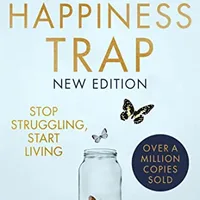
The Happiness Trap (2nd Edition) — Russ Harris
Right after the fawn response is defined as an anxiety-driven reflex — Russ Harris's ACT-based work names the mechanism behind automatic, fear-led compliance and how to stop struggling against it.
As an Amazon Associate, we earn from qualifying purchases — at no extra cost to you.
The fawn response isn't people-pleasing in the ordinary social sense — the mild, universal desire to be liked that psychologists Roy Baumeister and Mark Leary mapped in their research on belonging. That's a preference. Fawning is a reflex. It activates the same physiological cascade as the freeze response: suppressed heart-rate variability, muted prefrontal access, a narrowed behavioral repertoire. You're not choosing to be agreeable. Your nervous system has already made the decision before your conscious mind has weighed in.

What's Actually Happening in Your Nervous System
Stephen Porges has spent more than four decades — first at Michigan State University, the University of Maryland, and the University of Illinois at Chicago, and more recently at the University of North Carolina and the Kinsey Institute at Indiana University — mapping the layered architecture of the mammalian autonomic nervous system. His framework, the Polyvagal Theory, identified a structure called the ventral vagal complex — the most evolutionarily recent branch of the vagus nerve, unique to mammals. This is the neural hardware that powers what Porges calls the "social engagement system": your ability to read facial expressions, soften your vocal tone, use warmth and appeasement to co-regulate a threatening interaction back toward safety.
In a healthy environment, this system is used for genuine connection. You feel safe, you open up, you move toward people.
In a dangerous one, it's recruited for something else entirely.
When a child repeatedly faces a caregiver who is frightening rather than protective, the social engagement system gets chronically activated — not for love, but for threat management. The child's warmth, attentiveness, and agreeableness stop being authentic self-expression and start being a survival strategy. And here's the part that's hardest to accept: that strategy doesn't switch off when the danger is gone.
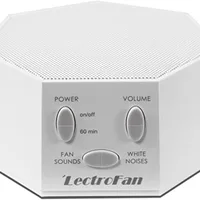
LectroFan Classic White Noise Machine (Global Power Edition)
In the nervous-system section — a downregulation aid for an autonomic system stuck in low-grade threat mode; helps the ventral vagal system reach genuine rest.
As an Amazon Associate, we earn from qualifying purchases — at no extra cost to you.
It persists. It generalizes. A boss's raised eyebrow, a partner's momentary withdrawal, a friend's casual irritation — any of these can trigger the same neurological sequence the childhood nervous system learned would keep things safe. The fawn response fires automatically, before you've had a chance to evaluate whether the threat is real.
You're not being kind in those moments. You're managing a threat that, in most cases, no longer exists.
How to Tell the Difference From the Inside
This is the distinction most people miss — and it matters enormously.
Genuine generosity has a specific quality. It's chosen. It comes from a felt sense of having something to give. After it, you feel good. Often energized. The giving doesn't hollow you out.
Fawning feels different from the inside. The agreement comes before the thought. There's an anxiety spike before you've said yes — a kind of pre-verbal urgency to smooth things over. The word "no" doesn't even surface as a possibility in the moment; it's as if the option isn't available on the menu. And afterward there's a residue: a low-grade resentment, a tired frustration, a vague sense of having betrayed yourself without being able to identify exactly when.
A few other markers that tend to cluster together in people whose default is the fawn response:
- The question "what do you want?" produces genuine blankness — not modesty, actual blankness — when another person is present
- Any sign of someone else's displeasure produces physical anxiety, not just mild discomfort
- Apologizing is nearly continuous, including for things that aren't your fault
- There's a felt responsibility for managing other people's emotional states
- Most relationships and decisions are organized around anticipating others' needs before your own are even conscious

Clever Fox Habit Calendar Circle (24-Month)
In the 'markers that cluster together' section — a low-friction way to track triggers and body signals that precede automatic compliance, building the awareness the article prescribes.
As an Amazon Associate, we earn from qualifying purchases — at no extra cost to you.
Gabor Maté, the physician whose clinical work examined the link between chronic self-suppression and physical illness, described the developmental tradeoff at the root of all this with unusual clarity. In environments where genuine, unconditional love wasn't available, children make a survival choice — not consciously, but biologically. They sacrifice authenticity for attachment. Because in a threatening environment, being loved for who you actually are is less available than being tolerated for what you can provide.
The adult fawn pattern is the adult version of that childhood calculation, running on autopilot.
What makes it particularly disorienting to recognize is that the fawn response often produces people who are genuinely excellent to be around. Perceptive, attentive, emotionally intelligent. The skills built by a childhood spent reading other people's emotional weather are real skills. The problem isn't the skill set. It's what activates it. Not "I want to connect with this person" — but "I sense potential disapproval and need to neutralize it before it arrives."
The Price Your Body Pays for Being "The Easy One"
Here's the counter-intuitive part: fawning isn't physiologically neutral. It looks like kindness from the outside. But internally, it's a sustained, low-grade activation of the threat-response system — and that carries a metabolic cost the body pays continuously.
Maintaining chronic self-suppression means the autonomic nervous system never quite gets to rest. Every suppressed reaction, every swallowed preference, every anticipatory compliance requires the threat-response pathway to stay partially engaged. Maté documented specific clinical patterns linking this kind of chronic self-erasure to physical health outcomes — autoimmune conditions, chronic pain, illness patterns where the body begins expressing what the person can't.
This isn't metaphor. Chronic stress physiology research is consistent: sustaining an ongoing threat-response state draws resources away from immune function, hormonal regulation, and cellular repair. The person who has spent a decade being "easy" isn't just emotionally exhausted. They're paying a biological bill they've never connected back to its source.

Philips SmartSleep Wake-Up Light (HF3520)
In 'The Price Your Body Pays' section — a high-value pick supporting circadian rest and gentle mornings for a body paying a biological bill for chronic threat-response activation.
As an Amazon Associate, we earn from qualifying purchases — at no extra cost to you.
what your body does when you suppress emotions
How to Start Telling the Difference — Today
The first step isn't changing the behavior. Your nervous system won't accept a direct override; it'll just reroute. The first step is building enough awareness to notice when fawning is happening.
Most people who fawn do it so automatically that the fawn has already completed before they've registered it consciously. The practice is noticing the moment just before — the small internal signal that something is being suppressed. For a lot of people, it has a body location: a tightening in the chest, a drop in the stomach, a sudden vagueness where a clear thought was forming.
Start here: just observe. You don't have to change the outcome yet. The goal at this stage is noticing the pattern with curiosity rather than shame — because the fawn response isn't a character flaw. It was, at one point, genuinely adaptive.
Then try distinguishing anxiety-driven compliance from genuinely chosen generosity. Before you agree to something, introduce enough of a pause to ask: Is this something I'm choosing, or something my nervous system has already decided for me? You don't have to act on the answer right away. You just need to start being able to tell the difference. That ability, practiced slowly, is the beginning of the actual work.
Five Starting Points — Concrete, Not Vague
1. Map the trigger. The next time you feel that automatic, pre-verbal agreement, notice what preceded it. Was there a tone shift? An expression change? A perceived withdrawal? Build a picture of what your specific nervous system reads as threat. It's usually more specific than "someone's displeasure."
2. Use the pause phrase. "Let me think about that" — that's it. Three seconds between stimulus and response. You don't have to say no. You just need a gap. The fawn response operates in the gap between stimulus and response; a pause begins to create that gap where there wasn't one.
3. State one small, low-stakes preference daily. Where do you want to eat? Which plan works better for your schedule? What film sounds good to you? These micro-decisions aren't trivial. They build the neural evidence your nervous system needs that stating a preference is safe — and that someone else's mild disappointment won't destroy the relationship or your safety.
4. Read the original source. Not all self-help writing about people-pleasing addresses the fawn response at the level of its mechanism. Pete Walker's clinical writing on complex PTSD goes to the root — the nervous-system architecture, the childhood origins, the specific physiological pathway. It's not a breezy read. But it's an honest one, written by someone who lived this pattern and then mapped it with rigorous clinical care.

Kindle Paperwhite (2024, 16GB)
At 'Read the original source' — the ideal device for reading Pete Walker's complex-PTSD writing and other trauma-informed texts the article points toward.
As an Amazon Associate, we earn from qualifying purchases — at no extra cost to you.
5. Consider somatic support. The fawn response is stored in the body, not just the intellect. You can understand every word of this article and still find your mouth saying "of course, whatever works for you" before your brain catches up. Practices that work at the physiological level — somatic therapy, breath work, structured tracking of body sensations before and after moments of choosing your own preference — begin to retrain the physical substrate the pattern runs on. That's where the durable change happens.
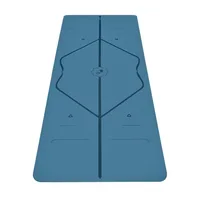
Liforme Original Yoga Mat (Blue, 4.2mm)
At 'Consider somatic support' — the fawn response is stored in the body; a mat grounds breath work and somatic practice that retrains the physical substrate the pattern runs on.
As an Amazon Associate, we earn from qualifying purchases — at no extra cost to you.
attachment styles: the hidden pattern in every relationship
You Were Never Just "The Easy One"
The thing Walker's framework clarifies — and that most frameworks miss — is this: the kindest thing you've been doing for yourself all these years wasn't kindness. It was survival. And survival strategies don't deserve shame. They were appropriate to the environment that built them. They kept you safe.
But you're not in that environment anymore.

Designing your evolution doesn't mean becoming someone who stops caring about people. It means learning to distinguish genuine generosity — chosen, resourced, freely given — from the automatic appeasement of an old threat response still running in a body that is, in most present-tense moments, actually safe. The reflex kept you safe once. Now it's keeping you small.
That distinction, practiced slowly and without hurrying, is not a small thing. It's the difference between a life organized around managing other people's reactions and one organized around what you actually think, want, and choose.
how to stop people-pleasing and rebuild self-trust
What's one situation this week where you'll practice the pause — and notice, before you agree, whether it's you choosing or your nervous system deciding for you?
Was this helpful?