Mindset· 9 min read
Why You Choke Under Pressure — And How to Stop It
Why you perform worse when it matters — and what performance psychology reveals about stopping it. Tim Gallwey's Inner Game science explained.
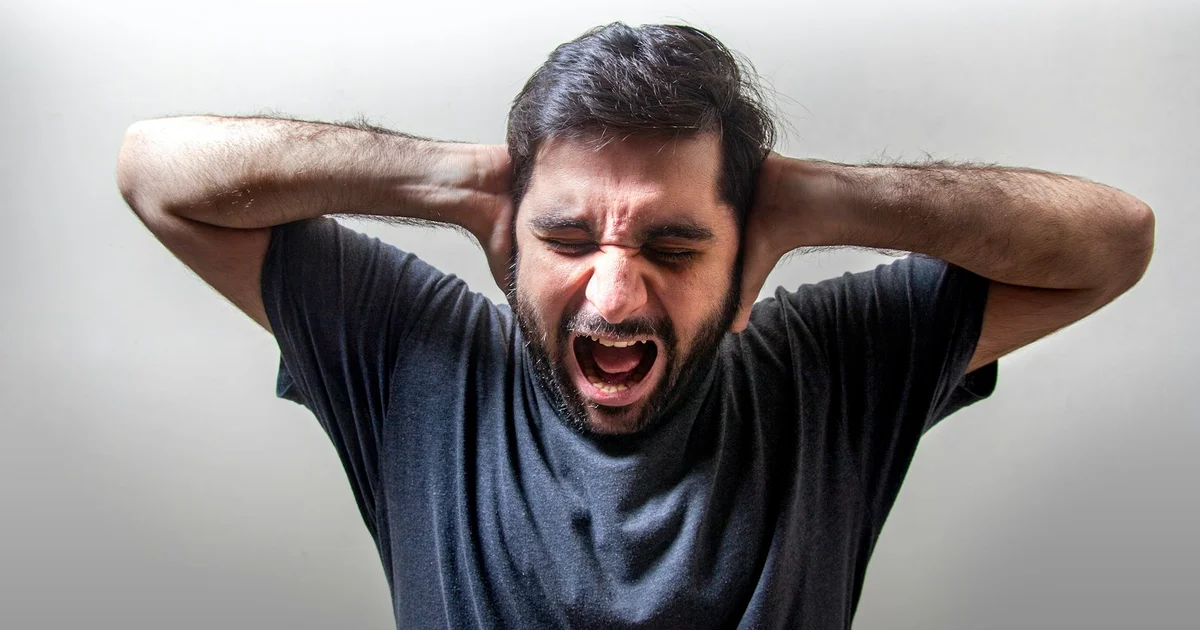
Why You Choke Under Pressure — And How to Stop It
The night before my biggest presentation, I rehearsed for three hours straight. Every slide was memorized. Every transition was timed. By midnight, it felt flawless — or close enough to feel confident.
Then the morning came. I walked into that room, and something shifted. My words came out technically correct but flat. A slight lag between thought and speech. A version of me that was measurably worse than the one pacing my apartment the night before. The person I was presenting to could feel it. I could feel it. And I couldn't explain it.
I've since learned there's a precise scientific name for what happened. More importantly — what performance psychology research actually shows about why we choke under pressure is not what most people assume. It's not nerves. It's not lack of preparation. It's a specific cognitive mechanism that you can understand, train against, and largely prevent.
But only if you know who the real opponent is.
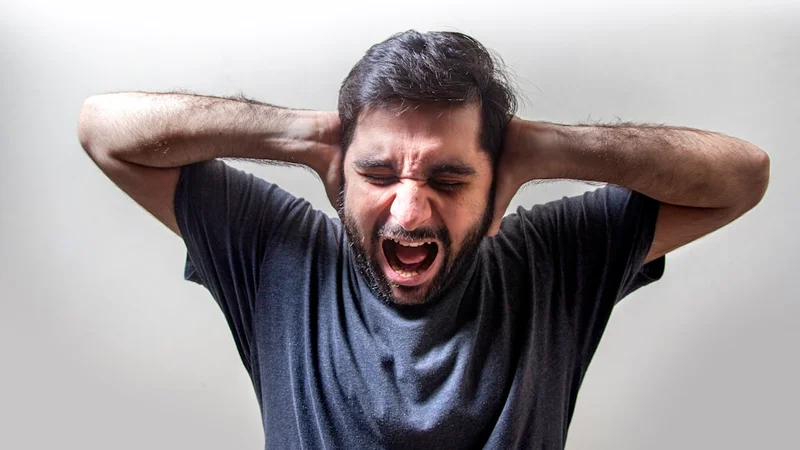
The Opponent Nobody Told You About
In 1974, a Harvard-educated tennis teaching pro named Tim Gallwey published a book that contained what might be the most practically useful single sentence ever written about human performance.
The sentence was this: Performance = Potential minus Interference.
Gallwey had been watching something strange on the court for years. Students who rallied beautifully in casual practice would stiffen, hesitate, and make unforced errors the moment anything was at stake. This wasn't a skill problem — the skill was demonstrably there. Something else was happening in the spaces between shots.
He called it a battle between two selves. Self 2 is the body — the accumulated training, the procedural intelligence that can execute a forehand without conscious direction. Self 1 is the internal commentator: the voice that evaluates, corrects, predicts, and judges in real time during the very moments that require undivided engagement.
Self 1, Gallwey argued, is the real opponent. Not your competitor. Not the audience. Not the stakes themselves.
The interference Self 1 generates — the continuous running commentary on how you're doing, the comparison between current execution and desired outcome, the evaluation of your performance against imagined external judgment — consumes exactly the attentional resources that skilled performance requires. And it gets loudest at precisely the moment you need it quietest: when the pressure arrives.
This isn't a personality flaw. It's the structure of human consciousness operating in an environment it wasn't built for. The judging mind evolved to protect you. Under genuine physical threat, self-monitoring kept you from stepping off cliffs. Under high-stakes performance situations, that same protective impulse fires — and because there's no cliff, it consumes resources that should be directed at the task itself.

Sony WH-1000XM5 Noise Cancelling Headphones
Silencing 'Self 1' — the internal commentator — is easier when you silence the room first. A physical noise barrier helps you drop into the undivided engagement the article describes.
As an Amazon Associate, we earn from qualifying purchases — at no extra cost to you.
What's Actually Happening in Your Brain
Sian Beilock, a cognitive scientist at the University of Chicago who spent years studying the neurological mechanics of performance failure, documented the precise mechanism behind Gallwey's observation. Her research produced a finding that's counterintuitive enough to be worth saying slowly.
For highly skilled performers, paying more conscious attention to your technique causes the failure.
She ran experiments with experienced golfers. They were asked to explicitly monitor their putting stroke — to think, in real time, about exactly what their hands were doing, the arc of the club, the angle of their stance. Performance degraded immediately. Not because the players had forgotten how to putt. Because the putting skill was already procedurally automated. Injecting conscious attention into an automated motor sequence is like manually overriding autopilot during a routine landing. The intervention itself is what creates the problem.
The high-stakes trigger is the critical piece here. When something matters more, your brain reasonably wants to supervise more carefully — it's doing its job, trying to help. For a skill you're still learning, that supervision genuinely helps. For a skill you've already internalized through hundreds of repetitions, that same supervision disrupts the automaticity that makes expert performance possible.
This is why performance can seem to get worse the harder you try. Caring more triggers monitoring. Monitoring disrupts automatic execution. And what you experience as anxiety or self-doubt is often, at the neural level, your conscious mind inserting itself into a process that ran better when it was left alone.
The Two Types of Performers — And Why Fear Is the Wrong Fuel
Gio Valiante is a performance psychologist who has worked with multiple PGA Tour champions and coaches high-stakes performers in finance, including his role as Head Performance Coach at Point72 Asset Management. He's spent decades in environments where performance variance has direct, measurable consequences — and he's identified the psychological difference between people who perform under pressure and people who don't.
His framework is disarmingly simple.
Some performers are driven by mastery-based motivation: they want to grow their competence. They measure themselves against personal standards and personal progress. Pressure, to them, is an engagement signal — a chance to see how well the preparation holds.
Others are driven by ego-based motivation: they want to show their competence, and — crucially — they want to avoid the exposure of failing to show it. They measure themselves against external evaluation. Pressure, to them, is a threat to their self-image, a referendum on their worth.
Under ordinary conditions, both types can perform well. Under pressure, the divergence becomes extreme. The mastery-based performer narrows their focus and executes. The ego-based performer runs two simultaneous mental processes: executing the task and monitoring how that execution is being perceived by others. That second process is the interference Gallwey identified fifty years ago. It depletes exactly the attentional resources the first process requires.
Here's the part that changes everything: this is not a fixed personality trait. It's a trainable orientation. But training it requires more than telling yourself to be less nervous — it requires deliberately restructuring where your attention goes in the moments that matter.
The Upside of Stress — Kelly McGonigal (paperback)
Directly reinforces the mastery-vs-ego framing: McGonigal's research reframes pressure as an engagement signal rather than a threat — the exact mindset shift Valiante describes.
As an Amazon Associate, we earn from qualifying purchases — at no extra cost to you.
Why "Trying Harder" Makes It Worse
Bob Rotella, a sport psychologist who has worked with dozens of major championship winners, frames this as the master paradox of skilled performance.
At a certain level of mastery, the best thing you can do in the execution moment is trust the preparation and get out of the way. The conscious mind is too slow, too analytical, and too preoccupied with self-referential commentary to assist execution directly — but it can direct attention. And that choice of attention target is, functionally, everything.
Rotella calls this process focus: directing attention toward the immediate, sensory, task-specific cues of what you're doing right now. The physical weight of what you're holding. The breath before you speak. The literal words of the sentence you're about to say — not the evaluation of whether you're speaking well. Not the question of whether the room is engaged. Just the next thing.
Process focus doesn't mean low effort. It means high engagement with the right object. The distracted performer and the process-focused performer may look identical from outside. Inside, they're running completely different mental software.
Here's the uncomfortable truth that keeps emerging from the research: you perform worse under pressure not because you care too much, but because you're pointing your attention at the wrong thing. Caring about the outcome is normal. But the performer who cares about the outcome by monitoring the outcome in real time is undermining the very performance they care about.
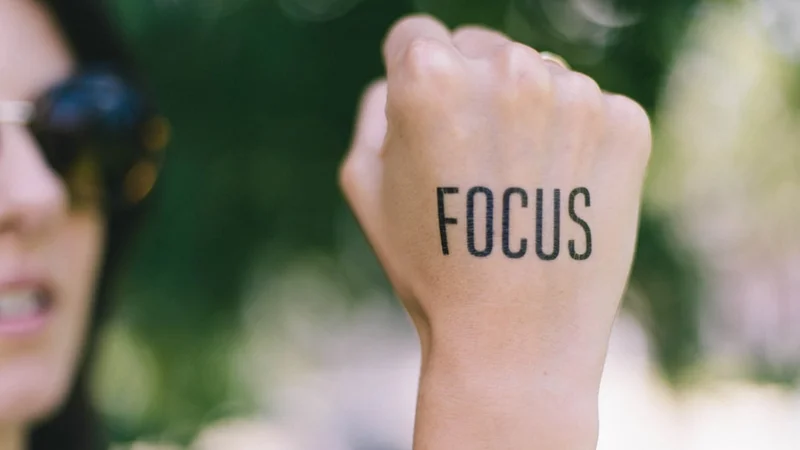
Training Your Mind Like You Train Your Body
Michael Gervais is a high-performance psychologist who works with NFL teams, Olympic athletes, and senior military leaders. His core argument — developed through hundreds of interviews on his Finding Mastery podcast and in his applied work with elite performers — is this: the attentional control that enables performance under pressure is not a talent. It's a trainable skill.
And you don't train it during performance. You train it in the thousands of ordinary moments between performances, where you practice directing attention to the present task rather than to the running commentary about the task. Washing dishes without mentally rehearsing tomorrow's conversation. Walking somewhere without narrating the walk internally. Having a conversation where you're actually listening rather than preparing your next sentence.
These aren't metaphors for mindfulness. They're literal training reps for the attentional muscle that high-stakes performance requires — the same muscle that gets called into action when you need it most.
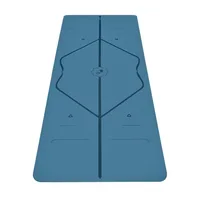
Liforme Original Yoga Mat (Blue, 4.2mm)
A dedicated surface for the daily attention-training reps Gervais prescribes — practicing present-focus off the field so it's available under pressure.
As an Amazon Associate, we earn from qualifying purchases — at no extra cost to you.
Gervais also makes the case for a specific pre-performance routine as the critical transition mechanism: a consistent sequence of actions that signals to the nervous system that it's time to narrow attention to the task ahead. The content matters less than the consistency. Three slow deliberate breaths. A specific internal phrase that directs focus. A physical anchor — a posture, a gesture — that marks the beginning. Use it before every significant performance: every practice run, every presentation, every high-stakes conversation. Over time, the nervous system learns to associate that sequence with readiness rather than threat.
A pilot study with elite soccer and track athletes found that heart rate variability (HRV) biofeedback training produced measurably calmer physiological baselines before competition — consistent evidence that the preparation window, not the performance moment itself, is where this kind of regulation happens. You can't calm a nervous system on the day by wanting to. You can build a calmer system in advance.
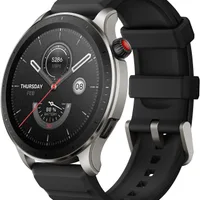
Amazfit GTR 4 Smartwatch (46mm, HRV & Stress Tracking)
Directly ties to the HRV-biofeedback study cited: on-wrist heart rate, stress and HRV tracking lets you see whether your pre-performance regulation is actually working.
As an Amazon Associate, we earn from qualifying purchases — at no extra cost to you.
How to Start Today
Here's what the science actually supports — not as philosophy, but as specific practices you can begin this week.
1. Audit your skill automation level. The intervention that helps an expert hurts a novice, and vice versa. If you're still building a skill, conscious attention helps you build it faster. If the skill is already internalized — you've done it hundreds of times and it runs without deliberate thought — then your job under pressure is to redirect attention away from monitoring the execution. Knowing which category you're in changes everything about how you prepare.
2. Build a pre-performance routine and use it every time — even in low-stakes practice. It needs three elements: a brief physical reset (slow breath, deliberate posture shift), a focus phrase (one internal sentence that points your attention to process rather than outcome), and a transitional action that marks the beginning. The specifics matter far less than the consistency. The routine earns its value by being the same every time.

Clever Fox Habit Calendar Circle (24-Month)
The article's step 2 — build a pre-performance routine and use it every time. A visible tracker turns 'consistency' from intention into a logged streak.
As an Amazon Associate, we earn from qualifying purchases — at no extra cost to you.
3. Track where your attention went — after the fact. You probably can't catch the monitoring impulse in real time yet. That's fine. Review afterward: "In that meeting, in that pitch, in that conversation — when did I drift from doing to evaluating how I was doing?" The pattern becomes visible first. Once you can see it, you can start to catch it earlier.
4. Do the daily attention training. Five minutes in the morning of directing focused attention to one sensory experience — your coffee, your breathing, the specific texture of the work you're picking up — without narrating it, without drifting into evaluation. This is not passive meditation. It's active attention practice. A consistent daily timer helps more than you'd expect.
5. Reframe what choking actually means. A choke is diagnostic, not damning. It tells you two things: the skill is sufficiently automated that monitoring disrupts it (which is a sign of genuine progress), and your attentional training hasn't caught up yet (which is fixable). The choke is not evidence you're not good enough. It's data about where the gap is. Use it accordingly.

The Real Inner Game
Tim Gallwey's equation — Performance = Potential minus Interference — is fifty years old now. The neuroscience has since confirmed it, refined it, and made it more precise than he could have known in 1974.
You perform worse when it matters not because you care too much but because caring triggers monitoring, and monitoring disrupts the automatic execution that genuine skill requires. The gap between what you're capable of in practice and what you deliver under pressure is not a talent gap. It's an attention gap. And attention, unlike talent, is directly trainable.
Closing that gap doesn't happen in the high-stakes moments. It happens in how you show up to the ordinary moments leading up to them — in whether you practice directing attention intentionally or let it drift by default; in whether you build consistent pre-performance routines or walk into critical situations cold; in whether you treat a choke as a character verdict or as calibration data.
"Design Your Evolution" isn't just a tagline. In the context of performance under pressure, it means something specific: treating the mental dimension of performance as something you can deliberately engineer, practice, and improve — rather than something that either shows up for you on the day or doesn't.
What's one high-stakes situation coming up in your life where you want to try the process-focus principle? Drop it in the comments — I'd genuinely like to know what you're preparing for.
Was this helpful?