Mindset· 9 min read
Adults Need to Play: The Science You've Been Ignoring
Play isn't optional — it's a biological drive. Stuart Brown's 6,000-case study links play deprivation to violence, depression, and lost creativity.
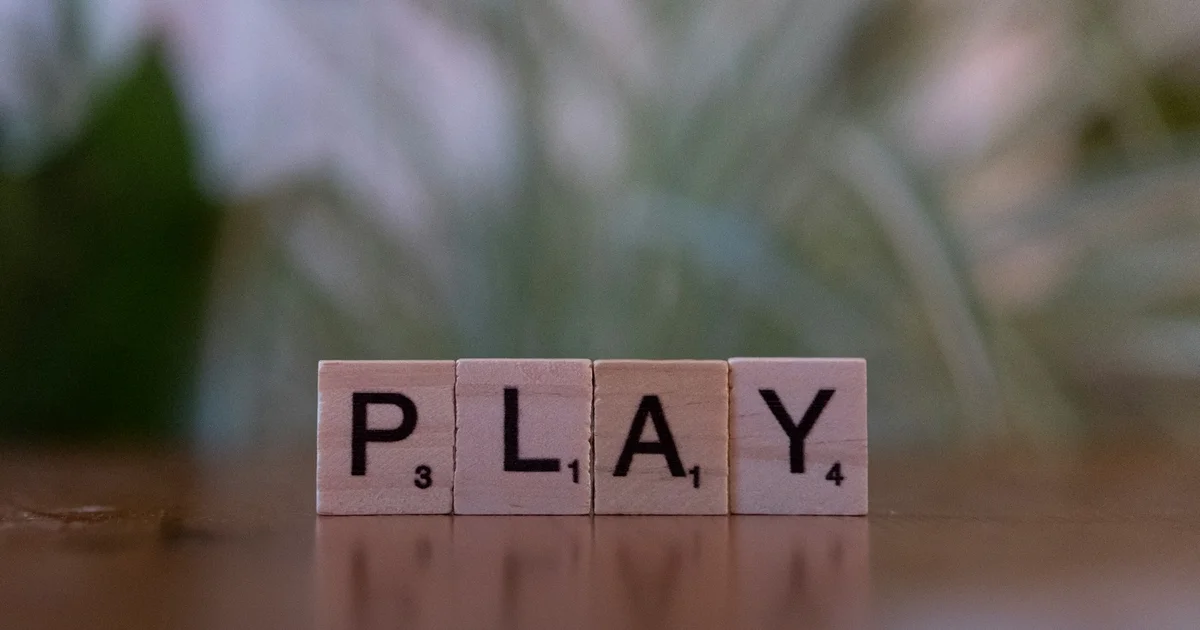
Adults Need to Play: The Science You've Been Ignoring
There's a conversation most people have with themselves somewhere around 28 or 29. You're on a Saturday afternoon — genuinely free, not tired-free, actually-free. No meetings, no obligations. And the experience is... uncomfortable.
You scan your options. You think about things you should do (laundry, groceries, that email from three weeks ago). You think about things you've been promising yourself for years (learn guitar, go hiking, finish that book). Then you open your phone because choosing between any of those feels weirdly like work.
Here's what's actually happening: you've forgotten how to play. And the part that should concern you — according to roughly 30 years of neuroscience and clinical research — is that forgetting how to play isn't a minor inconvenience. It's a measurable biological deficit with consequences for your creativity, your stress resilience, your relationships, and the baseline quality of your inner life.

The science is surprisingly clear on this. Most people just haven't heard it.
Play Is Not What You Think It Is
Before we go further, a definition — because most adults, when they decide to "play more," actually schedule more productive leisure. They train for a marathon. They start a side hustle. They take a masterclass in something they've been meaning to learn. These are fine activities. But Stuart Brown, a psychiatrist and clinical researcher who founded the National Institute for Play, is very specific about what actually qualifies.
What is play? Play is any activity that is intrinsically motivated, absorbing enough to distort your sense of time, improvisational in nature, and pleasurable in itself — not as a means to an outcome. The clearest marker: you want to continue, not to finish.
Brown's framework identifies five conditions that must be met simultaneously:
- Intrinsically motivated — you're doing it because you want to, not because it leads anywhere
- Time-distorting — you lose track of the hour
- Improvisational — you're responding to the moment rather than executing a predetermined plan
- Pleasurable in itself, not as a reward for something else
- Self-continuing — it makes you want to keep going, not want to finish
Notice what doesn't qualify: training for a race you've committed to, journaling for self-improvement, meditating with a personal development goal attached. Those aren't play — they're productive activities dressed in casual clothes. The brain knows the difference.
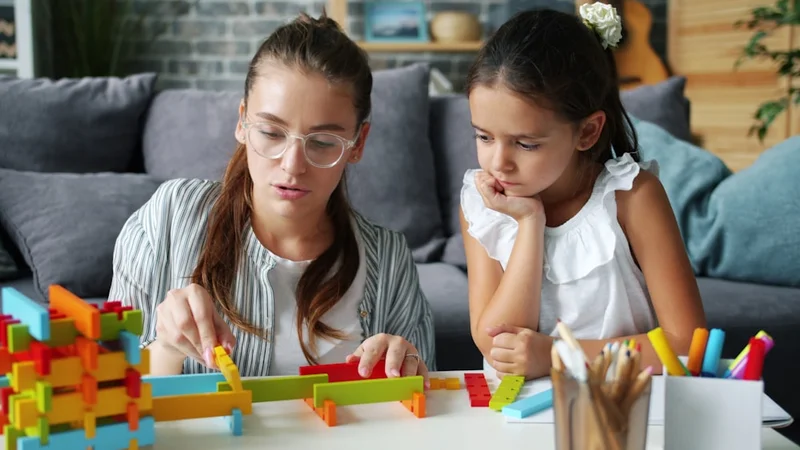
Real play is building something with LEGO because you feel like it. It's shooting hoops without keeping score. It's learning three chords on a guitar you bought six years ago with no intention of performing for anyone.
Flow: The Psychology of Optimal Experience — Mihaly Csikszentmihalyi
Mihaly Csikszentmihalyi spent years studying what makes people feel most alive — intrinsic motivation, time distortion, the desire to continue rather than finish. *Flow* is the science behind the exact mechanism this…
As an Amazon Associate, we earn from qualifying purchases — at no extra cost to you.
Brown's book on this research — Play: How It Shapes the Brain, Opens the Imagination, and Invigorates the Soul — is one of those rare works that earns both the academic and popular labels. If you want the science behind why play shapes the adult brain (not just children's), it's the cleanest place to start.
What 6,000 Life Histories Actually Showed
Stuart Brown didn't arrive at play research through recreational curiosity. He arrived through violence.
In 1966, Brown was appointed to the Tower Commission — a team tasked with investigating the psychology of Charles Whitman, the Texas Tower Sniper, who killed 16 people from atop the University of Texas clock tower before being shot by police. Examining Whitman's life history, Brown found what he hadn't expected: a pattern of severe play deprivation in childhood. That finding led him to conduct a follow-up study of 26 convicted murderers at Huntsville Prison in Texas, where he found the same pattern across all of them: environments where rough-and-tumble play, imaginative play, and unstructured social activity were absent, punished, or genuinely unsafe.
That finding launched decades of further investigation. Brown has since analyzed more than 6,000 life histories across populations as varied as Nobel laureates, elite athletes, adults in therapy, and people who committed violent crimes. The finding that runs through all of them: the quality and richness of play across a person's entire life is one of the strongest predictors of their creativity, relational effectiveness, and overall life satisfaction.
What's striking is that the play-creativity link doesn't diminish in adulthood. It's not that play matters when you're young and then the benefits coast forward. The adults who remained genuinely playful — who maintained unscripted, intrinsically-motivated activities with no productivity justification — showed consistently higher creative output, stronger social bonds, and better psychological resilience under pressure.
The adults who'd abandoned play showed the opposite pattern. Not dramatically, not all at once. It happened gradually, the way most important things erode.
The Brain System You Didn't Know You Were Starving
Here's where it gets genuinely surprising.
Jaak Panksepp, a neuroscientist at Washington State University, spent his career mapping what he called the primary emotional systems in the mammalian brain — the seven neurological circuits evolution hard-wired into every mammal. He documented these in his landmark 1998 work, Affective Neuroscience: The Foundations of Human and Animal Emotions.
The seven systems: SEEKING, RAGE, FEAR, LUST, CARE, PANIC/GRIEF, and PLAY.
Play. In capital letters. A dedicated biological system involving subcortical networks including the periaqueductal gray, endocannabinoids and opioids, and phylogenetically ancient. Not a behavioral category, not a cultural preference — a hard-wired neurological circuit that every mammal carries.
Panksepp demonstrated what happens when you deprive this system by studying juvenile rats separated from play opportunities. They didn't just become bored. They became anxious, hyperreactive, socially incompetent. When eventually given play access again, they showed dramatically elevated play-seeking behavior — trying to catch up on what they'd missed. The PLAY system had been building pressure, and when the valve opened, it flooded.
The adult mammalian brain retains this system entirely. What changes isn't the circuitry. It's the social permission and environmental structure that used to give it regular expression.
You're not too mature for play. You're living in a context that forgot to make room for it.
For the neuroscience of how motivation actually works at the subcortical level — including why the SEEK and PLAY systems interact — this deep-dive into dopamine research explains what the science actually says.
Why Shame Is the Real Mechanism
The science of why adults abandon play is less about neurology and more about a specific emotional mechanism: shame.
Brené Brown's twelve years of vulnerability and shame research at the University of Houston produced a finding that keeps showing up in her data: the happiest and most psychologically resilient adults consistently shared one unexpected quality — they took play seriously. They hadn't let the cultural message that play is "for children" fully overwrite the biological drive.
The message most adults have received — and likely internalized — goes roughly like this: serious people don't do things that don't produce results. Rest has to be earned. Fun is a reward for completed obligations. An adult who spends a Saturday afternoon building with blocks or splashing in the ocean is being, at minimum, indulgent.
That's not a fringe belief. It's practically the operating system of modern productivity culture.
And Brown's research identifies it as what it actually is: shame about play. This is the mechanism by which adults self-police themselves out of a basic biological need. You don't just stop playing because you get busy. You stop playing because you've come to believe that playing reveals something embarrassing — that it's not what serious people do.
Peter Gray, a developmental psychologist at Boston College, documented the population-level consequences of this in Free to Learn (2013). Over the past five decades, unstructured, self-directed play in children's lives has dropped dramatically. That decline tracks closely with rising rates of anxiety, depression, and narcissism in adolescents and young adults — a correlation consistent with Panksepp's deprivation research across species.
When you systematically deprive a mammal of PLAY system activation, the consequences show up in stress reactivity, social functioning, and the capacity for creative problem-solving. In children. In adults. The biology doesn't care which.
The Creative Argument (For Anyone Who Needs One)
If you're having trouble accepting play as something you need for its own sake — which would be entirely understandable given everything above about shame — here's the productivity case.
Play activates the default mode network (DMN) — the brain state associated with mind-wandering, spontaneous association, and creative synthesis. The task-positive network, which runs during focused, goal-directed work, actively suppresses the DMN. The two systems are mutually inhibitory.
This means the cognitive operations that generate novel ideas, unexpected connections, and genuine creative insight require the task-positive network to go offline. Not briefly — for sustained periods that allow the DMN to actually run its processes.
Play is one of the most effective DMN activators there is. Not deliberate daydreaming or "taking a walk to get ideas" (the goal is idea-generation, which keeps the task-positive network in charge). Actual absorption in an intrinsically motivated activity with no goal to achieve. The associative network does what it does best precisely when it's not being pointed at anything.
This is why historically creative people had hobbies that looked, from the outside, like complete wastes of time. Einstein played violin obsessively. Darwin took aimless walks and tended his greenhouse. Richard Feynman played bongos in bars. These weren't recovery strategies. They were unconscious DMN management.

Kindle Paperwhite 2024 (12th Gen, 16GB, Black)
Julia Cameron's *The Artist's Way*, Stuart Brown's *Play*, and a dozen related books on creative recovery are worth having. The Kindle removes the friction between you and that reading list — one device, weeks of batt…
As an Amazon Associate, we earn from qualifying purchases — at no extra cost to you.
Julia Cameron's The Artist's Way has been a creative recovery bible for decades precisely because its core practice — the weekly "artist's date," a solo excursion to do something purely enjoyable — is an intentional DMN activation. Cameron arrived at this through artistic practice, not neuroscience. But the mechanism is the same.
The morning window is when the default mode network has the most room before goal-directed work takes over. This guide on building a morning routine that actually sticks covers the structural conditions that protect that space.
How to Actually Bring Play Back (Without Making It Another Project)
Here's what doesn't work: blocking off "play time" in your calendar and then trying to figure out what to do with it.
That puts the task-positive network in charge of selecting the play activity, which produces the same problem as before — you'll pick something productive, evaluate whether you're doing it correctly, and check your phone after twenty minutes.
Brown suggests a more useful starting point: a play history. Think back to what you did as a child that produced those specific qualities — time distortion, intrinsic motivation, the desire to continue. Not what you were good at. Not what adults praised you for. What you did when no one was watching, because you couldn't help yourself.
For some people it's physical: climbing, dancing, rough play. For others it's creative: drawing, building, making music badly. For others it's social: elaborate games with rules that kept changing, storytelling, competitions. For others it's object-based: taking things apart, building things, collecting.
Those categories don't disappear from your personality. They get buried under accumulated adult obligation.
Liforme Original Yoga Mat (Blue, 4.2mm, Free Bag)
Physical play — climbing, dancing, floor-based movement — is one of the most direct re-entry points into genuine play for most adults. A quality mat removes the practical barrier so the only question left is whether y…
As an Amazon Associate, we earn from qualifying purchases — at no extra cost to you.
Tactile building tools — quality LEGO sets, model kits, woodworking supplies — reliably reactivate object-play for adults who had it as children, without requiring any justification. The specificity of the physical task gives the judging mind something to anchor to while the PLAY system runs underneath.
For social play, analog games — board games, card games, improv groups — provide enough structure to lower the awkwardness barrier without eliminating the genuine improvisation that makes social play different from managed socializing.
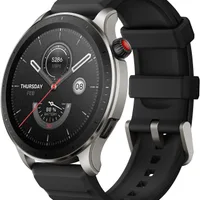
Amazfit GTR 4 Smart Watch (46mm, Black, 150+ Sports Modes, GPS)
Active play — sport, dancing, hiking, anything that moves you — is most sustainable when you can track effort and recovery without turning the activity itself into a performance project. The GTR 4 handles the data so…
As an Amazon Associate, we earn from qualifying purchases — at no extra cost to you.
Charlie Hoehn wrote one of the more unusual books in the self-improvement space: Play It Away — an account of recovering from severe anxiety by systematically reintroducing play into adult life. What makes it worth reading isn't the novelty of the concept; it's the specificity of the protocol. He's not telling you to "be more spontaneous." He's describing, week by week, what returning to play actually looks like when you've spent years without it.
For creative play without performance goals — which Brené Brown's research suggests is particularly important for shame-prone adults — medium-complexity board games (Wingspan, Azul, Ticket to Ride) thread the needle between structure and genuine enjoyment. You're playing toward something without it being work.

Clever Fox Habit Calendar Circle (2-Year Reflection Journal)
Stuart Brown's play history exercise — recalling what you did as a child purely for the love of it — is best worked through slowly, over a few weeks. A light reflection journal gives you space for that without turning…
As an Amazon Associate, we earn from qualifying purchases — at no extra cost to you.
The deeper structural issue isn't motivation. Adult life is organized around deliverables, and play doesn't produce any. Every other major recovery practice — exercise, sleep, nutrition — can be justified in terms of outputs. Play produces outputs too (creativity, resilience, better relationships), but the mechanism requires not thinking about those outputs while you're doing it. The moment play becomes a productivity strategy, it stops being play.
The scheduling intervention that actually works is simpler than most expect: don't schedule the activity. Schedule the time, then decide in the moment. "Saturday 2–4pm" in your calendar, with no plan attached. The only rule is that whatever you do meets Brown's five criteria — intrinsically motivated, improvised, time-distorting, pleasurable, ongoing.
The reason choosing a play activity feels like work is explained by the same cognitive mechanism that degrades decision quality under pressure. Here is why your worst decisions happen when stakes are highest.
This matters because "what should I play?" is a task-positive network problem. When you arrive at an unscheduled two-hour window with no plan, your nervous system tends to settle into what it actually wants rather than what it thinks it should want. That process takes longer than five minutes. Give it time.
What You've Actually Lost — And What You Can Get Back
Stuart Brown ends his research with a finding that rarely gets highlighted in how his work is discussed: the adults with the richest emotional and creative lives in his 6,000-case study are not the ones who worked hardest. They're the ones who played consistently across their entire lives.
Not the ones who worked hard and played hard — implying two separate and competing activities. The ones who treated play as inseparable from the rest of their functioning. Who didn't need to justify it, didn't need it to produce anything, and didn't feel embarrassed by it.
Panksepp's research gives you the neurological reason: you're a mammal with a PLAY system that runs regardless of your age, your job title, or your beliefs about what serious people do. That system doesn't care that you have a mortgage. It's been running since before mammals had mortgages. If you don't give it regular expression, it finds other outlets — or it goes quiet, and you find yourself on a Saturday afternoon scrolling because you've genuinely forgotten what you'd otherwise want to do.
The good news is the PLAY system recovers quickly when you give it room. Brown's research shows that adults who've been play-deprived for decades can reconnect with the specific play modalities that were most alive for them as children. The circuitry is intact. It just needs permission.
Design your evolution deliberately — or let obligation design it by default. Recovering play isn't about becoming someone new. It's about recovering a capacity that was always there.
So — when did you stop playing? And more to the point: what would you actually do this Saturday if productive wasn't an option?
Leave your answer in the comments. I'm genuinely curious what comes up for you when you sit with that question.
Was this helpful?