Mindset· 12 min read
The Dopamine Science of Why Your Motivation Crashes
Motivation isn't willpower — it's dopamine. Learn why your drive crashes and how reward prediction error science can help you rebuild it.
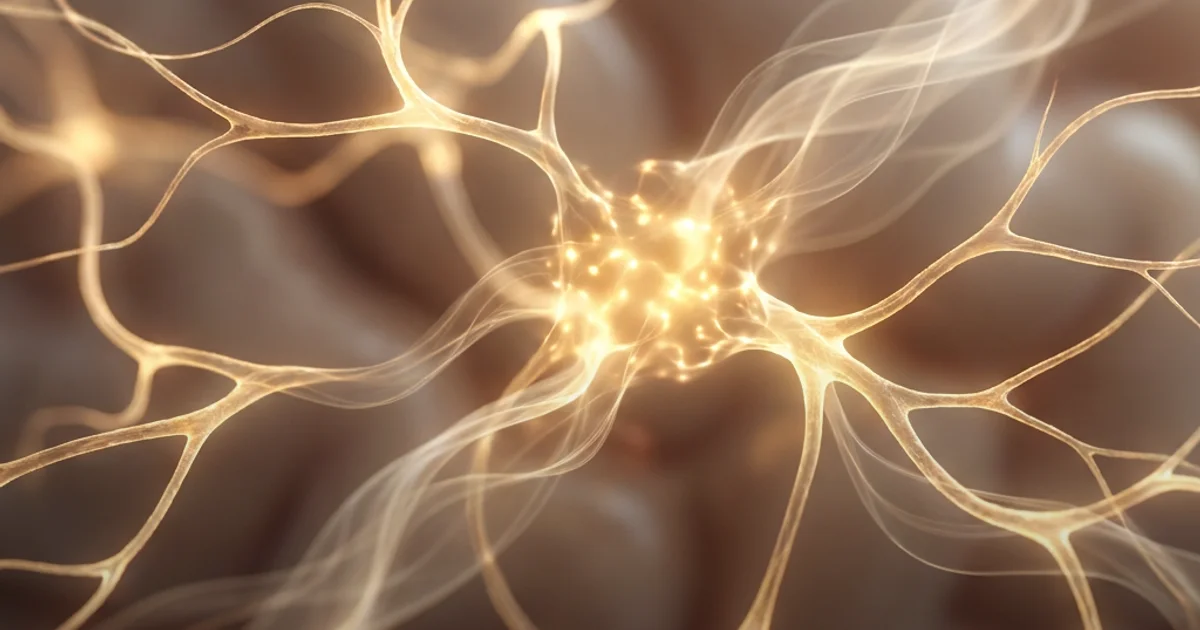
Your Motivation Keeps Crashing After Day 3. Here's the Dopamine Science Behind It.
Every January — and honestly, most Mondays — I used to run the same pattern. My motivation would spike: a new training routine, a writing project, a habit I was absolutely going to build this time. The first two or three days felt almost effortless. I was showing up. I was executing. Something felt genuinely different about this time.
By day five, the drive had evaporated. Not dimmed. Gone. And I'd be sitting there staring at the thing I was supposed to be excited about, running through the usual story: weak-willed, undisciplined, not the kind of person who follows through. I searched for better morning routines, stronger accountability systems, more compelling vision boards. It took me an embarrassingly long time to understand that I was solving the wrong problem.
The prevailing story about motivation is essentially a moral one. You either have the discipline or you don't. The motivated person wakes up at 5 AM because they want it badly enough. The unmotivated person snoozes because they haven't committed fully yet. Motivation is framed as a virtue, which means its absence is framed as a character flaw.
That story isn't just incomplete. It's actively harmful, because it directs your efforts toward the one lever that can't fix the underlying problem.
The more accurate story was documented not in a self-help book but in a neuroscience lab at the University of Fribourg in Switzerland in the late 1980s and 1990s. A German neuroscientist named Wolfram Schultz was recording electrical signals from individual dopaminergic neurons in macaque monkeys while those monkeys received juice rewards associated with auditory cues. What he found overturned the prevailing model of dopamine entirely.
Dopamine — the neurotransmitter most associated with motivation, reward, and drive — doesn't respond to pleasure. It responds to the prediction of pleasure. More precisely, it responds to the gap between what your nervous system expected and what actually happened. The technical term is reward prediction error (RPE), and understanding it changes everything about how you think about your own drive.
When an unexpected reward arrives, dopamine neurons fire intensely. When an expected reward arrives exactly as predicted, they're largely silent. When an expected reward fails to arrive, dopamine activity drops below baseline. The system isn't tracking what feels good — it's tracking the surprise value of outcomes relative to predictions.
Which means motivation isn't something you have in a fixed quantity that willpower draws from until the tank runs dry. It's the continuous output of a prediction system, comparing what happened against what it expected and adjusting your drive accordingly. You can work with that system deliberately, or you can remain at its mercy without understanding why you keep losing steam at day four.
Here's what working with it actually looks like.
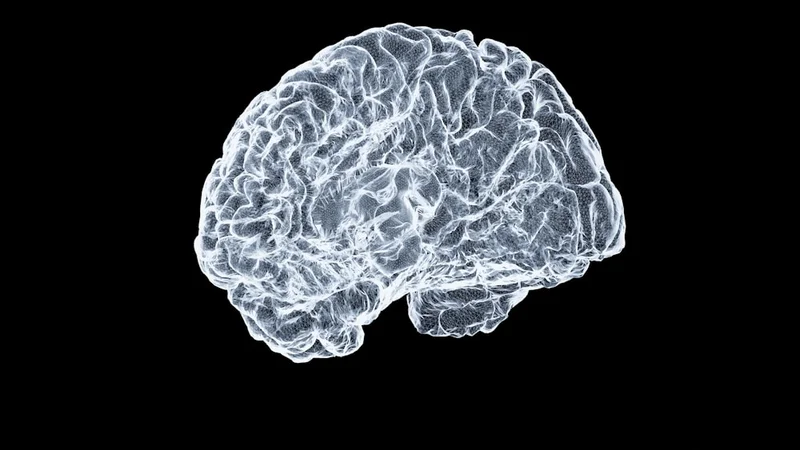
What Dopamine Is Actually Doing (It's Not About Pleasure)
The cultural version of dopamine — the "pleasure chemical," the feel-good neurotransmitter you get from food and sex and social approval — is accurate but shallow in a way that makes it nearly useless for practical application.
The more useful model comes from Kent Berridge at the University of Michigan, whose 30-year research program produced one of the most important distinctions in motivation science: the difference between wanting and liking.
Wanting is dopamine-driven: the motivational pull toward a goal, the urgency of pursuit, the feeling that something is worth reaching for. Liking is handled largely by opioid-mediated systems: the hedonic pleasure of actually receiving the reward. And crucially — these two systems can come completely apart.
That's why you can work toward a goal for months, finally achieve it, and feel something closer to mild relief than genuine satisfaction. The dopamine system that powered the pursuit doesn't celebrate the arrival. It's already scanning for the next prediction gap to close. The achievement was a "liking" event. Your dopamine system had already moved on.
This isn't a bug in your psychology. It's the architecture that keeps organisms searching, building, adapting. But if you don't understand it, you'll interpret every post-achievement flatness as evidence that you don't know what you really want — when the truth is that your wanting system is simply built for the journey, not the destination.
Daniel Lieberman and Michael Long wrote the clearest popular account of this dynamic. Their book The Molecule of More is worth reading if you want the full picture of how dopamine governs not just motivation but creativity, romantic love, addiction, and the relentless pull of "what's next."
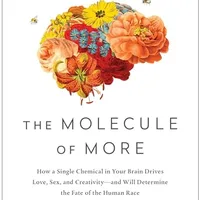
The Molecule of More — Daniel Z. Lieberman & Michael E. Long
The clearest popular account of how dopamine governs wanting vs liking — cited directly in this article.
As an Amazon Associate, we earn from qualifying purchases — at no extra cost to you.
The Two Dopamine States That Determine Whether You Have Any Drive at All
Andrew Huberman's neuroscience synthesis — drawing on Schultz, Berridge, and the broader dopaminergic literature — offers the most practically actionable framework I've encountered for understanding why motivation fluctuates so dramatically.
He distinguishes between two dopamine states that are always operating simultaneously.
Tonic dopamine is your baseline level of dopaminergic activity — think of it as the tide. When your tonic baseline is healthy, modestly rewarding tasks feel worth pursuing. Slightly challenging work feels energizing. Goals that are weeks away feel real enough to work toward. Your brain has the neurochemical substrate to treat low-to-moderate rewards as genuinely worth responding to.
When your tonic baseline is depleted — through sleep deprivation, chronic stress, inadequate nutrition, or chronic exposure to high-stimulation inputs — everything below a certain stimulation threshold loses its pull. The project that excited you last week feels gray. The habit you were building feels arbitrary. The people you love feel exhausting rather than energizing. This isn't a mood problem. It's a neurochemical state problem, and no amount of willpower can substitute for the substrate that willpower requires to function.
Phasic dopamine is the peaks — the surges during pursuit, progress, and attainment of specific rewarding outcomes. These peaks are what reinforce specific behaviors, what give you the "this is working" signal that keeps you returning to an activity.
The problem with a chronic high-stimulation environment — continuous social media, ultra-processed food, binge entertainment, the permanent scroll — is that it generates frequent, large phasic peaks that continuously pull the tonic baseline downward as the system works to restore homeostasis. You end up with a dopamine architecture that's excellent at generating hunger for the next high-stimulation hit, and genuinely terrible at sustaining the moderate-stimulation effort that anything meaningful requires.
If you've ever noticed that a morning of mindless scrolling leaves you less motivated for the rest of the day than a morning of actual work — even though the scrolling felt easier — you've experienced this dynamic firsthand.
The See-Saw That's Quietly Draining You
Anna Lembke is the medical director of addiction medicine at Stanford University School of Medicine, and Dopamine Nation contains the most useful metaphor I've found for explaining why chronic high-stimulation behavior systematically erodes the capacity for meaningful effort.
Imagine a see-saw, perfectly balanced. Every time you activate the dopamine system with a pleasure stimulus — a scroll, a snack, a show — the pleasure side dips down. Your nervous system, which is always seeking equilibrium, tilts the opposite side up in compensation. That compensatory tilt is experienced as restlessness, mild irritability, boredom — a system slightly below its neutral baseline.
That's normal after a single stimulus. The problem begins when you immediately seek the next stimulus to counter the compensatory tilt. The person who checks their phone 80 times a day isn't building up reserves of satisfaction — they're spending the majority of their waking hours in the compensatory trough, because each stimulus only briefly relieves the trough created by the previous one before creating a new trough of its own.
Over time, the baseline recalibrates. The system expects more stimulation just to feel neutral.
This has a direct and largely undiscussed consequence for motivation: the person who has calibrated their baseline to continuous high stimulation has a nervous system that literally requires more input to treat anything as worth pursuing. The moderate rewards of building a skill, maintaining a habit, doing the next small step on a long project — these fall below the threshold that the recalibrated system treats as worth responding to. Your motivation hasn't failed. Your sensitivity has been dialed down.

kSafe Time-Locking Container (Phone Lock Box)
Physically breaks the high-stimulation loop draining your tonic baseline. Lock your phone for a set period and protect the focus time the article prescribes.
As an Amazon Associate, we earn from qualifying purchases — at no extra cost to you.
Why your brain craves distraction and what to do about it
Why Dopamine Fasting Gets It Half Right
Around 2019, "dopamine fasting" became a Silicon Valley phenomenon. The concept — attributed to psychiatrist Cameron Sepah at UCSF — was a repackaging of a real neurobiological truth: if high-stimulation behaviors are downregulating your dopamine receptors and reducing sensitivity, removing those behaviors should allow receptor sensitivity to recover.
That part is correct. But the popular version of the practice — complete abstinence from all pleasurable activities, including conversation, music, and food beyond basics — significantly overstates the mechanism and misses the most practical levers.
What the research supports is something more specific: increasing the contrast between high-stimulation and low-stimulation periods, rather than eliminating all stimulation. Receptor sensitivity recovers through adequate rest relative to stimulation load. The nervous system needs the contrast, not the deprivation.
Three interventions have the strongest research support for restoring depleted dopamine sensitivity:
Aerobic exercise. Not because it provides another high, but because sustained moderate-intensity aerobic activity increases dopamine synthesis in the VTA and enhances dopamine receptor density in the striatum — the two mechanisms that most directly support baseline restoration. Thirty minutes of moderate running produces sustained dopamine and norepinephrine elevation for one to two hours post-exercise without the compensatory trough that behavioral or pharmacological spikes generate. John Ratey's work at Harvard Medical School documents this mechanism extensively in what he calls the exercise-brain connection — you're not just moving your body, you're literally rebuilding the substrate of drive.
Cold water exposure. Susanna Søberg's research — published in Cell Reports Medicine in 2021 — documents dopamine increases of approximately 250% following cold water exposure, sustained for several hours without the subsequent crash that typically follows stimulant-generated peaks. The mechanism involves cold-induced norepinephrine release that secondarily elevates dopamine through VTA projections. It's uncomfortable. It's also one of the most reliably documented non-pharmacological tools for dopamine baseline restoration available.
Amazfit GTR 4 Smartwatch
Tracks the 20–30 min aerobic sessions that rebuild your dopamine baseline. Turns the invisible neurochemical recovery the article describes into trackable daily data.
As an Amazon Associate, we earn from qualifying purchases — at no extra cost to you.
Structured rest. The research on what Huberman calls "non-sleep deep rest" — which includes yoga nidra, deliberate breathing protocols, and genuine decompression after intense focused work — shows that these practices restore baseline dopamine more efficiently than passive entertainment. Passive entertainment makes ongoing dopaminergic demands. True rest does not.

The Motivation That Doesn't Run Out
Here's the counterintuitive finding that explains why some people stay motivated for years while others can barely sustain it for a week: the most durable motivation is generated not by large rewards, but by the RPE mechanism itself — the surprise signal from genuine progress in genuinely uncertain territory.
Daniel Pink's synthesis in Drive — drawing on Deci and Ryan's Self-Determination Theory — identifies the three conditions that produce the most stable, burnout-resistant motivation: autonomy (the sense that you're acting from your own values, not external obligation), mastery (the ongoing experience of genuine competence development), and purpose (the sense that the work connects to something beyond yourself).
These don't just sound good. They map precisely onto what sustains the RPE mechanism over time.
Activities that generate durable motivation are variable enough to produce genuine prediction errors — you don't know exactly how the work will go each day. They're connected to real skill development, so the progress signal that the RPE system is most sensitive to appears regularly. And they're intrinsically directed: autonomous motivation recruits the wanting system more fully than controlled motivation, because when you're doing something because you chose it rather than because you had to, the dopamine encoding of that behavior is qualitatively different.
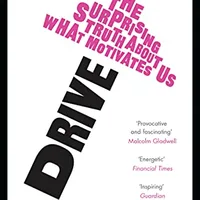
Drive — Daniel H. Pink
The autonomy/mastery/purpose framework the article builds its sustainable-motivation section on. The essential companion to the neuroscience covered here.
As an Amazon Associate, we earn from qualifying purchases — at no extra cost to you.
This is why the goal you chose for yourself is always more sustainable than the goal someone else set for you. It's not poetic — it's the difference in how the dopamine system encodes intrinsic versus extrinsic behavioral control.
Self-Determination Theory and how to find intrinsic motivation
How to Actually Rebuild Your Motivation Architecture
The goal isn't to eliminate stimulation from your life. It's to design a stimulation environment that keeps your tonic baseline intact while pointing your phasic peaks at the activities and pursuits that actually matter to you.
Here's what that looks like in practice — not as a rigid system, but as a set of deliberate choices that compound:
-
Map your daily stimulation load honestly. Before you try to change anything, list every recurring behavior in your day that activates the dopamine system: phone checks, social feeds, snacking patterns, entertainment habits. You're not judging any of these. You're mapping the architecture of your see-saw. If your day contains dozens of small stimulation events before your most important work even begins, your tonic baseline is almost certainly lower than it needs to be for that work to feel worth doing.
-
Protect the first 90 minutes after waking. The window immediately following sleep is when cortisol is naturally elevated and your nervous system is optimally primed for engagement with meaningful effort — if it hasn't already been loaded with high-stimulation input. No phone, no news, no social media during this window. The neurobiological case for this practice is stronger than almost any productivity technique you'll read about.
-
Move before your most important cognitive work. Even 20 to 30 minutes of moderate aerobic exercise — a brisk walk, a slow run, a cycling session — generates the sustained neurotransmitter environment that enhances both motivation and cognitive performance for one to two hours post-exercise. You're priming your neurochemical substrate for the work that follows, not just warming up your body.
-
Track progress at a granularity fine enough to generate genuine prediction errors. The RPE mechanism responds to unexpected positive signals — small advances you didn't quite know were coming. If you track your progress daily at a level where improvement is actually visible, rather than monthly at a level where it's abstract, your dopamine system gets the genuine surprise signal that reinforces continued effort. A well-designed journal that captures daily wins, obstacles navigated, and forward momentum does more motivational work than most goal-setting frameworks.
-
Schedule genuine low-stimulation recovery periods. Deliberate contrast is the most evidence-supported approach to maintaining dopamine sensitivity over time. A walk without earphones. A meal without a screen. A rest period after intense focused work where you're genuinely resting — not switching to a different stimulation feed. Think of it not as restraint but as maintenance. The system needs the contrast to stay calibrated.
Liforme Original Yoga Mat
The physical anchor for structured low-stimulation recovery — yoga nidra, deliberate breathing, and NSDR practices the article recommends over passive entertainment.
As an Amazon Associate, we earn from qualifying purchases — at no extra cost to you.

How to design a distraction-free environment and enter deep work
Design the Architecture First
Wolfram Schultz's monkey neurons were recording something much older than any productivity system: your drive is built around prediction and surprise, not pleasure and willpower. It needs the gap between what was expected and what happened. It needs variability, genuine progress signals, sufficient contrast, and challenges calibrated close to the leading edge of your current capability.
The person telling you that your motivation problem is a character problem is offering you a story that keeps you blaming yourself while searching for the discipline you already have. The neurobiological story is more honest — and considerably more actionable: your motivation is the output of a system you can understand, and understanding it is the first step toward designing it.
The same dopamine architecture that collapses after day three on a random goal can sustain years of committed effort on something that genuinely engages your prediction machinery. The question isn't whether you have enough drive. It's whether the environment you've built is one your drive can actually thrive in.
That's the specific work of designing your evolution: not summoning more willpower from somewhere, but redesigning the neurochemical substrate in which everything else you're trying to build becomes possible.
So here's what I'd ask you to sit with: what activities in your life right now produce the variable, progress-signaling, autonomy-supporting engagement that the RPE mechanism is actually designed to sustain? And what's been quietly consuming the tonic baseline those activities require before you even get started?
Sources: Schultz W. "Predictive reward signal of dopamine neurons." Journal of Neurophysiology, 1998. Berridge KC & Robinson TE. "What is the role of dopamine in reward: hedonic impact, reward learning, or incentive salience?" Brain Research Reviews, 1998. Huberman A. "Controlling Your Dopamine For Motivation, Focus & Satisfaction." Huberman Lab Podcast, Episode 39, 2021. Lembke A. Dopamine Nation. Dutton, 2021. Søberg S et al. "Altered brown fat thermoregulation and enhanced cold-induced thermogenesis in young, healthy, winter-swimming men." Cell Reports Medicine, 2021. Pink D. Drive: The Surprising Truth About What Motivates Us. Riverhead Books, 2009.
Was this helpful?