Habits· 10 min read
How to Break a Bad Habit: It's Not About Willpower
Most habit-breaking attempts fail because they rely on willpower. Here's what neuroscience actually says about ending bad habits — and what to do instead.

How to Break a Bad Habit: It's Not About Willpower
For four years, I had the same conversation with myself every Sunday night.
Tomorrow is different. I've figured out the problem. This time I actually mean it.
By Wednesday, I was back to exactly where I started — the same automatic sequence I'd been running for years, triggered by the same cue, producing the same outcome, complete with the same guilt about it afterward. I wasn't undisciplined in every other area of my life. I trained consistently, showed up for work, kept commitments to other people. But this one loop just wouldn't break.
It wasn't until I stopped trying to stop the habit — and started understanding what a habit actually is, neurologically — that anything changed at all.
Here's what no willpower-based advice ever tells you: habits don't get deleted. They get replaced.
The Brain Science No Self-Help Article Mentions
Ann Graybiel at MIT's McGovern Institute for Brain Research has spent decades studying the basal ganglia — the region deep in the brain most responsible for habitual behavior. Her research established something both unsettling and, once you understand it, genuinely liberating: once a habit loop is encoded in the brain's procedural memory, the neural pathway remains available essentially permanently.
The person who hasn't smoked in 20 years still carries the smoking habit in their neural circuitry. What has changed is that a competing pathway — built through consistent repetition of a different behavior in response to the same cue — has grown stronger.
This isn't a technicality. It's the single most important fact about habit change, and it completely reframes what "breaking" a habit actually requires of you.

Charles Duhigg's synthesis in The Power of Habit
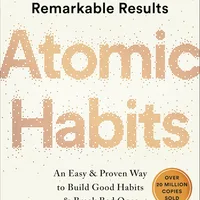
Atomic Habits — James Clear
The foundational playbook for the cue-routine-reward framework the article draws from — and the most practical system for making habit change mechanical rather than motivational.
As an Amazon Associate, we earn from qualifying purchases — at no extra cost to you.
made this research accessible to anyone not reading neuroscience journals. Every habit — without exception — operates as a three-part loop: cue → routine → reward. The cue is the environmental trigger or internal state that initiates the behavior. The routine is the automatic behavior itself. The reward is what the habit actually delivers — stress relief, stimulation, social comfort, a brief escape from discomfort.
You cannot break this loop by wanting to. You can only intervene in it by understanding each component and intentionally redesigning one or more of them.
Most habit-breaking strategies — the ones built entirely on discipline and decision-making — skip this diagnostic step entirely. They assume the problem is insufficient motivation. Motivation is not the problem. Understanding the loop is.
Why Willpower Is the Wrong Tool for This Job
Let's be direct about something: willpower is real. The capacity to override an automatic impulse through deliberate effort exists and matters. But it has two properties that make it poorly suited to habit change specifically.
First, it depletes. Resisting one temptation makes you less capable of resisting the next one, especially as the day progresses and cognitive resources thin out under the accumulated weight of decisions, stress, and fatigue. The habit you're trying to break becomes most compelling precisely when you have the least mental energy to fight it.
Second, it relies on you consciously noticing that you're in the habit loop — which the brain specifically does not flag for you. Habits evolved as a mechanism for automated behavior that doesn't require conscious attention. The brain doesn't send a warning notification when the cue fires. You're often several steps into the routine before awareness kicks in. At that point, the willpower required to stop mid-loop is far higher than willpower engaged before the loop even begins.
This is why most people fail at the same moment: the first stressful week. The habit cue fires. They notice too late, or they're too tired to fight it, and the loop completes. They interpret this as evidence of insufficient willpower. They redouble the willpower effort the next day — which also depletes and fails.
The cycle has nothing to do with character. It's mechanics.
James Clear's Atomic Habits

Kindle Paperwhite (2024, 12th Gen)
The same physical gesture as evening scrolling — different identity payoff. A reading device that routes the 9 PM instinct toward something worth it, without notifications or feeds.
As an Amazon Associate, we earn from qualifying purchases — at no extra cost to you.
provides the most immediately practical framework for working with these mechanics rather than against them. His Four Laws of Behavior Change — make the cue invisible, make the routine unattractive, make it difficult, make the reward unsatisfying — are not primarily about willpower. They're about system design. You're engineering the conditions under which automatic behavior occurs, not relying on moment-to-moment conscious decision-making to override it.
That distinction — system vs. willpower — is where most habit change either succeeds or collapses at the first sign of a difficult week.
The Replacement Strategy: What Actually Works
Here's the counter-intuitive finding documented in Wendy Wood's Good Habits, Bad Habits
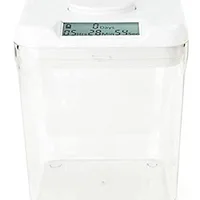
Kitchen Safe kSafe Time Locking Container
Environmental redesign in physical form: a time-locking container that makes the cue literally impossible to act on until the timer expires. The closest thing to Wendy Wood's research in a box.
As an Amazon Associate, we earn from qualifying purchases — at no extra cost to you.
: the most effective habit-change interventions are not the ones that make the bad habit feel worse. They're the ones that make a competing habit feel better in response to the same cue.
The person who can't stop scrolling their phone at 9 PM doesn't primarily need to feel worse about scrolling. They need a competing routine — reading, a specific TV show they've designated for this slot, a short walk — that delivers a satisfying response to the same cue (fatigue, the psychological signal that the day's demands are done) in the same context (couch, evening, restlessness).
The diagnostic process breaks down like this:
Step 1: Identify the actual cue. Keep a simple log for five days. Every time you engage in the habit, note the time, your emotional state, what you were doing just before, and where you were. Patterns emerge fast. The habit almost certainly isn't random — it fires in response to specific triggers your brain has learned to associate with the behavior.
Step 2: Identify the actual reward. This is the less obvious step. What does this habit actually give you? Not the stated purpose — the delivered psychological payoff. Stress habits deliver relief. Distraction habits deliver escape from discomfort. Social media habits deliver novelty and a low-effort sense of social connection. Understanding the actual reward tells you what the replacement routine needs to deliver.
Step 3: Design the replacement before you need it. Decide in advance: when [cue] happens, I will do [specific replacement]. Write it down. The specificity matters — "I'll do something healthier" doesn't work. "When I feel the 4 PM stress spike, I'll put on my coat and take a 10-minute walk outside" works.
The replacement doesn't need to deliver the reward as intensely as the old habit. It needs to deliver it recognizably — enough that the brain accepts it as an alternative response to the same cue.
morning routine habits
The Identity Layer That Makes It Last
Duhigg explains the mechanism. Clear designs the system. But neither fully accounts for why some people maintain habit replacements for years while others revert after the first difficult week.
Vanessa Patrick at the University of Houston ran a series of studies on what she called "empowered refusal" — specifically, the difference between saying "I can't do that" and "I don't do that." On the surface, these look the same. They're not.
"I can't" encodes external prohibition. Some authority — a diet, a doctor, a goal — is forbidding this behavior, and you're complying. The prohibition lives outside you, which means it always feels resistible. "I don't" encodes chosen identity. It says: this is not something a person like me does.
Participants who used "I don't" when declining tempting food choices maintained their intention significantly more consistently than those using "I can't" — not because of any difference in motivation, but because of the identity framing.
James Clear calls this identity-based habit change, and it's the long-term engine of everything else. The shift is subtle but specific: instead of trying to break the bad habit — a resistance frame that puts you in constant battle — you're becoming someone who doesn't do this thing. Every time you respond to the cue with the new routine instead of the old one, you cast a vote for that identity. The accumulation of those votes is how self-concept actually changes.
This isn't soft psychology. Goals get abandoned when progress is slow. Identities don't.
BJ Fogg's Tiny Habits gives you the minimum-effective-dose version of this: the smallest possible replacement routine that still represents movement in the identity direction, built up from there — no dramatic overhaul required on day one.
The Leverage Most People Ignore: Your Environment
Everything above — the diagnostic process, the replacement strategy, the identity shift — works. But it works in the presence of the cue. And the cue is usually in your environment, not in your head.
Wendy Wood's research on habit formation in context — compiled across decades at USC's Habit Lab — produced one of the most practically useful findings in the entire field: context change is the single most reliable predictor of successful habit cessation in real-world studies.
When people move cities, change jobs, or significantly restructure their daily environment, old habits become dramatically easier to break — not because they've worked on those habits directly, but because the environmental cues that triggered them have disappeared. The chain-smoker who moves from an office where everyone smokes to one where no one does experiences a natural disruption of the cue-routine cycle that months of willpower couldn't engineer.
You don't need to move cities. You need to redesign the immediate environment where the habit fires.
Remove the app from your home screen. Put the food you habitually reach for in a different room. Physically separate the device from the space where you're trying to focus. The Freedom app does this at the system level for digital habits — blocking access to specific platforms during designated periods so the cue literally cannot complete its cycle within your digital environment.

This isn't friction for friction's sake. Your habits run on low cognitive cost. Raise the cost of the cue — even slightly — and you interrupt the automatic sequence long enough for the conscious brain to step in. That's the window the replacement routine needs to operate in.
deep work focus productivity setup
How to Start Today
You don't need a complete system before you begin. You need one specific habit, one identified cue, and one chosen replacement. Here's the process compressed to its essentials:
-
Pick one habit only. Not three. One. Attempting multiple simultaneous habit changes dramatically reduces the success rate of each individual change. Pick the habit that, if replaced, would have the biggest downstream effect on your daily life.
-
Run the cue log for five days. Use a simple notebook or your phone's notes app. Every single instance: time, location, emotional state, immediately preceding event. Five days is enough to see the pattern clearly.
-
Write your implementation intention. "When [specific cue], I will do [specific replacement]." The specificity is what makes this work. Keep it on a card, your lock screen, or the first page of whatever you're tracking in.
-
Change one environmental trigger. Remove, relocate, or block one element of the environment that triggers the habit. Just one. Make the cue harder to fire.
-
Adopt the identity frame. Say it out loud: "I'm someone who [doesn't do the old habit]." It feels odd the first few times. Say it anyway. Every replacement behavior casts another vote for the person you're describing.
A dedicated habit journal

Clever Fox Habit Calendar Circle — 2-Year Tracker
The two-year habit calendar the article describes directly: a simple daily tracking grid that makes replacement progress visible without requiring a device in hand during vulnerable moments.
As an Amazon Associate, we earn from qualifying purchases — at no extra cost to you.
— the kind with a simple daily tracking grid — makes the replacement progress visible and provides the same streak reinforcement that apps offer, without requiring a device in your hand during the moments you're most vulnerable to the old cue.
compound effect of daily habits
The Long View
Here's what no one mentions when you start this process: the old neural pathway never fully disappears.
It stays. On a bad week — high stress, poor sleep, depleted resources — you may slip back into the old loop. That is not failure. It is not weakness. It is the predictable behavior of a brain under load, defaulting to its most well-worn pathways.
What changes isn't the old pathway. What changes is that you build a competing pathway that, through consistent repetition, becomes increasingly better resourced than the old one. The slip becomes an anomaly rather than the baseline. The baseline becomes the person you're designing yourself to be.
The decisions you make in the next 90 days will determine who you are by the end of the year — not the dramatic ones, but the small, repeated ones that nobody sees except you. The moment you respond to the familiar cue with the new routine instead of the old one. The moment you rearrange the kitchen so the cue doesn't fire at all. The moment you say "I don't" and mean it.
Atomic Habits, The Power of Habit, and Good Habits, Bad Habits together give you the complete scientific and practical architecture for this work.

The Five Minute Journal — Intelligent Change
Morning prompts and evening reflection: the daily identity-vote practice that pairs with the habit calendar to build the person you're becoming — one small decision at a time.
As an Amazon Associate, we earn from qualifying purchases — at no extra cost to you.
— for those dealing with anxiety-driven compulsive habits specifically, Judson Brewer's Unwinding Anxiety applies the cue-routine-reward model directly to the worry loops and stress habits that are hardest to interrupt through behavioral design alone.

The hardest part of any real change isn't the first decision. It's the day after the first slip — when you choose whether you're still the person who made that decision.
You're not trying to delete the old version of yourself. You're designing your evolution — one loop at a time.
What's the one habit you'd most want to replace right now? And have you figured out what cue is actually triggering it?
If you want a concrete tool for pre-deciding that cue-response pair instead of leaving it to willpower in the moment, the if-then habit fix is the single most research-backed technique for making it stick.
→ Why Willpower Isn't What Builds Habits
Related read: Name It to Tame It: The Affect Labeling Science
Was this helpful?