Mindset· 10 min read
Why You Still Take Things Personally — And How to Stop
You already know you shouldn't personalize everything. Here's why you still do — and the science of what actually rewires the pattern for good.

Why You Still Take Things Personally — And How to Stop
You've read about the personalization bias. You know about the spotlight effect. You've probably bookmarked at least one article explaining that when someone seems short with you, it's almost certainly about them, not you.
And yet. A friend cancels with a two-word text, and your brain is already auditing the past three weeks looking for what you did wrong. Your partner seems distracted over dinner, and somewhere between the first course and dessert you've quietly concluded they're pulling away. A colleague walks past without making eye contact, and you spend two hours replaying your last conversation to find the crime you committed.
Knowledge, it turns out, is not the same thing as rewiring.
You can know — genuinely, intellectually know — that you're personalizing and still find yourself mid-spiral twenty minutes later, unable to stop. That gap between understanding and actually changing is where most emotional resilience advice breaks down completely. You get the explanation. The pattern keeps running.
This is what closes the gap.
What Your Brain Does Before You Have Time to Think
Before we get to the solution, we need to look at the mechanism more precisely than most articles bother to.
When something ambiguous happens — a terse message, a cancelled plan, an unreturned look — your brain doesn't wait for you to analyze it. Within roughly 250 milliseconds, your amygdala has already tagged the event as socially relevant and started generating an emotional response. You're experiencing the reaction before your prefrontal cortex has even joined the meeting.
This is why the standard advice — "just remind yourself it's not about you" — fails in the moment. By the time you're consciously thinking about it, the interpretation has already been emotionally tagged and partially encoded. You're not catching it at the beginning of the process. You're arriving after the first verdict has been delivered.
There's a second mechanism compounding the problem: what psychologists call the egocentric bias. When interpreting ambiguous social signals, your brain reaches for the most available data set — and the most available data is always your own internal experience. If you're already feeling uncertain or self-critical when the ambiguous event lands, your interpretation gets shaped by that uncertainty and self-criticism. The same email reads completely differently in a confident week than in an anxious one.
David Burns mapped this in his landmark Feeling Good
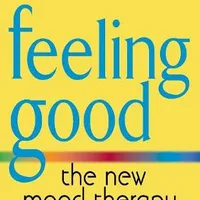
Feeling Good — David D. Burns
The foundational CBT manual that maps every cognitive distortion behind the personalization pattern — five million copies sold, the most-recommended self-help book in clinical psychology worldwide.
As an Amazon Associate, we earn from qualifying purchases — at no extra cost to you.
decades ago: the tendency to read your current emotional state back onto incoming information, then treat the interpretation as objective observation when it's anything but. The person who concludes "they must be annoyed with me" is often, without realizing it, expressing a feeling they were already carrying about themselves. The external event became the story's evidence; it was never the story's cause.
Why Knowing About the Bias Doesn't Stop the Bias
Here's what almost no one explains clearly enough: cognitive awareness and behavioral change operate through different brain systems.
When you read about the spotlight effect — the Cornell research from Thomas Gilovich showing that participants wearing embarrassing T-shirts estimated 50% of a room had noticed them, when the real number was closer to 25% — your prefrontal cortex files this as interesting and true. It updates your beliefs. That's genuinely useful.
But the pattern of taking things personally isn't stored primarily in your belief system. It's stored as a procedural habit — a fast, automatic sequence encoded through repetition over years. Habits like this live in the basal ganglia, which doesn't consult your recently updated intellectual beliefs before firing. It runs the sequence because it has run it thousands of times, and that makes it the path of least neural resistance.
This is the precise reason why people who understand the concept completely still find themselves spiraling four minutes after an ambiguous message. The intellectual knowledge sits in one place. The habitual response lives somewhere else entirely and moves much faster.
To change the pattern, you have to work at the level of the pattern — not the level of explanation.
What that actually requires is a specific practice, repeated enough times to build competing neural circuitry. Not a concept you understand. A technique you train.
cognitive distortions and how to overcome them in daily life
The Self-Distancing Research That Changes the Equation
Ethan Kross has spent his career at the University of Michigan studying what he calls "chatter" — the inner voice that either guides us or derails us — and the specific conditions that make it spiral into corrosive self-referential loops. His research on self-distancing is the closest thing available to an intervention that interrupts the personalization cycle at the right stage of its development.
Self-distancing is a deliberate shift from first-person to third-person observer when processing a charged social situation. Instead of asking "why is she treating me this way?" you ask "what might be going on for her, independent of anything to do with me?"
That switch sounds simple. The research says it isn't trivial. Kross's studies showed that people who used this third-person perspective shift when processing difficult social situations demonstrated measurably different patterns of neural activation — lower activity in regions associated with emotional reactivity, higher activity in areas linked to perspective-taking and social cognition. They weren't just thinking differently on the surface. Their brains were doing something functionally different.
The practical consequence matters enormously: they consistently produced more accurate interpretations of others' behavior. Not more charitable — more accurate. Because they had temporarily stepped outside the filtered lens of their own anxiety and self-concern.
There are three specific moves to make this a working skill:
-
The pause. Don't reach for the interpretation immediately. Hold the raw data — the clipped reply, the cancelled plan, the shifted tone — for thirty to sixty seconds without explaining it. Just let it be information, not yet a story. Even this pause disrupts the automaticity of the loop.
-
Three alternative explanations. Ask yourself what else could explain this person's behavior assuming it has nothing to do with you. Then generate three actual answers. Three is the number that forces you past the most reflexive response. It almost always surfaces at least two possibilities you hadn't initially considered: stress from an unrelated conversation, a deadline bearing down, something that happened before you arrived.
-
The evidence check. Treat your self-referential interpretation as a hypothesis, not a fact. What actual, observable evidence do you have for it? Not what your gut insists. Evidence. In most cases you'll find the case against you is built entirely on absence of information rather than presence of proof.
Kross synthesizes the full science behind this in Chatter: The Voice in Our Head
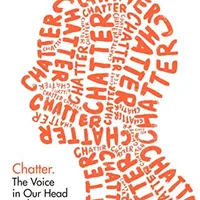
Chatter — Ethan Kross
Ethan Kross's full synthesis of why the inner voice spirals and how the self-distancing technique — the three-move practice the article describes — actually works at the neural level.
As an Amazon Associate, we earn from qualifying purchases — at no extra cost to you.
— his more accessible distillation of years of lab research on why the inner voice spirals and how to redirect it.

The Principle Nobody Talks About: Task Separation
Most emotional resilience frameworks help you manage your reaction to other people's behavior. The Adlerian psychology framework in Ichiro Kishimi and Fumitake Koga's The Courage to Be Disliked

The Courage to Be Disliked — Kishimi & Koga
The book the article's task separation framework is drawn from: the complete five-conversation Socratic dialogue that makes the principle of "whose task is this?" immediately operational in your own life.
As an Amazon Associate, we earn from qualifying purchases — at no extra cost to you.
does something structurally different: it changes the relationship between you and other people's evaluations from the ground up.
Their central tool is task separation — the practice of identifying whose task something actually belongs to. The question it asks is deliberately direct: who has to live with the consequences of this particular judgment or reaction?
Whether your colleague thinks your idea was good — that's their task. Whether your manager approves of your work style — their task. Whether your friend is pleased with how you handled a situation last week — also theirs. You have no more legitimate stake in managing other people's evaluations of you than you have in managing their opinions about films they've seen without you.
This isn't indifference. It isn't the studied detachment of someone who has decided they don't care what anyone thinks. It's a structural reorientation: you remain fully invested in the quality of your work, the sincerity of your effort, and the depth of your relationships. You stay genuinely open to feedback that is useful. But whether someone converts that information into a favorable or unfavorable opinion of you — that is their project, not yours. You don't need to manage it, monitor it, or take responsibility for it.
The practical effect Kishimi and Koga describe is something they call freedom — not the freedom of not caring, but the specific freedom of knowing precisely where your responsibility ends. When you stop treating other people's emotional states as things you caused and must now repair, an enormous amount of background cognitive activity shuts down. The constant monitoring for approval and threat stops running. What opens up in its place tends to surprise people.
how to stop people-pleasing without losing the relationships you value
How to Not Take Criticism Personally at Work
Self-distancing and task separation handle ambiguous situations well. Direct criticism is harder, because it arrives with the feeling of evidence.
Here's the distinction that makes all the difference in those moments: the content of feedback tells you something about your work; the delivery of feedback tells you something about the person delivering it.
These are two separate data streams. The personalization pattern conflates them automatically. A manager who criticizes your work harshly is simultaneously communicating something that may be accurate about your output and something about their communication style, their current pressure, their relationship to their own work. The harshness is not additional evidence that you're failing, not respected, or insecure in your position. The harshness is information about them.
If you process the emotional delivery as additional data about your value — if the sharpness of the tone becomes evidence supporting the story "I'm not good enough here" — you've mixed up two completely different signals. And you've missed the only genuinely actionable part of the exchange: what specifically needs to change?
The discipline is extraction. What is being said about the work? What's concrete and actionable here? What would you do differently if you'd heard this from someone you trusted completely, delivered with warmth? Those questions route the feedback into the domain where it belongs — information for improvement — while leaving the emotional weather of its delivery in the domain where it belongs: the other person's current state.
It's worth saying plainly: this does not mean accepting everything anyone says about your work as accurate. People give bad, biased, and self-serving feedback all the time. But even inaccurate feedback deserves an accurate assessment — which you can't give if you've routed it through the story of what it reveals about your worth rather than the question of whether it's true.
How to Start Building This as a Daily Practice
The self-distancing technique produces real neural change only through repetition. Here's the minimum viable version.
-
Pick one relationship where you know you regularly personalize — not the most charged one, somewhere in the middle difficulty range. For seven days, every time you notice yourself constructing a story about that person's behavior, write it down: what your brain's first interpretation was, what three alternative explanations you generated, and what actual evidence you found for the original interpretation. Physical writing matters here. The act of recording slows the process down enough to make the pattern visible in a way that mental rehearsal doesn't.
-
Practice the pause actively, not passively. When you feel the pull to reach for the interpretation — to fire off the follow-up message asking if everything's OK, to replay the conversation looking for the thing you said — notice the pull. Don't act on it for five minutes. Just five. Most spirals lose their urgency within that window because the urgency was the spiral, not the situation.
-
Make accuracy your standard, not charity. The goal isn't to force yourself into thinking the best of people at all times. That's its own kind of distortion. The goal is to think the most accurate thing. Accuracy almost always involves considerably less "me" than the first interpretation your brain offers.
And extend the same discipline to yourself. The personalization pattern tends to be harshest in how it interprets your own social performances — your stumbled sentence, your joke that didn't land, your moment of uncertainty in a meeting. The person who learns to receive others' behavior without turning it into a verdict about their worth needs to apply exactly the same generosity to their own imperfect moments.

how to stop taking things so personally — 6 evidence-backed techniques
The real cost of taking things personally isn't the discomfort in the moment. It's the attention tax — the accumulated hours spent constructing prosecution cases against yourself from insufficient evidence, the relationships navigated through a lens permanently tilted by self-referential anxiety, the mental real estate occupied by tribunals that were finding you guilty of crimes you didn't commit.
Every interpretation spiral carries an opportunity cost. That's attention not going toward thinking clearly, creating, connecting, or simply being present with the actual life you're living right now.
Building emotional resilience doesn't mean caring less about what people think of you. It means getting significantly more accurate about what they're actually thinking — which, reliably and consistently, turns out to be far less about you than the pattern insists. Most people, most of the time, are managing their own version of this exact spiral. They're not watching yours.

Kindle Paperwhite (2024, 12th Gen)
Three books just recommended — one device that delivers all of them instantly, and routes psychology reading away from the phone where social-ambiguity loops actually live.
As an Amazon Associate, we earn from qualifying purchases — at no extra cost to you.
Designing your evolution means building the perceptual precision to receive what's actually happening rather than the self-referential story your brain assembles to explain ambiguity. You can't design anything clearly from inside a narrative you didn't write and can't verify.
What's one story you've been carrying about someone in your life that you've never actually tested against the evidence? And what might it be costing you — quietly, in the background — to keep treating it as fact?
See also: Why imagining their view makes you less judgmental
Was this helpful?