Mindset· 10 min read
Adult Attachment Styles: Why Toxic Feels Like Love
Hazan and Shaver's research explains why your earliest bonds silently script who feels like love. Here's the science — and how to rewrite the pattern.

Adult Attachment Styles: Why Toxic Feels Like Love
There's a particular kind of relationship that makes no logical sense from the outside.
Your friends can see it. You can probably see it yourself, if you're honest. The person is inconsistent — warm one week, cold the next. You've spent more nights anxiously interpreting their silence than actually enjoying their company. Every calm, stable person who has ever shown up for you has felt somehow... flat. Unexciting. Like something's missing.
And yet the pull toward the hot-and-cold one feels almost physical. It feels like real love in a way the steady, available relationships never quite do.
Here's what the research actually says about that: you're not broken, you're not weak, and you're not picking the wrong people out of poor judgment. You're following a blueprint your nervous system wrote before you were old enough to know you were being handed one. Researchers call it your adult attachment style — and what it has to say about who you end up drawn to is both unsettling and, once you can see it clearly, genuinely useful.

The 1987 Study That Moved Infant Research Into Adult Love
Adult attachment style refers to the consistent emotional pattern you bring to close relationships — who you feel safe to get close to, how much intimacy you can tolerate, and what you do when connection feels threatened. This pattern forms in early childhood and, as Hazan and Shaver's research demonstrated, powerfully shapes adult romantic choices in ways most people never consciously recognize.
In 1987, psychologists Cindy Hazan and Phillip Shaver published a paper in the Journal of Personality and Social Psychology that quietly changed the direction of relationship science.
Their core move was borrowing from a different field entirely. John Bowlby, a British psychiatrist, had spent decades arguing that human infants are hardwired to form emotional bonds with caregivers as a survival mechanism — not just for warmth and feeding, but because proximity to a reliable caregiver literally kept early humans alive. His colleague Mary Ainsworth operationalized this in the 1970s with a laboratory procedure called the Strange Situation: infants were briefly separated from their mothers, then reunited, and researchers observed how each baby responded.
From thousands of observations, three consistent patterns emerged.
Securely attached infants were distressed during separation and quickly comforted when the caregiver returned. Anxiously attached infants were highly distressed during separation and difficult to soothe even after the caregiver came back — they'd cling and protest even with the parent right there. Avoidantly attached infants appeared indifferent to both the separation and the reunion, suppressing visible distress while their heart rates remained elevated.
Hazan and Shaver's leap was simple and unsettling: what if these same three patterns show up in adult romantic love?
They tested it by surveying newspaper readers about their current relationships, their childhood bond with their parents, and a set of statements about how they experienced intimacy. The results tracked almost exactly with Ainsworth's infant categories. About 56 percent showed secure patterns — they found it relatively easy to get close, didn't panic about abandonment. Roughly 25 percent showed avoidant patterns — they were uncomfortable with emotional closeness, tended to withdraw when things got too intimate. And 19 percent showed anxious patterns — they craved closeness intensely but frequently feared their partner didn't love them enough, or would leave.
This wasn't a one-off result. The three-category framework has replicated across dozens of cultures and research methods in the decades since. Adult romantic love, the research now consistently shows, operates through the same attachment system that bonds an infant to a caregiver.
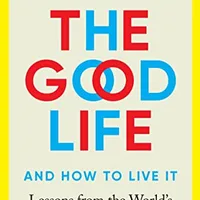
The Good Life — Robert Waldinger & Marc Schulz
The article establishes that adult romantic love runs on the same attachment system studied since infancy. The Good Life — from the 84-year Harvard Study of Adult Development, directed by the same Waldinger the articl…
As an Amazon Associate, we earn from qualifying purchases — at no extra cost to you.
The mechanism behind that — specifically why it makes toxic relationships feel more real than healthy ones — is where it gets genuinely uncomfortable.
Why Your Nervous System Calls Instability "Home"
Attachment style doesn't just describe how you behave in a relationship once you're in one.
It shapes who feels like love in the first place.
An anxiously attached adult typically grew up with a caregiver who was inconsistent — sometimes warm and responsive, sometimes distracted, critical, or simply unavailable without explanation. The child's nervous system learned a specific emotional equation: closeness comes with uncertainty. Love includes a push-pull dynamic. The pursuit of connection involves a low hum of anxiety that you're always trying to resolve.
That template doesn't evaporate when you become an adult. It becomes the baseline against which new relationships get evaluated.
So when an anxiously attached person meets someone who is warm, available, and straightforward about how they feel, something odd happens: the relationship can genuinely feel boring. Not because the person is objectively dull, but because there's no nervous tension to read as chemistry. No anxious monitoring of the phone, no peak of relief when the text finally arrives. The emotional vocabulary the nervous system learned for love doesn't get activated.
Then they meet someone inconsistent. Someone hot-and-cold, a little hard to read, who keeps them slightly off-balance. The nervous system recognizes the frequency immediately. This feels like something. This is what love is supposed to feel like.
What it's actually feeling is a pattern match. The nervous system isn't detecting a soulmate — it's detecting a familiar emotional dynamic, one it learned to call home before it had words for any of it.
Psychiatrist Amir Levine, who co-wrote Attached with Rachel Heller, describes this as the attachment system getting activated by perceived inconsistency. An emotionally unavailable partner keeps the anxiously attached person's nervous system in a state of low-level alarm — always half-focused on the relationship, always scanning for signs of reassurance or rejection. That activation feels, from the inside, like intensity. Like proof that you care deeply.
It is intense. But what it's measuring isn't the quality of the relationship. It's measuring how closely the relationship mirrors an old internal template.
The Avoidant Side of the Same Coin
This dynamic has a mirror, and it runs in the opposite direction.
Avoidantly attached people often genuinely want closeness in theory. They think about love, they want relationships, they're not cold in any obvious way. But when someone actually gets close — when a partner starts expressing their feelings clearly, asking for reciprocity, wanting more — something unnameable kicks in. Resistance. Suffocation. A pull toward distance that can feel like falling out of love, but that tends to happen with every partner who gets close enough.
What does feel like real chemistry to an avoidant person is often distance. A partner who keeps a certain emotional remove. Someone who doesn't push, doesn't ask too much, who's a little self-contained.
Stan Tatkin, who developed the Psychobiological Approach to Couple Therapy, writes about this in Wired for Love: the anxious-avoidant cycle is one of the most common relationship patterns, and it's self-reinforcing. The anxious partner pursues; that triggers the avoidant partner to pull back; the withdrawal intensifies the anxious partner's alarm; which deepens the avoidant partner's retreat. Both people end up distressed. Both often describe these as their most intense, most real relationships.
Intensity here is not a signal of compatibility. It's a signal of complementary attachment wounds landing in the same orbit.
This is the part the research points to with unusual clarity: the same mechanism that makes an anxious person feel most alive in an unstable relationship also makes an avoidant person feel most comfortable with a partner who maintains distance. The attachment template shapes not just how you behave, but who feels right — and that can keep both types cycling through relationships that feel deeply real and go nowhere healthy for years.
When Chemistry Is Data, Not Proof
Here's the reframe that actually changes something.
Those feelings — the nervous excitement, the way a certain person makes everything feel urgent and alive — are real feelings. They're not imaginary, they're not weak, and dismissing them entirely doesn't help. But the research suggests they're better understood as data about your attachment history than as evidence you've found the right person.
Think of it this way. If you grew up hearing one language spoken constantly, you'd respond to it differently than to an unfamiliar one — with recognition, with ease, with the feeling that this is how communication sounds. Hazan and Shaver's research says the emotional equivalent happens with closeness. The emotional "language" of love that your nervous system learned first gets encoded early, and relationships that speak it fluently — even when the content is harmful — will feel more like home than relationships that speak a healthier dialect you've never been taught to hear.
Sue Johnson, who developed Emotionally Focused Therapy and wrote Hold Me Tight, argues that secure attachment is something you can learn in adulthood — but it requires first recognizing that your nervous system's definition of love might be tracking the wrong signal entirely. The work isn't suppressing intense feelings. It's learning to ask what those feelings are actually measuring.
That distinction — between feeling real and being good — is the most practically useful thing attachment research offers. You don't have to dismiss the chemistry. You just have to stop treating it as proof.
how toxic relationships quietly erase who you are
How to Read Your Own Pattern — Starting Today
This isn't about spending six months in therapy before you're allowed to date. It's about building a specific kind of self-awareness most people never develop because they're too busy reacting to feelings to observe them from the outside.
1. Map the direction of your discomfort. In your recent close relationships, has tension come from someone getting too close (avoidant) or from fear they'd leave or pull away (anxious)? That single question — honestly answered — is more revealing than any quiz. Write it down. The pattern tends to be remarkably consistent across relationships once you look for it.
2. Track the chemistry-to-calm ratio. When you've felt "real" connection with someone, notice honestly: how much of it was calm and mutual, and how much was nervous energy you were interpreting as passion? If every relationship that has ever felt real has also involved significant anxiety, that's a data point worth sitting with. Not a reason to panic — but a signal worth investigating seriously.

Liforme Original Yoga Mat
Calm can be its own form of closeness — a steady body-regulation practice like yoga is a concrete way to build tolerance for security instead of chasing nervous intensity.
As an Amazon Associate, we earn from qualifying purchases — at no extra cost to you.
3. Read your attachment history directly. Levine and Heller's Attached includes a self-assessment derived from validated research instruments that helps you identify your attachment style with more precision than most self-help tools. It's one of the more useful starting points precisely because it's built on the actual science. The goal isn't a label — it's a map.
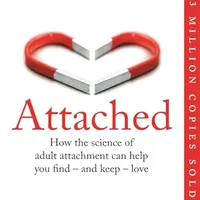
Attached: The New Science of Adult Attachment — Amir Levine & Rachel Heller
Levine and Heller's Attached includes a self-assessment built from validated research instruments — a concrete way to name your own attachment pattern and start working with it instead of against it.
As an Amazon Associate, we earn from qualifying purchases — at no extra cost to you.
4. Practice tolerating security. This sounds strange, but it's what the research points toward: if an available, consistent relationship genuinely feels boring to you, the work isn't finding someone more exciting. It's slowly teaching your nervous system that calm can be a form of closeness — that you can feel something real with someone who doesn't make you anxious. This takes deliberate, repeated exposure. It doesn't happen from a single decision.
5. Write the pattern down, specifically. Not to process feelings endlessly, but to log observations over time: what triggered intense chemistry, what the dynamic actually looked like across weeks and months, whether the emotional shape of a new relationship resembles previous ones, and whether it resembles what you remember of your earliest bond with a caregiver. Patterns that stay unconscious stay powerful. Writing them down is how you start to see them from the outside, where they're much easier to work with.

Clever Fox Habit Calendar / Reflection Journal
Directly serves tip #5: 'Write the pattern down, specifically.' The article is emphatic that patterns which stay unconscious stay powerful — a dated tracking journal is the exact tool it prescribes for logging trigger…
As an Amazon Associate, we earn from qualifying purchases — at no extra cost to you.
building a daily writing habit for clearer thinking
You're Running Old Code on New Hardware
The part that most attachment content misses is this: none of this is your fault, and none of it means you're destined to repeat it.
Your nervous system is doing exactly what it was shaped to do. It's pattern-matching. It's optimizing for the familiar frequency. It's trying to help you find connection using the only map of love it has ever been given. That's not pathology — it's the attachment system working precisely as designed, just from an outdated blueprint.
The work is updating the blueprint. Not overnight. Not through sheer willpower or a decision to simply pursue healthier relationships while the nervous system keeps insisting that they don't feel real. But through the kind of slow, deliberate self-observation that Hazan and Shaver's research makes possible — treating intense anxious chemistry as a signal to slow down and look more carefully, and treating calm mutuality as something to practice tolerating rather than immediately dismiss as lack of spark.
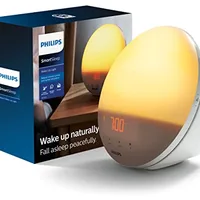
Philips SmartSleep Wake-Up Light HF3520
The closing 'update the blueprint' section is about slowly re-training a nervous system that learned love from an unstable, inconsistent early environment. A gentle sunrise wake routine is the quiet, daily-ritual embo…
As an Amazon Associate, we earn from qualifying purchases — at no extra cost to you.
how self-limiting beliefs quietly run your decisions
Bob Proctor spent decades making a version of this point: you can't consistently outperform your self-concept. Attachment research says something more precise — you can't consistently choose differently from your nervous system's working model of what love is, until you've made that model visible and started deliberately building a different one.
That's the principle at work here. You don't find your evolution — you design it. Which means first understanding exactly what template you're currently running on, before you can do anything thoughtful about building a better one.
So here's the question worth sitting with honestly: if the type of relationship that has always felt most real to you is actually a reflection of an old emotional template rather than a reliable guide to your future, what would it mean to stop treating intensity alone as evidence? And what might become possible if you started treating security not as boredom, but as something worth slowly learning to feel?
Was this helpful?