Productivity· 10 min read
The Power of Saying No: The Productivity Hack Nobody Teaches
Why high performers protect their time by declining more than they accept — a science-backed guide to strategic no's that free your best work.
The Power of Saying No: The Productivity Hack Nobody Teaches
Warren Buffett tells a story he probably regrets putting on the record, because it has been quoted so many times the words have started to lose their teeth. He told a young pilot to write down his twenty-five career goals, then circle the top five. The pilot expected to hear that the other twenty were the secondary list — things to chip away at when he had time. Buffett told him the opposite. The other twenty were the avoid-at-all-costs list. They were the goals that would quietly eat the time meant for the top five.
I think about that story almost every time I open my calendar. Not because I have a top-five list as polished as a Berkshire annual letter, but because it names the thing nobody quite wants to admit out loud. The reason your most important work keeps getting pushed to next week is not that you lack time. It's that you keep saying yes to other people's lists.
three daily habits quietly draining your potential
The Real Cost of Always Saying Yes When It Comes to Productivity
There's a quiet math at work in every yes you give that you don't actually mean. Each one looks small in the moment — a coffee meeting, a feedback request, a Slack DM that turns into a thirty-minute thread. But pile a week of those on top of each other and you have just spent more time on other people's near-priorities than on your own real ones. The tax is invisible because it's paid in fragments.
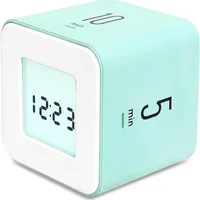
Mooas Cube Timer
The invisible tax described here — fragments of interrupted time that add up to nearly five hours a day — becomes measurable when you time-box your work instead of letting it bleed at the edges. A cube timer makes eac…
As an Amazon Associate, we earn from qualifying purchases — at no extra cost to you.
A 2008 University of California, Irvine study found that office workers were interrupted, on average, every three minutes and five seconds, and once interrupted, took just over twenty-three minutes to fully return to the original task. That's not a focus problem. That's an accumulation problem. Twenty-three minutes, twelve times a day, and the math gets ugly fast: nearly five hours of every workday spent climbing back up the cliff you keep getting pulled off of.
You've probably felt this even if you've never put a number on it. The week ends and you can list everything you helped with — and almost nothing you actually built. Cal Newport calls this the difference between busy and productive, and he's been making the case for years that the people producing the most valuable work are not the ones with the most stamina. They're the ones with the most fences.
Why Saying No Feels Like a Threat to Your Social Brain
There's a reason "no" is so hard to say even when you know it's the right answer, and it's not that you're weak-willed. It's that for most of human history, social belonging was survival. Get cast out of the tribe and your odds of surviving the winter dropped through the floor. Your nervous system still believes that, even though your manager is not a saber-toothed tiger and your colleague's slide deck is not the savanna.
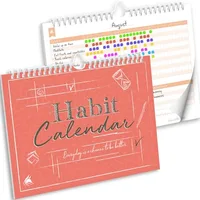
Clever Fox Habit Tracker Journal
The threat-assessment your brain runs every time someone asks for your time is fastest when you have no record of what that time actually costs — keeping a weekly log of yes/no decisions builds the data you need to re…
As an Amazon Associate, we earn from qualifying purchases — at no extra cost to you.
So when somebody asks for your time, your brain does a tiny threat-assessment: how much will saying no cost me, socially? And because the cost feels concrete (this person, right now, possibly disappointed) while the benefit feels abstract (the work I might do this afternoon if I protect my morning), the math almost always tips toward yes. You're not bad at boundaries. You're running ancient software on a modern operating system.
The trick — and this is where most productivity advice quietly fails — is not to override the social instinct with willpower. Willpower is a finite resource and it depletes over the day. The trick is to make your no's structural rather than personal. Decided in advance. Almost boring. Not a brave act each time, but the default the system runs on.
Decided in Advance Beats Decided in the Moment
James Clear has a phrase I love: "You do not rise to the level of your goals; you fall to the level of your systems." That goes double for protecting your time. If you're deciding whether to say yes or no in the moment, in front of a request, with cortisol nudging you toward harmony, you have already lost the deal. The other person has already framed the question. You're just signing the paperwork.
Full Focus Planner by Michael Hyatt
The argument here is that no's decided in advance — before the request arrives, before cortisol nudges you toward harmony — are the only ones that reliably hold. The Full Focus Planner is designed around exactly that:…
As an Amazon Associate, we earn from qualifying purchases — at no extra cost to you.
People who guard their time well almost always have something pre-decided. A weekly "no meetings before 11" rule. A standing answer for any speaking-engagement request that lands without two months of lead time. A blanket policy on free advice calls — three a month, no more, scheduled in one batch on Friday afternoons. These look like quirks from the outside. From the inside, they're the only reason the real work gets done.
Tim Ferriss famously turned almost every podcast guest request down for years before he started his own show, and his calendar wasn't empty because he was lazy. It was empty because he had decided, in advance, that his bandwidth belonged to deep work and a small handful of relationships. When the request came in, the answer was already written. He just had to send it.
This is the part that takes some unlearning. We're trained to think of "no" as an emotional moment — an awkward sentence, a disappointed face, a relationship slightly chipped. It doesn't have to be. Pre-decided no's are not unkind. They are honest about a truth most of us avoid: time is a real resource and it cannot be conjured.
The Polite, No-Drama Script for Saying No Without Guilt
Most people never learn how to say no without either grovelling or coming off harsh, so they default to ghosting and the slow yes — that miserable middle ground where you take three days to respond, then commit to something you'll resent doing. There is a better way, and it's almost embarrassingly simple.
What a clean "no" looks like: brief gratitude for being thought of, one honest reason (a sentence, not a defense), no apology theater, and a warm close. One paragraph. No exit ramps. No "maybe we can revisit." Here's a version I use, lightly modified for context:
Thanks so much for thinking of me on this — I genuinely appreciate it. I've made a hard rule this quarter to keep my afternoons clear for a writing project I'm trying to finish, so I'm going to pass on the call. I hope it goes well, and please do keep me posted on how it lands.
Notice what isn't there. No "I'm so sorry, I wish I could but…" — that begs for a follow-up and signals that the no is negotiable. No vague "let's reconnect when things calm down," because things never calm down, and the other person will call your bluff. No long explanation justifying yourself. The honest reason is a sentence, not a defense.
The real magic of the script is that it ends warmly. You can say no and still be a generous human. The two are not in opposition — in fact, the more clearly you can decline, the more your yes actually means something when you give it.
What to Do With the Reclaimed Hours
This is the part most "say no" advice forgets to tell you, and it's the most important part. If you reclaim five hours a week and immediately fill them with low-value busywork because your nervous system can't handle the silence, you have not gained anything. You have just shifted the wallpaper.

Sony WH-1000XM5 Noise Cancelling Headphones
Greg McKeown's point in this section is that reclaimed hours only matter if they're filled with real, uninterrupted focus — and the interruption rate in a typical office makes that nearly impossible without a physical…
As an Amazon Associate, we earn from qualifying purchases — at no extra cost to you.
Greg McKeown writes in Essentialism that the discipline of less is meaningless without a discipline of replacement. The hours you free up should be earmarked, in advance, for the work only you can do. Not the work that feels productive — the work that, if it doesn't get done, nothing else matters. For most knowledge workers, that's somewhere between two and four hours a day of real, uninterrupted focus on the thing that compounds. Not email. Not meetings. The thing that gets harder the longer you avoid it.

Try this for one week as a test. Before you say no to anything, write down what you are saying yes to instead. If the answer is "another twenty minutes of inbox triage," you have not earned the no. If the answer is "the chapter I've been postponing for three months," you have. The yes that backs the no is the whole game.
goals vs. purpose — the difference that changes everything
How to Start Today: A Practical Saying No Audit
The thing about strategic no's is that they sound abstract until you actually try them, and then they sound obvious. So here is the smallest possible starting move, the kind that takes about ten minutes and changes the texture of the next two weeks.

Kindle Paperwhite (2024)
The framework in this article draws on Cal Newport's deep work research, Greg McKeown's Essentialism, and James Clear's systems thinking — books worth reading in full once you've carved out the hours this audit is des…
As an Amazon Associate, we earn from qualifying purchases — at no extra cost to you.
-
Audit last week's calendar. Open it up and label every commitment with a YES, NO, or MAYBE. The YESes are things you'd do again happily. The NOs are things you'd refuse if asked again. The MAYBEs are the killers — the meetings you didn't quite want but didn't quite refuse. Most people find that 30 to 50 percent of their week is MAYBE. That's your reclaim zone.
-
Pick one recurring MAYBE and end it this week. Not all of them — just one. Cancel the standing meeting that has no agenda. Step off the committee that meets monthly and decides nothing. Politely exit the group chat that drains attention without giving any. One pre-decided no, executed cleanly.
-
Write your standing rule. One sentence that you will use, verbatim, the next five times someone asks for time you don't want to give. Save it as a text snippet. Make the no boring and frictionless to deploy.
-
Block the reclaimed hours. And do not — please — fill them with "catching up." Earmark them, on the calendar, with the actual project name. Treat them as if your favorite client booked them. Because, in a sense, you are that client.
The goal of this exercise is not to become the office grouch who declines everything. It's to make the few yeses you give count for something. People can feel the difference between the colleague who shows up to everything mildly resentful and the colleague who shows up to fewer things, fully present. Be the second one.
The Quiet Math of a Designed Life
Here's the part nobody puts on a productivity blog because it sounds too much like philosophy. The shape of your life — the thing your résumé will quietly become — is just the running total of what you said yes to and what you protected. Every yes is a small bet on what matters. Every no is a small refusal to let the urgent eat the important.
Most of us, in our thirties or forties or fifties, look back and realize the years did not get stolen by one big tragedy. They got drained by a thousand small yeses given on autopilot, to things we never quite chose. That's not a moral failing. It's a system failure. And systems, unlike character, are easy to redesign.
Designing your evolution is largely the practice of subtraction. The big things — the work that compounds, the relationships that nourish, the body that carries you, the mind that stays curious — those don't need more hours added. They need other things removed from on top of them. Every clean no you make is one more layer lifted off the things you actually want to grow into.
So here's the question I'll leave with you, because it has rattled around in my head for years and I think it's the only one that matters in a conversation about this: if someone audited your last week and asked which yeses you'd defend in writing, how many would survive the question — and what would change, starting tomorrow, if you only said yes to those? Drop your answer in the comments. I'd genuinely like to know what you're protecting.
→ The Mere Urgency Effect: Why You Choose Busy Over Important
Was this helpful?