Habits· 10 min read
Why Slow Growth Is the Only Kind That Lasts
There's no dramatic turning point. What the science of gradual transformation reveals about why ordinary daily choices compound into lasting change.

Why Slow Growth Is the Only Kind That Lasts
I kept a journal for three years before I read a single entry back.
When I finally did — on a slow Sunday morning, coffee going cold while I was supposed to be doing something more important — I expected to find the dramatic turning point I'd been half-consciously waiting for. The week it all clicked. The entry where you could feel the shift in the sentences. That clean before-and-after threshold that every transformation story promises.
There wasn't one.
What I found instead was three years of mundane, slightly embarrassing daily notes. Missed workouts. Renegotiated deadlines. Small wins that felt significant for exactly one paragraph before the next frustration took over. Nothing looked like transformation from the inside. But here's what stopped me cold: by entry 200, I was clearly reading about a different person. Someone with a completely different relationship to sleep, to conflict, to how they spent their mornings. The change had happened. It just hadn't announced itself.
The personal development industry is built, almost entirely, on the mythology of the turning point. The book that rewired your brain in a single afternoon. The retreat that broke you open and rebuilt you over a weekend. The coaching session where someone said exactly the words you'd been waiting to hear.
These stories sell because they satisfy a deep narrative instinct. Cognitive psychologist Jerome Bruner — whose long career spanned Harvard, Oxford, and NYU — spent decades documenting how human memory reconstructs experience as story — and stories require a beginning, a complication, and a resolution. The "breakthrough moment" is the resolution our minds reach for when asked to account for change.
The problem is that this narrative is almost always a retrospective construction. The person describing their transformation rarely experienced it as transformation while it was happening. They experienced months or years of ordinary, unremarkable days that only crystallized into a narrative arc when someone asked them to explain themselves. The turning point is something we find in hindsight. We don't walk through it in real time.
And once you understand why that's true, everything about how you approach your own growth needs to change.
Why Personal Growth Feels Slower Than It Actually Is
Here's a pattern that cognitive scientists have consistently documented — though self-help rarely mentions it: the way we perceive gradual change is systematically distorted from within.
When you look forward at a change goal six months out, the distance feels enormous — almost fictional. When you look backward at the six months you've actually been working on something, the amount of change you've accumulated is consistently larger than you perceived it to be while you were living it. You are systematically underestimating your own progress. Not because you're a pessimist, but because the subjective experience of gradual change is nearly invisible from the inside.
This is one concrete reason why journals, habit trackers, and periodic review practices show up so persistently in the behavioral change research as effective tools. Not primarily because they increase motivation — though they do. They work because they create an objective record that your subjective sense of progress cannot distort. This perceptual bias operates on feeling and memory. It has no defense against a written log.

Clever Fox Habit Calendar Circle (2-Year Habit Tracker)
The article names journals and habit trackers as the antidote to gradual-change blindness — an objective record the subjective sense of progress cannot distort.
As an Amazon Associate, we earn from qualifying purchases — at no extra cost to you.
When you can look at 90 days of actual logged behavior instead of trying to reconstruct how it felt, the illusion loses its grip. The evidence is right there in front of you. You have been moving. The record proves it, even on the days your feelings don't.
You're Not Stuck — You're Just in an Earlier Stage Than You Think
Before 1983, most behavioral change research operated on a binary: people were either changing or they weren't. If you were still hitting snooze, still avoiding the difficult conversation you'd been avoiding for two years, you were in the "not changing" category — which most researchers treated as equivalent to failing.
James Prochaska and Carlo DiClemente at the University of Rhode Island dismantled this model through what became one of the most replicated frameworks in health psychology: the Transtheoretical Model. Studying thousands of people who had successfully changed major behavioral patterns without professional intervention, they found that change doesn't happen as a binary switch. It moves through five stages — precontemplation, contemplation, preparation, action, maintenance — with expected cycling back through earlier stages built directly into the model itself.
The finding that matters most for anyone frustrated with the pace of their own progress: the stages before action are not pre-change. They are change, actively occurring at the cognitive and motivational level while behavior hasn't visibly shifted yet.
The person who has been "meaning to start" for four months isn't stuck in amber. They are, in Prochaska's mapping, almost certainly somewhere in contemplation or preparation — genuinely working through the problem, just not in ways that produce observable external evidence. Their ambivalence isn't resistance; it's the normal cognitive friction of moving toward a behavior that conflicts with an existing identity or habit system.
Prochaska's research found that people who understood their current internal work as a legitimate stage of change — not a failure to start — showed significantly better long-term outcomes than those who interpreted it as personal weakness. The reframe alone changes the trajectory.
You're probably further along than you think.
The Biology of Why Small Beats Big (And Why This Is Hard to Accept)
Here's the opinion that most high-achievers genuinely don't want to hear: ambitious goals, intensely pursued, produce worse long-term outcomes than modest goals, consistently executed. Not in the motivational sense. Neurologically.
Robert Maurer's synthesis of kaizen — the Japanese practice of continuous improvement through incremental steps — with modern neuroscience makes the mechanism precise. The amygdala — the brain's threat-detection system — doesn't distinguish cleanly between physical danger and psychological novelty. An ambitious behavioral change that feels unfamiliar, costly, or uncertain triggers the same fight-or-flight cascade as an actual threat. Cortisol rises. The prefrontal cortex goes partially offline. The plan you felt genuinely committed to at 7am feels unreasonable by 7pm.
Small changes don't activate that response. The amygdala stays quiet. The prefrontal cortex — the goal-directed, reasoning part of the brain that actually executes behavioral plans — stays fully online.
BJ Fogg's Tiny Habits protocol at Stanford's Behavior Design Lab codified this into a practical system. Fogg's core empirical finding: the most durable behavior change begins with an implementation so small it cannot fail. Not because small is inspiring (it isn't), but because the consistency of small successful executions builds the associative strength — the neural habit — that larger, motivation-dependent implementations can't sustain past the first week of friction.
A two-minute daily reading practice isn't going to change your life in two weeks. It will still be happening in two years when the "45 minutes every morning before sunrise" plan has been abandoned for 23 months.

Kindle Paperwhite (2024, 16GB)
Supports the two-minute daily reading practice — the comically-small habit that is still running in two years when the ambitious plan was abandoned.
As an Amazon Associate, we earn from qualifying purchases — at no extra cost to you.
This is counterintuitive precisely because our culture treats intensity as the proxy for commitment. Doing something difficult and ambitious feels like evidence that you're serious. Doing something almost comically small feels like you're not trying hard enough. That feeling is the amygdala talking, and it has a poor track record on this particular question.
Identity Change Is a Statistics Problem, Not a Declaration
James Clear's synthesis of the behavioral research in Atomic Habits introduced a framing that has since found support in identity psychology: every repetition of a chosen behavior is a vote for the identity you're constructing.
You're not just going for a run. You're casting a vote for "person who runs." You're not just writing a paragraph. You're casting a vote for "person who writes." Identity consolidation is a statistical outcome of accumulated behavioral evidence — not the result of a single decision, affirmation, or breakthrough session.
This means the dramatic transformation you're waiting for has already been happening, in the form of every unremarkable repetition you've shown up for. The person you're becoming is being assembled, quietly, from the evidence you're generating on days when nothing feels significant.
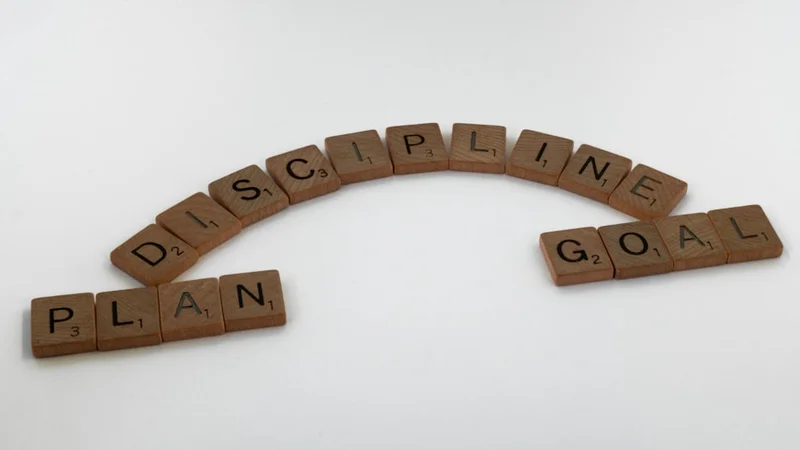
The practical shift this produces: instead of asking "when will I feel like I've changed?" you start asking "am I generating consistent votes for the identity I want to inhabit?" Those are very different questions with very different behavioral implications. The first question is unanswerable from the inside of the process. The second one you can check tonight.
The Compound Effect Is Not a Metaphor
Darren Hardy's The Compound Effect popularized the mathematical argument for slow, consistent action — but the compound dynamic isn't motivational language. It's the actual mechanism operating at the cellular level.
Hardy's core illustration: two people start from an identical baseline, but one makes a 0.1% daily improvement while the other makes no change. After one year, the first person is 44% ahead. After two years, they're more than 100% ahead. The gap doesn't emerge from dramatic moments. It accumulates from daily differences so small they're invisible in the moment.
Michael Merzenich's neuroplasticity research corroborates this at the biological level. The brain's physical architecture reorganizes in response to repeated experience — but this reorganization requires repetition distributed over time. Long-term potentiation, the cellular mechanism of learning, occurs most robustly when neural circuits are activated, allowed to partially recover, and then reactivated again. Massed practice — the intensive burst that motivation-driven behavior tends to produce — builds less durable neural change than the distributed practice that consistent daily behavior generates.
This is why the athlete training daily outperforms the athlete training intensely for two weeks and then resting for two, even at equivalent total training volume. Distribution is not just a scheduling preference. It's the biological prerequisite for consolidation.
Atomic Habits — James Clear
Cited directly in the article — Clear's "every repetition is a vote for an identity" framing anchors the identity-as-statistics section.
As an Amazon Associate, we earn from qualifying purchases — at no extra cost to you.
When Retrospective Vision Finally Works in Your Favor
There's a specific moment that most people serious about personal growth eventually experience, and it doesn't get enough attention.
You run into someone you haven't seen in 18 months. They look at you differently. Not your appearance — something in the texture of the conversation. "You seem different," they say. "More settled, somehow."
And you realize: they can see what you couldn't see from the inside.
This is the gradual-change blindness operating in reverse. The person observing you from a distance has witnessed the compound effect you were too embedded in to perceive. Their external perspective captures what your daily subjective experience couldn't: the person you have gradually, quietly become.
The practical implication is precise: the absence of dramatic milestones is not evidence that nothing is happening. The evidence lives in the external observation and the retrospective record — not in the moment-to-moment experience of doing the work. This is why Jeff Olson's core argument in The Slight Edge is worth taking seriously: the slight edge toward growth and the slight edge toward stagnation are the same size. Neither feels significant in any single day. The difference is only the direction they're pointed.
How to Start Today (Without Waiting to Feel Ready)
The research on gradual transformation doesn't just explain why it works. It points toward specific structural conditions that make compounding more likely — and some of them are genuinely counterintuitive.
Make your first action smaller than feels justified. Not motivationally small — neurologically small. Fogg's original protocol suggests anchoring a tiny behavior to an existing routine and making it so brief that skipping it would feel more effortful than doing it. The goal isn't the action itself. The goal is building the consistency engine that the slightly larger action will eventually run on.
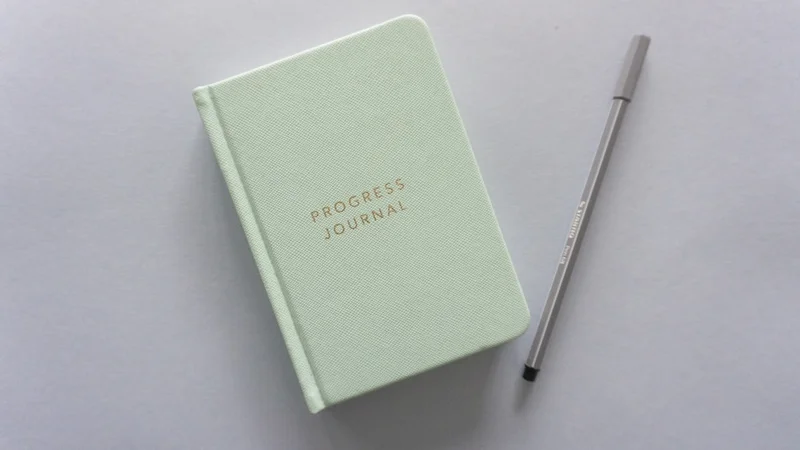
Set up an objective record, starting now. Don't trust your subjective sense of your own progress — it's distorted by the perceptual biases described above, and you already know this. A paper log, a simple habit-tracking app, a weekly five-sentence journal entry. The format doesn't matter. The externalization of your internal process does.
Schedule a retrospective look at 90 days from today. Block the calendar time now, add a single task: read your tracking record from Day 1 to present. What you'll find from that temporal distance will almost certainly exceed what your moment-to-moment experience has been telling you. This isn't a productivity hack — it's a cognitive error correction for a bias you already know you have.
Change what you're measuring. Most people track outcomes — weight, savings, word count — that change too slowly for daily feedback to be useful. Track behaviors instead: the votes you cast. You can execute your behaviors at 100% fidelity and see zero outcome progress in week one. That's not failure. That's how biology works, and it should be expected rather than interpreted as a reason to quit.
Expect the spiral, not the line. Prochaska's research documents that most people cycle through the stages of change multiple times before a new behavior sticks — relapse and re-entry are built directly into the model itself. The first relapse is not the end of the story — it's the anticipated second lap. The people who eventually sustain real change are not the ones who never relapse. They're the ones who re-enter the cycle after relapsing, instead of treating it as definitive evidence about their character.
The Evolution That Doesn't Announce Itself
The most genuinely transformed people I've observed — people who have redesigned significant parts of how they live over years, not months — share a consistent phenomenology. Ask them when it changed, and they can't locate the moment. Ask them whether they feel different from who they were five years ago, and they pause, seem genuinely surprised by the question, and then say: yes. Very much so.
The change doesn't announce itself. It accumulates, daily, in choices that feel too small to matter while they're being made.
Designing your evolution — genuinely designing it, as a deliberate practice rather than a passive hope — requires accepting the most psychologically uncomfortable feature of real transformation: it will feel unremarkable while it's happening. The breakfast you chose, the paragraph you wrote, the moment you sat with a difficult feeling instead of reaching for your phone — none of these feel like evolution in the moment.
They are, though.
The question worth sitting with tonight: if you could see the person you'll be in three years of consistent unremarkable choices — would that change which choice you make tomorrow morning?
Was this helpful?