Mindset· 10 min read
How Confirmation Bias Warps Your Best Decisions
You're not choosing beliefs based on facts — you're choosing facts based on beliefs. Here's how confirmation bias quietly hijacks your judgment every day.

How Confirmation Bias Warps Your Best Decisions (And How to Audit Your Own Thinking)
A friend of mine spent three months "researching" before he quit his job to go all-in on a business idea. He read books. He watched interviews with founders who'd done it. He filled two notebooks with projections, competitive analysis, and what he called "market signals."
He was thorough. He was serious. He felt completely certain.
When the business failed eighteen months later, I asked him something he wasn't expecting: "Can you name one source you consulted before you quit — one voice, one book, one article — that seriously argued against the idea?"
He sat with that question for a long time.
He couldn't name a single one.
That's not stupidity. It's not even overconfidence, exactly. It's confirmation bias — and it's operating inside your thinking right now, on decisions big and small, quietly selecting which information gets through and which gets turned away before it ever reaches your conscious attention.
Confirmation bias is the brain's tendency to search for, interpret, and remember information in a way that confirms what you already believe. Psychologist Peter Wason first demonstrated it in 1966 with a deceptively simple card experiment, and the decades of research since have only deepened the finding: the human mind didn't evolve primarily to find truth. It evolved to survive — which means conserving cognitive energy and maintaining social cohesion, not necessarily running accurate reality checks.
Daniel Kahneman spent a career mapping this territory. His framework separates cognition into two systems: fast, automatic, pattern-matching thinking (System 1), and slow, deliberate, effortful reasoning (System 2). Here's the trap: System 2 is supposed to audit System 1's errors. But much of the time, System 2 gets recruited not to correct what System 1 already concluded — but to justify it after the fact. You feel like you're reasoning. You're actually rationalizing. And from the inside, those two experiences are indistinguishable.
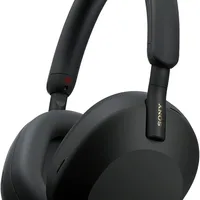
Sony WH-1000XM5 Noise Cancelling Headphones
System 2 thinking — the slow, effortful reasoning that could catch confirmation bias — requires silence and zero interruption. Active noise cancellation creates the acoustic conditions where honest self-audit becomes…
As an Amazon Associate, we earn from qualifying purchases — at no extra cost to you.
It's a well-documented pattern: we don't choose beliefs based on facts — we choose facts based on beliefs. Take the seed oil debate: two people with opposite priors can read the same scientific literature and each walk away more convinced they were right to begin with. It's not that one is smarter. It's that they're both running the same broken process.
You've probably felt this. The house you'd already decided to buy had no real flaws when you went back for the second viewing. The job offer that aligned with your plan suddenly seemed more prestigious once you'd told people about it. The relationship you wanted to work kept producing reasons — somehow — why it was going to work.
Here's what makes all of this so difficult to catch: confirmation bias doesn't feel like a filter. It feels like clarity.
What Confirmation Bias Feels Like from the Inside
That's the piece nobody warns you about: it doesn't feel like bias. It feels like finally seeing things clearly.
When you're deep inside a confirmation loop, you feel unusually certain. Information keeps arriving that supports the picture. Everything lines up. You've done the research. You feel confident.
That smoothness — that sense of everything adding up — is the tell.
Real thinking, honest rigorous thinking, almost never feels that frictionless. Reality is noisy. Evidence points in multiple directions simultaneously. Genuine inquiry leaves residual uncertainty even after you've reached a conclusion.
When everything points the same way, the most likely explanation isn't that you've found the truth. It's that your brain carefully curated the inputs.
The philosopher Karl Popper argued that the hallmark of genuine scientific inquiry is falsifiability: you look for ways your theory could be wrong, not just ways it could be right. Most people in most decisions are running the inverse of that. They're building a case for the prosecution — gathering only evidence for a verdict they've already privately returned.
Here's a quick diagnostic: if you can't clearly articulate the strongest argument against your current position on any important topic, you're not engaging with the topic. You're performing certainty. There's a difference.
how to build better mental models for decision-making
Three Channels Confirmation Bias Uses to Distort Your Reality
The bias doesn't show up in just one place. It runs simultaneously across at least three distinct cognitive channels, each reinforcing the others:
1. Information seeking. You selectively search for evidence that supports what you already believe. Your Google searches are leading questions. The commentators you follow share your worldview. The articles you click, the people you ask for second opinions, the books you pick up — all of it tilts invisibly in one direction, because you've already decided where you're headed before you start "researching."
2. Interpretation. Even when you encounter mixed or ambiguous evidence, your brain preferentially reads it as supportive. Someone bullish on a stock sees a flat quarter as "a consolidation phase." Someone bearish reads the same numbers as early-stage collapse. Identical data, opposite conclusions — because the prior belief is doing the heavy analytical lifting.
3. Memory. Over time, you remember the hits and quietly forget the misses. The predictions that came true feel vivid and significant. The ones that didn't evaporate without leaving a trace. This is why people accumulate so much personal "evidence" for gut instincts, lucky streaks, and informal theories — the confirming moments are unforgettable, while the disconfirmations disappear.
All three channels feed each other. And they're invisible from the inside, which is what makes this so insidious.
The antidote isn't willpower — it's structure. Building mental model frameworks that actively test beliefs against evidence, rather than just gathering support for them, is one of the highest-leverage cognitive upgrades available to you. Shane Parrish has done more than almost anyone to make this practical: distilling the most powerful thinking tools from physics, biology, economics, and psychology into frameworks you can actually apply to the decisions you're making this week.
Atomic Habits — James Clear
The habits you install decide which evidence you even encounter. Clear's framework helps you design systems that actively test beliefs against evidence — the behavioural cousin of the cognitive auditing this article a…
As an Amazon Associate, we earn from qualifying purchases — at no extra cost to you.
Why Intelligence Makes This Worse, Not Better
Here's what should make every well-read, educated person genuinely uncomfortable:
Higher intelligence doesn't protect you from confirmation bias. Multiple well-designed studies have found that it amplifies it.
Psychologists call it motivated reasoning. Smarter people are, on average, better at it. The ability to construct sophisticated arguments, marshal supporting evidence, anticipate objections, and build a coherent internal case — those exact skills make you a more effective rationalizer, not a more accurate thinker.
In a study at Yale led by researcher Dan Kahan, subjects with stronger mathematical reasoning performed worse at interpreting politically charged statistical data objectively — not better. They used their analytical abilities to reason around the inconvenient parts, crafting more elaborate justifications for the conclusion they'd already reached emotionally.
The implication is uncomfortable. Reading more, being better educated, thinking faster — none of these automatically produce clearer thinking. What they can produce is more articulate, more confident, more elaborately defended versions of the same distorted picture you held before you started.
Jim Rohn said, "Don't wish it were easier, wish you were better." There's a harder version of that for cognitive bias: don't wish you were smarter. Wish you were more honest about how your mind actually operates when it's under the influence of something you already want to be true.
why self-awareness is the real foundation of growth
The most rigorous thinkers aren't necessarily the most credentialed. They're the ones who've built habits that actively reward catching themselves being wrong — people who've internalized that being correctable is more valuable than appearing certain.
The Real-Life Costs You're Probably Not Counting
Confirmation bias doesn't reserve itself for rare, dramatic moments. It runs in the background of ordinary decisions every single day, and the cumulative cost is significant — mostly because it's invisible.
At work. You hire the candidate who "feels right" and subconsciously weight the entire interview toward confirming the conclusion you'd already reached before they sat down. You defend the strategy your team locked in six months ago and frame new contradicting data as noise, anomalies, or bad timing. Your competitor's success is luck; your own setback is temporary. Neither conclusion gets seriously tested.
In relationships. You stay past the point of good reason because you've committed to making it work — and every concerning signal gets reinterpreted as growth, as a rough patch, as something that's almost resolved. Or you exit mentally first, and suddenly find evidence of failure everywhere, long before you'd otherwise have noticed it.
With money. You hold a losing position because you researched it thoroughly and it should be working — and the confidence you felt at entry quietly becomes the justification for not exiting when you should. Warning signs in a deal are easy to dismiss when the potential upside means too much to you to evaluate clearly.
About your health. You ignore a symptom because it doesn't fit the narrative that you're fine. You believe a protocol is working because you need it to be, not because you ran any kind of honest measurement or kept a real record.
This is where it becomes structural. You cannot design your evolution on a map you've selectively drawn yourself. The mental picture you carry of your career, your finances, your relationships, your capabilities — if that picture has been systematically filtered by what your brain preferred to let through, you're navigating with a compass that points wherever you want it to.

Kindle Paperwhite (2024, 16GB)
Reading voices that challenge you — not just those that confirm you — is the antidote the article prescribes. A dedicated reading device sidesteps the same algorithmic filter-bubbles that create confirmation bias in t…
As an Amazon Associate, we earn from qualifying purchases — at no extra cost to you.
How to Make Your Own Thinking Auditable
The goal isn't to eliminate bias. That's not possible — it's built into the architecture of human cognition. The goal is to make your thinking auditable: to install habits and structures that catch distortions before they harden into commitments you can't easily walk back.
Here's what the evidence and the best practitioners consistently point to:
Seek disconfirming evidence first. Before you commit to a position, spend real time — not a token gesture — looking for the strongest argument against it. Not a strawman. The most intelligent objection from the most informed person who genuinely disagrees with you. If you struggle to construct one, you haven't engaged with the topic honestly enough yet.
Run a pre-mortem. Imagine it's twelve months from now and the decision has failed. Write down, specifically, what went wrong. This technique — developed by psychologist Gary Klein and popularized by researchers at Wharton — systematically surfaces risks that optimism bias and confirmation bias would otherwise screen out completely before you ever see them.
Appoint a devil's advocate. In group settings, explicitly assign someone to argue against the proposal — not as a game, but as a structural safeguard. Groups are even more confirmation-biased than individuals. Groupthink has collapsed companies, lost military campaigns, and ended political careers. Building structural dissent into your decision process isn't negative — it's protective.
Keep a decision journal. Write down what you decided, why, what you predicted would happen, and what actually did. Review it quarterly. Most people never do this, which means they never update the mental model that keeps producing the same categories of mistake. The journal doesn't just record your thinking. Over time, it holds you accountable to it in a way no one else can.
How to Start Today
You don't need to overhaul your entire approach to thinking. One practice, consistently applied, shifts the baseline over time:
Step 1. Pick one active decision — something you're currently working through, not something already resolved.
Step 2. Write your current belief in one sentence. What do you think the right call is?
Step 3. Spend 20 minutes finding the single best argument against it. Not a weak objection — the most intelligent case that a genuinely well-informed person who disagrees with you would make.
Step 4. Write down what shifts. Not necessarily your conclusion, but your certainty level. Did the needle move, even slightly?
Step 5. Do this before every significant commitment going forward.

Clever Fox Habit Calendar Circle (2-Year Tracker)
The article explicitly prescribes a decision journal: write down what you decided, why, what you predicted, and what actually happened. This 2-year tracker with 24 undated monthly pages turns that practice into a visi…
As an Amazon Associate, we earn from qualifying purchases — at no extra cost to you.
That's the entire practice. You're not chasing certainty on the other side. You're cultivating honest uncertainty on your own side — which is a more accurate map of reality than the false confidence confirmation bias reliably produces.
Bob Proctor used to say most people never examine the beliefs that are running their lives. They just live them — treating the map they assembled haphazardly in their twenties as if it were still the actual territory in their forties.
Confirmation bias is the mechanism that keeps that map frozen. It's not malicious. It's efficient — the brain conserving resources, protecting identity, maintaining internal narrative consistency. But "internally consistent" and "accurate" are not the same thing, and the gap between them is where most of the expensive mistakes live.
If you want to go deeper and systematically map your own cognitive blind spots — not just understand them conceptually, but build specific countermeasures for each one — a well-structured workbook approach pays far greater dividends than passive reading about the topic.
cognitive biases that are quietly limiting your potential
Designing your evolution requires a map you can actually trust. That means being willing to stress-test your beliefs — to look at what you feel certain about and ask, seriously and without flinching: what would have to be true for me to be wrong about this?
If you can't answer that question cleanly, you're not thinking. You're confirming.
What decision are you currently "researching" — and how many of the sources you've consulted have actually argued against it?
If a belief has survived every counter-argument you've thrown at it, it's worth asking why — sometimes it's genuinely well-supported, and sometimes the topic has quietly become part of your identity. Why Facts Don't Change Minds: Identity-Protective Cognition goes further into that second case, and why smarter people are often more prone to it, not less.
Related read: Why two people who saw the same event walk away with different stories
Was this helpful?