Productivity· 10 min read
My Flow State Setup: The Research Behind Every Decision
Flow isn't luck — it's an environment you design. Csikszentmihalyi's flow channel, Kotler's four-stage cycle, and SDT science in one practical setup.
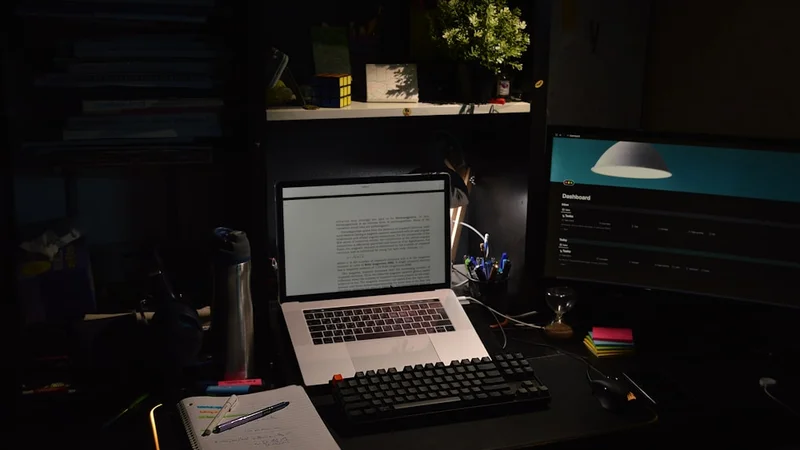
My Complete Flow State Setup (The Research Behind Every Decision)
For two years, I was a productivity system tourist.
I tried the Pomodoro Technique. Time-blocking. Task batching. Getting Things Done. A brief and embarrassing phase involving a whiteboard covered in color-coded sticky notes. Some of it worked. None of it stuck. And the hours that felt genuinely effortless — the sessions where I'd look up and three hours had dissolved — arrived at random, with no apparent connection to whatever system I was running that week.
It wasn't until I read the neuroscience of flow that I understood why. I'd been optimizing the wrong layer. Every productivity system I tried was built around managing tasks and time. But the brain doesn't enter its most capable state because your task list is tidy. It enters that state when a specific set of conditions is satisfied — conditions that most knowledge workers systematically undermine without realizing it.
This article is the setup I've built around those conditions. Not a system. An environment. And there's a meaningful difference.
What the Flow State Research Actually Shows About Design
Mihaly Csikszentmihalyi spent three decades at the University of Chicago investigating a question that sounds almost too simple to be scientific: when do people feel most fully alive?
Not happiest. Not most relaxed. Most alive — most engaged, most capable, most themselves.
He interviewed thousands of people across completely different domains: chess grandmasters, surgeons mid-operation, rock climbers 800 feet up, factory workers, jazz musicians, Navajo shepherds. People with nothing else in common. But when he asked them to describe their most meaningful experiences, they described the same state.
Complete absorption. Effortless precision. A sense of time bending. The feeling of being exactly matched to the challenge in front of them — not overwhelmed, not bored, but precisely calibrated.
He called it flow, because that word kept appearing in the interviews — people describing the experience as being carried by a current, effortless and directional. He then spent three decades mapping what produces it.
Here's the finding that changes everything: flow has consistent, replicable antecedents. It doesn't visit people who are trying hard enough. It visits people whose environment satisfies specific neurological conditions. Get those conditions right, and flow becomes a regular feature of your work life rather than an occasional miracle.
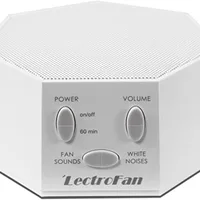
LectroFan Classic White Noise Machine (Global Power Edition, 20 Non-Looping Sounds)
Flow has replicable environmental antecedents — consistent, non-variable sound is one of them. A white noise generator gives the nervous system a steady acoustic floor so it stops threat-scanning.
As an Amazon Associate, we earn from qualifying purchases — at no extra cost to you.
The neuroscience adds detail that makes the design logic undeniable. Arne Dietrich at American University of Beirut documented what happens in the brain during flow: transient hypofrontality, reduced activity in the prefrontal cortex — the region responsible for self-monitoring, second-guessing, and social self-consciousness. The inner critic goes partially offline. Simultaneously, the brain's default mode network — the system generating rumination and mental time-travel between past and future — goes quiet.
You stop watching yourself work. You're just working. And that is the state worth designing toward.
Component 1: The Flow Block — Time Architecture First
The single highest-leverage change I've made is deceptively simple: one protected 90-minute block scheduled in my highest-alertness window, treated with the same inviolability as an external meeting.
This sounds like standard productivity advice. It isn't, because the reason matters and changes how you defend it.
Csikszentmihalyi's research establishes that flow requires sustained, uninterrupted engagement. And cognitive interruptions don't just pause focus — they reset it. Research by Gloria Mark at UC Irvine puts the recovery time at an average of 23 minutes after a significant interruption. If you're fielding messages or notifications every 15 minutes, you are mathematically incapable of entering flow at all. You're spending your entire day in the shallow end of your own attention.
The 90-minute duration isn't arbitrary. It maps to the ultradian rhythm — the 90-120 minute cycles of neural activation and rest that govern cognitive performance throughout the day. Working with these cycles rather than against them means you're accessing a biological tailwind, not fighting one.
Practically: I schedule the block the night before, at the same time each day, and I write one sentence defining exactly what I'll work on and what "done" looks like for that session. Clear goal. Specific scope. This removes the decision overhead that stalls focus in its first five minutes — the "where should I start?" paralysis that masquerades as procrastination but is really just ambiguity.
A quality time-boxing planner makes this practice systematic and keeps the calibration notes in one place — what you'll work on, the challenge level you're aiming for, the output marker that tells you when the session was successful. More on this in the "how to build" section.
Component 2: The Acoustic Environment — Why Silence Isn't Enough
The most common advice about focus environments is "find a quiet space." The flow research points to something more specific: consistent acoustic isolation, not just low volume.
Here's why the distinction matters. Ambient noise that varies unpredictably — coworker conversations, the irregular appearance of notifications, street sounds that rise and fall — keeps the brain's threat-detection system partially online. The amygdala can't distinguish "someone calling my name" from background human speech without processing it first, which means variable social sound is a continuous low-level demand on attentional resources even when you're consciously ignoring it.
Consistent sound (white noise, instrumental music, brown noise) or genuine silence allows the nervous system to stop scanning. That's the condition under which the prefrontal cortex can reduce its monitoring function — the very reduction that transient hypofrontality requires.
I use noise-canceling headphones for every flow block. Not primarily for music. For the acoustic isolation, and for the Pavlovian trigger: my brain has learned what putting them on means. The physical gesture signals the transition as effectively as any ritual I've tried.
For knowledge workers in shared environments — open offices, coworking spaces, home offices with household activity — acoustic isolation isn't a luxury. It's the environmental prerequisite that makes every other component possible.
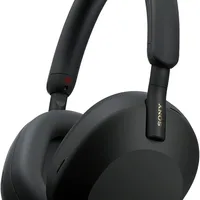
Sony WH-1000XM5 Noise Cancelling Headphones (Black)
Maps directly to the article line 'I use noise-canceling headphones for every flow block' — acoustic isolation plus the Pavlovian put-them-on trigger that signals the brain it's time to go deep.
As an Amazon Associate, we earn from qualifying purchases — at no extra cost to you.
Component 3: Challenge Calibration — The Flow Channel in Practice
Here's the insight from Csikszentmihalyi's research that most productivity articles skip entirely: flow doesn't visit people doing easy work. And it doesn't visit people doing impossible work either.
It lives in the flow channel — a precise band where both challenge and skill are high and closely matched. Where the task is genuinely difficult for your current level, but just within what that level can accomplish with full effort. Below this band: boredom and disengagement. Above it: anxiety and performance degradation.
The practical implication changes how you sit down to work. You don't design for flow by making your work more comfortable. You design for it by continuously calibrating its difficulty against the leading edge of your current capability.
Concretely: if a task feels overwhelming, don't push through blindly — break it into smaller units until you find the piece that's achievable with full effort. That's the flow-accessible version. If a task feels too routine, add a constraint: a tighter deadline, a higher quality standard, a narrower scope requiring more precision. The challenge has to grow as your skills grow.
This is also where Cal Newport's architecture of deep work converges precisely with what the flow science predicts. Deep work — extended, uninterrupted engagement with cognitively demanding tasks — isn't just a productivity strategy. It's the structural condition under which challenge-skill calibration can actually operate. You can't calibrate what you never stay inside long enough to feel.
The deeper principle: flow isn't merely a performance state. It's a development state. The skill consolidation, the creative outputs, and the neuroplastic changes that accumulate from sustained work at the challenge-skill edge — that's not a metaphor for growth. At the biological level, that's what growth is.
Component 4: The Four-Stage Cycle Protocol — What Nobody Tells You
This is the piece of the flow research that most articles leave out. And leaving it out is precisely why people end up frustrated when they can't force themselves into flow on demand.
Flow is not a state you enter directly. It is stage three of a four-stage cycle. You cannot reach stage three without completing stages one and two first.
Steven Kotler at the Flow Research Collective spent years documenting this cycle through interviews with elite athletes, special operations personnel, and world-class creative professionals. His central finding: the people who access flow most reliably are not the ones who try hardest to enter it. They're the ones who understand and respect the full cycle.
-
Struggle — Intense engagement with a challenging problem. It's hard. It doesn't feel like flow — it often feels like the opposite, a resistance that your brain wants to escape. This is the stage most people interpret as a sign that flow isn't coming, and they bail to easier stimulation. They're wrong. Struggle is loading the challenge into working memory. It's not a sign of failure. It's the necessary prerequisite.
-
Release — A deliberate shift to lower-intensity activity — a slow walk, a shower, a few minutes of stretching without a screen — that allows the nervous system to transition from analytical to associative processing. This is the phase from which breakthrough insights arrive. The brain's background processes complete while conscious attention is elsewhere. This isn't optional. It isn't procrastination. It's physiologically necessary for the transition into flow.
-
Flow — The state itself. Optimal duration in the research runs 90-120 minutes before cognitive resources begin to deplete noticeably.
-
Recovery — The consolidation phase in which the neurochemical resources expended during flow — dopamine, norepinephrine, anandamide, serotonin, and endorphins, what Kotler calls the "flow cocktail" — are restored. Without adequate recovery, the next cycle can't be fully initiated. This is why people who try to maintain flow-level intensity continuously find that access deteriorates within days.
Recovery isn't a failure of commitment. It's the precondition for the next cycle.
Understanding this model changes the entire shape of your day. You plan for struggle before flow — meaning early resistance isn't a sign to quit. You build deliberate release transitions between deep work blocks. And you protect post-session downtime as part of the protocol, not a departure from it.
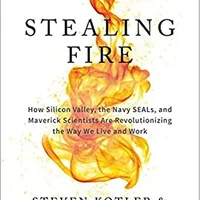
Stealing Fire — Steven Kotler & Jamie Wheal (Paperback)
Sits immediately after the four-stage-cycle (Struggle/Release/Flow/Recovery) section — Kotler & Wheal's own book on the science of peak/altered states. The single most contextually-relevant read at this point in t…
As an Amazon Associate, we earn from qualifying purchases — at no extra cost to you.
Component 5: The Pre-Flow Ritual — Designing the Transition
The last component took me the longest to take seriously: the 10-15 minutes before the flow block begins.
A consistent, repeated pre-flow sequence — the same playlist, the same beverage, the same physical desk configuration — becomes a conditioned cue over time. Your brain learns the pattern: this sequence means it's time to go deep. The cognitive settling that would otherwise take 20-30 minutes of slow adjustment begins to happen in five.
Csikszentmihalyi's research on the conditions that reliably produce flow includes one that gets less attention than the challenge-skill balance: unambiguous initiation. The person entering flow knows what they're about to do and why it matters. They don't begin with a scanning phase — checking email, deciding what to work on, rearranging notes. They walk into the block with purpose already established.
The pre-flow ritual is what builds that clarity before the block begins. Three elements I've found essential: the one-sentence goal written the night before (already covered above); a brief physical signal — putting on headphones, clearing the desk of everything unrelated to the task; and two or three minutes of quiet — no phone, no music yet — that acts as a hard reset between whatever happened before the block and what's about to begin.
It looks minimal. The effect accumulates.
How to Build This Setup Starting This Week
You don't need to implement all five components at once. Trying to redesign your entire work environment in a single weekend is one of the more reliable ways to abandon the whole project by Thursday.
Here's the sequence that builds each component on the previous one:
Week one: Block and goal. Schedule a single 90-minute flow block at your highest-alertness time. The night before, write the one-sentence goal and completion marker. Do this for five working days before adding anything else. Use a physical planning tool — not a digital calendar where notifications live — to keep these notes.
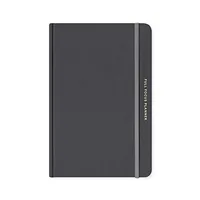
Full Focus Planner by Michael Hyatt (Linen Hardcover, 90-Day Cycle)
Maps to 'Week one: Block and goal — use a physical planning tool, not a digital calendar where notifications live' and the time-boxing planner referenced in Component 1.
As an Amazon Associate, we earn from qualifying purchases — at no extra cost to you.
Week two: Acoustic isolation. Add consistent sound management to the block — noise-canceling headphones, white noise, or a dedicated quiet space. Notice how the absence of variable interruption changes the quality of the first 30 minutes.
Week three: Challenge calibration. At the start of each block, explicitly ask: is this task at the leading edge of my current ability? If the task feels too vague or too routine, adjust before beginning. The calibration takes less than two minutes once you've done it a few times.
Week four: Cycle awareness. Start treating the 10 minutes before each block as the initiation ritual phase and the 20 minutes after as recovery. Log what you notice about your access to flow as the four stages become intentional rather than accidental.
Week five onwards: Refine. The fifth component — pre-flow ritual consistency — tends to lock in once you've been running the cycle deliberately for three to four weeks. By this point you're not following a protocol so much as returning to something that feels normal.
For the structural reading that makes all of this click at a deeper level, Newport's account of the work architecture that produces deep engagement remains the clearest bridge between the neuroscience and the practical setup.
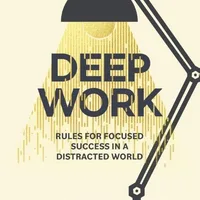
Deep Work — Cal Newport (Paperback)
Closes the 'How to build this setup' section — the article explicitly calls Newport's Deep Work 'the clearest bridge between the neuroscience and the practical setup'.
As an Amazon Associate, we earn from qualifying purchases — at no extra cost to you.

The Bigger Picture
Csikszentmihalyi wasn't describing a productivity technique when he named flow. He was describing what humans look like when they're fully using themselves.
The state where your current best meets the edge of what you don't yet know. Where the work isn't something you endure to reach the reward at the end — the work is the reward, because full engagement with a genuine challenge is intrinsically satisfying in a way that no external recognition can replicate.
Edward Deci and Richard Ryan at the University of Rochester, whose Self-Determination Theory is the most comprehensive account of human motivation ever developed, describe this as the convergence of three basic psychological needs: autonomy (you chose this activity and feel it's genuinely yours), competence (you're effective in it, working at your capable edge), and relatedness (it connects you to something or someone beyond the immediate task). When all three are present, the intrinsic motivation that makes flow accessible is at its maximum.
That's not a coincidence. Flow is what optimal motivation feels like from the inside. It's what designing your evolution looks like in practice: not more discipline, not a better app, but the conditions your brain actually needs.
The setup described here doesn't manufacture flow. Nothing can force a state that depends on genuine engagement with genuine challenge. What the setup does is remove the structural barriers — the acoustic chaos, the goal ambiguity, the schedule interruptions, the cycle mismanagement — that prevent flow from occurring even when you're fully willing to work hard.
You're removing the obstacles. The engagement is yours to bring.
What's one thing in your current work environment you know — honestly — is actively preventing you from reaching your deepest focus? And what would it take to change just that one thing this week?
Was this helpful?