Mindset· 12 min read
FOMO: Why Everyone Else's Life Looks Better (and the Fix)

FOMO: Why Everyone Else's Life Looks Better (and the Fix)
You're at home on a Friday night, perfectly comfortable, when your phone buzzes. Someone just posted photos from a party you weren't at. The food looks incredible. Everyone seems to be laughing at something hilarious. And somewhere in your chest, a small but insistent voice says: you should be there.
You weren't even sure you wanted to go out tonight.
That gap — between being content one moment and suddenly feeling like you're missing something essential — is FOMO at work. It's not a character flaw or a sign that you're bad at being happy. Research suggests it's rooted in something far more fundamental than jealousy.
What FOMO Actually Is (It's Not What You Think)
The term "fear of missing out" has been traced to the early 2000s and spread widely with social media, but the feeling is older than smartphones. What changed is the delivery mechanism.
Andrew Przybylski and colleagues published one of the first systematic studies of FOMO in 2013 in Computers in Human Behavior. Their definition is worth sitting with: FOMO is "a pervasive apprehension that others might be having rewarding experiences from which one is absent." The key word is apprehension — it's forward-looking anxiety about a present moment you're not in, not simple envy about someone else's possessions.
Their research found that FOMO wasn't random. People who reported lower satisfaction of basic psychological needs — competence, autonomy, and relatedness — tended to score higher on FOMO. The authors also proposed that FOMO may help explain the link between those unmet needs and heavier social media use. Social media may not create the problem so much as give existing unmet needs a mirror to look into, many times a day.
Self-determination theory — the framework Przybylski's team drew on — holds that belonging, competence, and autonomy are not nice-to-haves but genuine psychological necessities. When one or more goes unmet, people are motivated to restore them, sometimes in ways that don't actually help.
This matters because it shifts the question. The usual advice — "just use your phone less" — treats FOMO like a habit to break. But if unmet needs are part of what's driving it, rationing screen time alone is like turning down the volume on a smoke alarm while the smoke stays put.
social comparison theory stop comparing yourself
The Social Media Amplifier
That said, the platform design is not innocent.
A 2018 study by Milyavskaya and colleagues published in Motivation and Emotion tracked FOMO using experience sampling — brief check-ins several times a day — and an end-of-semester follow-up, looking at how common FOMO is, how it fluctuates, and what it costs people. FOMO was most common later in the day and near weekends, and over the course of a semester it linked to increased negative affect, fatigue, and stress.
It's plausible that FOMO and checking feeds feed each other: you feel the pull, you scroll, you see more things to miss, and you feel the pull again. Treat that loop as a hypothesis rather than a settled finding. Either way, you're often not scrolling because it feels good. You're scrolling because not scrolling feels worse.
This is the trap most productivity advice misses. It frames FOMO as a time-management problem when it's at least partly an emotional-regulation problem. Your attention keeps getting pulled back because part of you is trying to relieve discomfort — it just chose a poor tool for the job.
Why Everyone Else's Life Looks Better
Here's something worth knowing: it doesn't, really.
What you're seeing on anyone's social feed is a heavily curated reel. This isn't a cynical observation — it's just how sharing works. People photograph the remarkable, not the mundane. They post the trip, not the two-hour delay. They share the promotion, not the three rejection emails that came first.
There's also the asymmetry of context: you have full access to the textures of your own life — the dull Tuesday afternoons, the small disappointments, the meals that weren't worth photographing. You have almost no access to theirs. So you're comparing the full spectrum of your experience against their curated sliver.
There's also a cognitive pattern worth naming: the "focusing illusion," described by Daniel Kahneman and colleagues (Schkade and Kahneman, 1998). When you focus on one aspect of a situation, you tend to overweight its effect on overall happiness. You see the photos from Tuscany and briefly imagine their whole life is Tuscany. Yours, by contrast, includes the dentist appointment on Tuesday and the email you've been putting off since Wednesday.
The comparison is structurally unfair. You're running their highlight reel against your unedited footage.
Knowing this doesn't automatically fix the feeling. But it does create a little distance from it. The other person isn't living more. They're just showing less.
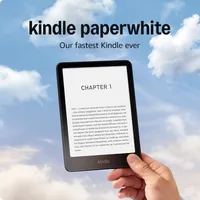
Kindle Paperwhite (12th Gen, 16GB)
As an Amazon Associate, we earn from qualifying purchases — at no extra cost to you.
The JOMO Reframe (and Why It Takes Practice)
The antidote most commonly suggested is JOMO — the Joy of Missing Out — a phrase Anil Dash used in a 2012 blog post to describe the quiet satisfaction of not being everywhere and doing everything, and later developed by writer Christina Crook in her 2015 book.
The concept is appealing, but it can feel hollow if you approach it as a mere attitude adjustment. Telling yourself "I actually like staying in" while feeling a creeping sense of exclusion isn't JOMO. It's suppression with a nicer name.
What the research points toward is something more structural: when you're clear about what you actually want, missing out on what you don't want may stop feeling like loss.
Przybylski's data linked higher FOMO to lower need satisfaction. That is an association, not proof that meeting needs lowers FOMO — but it suggests the fix isn't about avoiding social media or convincing yourself you're fine. It may be about filling those needs through the commitments you do keep, so there's less hunger left for social media to exploit.
The Good Life — Robert Waldinger & Marc Schulz
As an Amazon Associate, we earn from qualifying purchases — at no extra cost to you.
How to Choose What to Skip Without the Regret
None of this requires going off the grid. Here are four shifts that work inside your actual week:
-
Name what you're choosing toward, not what you're opting out of. Instead of "I'm skipping that event," try "I'm protecting this evening for something I care about more." The same decision, framed differently, carries a completely different emotional weight. Self-determination research suggests that the felt sense of choosing matters for well-being, not just the outcome. When you opt out as an act of choice rather than avoidance, regret may fade.
-
Schedule belonging on purpose. Since unmet relatedness needs are linked to FOMO, one practical step is making sure your calendar includes real contact with people who matter — not the performative kind that ends up on a feed, but the kind where you're actually present. A standing dinner with a friend, a weekly call with family, a consistent group activity. These create a felt sense of connection that makes the online version feel less urgent.
-
Audit your feed like a subscription service. You cancel subscriptions that no longer serve you. Apply the same logic to who you follow. The question isn't whether someone is a good person — it's whether seeing their content consistently leaves you feeling better or worse about your own life. A quick audit every few months is a reasonable way to reduce your FOMO triggers without requiring a full detox.
-
Try a 10-minute delay when you feel the compulsive pull. When you feel the urge to check social media out of anxiety rather than genuine curiosity, set a timer for ten minutes and do something else first. This is a practical experiment, not a research-proven protocol: the idea is that a small gap between the urge and the action can interrupt the automatic loop.
how to build habits that actually stick science
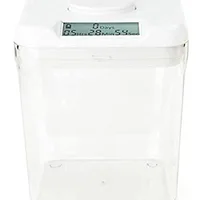
Kitchen Safe kSafe Time Locking Container (Medium)
As an Amazon Associate, we earn from qualifying purchases — at no extra cost to you.
A Caveat Worth Keeping
FOMO research is largely self-report, meaning the studies show associations rather than confirmed causes. It's possible that some people are simply more prone to social comparison regardless of platform, and that social media is the arena rather than the driver. Whether FOMO drives compulsive use, or compulsive use intensifies FOMO, remains genuinely unclear.
This means the interventions above are grounded in the evidence but not proven formulas. What works varies. If the feeling of missing out is persistent and affecting your daily life in a significant way, that's worth talking to someone about — not because FOMO is a clinical condition, but because it can be a symptom of loneliness or anxiety that benefit from more direct support.
The Happiness Trap (2nd Edition) — Russ Harris
As an Amazon Associate, we earn from qualifying purchases — at no extra cost to you.
The Design Question Underneath
There's a version of this problem that rarely gets named: FOMO is partly a signal that you haven't yet decided what you want your life to look like.
When you're clear on that — genuinely clear, not aspirationally clear — missing things gets easier. Not because you stop caring, but because you have a reference point. You know what you said yes to. Every invitation you turn down becomes confirmation of that choice, not evidence that you're being left behind.
Choosing what to skip — consciously, deliberately — is one way to design your evolution: deciding where you're headed before the algorithm decides for you.

Clever Fox Habit Calendar Circle (24-Month)
As an Amazon Associate, we earn from qualifying purchases — at no extra cost to you.
FOMO, at its core, is a compass needle without a destination. It spins toward wherever other people seem to be going. The fix isn't to disable the compass — it's to give it somewhere to point.
What would change in your week if you spent ten minutes deciding, in writing, exactly what you're choosing toward right now?
how to design your ideal week intentional living
Was this helpful?