Mindset· 10 min read
How to Get Motivated When Nothing Feels Exciting Anymore
Lost your drive? Science-backed strategies to reignite motivation when burnout or emptiness has drained your energy for the things that used to matter.

How to Get Motivated When Nothing Feels Exciting Anymore
There's a particular kind of awful that nobody talks about honestly. It's not a breakdown. It's not a crisis. You're still showing up, still functioning, still ticking items off some version of a list.
But you sit down to work on the thing that used to matter — the project, the goal, the habit — and there's just... nothing. No pull. No current. Not even resistance, really, because at least resistance implies something worth fighting. This is flatness. Motivational grey.
You know what you should want. You just can't seem to want it right now.
Here's what most people do at this point: they scroll for inspiration, watch a motivational video, re-read their vision board, and then feel worse when none of it moves them. Or they push harder, white-knuckling their way through tasks that feel increasingly hollow, draining the last reserves of something that was already running low.
Both approaches miss the diagnosis entirely. And without the right diagnosis, no prescription is going to work.
Motivation Is Not a Personality Trait — It's a System Output
The single most damaging lie in the personal development world is that motivation is something you have or you don't. Watch enough YouTube content and you'd be forgiven for thinking some people were simply manufactured with more dopamine, more drive, more grit baked in from the start.
They weren't. They just have systems — external and internal — that happen to be calibrated for what they're currently pursuing.
Daniel Pink spent years researching what actually drives human motivation and published the findings in Drive, one of the most useful books ever written on this subject. His conclusion: lasting motivation comes from three sources. Autonomy — the sense that you're choosing your work, not just executing someone else's agenda. Mastery — the feeling of genuine progress in something that matters. Purpose — a connection between what you're doing and something larger than the task itself.
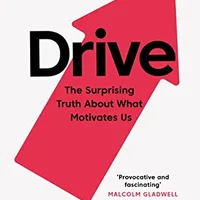
Drive: The Surprising Truth About What Motivates Us — Daniel H. Pink
Pink's three-pillar framework for lasting motivation — autonomy, mastery, purpose — is one of the most useful diagnostic tools ever published on this subject. Over 3 million copies sold; the kind of book that permanen…
As an Amazon Associate, we earn from qualifying purchases — at no extra cost to you.
When all three are present, motivation feels effortless — almost suspicious. When any one is absent, it weakens. When two are gone, it collapses. When all three are compromised, you get that grey flatness.
This is actually good news. Systems can be diagnosed. Systems can be fixed. Character flaws cannot — but character flaws aren't what's happening here.
The Three Hidden Reasons Your Drive Has Gone Quiet
Motivation rarely disappears for one reason alone. But in almost every case, it traces back to one of these three sources.
Goal-Identity Mismatch
You've grown. Your goals haven't noticed.
Jim Rohn talked often about the necessity of growth preceding change — "for things to improve, you have to improve." But the inverse is equally true: when you change, your old goals can quietly become misaligned with who you've become. You're still pursuing the ambitions of the person you were 18 months ago, and somewhere in your nervous system, a low-grade signal keeps firing: this doesn't fit anymore.
Chasing goals that have outgrown your current identity doesn't feel like lack of motivation. It feels like wearing someone else's clothes. The discomfort is so familiar you've stopped noticing it — but it's still there, and it's still draining.
Depleted Recovery Cycles
Jim Loehr and Tony Schwartz wrote about this in The Power of Full Engagement: energy, not time, is the foundational resource of high performance. And energy requires oscillation. Push, recover. Push, recover. Push, push, push with no recovery, and you don't burn out suddenly — you dim slowly.
If you've been in extended output mode with minimal real rest, you're not broken. You're depleted. And depleted people don't respond to motivational content the way rested people do. The receptors are temporarily offline.
The Progress Stall
Here's the one that surprises people. Neuroscientist Wolfram Schultz's research on dopamine revealed something important: dopamine neurons fire most strongly in response to the cue that predicts a reward, not when the reward itself arrives — a phenomenon called the reward prediction error. Once you know a reward is coming, the anticipatory signal is what drives the system. The practical implication: starting a task and seeing any forward movement generates the neurochemical signal that makes continuing feel worthwhile. Stagnation removes that signal entirely.
When progress stalls — whether because a goal got too big, too vague, or too distant — the neurochemical signal that makes pursuing it feel worthwhile simply stops firing. You can't think your way back to motivation when the biological feedback loop has gone quiet. You have to restart it mechanically.
For more on Schultz's original work, see his 1998 paper in the Journal of Neurophysiology.
The Motivation Ignition Sequence: Start Stupidly Small
Here's where most advice misses the mark entirely.
"Reconnect with your why." "Journal about your values." "Visualize the life you want." These are all useful tools — at the right moment. But recommending them to someone in a motivation flatline is like pouring premium petrol into a car with a dead battery. The engine won't turn over regardless of fuel quality.
What actually restarts the system is mechanical, not inspirational.
Jeff Haden makes a case in The Motivation Myth that is, frankly, more useful than anything written about motivation in the past decade: motivation doesn't precede action. It follows it. Specifically, it follows small, visible success.
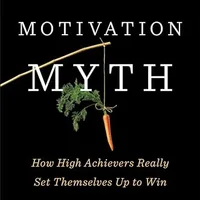
The Motivation Myth — Jeff Haden
Haden's central argument — that motivation doesn't precede action, it follows small visible success — is the most counterintuitive and practically useful thing written about motivation in years. Highly readable; the k…
As an Amazon Associate, we earn from qualifying purchases — at no extra cost to you.
The real sequence is: Act → Small Win → Motivation → More Action → Larger Win → More Motivation.
Not the other way around.
This means your goal on a motivationally flat day is not to feel motivated before you start. Your goal is to manufacture the smallest possible success and let the biology do the rest.
Write one paragraph — not the chapter. Do one set — not the full workout. Make one call — not all ten. Open the file, write one sentence, save it. Done.
You're not trying to accomplish the goal. You're trying to restart the feedback loop that makes pursuing the goal feel meaningful. That loop needs a win to ignite it, not a feeling.
This sounds almost insultingly simple. Most genuinely effective things do.
The Identity Audit: Are These Still Your Goals?
Once you've got the loop running — even barely — it's worth pausing to check whether the thing you're trying to motivate yourself toward is actually something you still want.
This sounds obvious. It almost never gets done.
Tony Robbins draws a sharp line between goals you think you should have and goals you genuinely, privately want. The former are borrowed — inherited from parents, copied from comparisons, left over from the person you were when you set them. The latter come from somewhere more internal, somewhere that doesn't require external validation to feel real.
Here's a three-question audit you can run in about 20 minutes:
- If I achieved this and nobody else ever found out — would it still matter to me?
- Am I pursuing this, or the approval and validation that would come with it?
- Is this what the version of me I'm growing into would choose — or what the version I'm leaving behind would have chosen?
Sit with those. The answers can be uncomfortable. They can also be clarifying in a way that no productivity framework will ever match.
If a goal fails all three, you don't have a motivation problem. You have a goal problem. And no amount of discipline, morning routines, or accountability partners will manufacture genuine desire for something your deeper self has already decided it doesn't want.
Releasing a goal that no longer serves you is not quitting. It's precision. And precision makes everything else sharper.
Rebuilding the Environment That Supports Drive
Something almost no one mentions in conversations about motivation: your physical environment is either quietly fueling you or quietly draining you. Most people have environments that are doing the latter.
Three changes with disproportionate returns:
Move before you think. Research consistently shows that aerobic exercise increases BDNF (brain-derived neurotrophic factor) — a protein that supports neural plasticity, mood, and cognitive clarity. Psychiatrist John Ratey, author of Spark: The Revolutionary New Science of Exercise and the Brain, documents how even moderate-intensity movement — a brisk 20-30 minute walk — measurably elevates BDNF and primes the brain for learning and motivated action. You don't need a 90-minute training session. You need to interrupt the transition from bed to screen. Walk around the block. Your brain will follow.
Eliminate the first 30 minutes of decision friction. Motivation is a cognitive resource, and it erodes with every micro-decision you make before you start the work that matters. What am I eating? What do I reply to first? What do I wear? The more decisions you can pre-make or eliminate, the more bandwidth arrives intact at the moment you actually need it. Prepare the night before. Set a clear first task. Remove alternatives.
Build a physical anchor. Elio D'Anna writes about space as philosophical container — environments where a specific version of yourself operates. That's not just philosophy; it's contextual cuing, a well-documented psychological phenomenon. Your brain learns to associate specific environments with specific states. A dedicated workspace — cleared, intentional, used consistently — trains your nervous system to shift into focus when you enter it. A kitchen table divided between meals, homework, and work doesn't have this property.

The Two-Day Rule: A Better Standard Than Perfection
Most habit maintenance advice is built around streaks — don't break the chain, never miss a day. The problem is that streaks create brittle motivation. One missed day doesn't just break the streak; it triggers a story about what that missed day means. You're not the kind of person who does this. You never were. The whole thing was a facade.
That story is motivation's fastest killer.
A better framework comes from a simpler place: never miss two days in a row.
One missed day is being human. Two missed days is the beginning of a new habit — the habit of not doing.
The two-day rule works because it removes perfection as the standard, while maintaining continuity as the goal. It gives you permission to be imperfect without giving you permission to stop. And it doesn't feed the story that failure is identity — it treats it as weather.
Apply this rule to exactly one keystone habit. Not five behaviors you want to build. One. The habit that, when done, makes you feel like the version of yourself you want to be — even slightly. That singular thread, maintained with the two-day rule, creates more motivational momentum over time than any sweeping transformation program ever will.
A quality habit journal isn't about tracking twenty things. It's about keeping that one thread visible, front and center, every single day.

Clever Fox Habit Calendar Circle (24-Month Habit Tracker)
The two-day-rule section prescribes one keystone habit. A quality habit journal keeps that one thread visible, front and centre, every single day. The Clever Fox Habit Calendar Circle is purpose-built for exactly that…
As an Amazon Associate, we earn from qualifying purchases — at no extra cost to you.
How to Start When You Still Don't Feel Like It
Here is the hardest truth in all of this, and probably the most useful:
You will not feel motivated before you start. Not reliably. Not even after you've applied everything in this article. Some days the feeling precedes the action. Most days it doesn't.
Steven Pressfield calls the force that prevents starting "Resistance." It's shapeless, convincing, and most intense around the work that matters most. The path through it isn't to defeat it — it's to start anyway, in the absence of the feeling, trusting that the feeling will arrive once you've moved.
Joseph Murphy wrote about the power of acting as if — beginning with the behavior before the internal state has arrived. Not as magical thinking. As a neurological primer. When you sit down and begin — even flatly, even mechanically, even without believing it will go anywhere — your brain begins to build the state retroactively. The act of doing signals to your nervous system: this is what we do now. And the neurochemistry follows.
You don't find motivation by waiting for it. You generate it by moving.
The brilliant paradox of motivation is this: the very moment that feels like the worst time to start is often the moment that most needs you to start anyway.
Five Steps for the Next 24 Hours
If you want to move from reading this to actually doing something, here is the sequence:
-
Name your one keystone habit. Not a list. One. The behavior that, when you do it, makes you feel most like the person you're building toward.
-
Set its smallest possible version. Not the full expression of it. The minimum viable version. Five minutes. One page. A single rep. Something you could do even on your worst day.
-
Prepare your environment tonight. Clear the desk. Remove the decision points. Set up the one thing you'll work on first when you sit down tomorrow.
-
Do the minimum version tomorrow. Before you check anything. Don't wait for the feeling. Generate it.
-
Apply the two-day rule to that one habit for the next three weeks. Nothing else. Just that.
If you want to go deeper into the mechanics of what actually drives sustained human performance — beyond the surface-level advice — Daniel Pink's Drive and Jeff Haden's The Motivation Myth are the two books most worth your time. Both will change how you diagnose the quiet resistance in your own system.

Kindle Paperwhite (2024, 12th Generation, 16GB, Without Ads)
The reading vehicle for the two-book prescription this article closes with. The 2024 Paperwhite — 25% faster page turns, 12-week battery, waterproof — aligns with reading in transit or during the recovery windows the…
As an Amazon Associate, we earn from qualifying purchases — at no extra cost to you.
Your Operating System Was Always There
Motivation was never a gift handed out unevenly. It was always a system — driven by identity, energy, environment, progress, and the meaning you assign to what you're pursuing.
When the system stops producing output, you don't need inspiration. You need a diagnostic. Look at the inputs, identify what's missing or misaligned, and start generating the small wins that restart the cycle.
That's what designing your evolution actually means. Not performing enthusiasm you don't feel. Not grinding through joyless days with sheer willpower. Understanding your own operating system deeply enough to know what it needs — and giving it that, even on the days you'd rather not.
The flatness you feel right now isn't a verdict. It's a signal. And signals can be answered.
What's the one thing, if you did it consistently this week, would make you feel most like yourself again? Drop it in the comments — sometimes naming it out loud is the first thing the system needs.
Was this helpful?