Mindset· 11 min read
I Dismissed Vision Boards — Until I Found the Science
Vision boards get dismissed as wishful thinking. Neuroscience says they work — if built right. Here's the evidence and method.
I Dismissed Vision Boards — Until I Found the Science
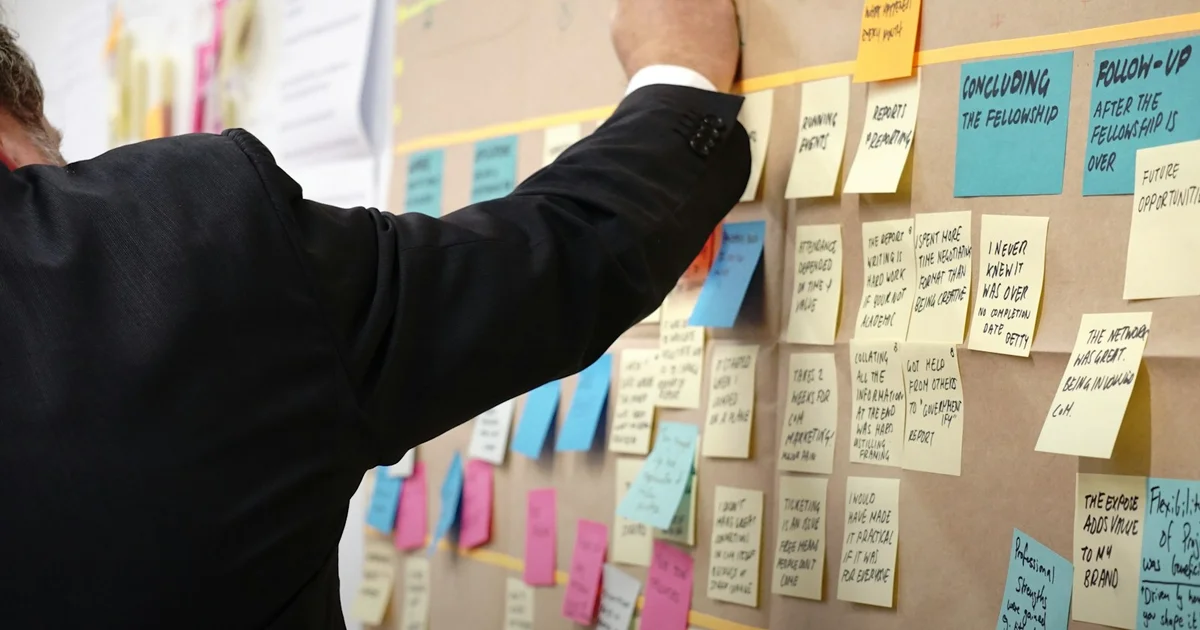
A friend showed me her vision board three years ago and I genuinely tried not to laugh. There were magazine cutouts of beach houses, a Tesla, some motivational quote in cursive, and a photo of Oprah. It looked like a craft project from a middle school sleepover. I nodded politely, went home, and told my partner it was the most ridiculous thing I'd ever seen.
Six months later, she'd landed a promotion she'd been chasing for two years, started a side business, and moved into a flat that looked suspiciously similar to one of those magazine cutouts. Coincidence? Maybe. But something nagged at me. Not the woo-woo part — the results part.
So I did what any skeptic does when their worldview gets challenged. I went looking for the science. And what I found didn't just change my mind about vision boards. It changed how I think about goals entirely.
The Problem With How Most People Set Goals
Here's the thing nobody talks about: most goal-setting is a left-brain exercise. You write down targets, break them into tasks, build timelines, track metrics. It's logical. It's structured. And for a lot of people, it's completely uninspiring.
Jim Rohn used to say, "If you don't design your own life plan, chances are you'll fall into someone else's plan." What he didn't say — but probably knew — is that design isn't just an intellectual activity. It's a sensory one. You don't design a house by listing square footage. You walk through it in your imagination. You feel the sunlight. You hear your kids running down the hallway.
Research on mental imagery and goal pursuit has consistently shown that people who engage in vivid mental simulation of desired outcomes are more likely to act on those goals than those who rely on written lists alone — a finding replicated across multiple psychology labs. Not because the universe rearranges itself. Because their brains do.
This is where the science gets genuinely interesting — and where most vision board advice falls apart.
Your Brain Has a Spotlight. You're Probably Pointing It at the Wrong Things.
There's a cluster of neurons at the base of your brainstem called the reticular activating system — the RAS, if you want to sound smart at dinner parties. Its job is deceptively simple: filter information. Your brain processes roughly 11 million bits of sensory data per second, but you're consciously aware of about 50. The RAS decides which 50.
Think about the last time you bought a car. Suddenly, you started seeing that exact model everywhere. They were always there. Your RAS just didn't flag them as relevant until you'd made the purchase decision. That's not magic. That's a filter update.
Now imagine deliberately programming that filter. Not through repetition of hollow affirmations, but through specific, emotionally loaded visual cues that tell your RAS: this matters to me. Flag anything related.
That's what a properly built vision board does. It's not a wish list pinned to corkboard. It's a daily firmware update for your attention system.
Dr. Tara Swart, a neuroscientist and former senior lecturer at MIT Sloan, explains it this way in her book The Source: when you repeatedly look at images connected to your goals, you strengthen the neural pathways associated with motivation and goal-directed behavior. You're not manifesting. You're training selective attention.

Kindle Paperwhite (2024)
This article references eight authors — Tara Swart, Jim Rohn, Bob Proctor, Napoleon Hill, James Clear, Bruce Lipton, T. Harv Eker, and Joseph Murphy. A Kindle turns that implicit reading list into instant, frictionles…
As an Amazon Associate, we earn from qualifying purchases — at no extra cost to you.
Why Most Vision Boards Fail (And Why That Proves Nothing)
Here's the part that drives me slightly mad. Skeptics point to vision boards that didn't work as evidence the concept is flawed. But that's like saying exercise doesn't work because someone did three pushups once and didn't get abs.
Most vision boards fail for one of three reasons.
First, they're too vague. A picture of a generic mansion tells your brain nothing actionable. There's no emotional charge, no specificity, no connection to your actual life. Your RAS yawns and moves on.
Second, they're passive. The whole "just put it up and let the universe do the work" approach isn't visualization — it's decoration. Research by Gabriele Oettingen at New York University found that pure positive fantasizing about a desired future actually reduced energy and effort. People who only visualized success were less motivated, not more. They'd already gotten the dopamine hit without doing anything.
Third, they skip the process. This one's the killer. If your vision board only shows outcomes — the beach house, the award, the body — you've built a destination board, not an evolution board. Research from UCLA published in Personality and Social Psychology Bulletin demonstrated that visualizing the process of achieving a goal (studying for an exam, in their experiment) produced significantly better results than visualizing the outcome (getting a good grade).
The people who imagined themselves sitting down, opening the textbook, and working through problems actually studied more hours and scored higher. The ones who imagined celebrating their A? They studied less.
So the vision board critics aren't wrong. They're just critiquing version 1.0.
How to Build a Vision Board That Actually Rewires Your Brain
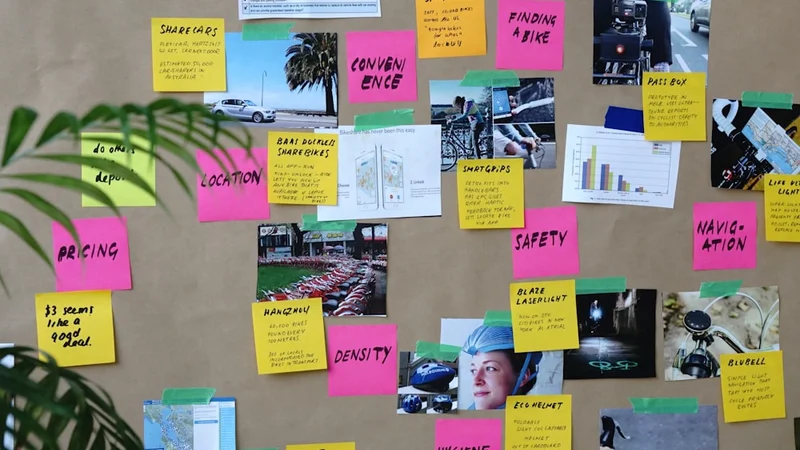
Version 2.0 — the one backed by actual neuroscience — looks different from the Pinterest-perfect boards you've seen online. Here's the framework I've used for the past two years, and the one I'd recommend to anyone who's serious about this.
Step 1: Get Ruthlessly Specific About What You Want
Not "financial freedom." Not "better health." Those aren't goals — they're categories. You need vivid, concrete images that spark a physical reaction when you look at them.
Bob Proctor talked about this constantly. He'd say your goal should make you feel slightly uncomfortable — a mix of excitement and fear. If the image doesn't create that tension in your stomach, it's not specific enough.
For me, one image was a screenshot of a bank balance at a number I'd never hit before. Another was a photo of a specific desk setup in a home office I wanted to build — down to the monitor, the chair, the lamp on the shelf. Not aspirational lifestyle content. My actual, designed future.
Step 2: Include Process Images, Not Just Outcomes
This is the Oettingen correction. For every outcome image, add at least one process image. If you want to write a book, include a photo of someone typing at 5 AM with coffee. If you want to run a marathon, find an image of someone doing a long, boring training run in the rain.
Your brain needs to rehearse the effort, not just the reward. Napoleon Hill wrote in Think and Grow Rich that the imagination is the workshop where all plans are created — but he also stressed that those plans must include action. The workshop without the blueprint is just an empty room.
Step 3: Use Words Sparingly — But Make Them Surgical
I'm not talking about "Live, Laugh, Love." I mean specific phrases that function like commands. "Write 1,000 words before 8 AM." "Say no to anything that isn't a clear yes." "Revenue target: [specific number] by December."
Your brain processes text and images differently, and the combination creates stronger encoding. But only if the words are precise enough to trigger the right neural associations.
Full Focus Planner — Michael Hyatt
The article recommends using specific phrases that function like commands. A planner with built-in goal templates and daily ritual sections is where those surgical targets live between vision board sessions — turning…
As an Amazon Associate, we earn from qualifying purchases — at no extra cost to you.
Step 4: Put It Where You Can't Ignore It
Sounds obvious. Almost nobody does it. A vision board in your closet is a journal entry you've forgotten. It needs to be somewhere you see it every single morning — ideally the first thing you look at when you sit down to work.
I use a large board mounted directly above my desk. Some people prefer a digital version as their laptop wallpaper or phone lock screen. The format matters less than the frequency of exposure. Dr. Swart recommends a minimum of twice daily for the priming effect to take hold.

Sony WH-1000XM5 Noise Cancelling Headphones
Deep visualization requires distraction-free focus. Dr. Swart recommends twice-daily priming sessions — these headphones create the sensory isolation that makes each session count. No background noise competing with y…
As an Amazon Associate, we earn from qualifying purchases — at no extra cost to you.
Step 5: Update It. Ruthlessly.
A static vision board is a dead vision board. Your goals evolve. Your understanding deepens. What excited you in January may bore you by March — and that's not failure, it's growth.
I revisit mine every 90 days. Some images come off. New ones go up. The board becomes a living document of your designed evolution, not a fixed snapshot of who you were when you made it.
Vision Board vs. Goal Setting: It's Not Either/Or
People love to set up this false binary. Vision boards OR goal setting. Visualization OR strategy. Feeling OR thinking.
The research doesn't support that split. Multiple studies on Mental Contrasting with Implementation Intentions (MCII) — a framework developed by Oettingen and Gollwitzer — show that visualization works best when combined with implementation intentions, the "when, where, and how" planning that traditional goal-setting provides. It's a double strategy that consistently outperforms either approach alone.
Think of it this way. Goal setting is the architecture. Visualization is the rendering. One gives you the blueprint; the other lets you walk through the building before it's built. You wouldn't construct a house with only blueprints and no sense of what it'll feel like to live in. And you wouldn't build purely from a feeling with no structural plan.
T. Harv Eker had a brilliant line about this: "Rich people believe 'I create my life.' Poor people believe 'Life happens to me.'" A vision board anchored to real strategy is an act of creation. A vision board without strategy is an act of hoping.
| Vision Board Only | Goal Setting Only | Both Combined | |
|---|---|---|---|
| Engages emotion | ✅ Strong | ❌ Weak | ✅ Strong |
| Provides structure | ❌ Weak | ✅ Strong | ✅ Strong |
| Activates RAS filter | ✅ Yes | ❌ Rarely | ✅ Yes |
| Includes process steps | ❌ Usually not | ✅ Yes | ✅ Yes |
| Triggers identity shift | ✅ Over time | ❌ Minimal | ✅ Fastest |
| Research-backed effectiveness | Moderate | Moderate | Highest (MCII) |
Atomic Habits — James Clear
The article quotes James Clear directly: "every action is a vote for the type of person you wish to become." Atomic Habits provides the identity-based framework that makes vision boards actionable rather than decorati…
As an Amazon Associate, we earn from qualifying purchases — at no extra cost to you.
The Part Nobody Mentions: Identity Priming
Here's what surprised me most in the research. The biggest effect of a well-designed vision board isn't motivational. It's identity-based.
When you surround yourself with images of the person you're becoming — their workspace, their habits, their daily rituals — you start to experience what psychologists call "identity priming." Your self-concept begins to shift before your circumstances do.
James Clear wrote about this in Atomic Habits: every action is a vote for the type of person you wish to become. A vision board, used correctly, is a daily ballot box. You're not just looking at pictures of things you want. You're rehearsing a version of yourself that already has them — and more importantly, that does the work to earn them.
Bruce Lipton's research on the biology of belief reinforces this from a different angle. Your subconscious mind doesn't distinguish well between real experience and vividly imagined experience. When you engage emotionally with specific visual cues repeatedly, your brain begins to form neural patterns consistent with that imagined reality. Not instantly. Not magically. But measurably, over time.
This is why the specificity matters so much. Generic luxury images don't trigger identity shifts. Your brain knows the difference between "wouldn't that be nice" and "this is who I'm becoming."
How to Start Today
You don't need a weekend retreat to build your first real vision board. Here's a stripped-down version you can complete in under an hour:
- Grab a physical board. Cork, foam, even a large piece of cardboard. Digital is fine, but physical boards generate slightly stronger emotional responses according to the research — your brain registers the tactile act of pinning and arranging as more significant than dragging files on a screen.

Weekly Whiteboard Wall Planner
The article says physical boards generate stronger emotional responses than digital ones. A wall-mounted dry erase board serves double duty as vision board display AND weekly planner — connecting daily actions to long…
As an Amazon Associate, we earn from qualifying purchases — at no extra cost to you.
-
Choose 3-5 goals. Not 15. Not "everything I've ever wanted." Three to five targets that genuinely make your pulse quicken when you think about them. Write each one as a specific, measurable statement.
-
Find 2 images per goal. One outcome image (what it looks like when you've achieved it) and one process image (what the daily work looks like). Pull from your own photos when possible — they carry stronger neural associations than stock images.
-
Add 2-3 surgical phrases. Not inspirational quotes. Specific commands or targets. Your brain needs to know exactly what you're committing to.
-
Mount it where you'll see it twice daily. Above your desk. Beside your bathroom mirror. On the wall you face when you wake up. Frequency of exposure is the mechanism, not hope.
The Board Is Not the Point
Here's what I'd tell my past self — the one who almost laughed at his friend's magazine collage.
The board itself is not the point. The board is a tool. A targeting system. A way to take the foggy, half-formed ambitions floating around in your head and make them concrete enough for your brain to actually work with.
Joseph Murphy wrote that the treasure house of infinity is within you — but even he stressed that you need to give your subconscious mind clear, specific instructions. Vague desires produce vague results.
My friend with the beach house cutouts? She didn't manifest anything. She looked at that board every morning and her brain started filtering her world differently. She noticed opportunities she'd have scrolled past. She made decisions faster because she'd already rehearsed what she was building toward. The board didn't change her reality. It changed her attention. And attention, it turns out, changes everything.
So do vision boards actually work? The honest answer: the bad ones don't. The good ones — specific, process-oriented, emotionally loaded, and consistently reviewed — don't just work. They quietly reprogram how you see the world.
And isn't that what designing your evolution actually means — not waiting for the right life to show up, but training your brain to build it?
I'm curious: have you ever tried a vision board that actually changed something for you, or are you still in the skeptic camp? Drop a comment below — I'd genuinely like to know what landed and what didn't.
Was this helpful?