Mindset· 10 min read
Locus of Control: How Rotter's Research Explains Coping
Rotter's 1966 research: an internal locus of control predicts better coping — even when you can't change a thing. Here's what the science shows.

Locus of Control: What Rotter's Research Reveals About Coping When You Can't Change a Thing
A friend called me last spring, about three weeks after her company had been acquired and her entire team eliminated in a single afternoon. No warning, no negotiation. Eleven years of her career, gone by the end of a forty-minute all-hands meeting she found out about via calendar invite at 9 AM.
She wasn't calling to vent. She'd already done that. She was calling because she'd noticed something strange about the people around her who were in exactly the same situation — same jobs lost, same shock — and yet seemed to be moving through it differently. Some had already started mapping next steps while she was still staring at the ceiling. Others seemed genuinely frozen, two months later, still waiting for something external to shift before they could do anything.
"Why," she said, "does the exact same situation look so completely different depending on who's inside it?"
I didn't have a clean answer then. But six decades of locus of control research do. And it's not the answer most people expect.
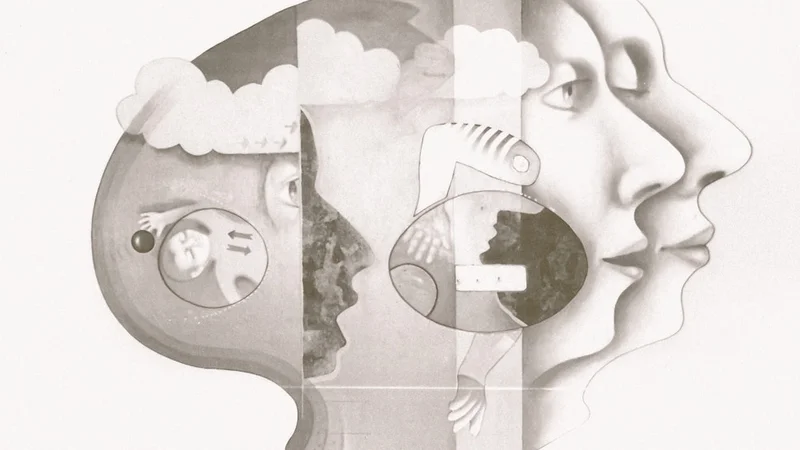
What Julian Rotter Actually Proposed in 1966
Julian Rotter, a psychologist working in the United States in the mid-twentieth century, published "Generalized Expectancies for Internal Versus External Control of Reinforcement" in Psychological Monographs in 1966. Dense title. Genuinely important idea.
What Rotter proposed was a single, measurable personality-level variable he called locus of control — the general tendency a person carries to explain their own life outcomes as resulting mainly from their own choices and actions (an internal locus) or mainly from forces outside themselves: luck, timing, other people's decisions, fate (an external locus).
He built a scale to measure where people sat on that spectrum. Then he — and the researchers who picked up his framework over the following decades — tested it against everything they could find: academic performance, physical health outcomes, workplace behavior, responses to loss, responses to illness, clinical anxiety rates, persistence in the face of failure.
The finding that held up, consistently, across very different settings and populations, was this: people scoring toward the internal end of the scale showed better psychological adjustment, more effective coping, greater resilience, and measurably lower rates of anxiety and depression when facing difficult circumstances.
Not because those circumstances were more within their control.
Often, they weren't. The situations Rotter's subjects faced were frequently just as objectively uncontrollable as the situations faced by external-locus people sitting right beside them. Same circumstances. Measurably different outcomes.
Something else was doing the work.
The Real Mechanism: Locus of Control Is an Attentional Habit
Here's the part most popular summaries of this research quietly skip.
Locus of control isn't primarily a belief about what's true in the world. It doesn't require you to accurately assess how much control you actually have over a situation. It's an attentional habit — a habitual direction of cognitive focus that operates almost automatically, particularly under stress.
When something goes wrong, an internal locus of control directs attention toward one specific question: What, within this situation, can I still actually do? Not what you wish you could do. Not what you could do if circumstances were different. What you can genuinely do, right now, with what's actually available.
That search happens fast, almost reflexively, in people for whom an internal orientation is the habitual default. They're not necessarily more optimistic than external-locus people. They're not denying the difficulty of the situation. They're just automatically scanning for the ledge of genuine agency — however narrow — that exists inside even a largely uncontrollable situation.
An external locus, by contrast, directs attention toward the uncontrollable parts of the situation themselves. The unfairness. The bad timing. The other people whose decisions shaped this outcome. None of that attention is wrong — those things are often genuinely real. But spending cognitive effort there doesn't expand what's actually available to you. It tends to narrow it, because you're running the analysis on the portion of the problem you can't affect.
Viktor Frankl described something close to this mechanism from the inside rather than from a research position — not as someone observing behavior in others, but as someone surviving conditions where virtually nothing was objectively within his influence. What he documented in Man's Search for Meaning is that the last remaining freedom — the freedom to choose one's response to a situation — proved to be both inalienable and consequential, even in circumstances most people would write off entirely as uncontrollable. Rotter's data gives that observation an empirical structure. The attentional habit Frankl describes is, more or less, what an internal locus of control looks like from the inside.

Man's Search for Meaning — Viktor E. Frankl
The article devotes a full paragraph to Frankl documenting this exact mechanism from the inside — 'the last remaining freedom, the freedom to choose one's response'. The reader has just been told Rotter's data gives F…
As an Amazon Associate, we earn from qualifying purchases — at no extra cost to you.
The Counterintuitive Part: Being Accurate About Control Doesn't Help as Much as You'd Expect
You might reasonably assume the most adaptive psychological position is a perfectly calibrated one: believing you have influence when you genuinely do, and accurately acknowledging that you don't when you genuinely don't. Precision over bias, at every moment.
That's not what the data shows.
What decades of locus-of-control research found is that a stable internal orientation — even when it's slightly miscalibrated, even when applied to situations where a meaningful portion of the outcome is genuinely determined by external factors — consistently outperforms a more contextually accurate but less stable internal/external distinction, in terms of coping and adjustment.
The mechanism researchers propose for this is worth sitting with: the benefit of an internal orientation comes precisely from not stopping to calculate whether agency is still worth looking for. That calculation takes cognitive resources. It creates hesitation. And in situations already demanding those same resources, hesitation tends to tip into a kind of paralysis — a holding pattern where you're waiting for clarity about whether you should be trying before you actually try anything.
An internal locus short-circuits that. It just searches for the lever. Whether the lever is there, and how much it moves, gets discovered through action rather than through prior assessment of whether action is warranted.
This doesn't mean magical thinking. The internal-locus person isn't telling themselves the situation is different than it is, or that attitude alone changes material outcomes. They're directing cognitive effort toward whatever genuinely actionable fraction exists — however small — rather than spending that effort assessing the larger portion that isn't theirs to move.
That's an important distinction. It's the difference between delusional optimism and what the research actually describes.
Related read: The Victim-Owner Switch: How to Take Back Your Story
How This Is Different From Learned Helplessness
Locus of control and learned helplessness get conflated constantly, usually because they're taught in the same psychology courses and because the surface-level description sounds similar. They're actually describing different things, and the distinction matters practically.
Learned helplessness — the phenomenon Martin Seligman and Steven Maier documented through experiments in the 1960s and 70s — is a specific state built from repeated exposure to a genuinely uncontrollable situation. After enough exposure to genuine uncontrollability, an organism stops trying to escape even when escape becomes possible. The expectation hardens into something specific and situation-tied: in this type of situation, my actions don't affect outcomes. It can generalize, but it starts as a learned belief constructed from accumulated specific experience.
Locus of control is a pre-existing, stable, personality-level orientation that predicts how you'll approach a difficult situation before you've even encountered that specific difficulty. It's not a response to repeated failure. It's a habitual interpretive stance — a default direction for attention — that you bring to new situations, including ones you've never faced before.
That distinction has practical implications. If you've developed something like learned helplessness in a specific area, through genuinely repeated, inescapable failure, the intervention is different: you need to interrupt the specific conditioning and rebuild situation-specific expectations of agency, ideally through small, genuine wins in that particular domain.
If what you're dealing with is a more general external locus orientation, the upstream question is about the broader attentional habit — where your attention defaults when things get hard, across different situations. That's a different kind of work.
Martin Seligman's Learned Optimism is one of the more useful books for navigating this territory, partly because it bridges his own helplessness research with the related (but distinct) explanatory-style framework he developed afterward. It also happens to be one of the more practically applicable academic crossover books in this area — accessible without dumbing anything down.
Learned Optimism: How to Change Your Mind and Your Life — Martin E. P. Seligman
The paragraph immediately above SLOT_2 recommends this book by name and explains why — it bridges Seligman's own learned-helplessness research with the explanatory-style framework, which is precisely the distinction t…
As an Amazon Associate, we earn from qualifying purchases — at no extra cost to you.

The Nuance That Changes How You Apply This
Decades of follow-up research have added a clarification that most popular summaries of Rotter's work leave out entirely.
The most psychologically healthy pattern isn't a rigidly maximal internal orientation applied to everything, without exception, regardless of the actual situation.
An internal locus applied without discrimination to things that are genuinely, completely uncontrollable — another person's choices, a past decision you can't revisit, a structural circumstance you have no actual leverage over — doesn't produce better coping. It tends to produce self-blame. And self-blame layered on top of an already difficult situation is its own specific kind of suffering, distinct from the original difficulty.
What the data actually supports is something more flexible and more specific: an internal focus applied selectively to whatever genuinely remains changeable within a largely fixed situation, alongside an honest acknowledgment of what's genuinely outside your influence. The distinction being: not "I control everything" and not "I control nothing," but "here is the specific, narrow ledge of what I can actually move — and that's where my attention goes."
That specificity matters. It's the difference between an orientation that protects and one that damages.
How to Start Finding the Ledge Today
Here's what the actual research suggests — practically, without the motivational-poster version.
1. Map the situation on paper. Internal attributions are easier to find when you've gotten the situation out of your head. Take whatever is overwhelming you right now and write out — specifically and honestly — what is and isn't within your influence. Not what should be, or what you wish were. What genuinely is, right now, given what's actually available. The act of writing it forces the attentional shift that an internal orientation does automatically in practiced people. It makes the ledge visible when emotion tends to make the whole situation feel like one undifferentiated wall.
A dedicated journal built around this kind of structured reflection — separating what you can and can't control on paper, regularly, as a practice — is one of the more consistently recommended practical tools in the clinical literature on locus of control. Not as a one-time exercise. As a habit.

Habit Tracker / Reflection Journal — Clever Fox Habit Calendar Circle (24-Month)
SLOT_3 sits directly under the paragraph that says a dedicated journal for separating what you can and can't control is 'one of the more consistently recommended practical tools in the clinical literature… Not as a on…
As an Amazon Associate, we earn from qualifying purchases — at no extra cost to you.
2. Notice your explanatory language after things go wrong. When something doesn't work out, what's your automatic first sentence? Not the one you'd say in public — the one you say to yourself, or to someone you trust completely. "I should have seen that coming" points toward internal attribution. "There was nothing I could have done" points toward external. Neither is automatically accurate. Both are worth noticing, because you can't change a habit you haven't noticed.
3. Choose one thing within the situation that's genuinely yours to act on. Not everything. One specific, concrete thing. Research on agency and coping consistently finds that taking one small, real action on something genuinely within your control produces more psychological relief than correctly identifying that a larger portion of the situation is outside your control. The action doesn't need to be decisive. It needs to be real and it needs to be yours.
4. Revisit your map as the situation evolves. Situations change. What was genuinely uncontrollable last month may not be this month. The audit isn't a single diagnosis — it's a recurring check-in that keeps your attentional stance calibrated to what's actually available right now, rather than to a fixed assessment made at the worst moment of a difficult situation.
5. Pair the framework with a firsthand account. There's something that happens when you read Rotter's mechanism through the lens of someone who actually lived under conditions of radical uncontrollability. The research gives you the structure; the account gives you evidence that the structure holds even at the extreme. Reading them alongside each other is more useful than reading either one alone.

Kindle Paperwhite 2024 (12th Generation, 16GB, Black, Without Ads)
SLOT_5 follows step 5: 'Pair the framework with a firsthand account… Reading them alongside each other is more useful than reading either one alone.' The article has just asked the reader to read two books in parallel…
As an Amazon Associate, we earn from qualifying purchases — at no extra cost to you.
What the Data Is Really Saying About Designing Your Evolution
My friend eventually found work she liked better than the job she'd lost. She'll say, if you ask her, that the company doing her a favor by eliminating her was a story she told herself much later — not something she believed in the first few weeks.
What she actually did in those weeks was something more specific and less poetic: she identified the narrow set of things still within her influence and focused there, while letting the much larger portion she couldn't affect sit where it was. She didn't resolve the uncertainty. She didn't fix the situation. She just kept her attention on the ledge.
That, in outline, is exactly what Rotter's data predicts.
Designing your evolution doesn't require controlling everything. It doesn't even require being right about what's within your control. What it requires is the disciplined, practiced habit of always looking for the specific piece that is — and directing your effort there, consistently, regardless of how much sits outside it.
The question worth sitting with: in the situation you're currently writing off as beyond your influence, what's the narrowest, most specific piece that might still be yours to move? Not the whole thing. Just that.
Related read: Micro-Progressions: Small Steps, Real Transformation
Was this helpful?