Habits· 10 min read
Loneliness Is as Deadly as Smoking 15 Cigarettes a Day
Loneliness kills — literally. A 148-study meta-analysis found social isolation is as deadly as smoking 15 cigarettes a day. Here's what the science says.
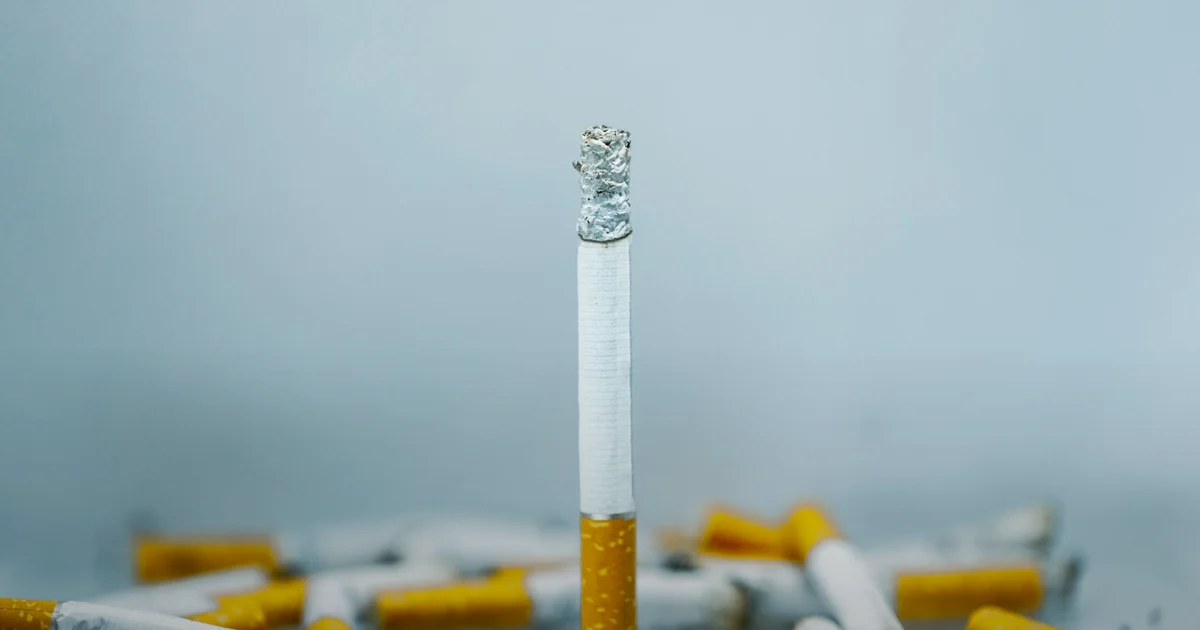
Loneliness Is as Deadly as Smoking 15 Cigarettes a Day
A few years ago, a colleague of mine spent six months obsessively optimizing his health. He wore a continuous glucose monitor. He took over a dozen supplements. He did zone 2 cardio four mornings a week. He tracked sleep stages with the kind of precision most people reserve for tax returns.
He also moved to a new city for work and — because he was busy, because it felt awkward, because there was always a reason to do it later — didn't build a single meaningful friendship in that time.
He was, objectively, one of the healthiest and loneliest people I knew.
I think about him every time I read the research on social connection, because the gap between what the data says matters and what we actually put energy into is genuinely staggering.

Here's the number that anchors everything else: Julianne Holt-Lunstad at Brigham Young University synthesized 148 studies involving more than 308,000 participants, and found that adequate social connection is associated with a 50% reduced likelihood of premature death. Not a modest correlation. Not a finding hedged with caveats. A 50% reduction — an effect size that, when she presented it at the American Psychological Association in 2017, prompted her to make this direct comparison: social isolation is as harmful to your health as smoking 15 cigarettes a day.
More harmful than physical inactivity. More harmful than obesity. And comparable in mortality risk to heavy drinking.
The original meta-analysis, published in Perspectives on Psychological Science, remains one of the most-cited papers in the social connection field — and one of the most consistently ignored by people drawing up their health priorities.
And yet: if you looked at how most people allocate their health optimization energy, you'd never guess it.
The Biology of What Loneliness Actually Does to You
Before the practical stuff, it's worth understanding what loneliness is actually doing inside the body — because it's not just a mood. It's a physiological event.
John Cacioppo spent more than two decades at the University of Chicago documenting the mechanics. His finding: the perceived experience of social isolation — not the objective count of people in your life, but the felt sense of disconnection — activates a full-spectrum biological threat response.
Cortisol rises. Inflammatory markers like IL-6 and TNF-alpha increase. Sleep architecture shifts away from deep restorative stages and toward the lighter, more vigilant states associated with threat detection. And a perceptual bias emerges that Cacioppo and colleagues called hypervigilance for social threat — the lonely brain becomes systematically more sensitive to social threat and less sensitive to social safety. It starts scanning for rejection rather than connection.
This is not a personality flaw. It's an evolved alarm system.
In the small hunter-gatherer bands where human cognition developed, social exclusion genuinely meant death — no group, no resources, no protection. The pain of loneliness was designed to be uncomfortable enough to motivate you to fix it. The problem is that the alarm designed for a 150-person village now fires in open-plan offices of 300 strangers, in cities of millions, and in the warm blue glow of social media feeds that simulate connection without delivering it.

Amazfit GTR 4 Fitness Smartwatch
You already track sleep stages, steps and heart rate with precision. Cacioppo's research shows isolation degrades the exact same metrics — turn that instinct toward the variable that predicts longevity most.
As an Amazon Associate, we earn from qualifying purchases — at no extra cost to you.
Cacioppo's book Loneliness — co-written with science journalist William Patrick — remains the most unflinching scientific account of what persistent social isolation does at the cellular level. It's not a comfortable read, but it's a clarifying one.
What Happens When You Actually Follow the Data
In 1938, two cohorts of young men enrolled in a study that would outlast most of the institutions that commissioned it. One group was made up of Harvard undergraduates; the other, boys from Boston's inner-city neighborhoods. For 85 years — through wars, recessions, divorces, career failures, illnesses, and everything else life stages throw at people — the Harvard Study of Adult Development tracked both groups.
Robert Waldinger and Marc Schulz, the study's current directors, published their synthesis in The Good Life (2023). The finding has a simplicity that makes it easy to dismiss until you sit with the weight of 85 years of data behind it:
The quality of your close relationships at age 50 predicts your physical and cognitive health at age 80 more powerfully than cholesterol levels, blood pressure, physical fitness, genetic risk, or professional success.
Not as one factor among many equal contributors. As the strongest predictor. The people who arrived at old age healthy and cognitively sharp were, almost uniformly, the ones who were embedded in warm, reliable relationships — people who could answer "yes" to the question: is there someone in your life you could call at midnight if something went wrong?
The people who arrived at old age with the most regret weren't the ones who had worked less or earned less. They were the ones who had substituted professional achievement for relational investment and found, at 70 or 80, that the substitution hadn't held.
The Good Life — Robert Waldinger & Marc Schulz
The book behind the Harvard section: 85 years of data showing relationship quality at 50 predicts health at 80 better than any biomarker. The single best companion read for this article.
As an Amazon Associate, we earn from qualifying purchases — at no extra cost to you.
The Structural Collapse Nobody's Talking About
Here's what makes this more than a personal problem. Vivek Murthy — US Surgeon General — published Our Epidemic of Loneliness and Isolation in 2023, an advisory that put Holt-Lunstad's data at the center of a public health emergency declaration.
The structural trend his report documented is worth reading twice: since 2003, average time spent with friends has declined by approximately 20 hours per month in American adults. Time spent alone has increased correspondingly. The percentage of adults reporting no close friendships has tripled over recent decades.
Twenty hours per month. That's essentially a part-time job worth of social connection — quietly erased over two decades, displaced by remote work, longer commutes, streaming queues, and the low-friction illusion of staying in touch through social media.

Kindle Paperwhite (2024, 16GB)
The Surgeon General's advisory is 'worth reading twice'. The full evidence base — Cacioppo, Pinker, Putnam — lives in books worth sitting with rather than skimming on a phone that fuels the disconnection.
As an Amazon Associate, we earn from qualifying purchases — at no extra cost to you.
That last part is worth a moment, because it's where most people's self-assessment breaks down. Digital social activity doesn't register as connection in the body the way Cacioppo's research defines it. Cacioppo was specific: what matters physiologically is perceived social connection — the subjective sense that specific people genuinely know you, care about you, and would show up. A carefully worded reply to your Instagram story doesn't move that dial. Watching someone's life through their Reels doesn't move that dial.
What does move it turns out to be remarkably low-tech.
The Village Effect: Your Most Under-Used Social Asset
Susan Pinker's The Village Effect (2014) investigated what actually explained the extraordinary longevity clusters she found — particularly in certain Sardinian villages where centenarians were statistically over-represented by a factor that couldn't be explained by genetics, diet, or healthcare access.
Her answer: face-to-face contact, especially the unremarkable, repeated kind.
Not dramatic friendship declarations. Not scheduled vulnerability. The incidental encounters that happen when people live in proximity to each other, share physical space regularly, and exist in each other's peripheral awareness without needing a calendar invite. The neighbour you see when you get your newspaper. The regular at the coffee shop who knows your order. The people from the weekly class who expect to see you next Tuesday.
This finding is counterintuitive for a culture that has spent twenty years designing increasingly convenient ways to interact without being in the same room. Convenience, it turns out, is expensive in a specific way that the body keeps track of.
Atomic Habits — James Clear
The article's core claim — 'relationships compound the same way habits do' — is the Atomic Habits thesis applied to connection. The systems-over-willpower framework for designing proximity into your week.
As an Amazon Associate, we earn from qualifying purchases — at no extra cost to you.
Robert Putnam's Bowling Alone (2000) documented the same structural collapse from a civic angle: the bowling leagues, neighborhood associations, church groups, and shared physical spaces that used to generate connection as an incidental byproduct of participation have been disappearing for decades. Putnam's data showed that this wasn't merely a loss of pleasant social activity — it was the demolition of the social infrastructure that had been quietly producing the health benefits Holt-Lunstad's meta-analysis later quantified.
The practical implication is slightly uncomfortable: if you've outsourced your social life entirely to planned, effort-requiring interactions, you've likely lost the ambient relational texture that was doing more health work than you realized.
How to Design for Social Connection (Not Just Hope for It)
The research on how adults build and sustain meaningful connection points to a consistent and slightly uncomfortable conclusion: it doesn't happen automatically past about age 25. You have to design for it.
Not in a forced way. In the same way you design for any other priority: by making it explicit rather than treating it as something you'll get around to eventually.
A few things the data actually supports:
Frequency matters more than depth. The strongest predictor of relationship quality isn't the intensity of occasional meaningful conversations — it's contact frequency. Regular low-stakes contact builds the accumulated familiarity that makes depth possible later. You don't need to have significant conversations with someone every week; you need to stay in each other's awareness.
Proximity is an investment, not an accident. Dunbar's research and Pinker's village data both suggest that the people you see incidentally — not because you planned it — are the ones most likely to develop into genuine connection over time. This means the question "where can I be in the same physical space as people I want to know?" is a more useful question than "how do I arrange a meaningful one-on-one?"
Gather with intention. Priya Parker's The Art of Gathering makes a case that's well-supported by the research on collective experience: most social events fail to generate genuine connection because they're organized around entertainment rather than encounter. The host who thinks about what she wants to happen between her guests — rather than just what food to serve — reliably creates more connective experiences.
Significant friendships require explicit maintenance. Aminatou Sow and Ann Friedman's Big Friendship introduced the concept of "big maintenance" — the effortful, sometimes slightly awkward work required to sustain the friendships that matter most. This isn't a sign that something's wrong with the friendship. It's the nature of adult relationships under time pressure. The friendships that survive adult life are almost uniformly ones someone was paying attention to.

Clever Fox Habit Tracker Journal (24-Month)
'Big maintenance' requires making relational contact explicit, not hoped-for. A visual tracker turns 'stay in each other's awareness' from intention into a habit you actually see.
As an Amazon Associate, we earn from qualifying purchases — at no extra cost to you.
Here's the counterintuitive thing the research keeps confirming: you don't need more friends. Most people's loneliness isn't a quantity problem — it's a quality and frequency problem. One person who genuinely knows you and shows up reliably will do more for your health, cognitive function, and longevity than fifty surface-level connections maintained through group chats.
Where to Start Today
Take ten minutes this week for an honest audit. Not of your follower count or your contacts list — of your actual social architecture.
Who would you call at midnight if something went wrong? How many names came to mind? When did you last see them in person? If you can't remember, the gap has been building for a while.
From there, three moves the research supports:
-
Schedule the call you've been meaning to make for three months. Not "sometime soon" — put a specific time on it this week. Holt-Lunstad's data isn't about grand gestures; it's about consistent contact frequency. The planning fallacy guarantees you won't do it unless there's a time attached.
-
Reduce the friction on proximity. If every social interaction in your life requires planning, you've lost the incidental contact layer that does a lot of relational maintenance quietly. Is there a recurring physical space — a coffee shop, a gym, a local class — where you could become a familiar face to a small group of people?
-
Treat one relationship as a priority this month. Send the voice memo. Show up to the thing they invited you to three months ago. Relationships compound the same way habits do, and consistent attention over a few months produces disproportionate return.

The Variable You've Been Optimizing Around
There's a version of personal development that treats the body as a machine to be calibrated and relationships as the nice-but-optional ambient backdrop of that project. The data from 148 studies, 308,000 people, and 85 years of longitudinal research doesn't support that framing.
Your relationships aren't the backdrop. They're the infrastructure.
Jim Rohn used to say that you become the average of the five people you spend the most time with — and most people take that as career advice. But the research says it's health advice first. The quality of the relational environment you inhabit over decades is the single strongest predictor of how your body holds up.
Designing your evolution means being as deliberate about who you're around and how often as you are about any other aspect of your lifestyle. Not because it feels good (though it does), but because the evidence says nothing else you're doing has quite this much biological leverage.
So here's the question worth taking seriously: if you treated social connection with the same systematic attention you currently give your sleep protocol or your workout routine — what would change? What's one thing you'd do differently this week?
Put it in the calendar. The data suggests it matters more than you've been acting like it does.
Related read: The Still Face Study: What Happens When No One Responds
Was this helpful?