Mindset· 10 min read
You Were a Creative Genius at Age 5. What Changed?
98% of children test at genius-level creativity. Only 2% of adults do. George Land's 1968 NASA study reveals the exact cause — and what you can do.
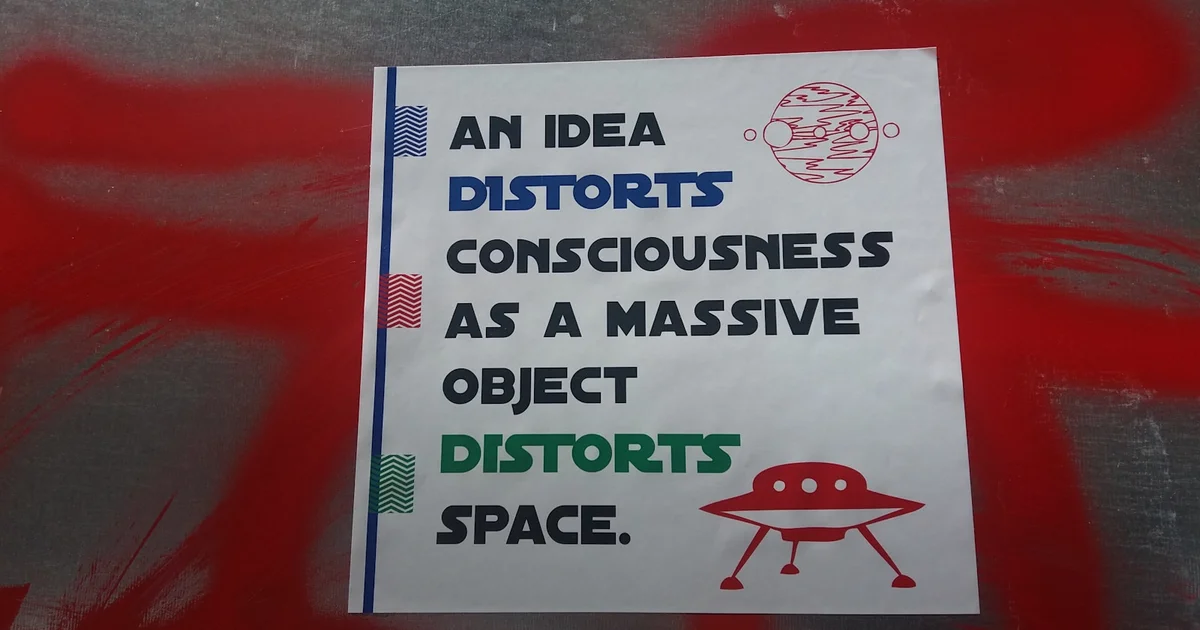
You Were a Creative Genius at Age 5. Here's Exactly What Happened After That.
Somewhere between kindergarten and your first performance review, you lost something important.
Not metaphorically. Not "you lost your spark" in the vague, inspirational-poster sense. A specific, measurable cognitive capacity that testing shows most people possess in abundance at age five — and almost nobody retains by the time they're an adult. The decline isn't gradual or inevitable. It follows a pattern. And it has a cause.
George Land found it in 1968. He wasn't looking for it.

Land had developed a divergent-thinking assessment for NASA — a test designed to identify engineers and scientists capable of generating genuinely novel solutions to problems with no known right answer. NASA needed people who could think past the obvious. The test worked well. Then Land did something unusual: he ran the exact same test on children.
First at age five. Then again at ten. Then fifteen. Then on adults.
The results, later published with co-author Beth Jarman in Breakpoint and Beyond (1993), became one of the most cited — and most uncomfortable — findings in creativity research. At age five, 98 percent of children scored at the "genius level" of divergent thinking. By age ten, that figure had dropped to 30 percent. At fifteen, 12 percent. Among adults tested on the identical measure: just 2 percent.
Read that again slowly. 98 to 2.
And before you file this away as an obscure curiosity: Land and Jarman's longitudinal work has since been cited extensively across educational psychology and organizational behavior research, and the basic pattern has replicated across cultures and schooling systems with consistent results — as creativity researcher Nick Skillicorn documents in his detailed breakdown of the study's reception in the literature. The decline is real. The timeline is real. What's driving it is what most people get wrong.
What Divergent Thinking Actually Is (And Why It Has Nothing to Do with Being "Arty")
Here's the misconception that trips most people up: divergent thinking isn't the same as being creative in the sense of making beautiful or unusual things. It's a specific cognitive operation, and understanding the distinction is the whole ballgame.
When you face a problem with a single correct answer — 4 × 7, the capital of France, which wire to splice — you're using convergent thinking. One right answer, one cognitive pathway to reach it. The goal is accuracy and efficiency.
Divergent thinking runs in the opposite direction. Given a paperclip, how many uses can you generate? Given a human problem, how many genuinely different solutions can you identify before you settle on one? The measure isn't which answer is correct — it's the quantity, variety, and originality of the answers produced. You're expanding outward rather than converging inward. Cognitive psychology defines divergent thinking as a central component of creative capacity — the mode the brain uses when it needs to generate possibilities, not locate a known answer.
Land's NASA test measured exactly this: the ability to hold a problem open and keep generating varied responses, rather than locking onto the first plausible solution and stopping. Five-year-olds are exceptional at it. They haven't yet learned that there's supposed to be one right answer.
What makes Land and Jarman's findings particularly important is the mechanism they identified for the decline. It wasn't aging. It wasn't biology. It was specifically correlated with years of formal education that systematically reward convergent thinking — finding the correct answer, following the correct procedure, completing the correctly specified task — while providing comparatively little practice in generating many possible answers to questions without a known correct one.
School didn't teach you to stop being creative. It spent twelve or more years drilling a different cognitive mode until that mode became your dominant default.

Flow: The Psychology of Optimal Experience — Mihaly Csikszentmihalyi
Placed right after the 'convergent machine' explanation — the reader has just learned their default cognitive mode was trained into them. Flow is the natural next question: what does the generative mode actually feel…
As an Amazon Associate, we earn from qualifying purchases — at no extra cost to you.
How Your Brain Was Retrained (The Convergent Machine)
Think about how a typical school day actually works. You're given a problem. There's a correct procedure. There's a correct answer. You demonstrate mastery by producing that correct answer, and you're marked on how accurately and efficiently you do it. Then you do this for thirty-six weeks per year, for at least twelve consecutive years.
This isn't a criticism of formal education. Convergent thinking is genuinely important — being able to follow a procedure, solve a structured problem, and find a known correct answer is useful in an enormous range of real-world situations. The issue is proportion.
After twelve-plus years of overwhelmingly convergent-thinking-dominant practice, most brains default to convergent mode when they encounter any problem at all — including open-ended challenges that would actually benefit from divergent thinking: creative projects, novel decisions, situations where there isn't a known right answer to locate.
The divergent mode doesn't disappear. It atrophies from underuse, exactly like a muscle you stopped working years ago. You can still feel where it used to be. It's just not very responsive anymore.
Land's data makes the timeline unusually precise. At age five, before formal schooling has had much time to establish convergent thinking as the dominant mode, the vast majority of children instinctively approach open-ended problems divergently — generating possibilities rather than hunting for the right one. By age ten, after five years of school, that proportion has dropped by over 60 percentage points. The convergent machine is extraordinarily efficient at doing exactly what it was designed to do.
See also: why willpower isn't what builds habits
The Structured Kit Problem: What Lego Instructions Are Actually Teaching
Here's where it gets practically interesting — and where a simple observation about toy design starts to illuminate something much larger.
In the early decades of Lego's existence, the product was almost entirely open-ended. You got a bucket of bricks in assorted shapes and colors. No picture on the box, no numbered instruction manual, no single correct spaceship to build. The play was entirely self-directed: you had to generate your own structure, your own rules, your own definition of what the thing was supposed to become.
That's divergent thinking in physical form. The child has to generate the structure because there's no other option.
Modern kit-based construction toys work differently. There's a correct finished model on the box. There's an instruction booklet with numbered steps and color-coded diagrams. There's a defined correct endpoint the child is working toward. Their job is to follow the procedure accurately and arrive at the correct result.
That's convergent thinking in physical form.

LEGO Classic Large Creative Brick Box 10698 (790 pieces, 33 colours, storage box)
Sits immediately after the 'Structured Kit Problem' section — the article has just contrasted a bucket of assorted bricks against a numbered instruction manual. This is the literal product the argument describes. High…
As an Amazon Associate, we earn from qualifying purchases — at no extra cost to you.
Land's framework doesn't argue that instruction-following is harmful in a single session. The concern is the proportion of a child's play time that becomes instruction-following versus genuinely open-ended generation — and that same proportion concern applies directly, and uncomfortably, to the adult's work day.
When you look at how most adults structure their creative time — if they set aside any at all — it's almost always convergent in disguise. The template, the framework, the proven process, the course with the correct steps to follow to arrive at the correct outcome. Even our recreational creativity tends to organize itself around following a known procedure to produce a predictable result. Paint-by-number is convergent. Genuinely open-ended painting — starting with a blank canvas and generating your own direction with no prescribed endpoint — is divergent.
This matters because you can spend years in activities that feel creative while systematically avoiding the one cognitive mode that actually rebuilds the capacity. Feeling creative and exercising divergent thinking are not the same thing.
The Adult Version of the Same Trap
The irony is that the modern workplace usually doubles down on everything school established.
You're given a brief, a process, a deliverable, a deadline. The metrics reward accuracy and efficiency. The meetings produce decisions that constrain the next steps. Career progression is frequently evaluated on your ability to execute reliably within established parameters — which is to say, on your convergent thinking performance. Again, none of this is wrong. Organizations need reliable, accurate convergent thinking to function.
But it creates a situation where a person's entire day, from first email to last meeting, can pass without a single genuine instance of open-ended, divergent-mode thinking. And this continues for years after the twelve years of school did the same thing.
Here's the counter-intuitive part: the research doesn't support the common assumption that creativity returns if you just "try harder" or attend a creativity workshop that teaches you a structured framework for being creative. That's still convergent thinking — following the correct steps to arrive at what looks like a creative output. The structure itself is the issue.
What Land's longitudinal data actually points toward is something simpler and more uncomfortable: unstructured time, without a framework, without a correct endpoint, without a procedure to follow, is the specific context in which divergent thinking gets practiced and rebuilt. Not structured creative exercises. Not brainstorming templates. The absence of prescribed structure itself is the practice.
See also: micro-progressions: small steps, real transformation
How to Start Rebuilding Your Divergent Thinking (What the Research Actually Points To)
Land and Jarman's work doesn't offer a prescriptive five-step program — which is appropriate, given that prescriptive programs are the problem. But the research does point toward something specific.
The divergent-thinking capacity correlates with time spent in genuinely open-ended, self-directed activity, and it declines in proportion to the accumulating weight of convergent-thinking-dominant environments over years. Which means rebuilding it starts with one concrete, scheduled change to your week.
The four practices below are grounded in what the data actually shows — not structured creativity exercises, but adjustments that directly address the convergent-dominant defaults the research identifies:
- Schedule one weekly open-ended creative session (30–45 minutes, no prescribed outcome)
- Choose instruction-free materials — blank page, loose building blocks, no kit
- Run at least one brainstorming session with zero evaluation or convergence allowed
- Read the primary research: Breakpoint and Beyond by Land and Jarman (1993)
Here's what each looks like in practice:
Schedule one genuinely open-ended creative session, weekly. Not a guided journal with prompts. Not a structured creative course. A blank page, a set of unassigned building materials, a sketchbook with no theme — and a real constraint that you can't produce anything with a defined correct outcome during that session. The goal isn't the product. The goal is staying in divergent mode — generating without immediately evaluating and converging — for a sustained period. Aim for thirty to forty-five minutes.
This feels uncomfortable fast, especially for people whose brains have spent decades defaulting to convergent mode. The urge to impose a structure, find the right answer, or produce something worth showing someone else is almost immediate. That discomfort is the relevant signal. You've hit the edge of your current divergent-thinking range. The practice is staying with the open-endedness past that edge.
Choose open-ended materials, not structured kits. Land's framework suggests it's the instruction-free engagement with materials that actually exercises the divergent mode. A set of plain building blocks with no prescribed assembly. A box of unassigned art supplies. An instrument you've never played, with no lesson plan. Any material that offers no instruction manual and no correct endpoint forces your brain to generate the structure itself — which is exactly the mode you're trying to rebuild.
Audit one recurring meeting for convergent bias. Most brainstorming sessions are structurally designed to produce convergent outcomes: someone facilitates toward a decision, a correct answer, a defined deliverable. Try a twenty-minute session where the only rule is that no idea gets evaluated, challenged, or directed toward a conclusion during the session itself. Just generation. Watch how quickly the group wants to converge onto something. That pull toward convergence — before you've generated nearly enough possibilities — is the learned reflex Land's research describes.
Read the primary source. Land and Jarman's Breakpoint and Beyond is a relatively short book, and reading the actual research narrative does something a summary can't replicate: it makes the decline feel specific and real rather than abstract. Knowing the methodology, seeing the age-by-age numbers, and reading Land's own account of why he ran the test on children in the first place produces a kind of productive discomfort that a secondhand summary doesn't.
See also: why writing calms a racing mind
One more thing worth saying clearly: none of this requires abandoning structure in your work or your life. Land's research doesn't argue that convergent thinking is the problem — it argues that an imbalance, accumulated across years, is what drives the decline. Protecting one specific, scheduled slot for genuinely open-ended, instruction-free activity is the intervention the data points to.
Not a wholesale rejection of structure. A deliberate counterweight to an environment that provides structure almost everywhere, almost all of the time.
"Design Your Evolution" isn't only about productivity systems or morning routines. It's sometimes about noticing what you've quietly stopped practicing — and deciding, with full knowledge of what the research says, to practice it again.
Land's data suggests your divergent-thinking capacity didn't leave. It hasn't been lost. It's been sitting in a pattern of underuse, waiting for a problem that doesn't have a single correct answer.
When was the last time you sat down with a blank page — not a template, not a framework, not a prompt — and let yourself generate without knowing what you were building toward? Not because someone asked you to. Not because there was a correct outcome to reach. Just because the materials were there and the hour wasn't already structured.
That question is worth sitting with. Your answer to it probably tells you more about where your divergent-thinking range currently sits than any formal assessment would.
Was this helpful?