Habits· 11 min read
Revenge Bedtime Procrastination: Why You Stay Up Late
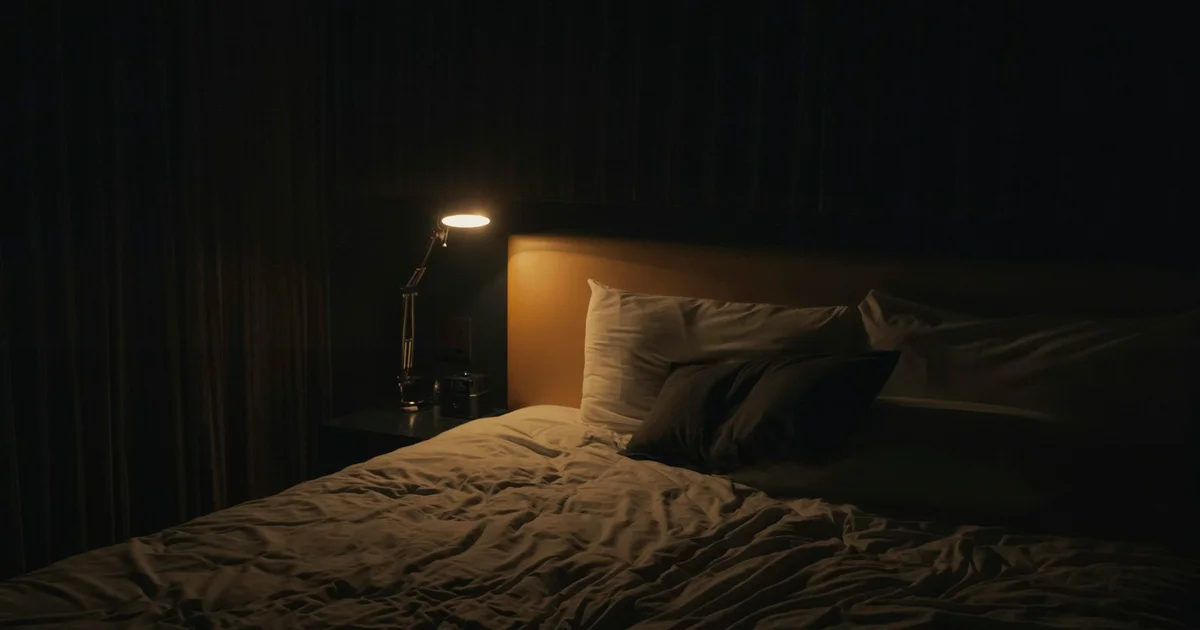
Revenge Bedtime Procrastination: Why You Stay Up Late
It's 11:47 PM. You've been tired since nine. Your eyes are dry, your brain is running on fumes, and you have to be up in less than seven hours. But here you are — still on your phone, scrolling through content you barely register, vaguely aware that you're going to regret this in the morning.
You know you should sleep. You want to sleep. You planned to sleep at a reasonable hour. And yet some part of you keeps finding reasons to push it forward by ten more minutes.
This isn't a character flaw, and it's not a simple matter of bad sleep hygiene. There's a specific name for what you're doing — bedtime procrastination — and behavioral researchers have been studying it for over a decade. What they've found reframes the problem entirely, and points to an evening design strategy that's more practical than trying to out-willpower yourself at midnight.
What the Research Actually Says About Bedtime Procrastination
In 2014, Dutch psychologist Floor Kroese and colleagues published a study in Frontiers in Psychology that gave this behavior its formal name: bedtime procrastination. They defined it as going to bed later than intended without having external reasons for doing so. The key phrase is the last part. No one is keeping you up. You're keeping you up.
Their work — and a companion study published in the Journal of Health Psychology in 2014 (a larger survey of over two thousand Dutch adults, including a sleep diary component) — found a consistent pattern. Lower self-regulation was associated with more bedtime procrastination, and bedtime procrastination in turn was associated with getting insufficient sleep.
A few qualifications worth naming upfront: the majority of this evidence is self-reported and cross-sectional, meaning it captures associations rather than causes, and the authors themselves caution that the design cannot establish causation. A later commentary has also argued that chronotype (whether you're naturally a night owl) may explain part of the pattern — if your biology inclines you toward alertness at 11 PM and your schedule forces a 6 AM start, some of that gap may reflect chronotype mismatch as much as procrastination. The research specifically measures the distance between what you intended and what you did, not the intention itself. Bedtime procrastination is also categorically different from insomnia — if you're lying awake wanting to sleep but unable to, that's a different problem, and a conversation with a doctor is the right first step. What this research describes is the voluntary choice not to go to bed in the first place.
With those limits noted: the pattern is consistent enough across studies to take seriously.
Why Evenings Are a Hard Time to Ask Anything of Your Willpower
The concept of "ego depletion" — the idea that willpower drains like a battery across the day — is contested in the replication literature, so treat it as a useful metaphor rather than settled mechanism. Still, most people recognize the experience: by 10 PM, you've spent hours filtering impulses, managing competing demands, responding to other people's requests, and exercising small acts of restraint in dozens of daily moments.
The version of you who made plans in the morning felt capable. The version of you sitting on the couch at 11 PM has been running on empty for hours.
decision fatigue and willpower
This is why the firm intention to be in bed by 10:30 dissolves into 12:15 without much drama. Your morning self sets an alarm and vows to be consistent. Your evening self, worn thin by the day, finds every reason to push it another thirty minutes. They're the same person in very different conditions.
Since the research links bedtime procrastination to self-regulation, the practical lever is to rely on it less: structure your evening so that going to bed requires fewer acts of will in the first place.
The "Revenge" Part — and Why the Name Landed
The phrase "revenge bedtime procrastination" entered English from Chinese social media around 2020. The original phrase roughly translates to reclaiming the night after days that felt entirely controlled by other people's demands. It spread fast, and for a predictable reason.
If your day is managed by external obligations from the moment you wake up — meetings, requests, a commute, kids, someone else's agenda — then the hour after everyone is finally asleep might be the first moment in sixteen hours that belongs entirely to you. The scroll, the streaming, the aimless browsing: these aren't really entertainment. They're a small act of reclamation. This hour is mine.
There's a version of this across almost every lifestyle. The parent who gets two hours to themselves after the kids are down and spends them watching nothing in particular, just grateful the choices are their own. The professional who needs the late hour to feel like an autonomous person rather than a function. The drive is entirely legitimate.
The problem is arithmetic. You're not creating free time. You're borrowing it from sleep and charging interest in the form of tomorrow's exhaustion.
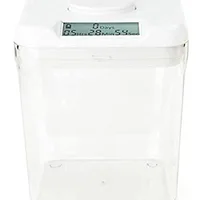
Kitchen Safe kSafe Time Locking Container (Medium)
As an Amazon Associate, we earn from qualifying purchases — at no extra cost to you.
Understanding this doesn't make the behavior disappear overnight. But it reframes what a solution looks like. If the real need is for time that belongs to you, fighting harder with yourself at midnight isn't the answer — designing your evening to give you that time before your resources run out is. The Sleep Foundation frames it the same way: the fix isn't discipline, it's structure.
What to Try
Two principles are practical, commonsense approaches to sleep and self-regulation. They are not prescriptions from the bedtime procrastination studies themselves.
First: reduce friction before the decision needs to be made.
A consistent wind-down sequence — the same low-stimulation activities in roughly the same order, most evenings — works because it removes the negotiation. You're not deciding whether to start winding down; you're continuing a pattern. There's no elaborate ritual required. It can be as simple as dimming the lights, making a warm drink, and putting your phone across the room for the last hour.

Philips SmartSleep Wake-Up Light HF3520/60 (sunset + sunrise simulation)
As an Amazon Associate, we earn from qualifying purchases — at no extra cost to you.
What counts as low-stimulation varies. For some people, a slow TV show qualifies; for others, it's reading fiction, a brief stretch, or simply sitting with the lights turned down. The specific activity matters less than the contrast it creates with the stimulation you were absorbing all day. If your evenings currently run from work or screens directly into attempted sleep with nothing between, a deliberate wind-down period gives your nervous system a recognizable signal that conditions have changed.
Another habit worth trying: externalizing whatever is still running in your head. A brief written brain-dump before bed — the three things on your mind, the one thing you finished, anything you don't want to lose — gives those open loops somewhere to land, so they don't have to circle while you try to wind down.

Full Focus Planner by Michael Hyatt (Gray Linen)
As an Amazon Associate, we earn from qualifying purchases — at no extra cost to you.
Second: build real free time earlier in the evening, not emergency free time stolen from sleep.
Thirty intentional minutes between 8 and 9 PM — reading something you actually enjoy, watching something you chose rather than defaulted to, or simply doing nothing with some awareness — is worth more than two hours of scattered phone use after midnight. Earlier in the evening, you're less depleted. The enjoyment is higher. And you've actually had the thing you were going to steal from sleep later.
This is the design principle. Give yourself genuine personal time before the tank is empty, and midnight stops being the only place left to find it.
How to Try This Tonight
You don't need a fully redesigned routine by tomorrow. Small adjustments tend to stick better than complete overhauls:
1. Set a bedtime alarm, not just a wake-up alarm. Most people only set alarms to start the day. An alert 30 minutes before your intended sleep time interrupts the scroll before momentum has turned it into inertia — and it works better than willpower because it doesn't require a decision in the moment.
2. Name what you're actually doing in the late night. Is it genuinely enjoyable? Move it earlier in the evening, when you can actually appreciate it with more energy. Is it avoidance — the same apps, the same feeds, the same not-quite-anything? Naming it as avoidance tends to reduce its pull.
3. Warm the room's lighting an hour before bed. Blue-wavelength light delays melatonin production, which keeps your brain's sleep signals quieter at the exact moment you want them loud. Switch to a lamp, or wear filtering glasses if screens are unavoidable.
evening routine productivity
4. Write down one loose end. Not a full journal — just one thing that's been circling in your head since this morning. A task, a worry, something you don't want to forget by tomorrow. Externalizing it ends the mental loop. The late-night scrolling many people do is often a search for resolution that no amount of Instagram is ever going to provide.
5. Give tomorrow something worth waking up for. When the morning holds something you're genuinely interested in — a project you're building, a workout you've been looking forward to, something you're learning — going to bed starts to feel less like surrender and more like preparation.
morning routine habits
Your evening is mostly invisible — no one is tracking whether you closed your phone at 10:30 or pushed it to 1 AM. But those hours compound. The depleted morning follows the depleted night follows the depleted evening, and at some point the pattern becomes the problem.
The late-night scroll is rarely about the content. It's about the need for time that belongs to you. Design your evening to give yourself that time before depletion takes it — and midnight stops being the thing you have to steal.
Every evening is a small design project. Done well, it gives back the hour the day took. That is the most practical version of designing your evolution: one deliberate choice, earlier in the evening, that doesn't require you to be a different person to make it.
What does your current evening look like between 9 and 11 PM, and is there one hour in it you'd actually choose if you were designing it on purpose?
Was this helpful?