Mindset· 10 min read
Scarcity Mindset: How Feeling Short Shapes Your Choices
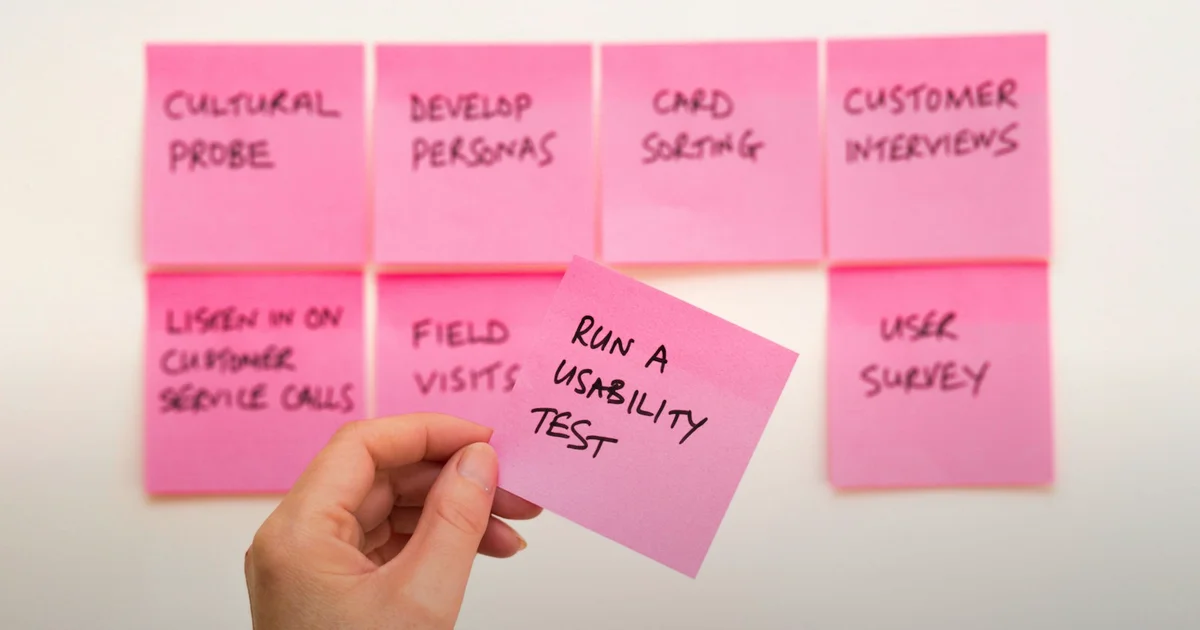
Scarcity Mindset: How Feeling Short Shapes Your Choices
Three weeks after my friend lost his job, he renewed a gym membership he hadn't used in months.
He knew he wasn't using it. He'd known for a while. But somehow, with his bank account thinning and his head full of numbers, the decision to cancel just didn't happen. And that failure — multiply it across a tight month — tells you something important about how a scarcity mindset operates: how feeling short quietly shapes the choices you don't even notice you're making.
This isn't a story about willpower or financial literacy or bad habits. It's about something the research community started taking seriously in 2013, when researchers published findings that were simultaneously more precise and more contested than the headlines made them sound.
What the Scarcity Mindset Research Actually Found
Sendhil Mullainathan and Eldar Shafir's book Scarcity: Why Having Too Little Means So Much drew partly on a 2013 Science paper, "Poverty Impedes Cognitive Function", which they co-authored with Anandi Mani and Jiaying Zhao. The central argument: feeling short — of money, time, food, or social connection — doesn't just cause stress. It captures attention. And captured attention is attention no longer available for everything else.
Getting Things Done — David Allen (Revised)
As an Amazon Associate, we earn from qualifying purchases — at no extra cost to you.
The paper reported two studies. In the first, shoppers at a New Jersey mall were asked to think about either an easy or a hard financial scenario, such as paying for a car repair, and then completed cognitive tasks. Higher-income participants performed similarly in both conditions. Lower-income participants performed worse when the scenario was the hard one. In the second, farmers in Tamil Nadu, India, did worse on cognitive tasks before harvest, when money was tight, than after it. Princeton's press materials described the size of the effect as similar to a 13-point dip in IQ, or the loss of a full night's sleep — a press framing, not a separate measurement.
The mechanism they proposed is what they called a cognitive bandwidth tax: the mental energy you spend preoccupied with shortage is unavailable for other work, including planning, impulse control, and long-term thinking. It's not that people become less intelligent. It's that something is using up the same RAM.
It's a compelling idea. And — worth knowing before you quote it at someone — it's also an idea where parts of the evidence have since been challenged.
The Tunnel Effect — and What It Costs You
Mullainathan and Shafir described a "tunneling" effect: when you're short on something, attention narrows onto the scarce resource, often at the expense of things just outside the frame. The person anxious about money focuses intensely on this month's rent while forgetting to cancel a subscription. The person sprinting toward a deadline thinks sharp thoughts about the immediate task while forgetting to eat before the presentation.
The tunnel has a useful edge. Tight constraints can generate real ingenuity, and when resources are scarce, you tend to get more out of them.
But the same tunnel systematically neglects whatever the scarcity mindset has decided isn't the emergency right now. You negotiate hard on the big bill and miss the small monthly fees quietly compounding in the background. You rehearse the difficult conversation and forget to call back your doctor. The attention is sharp in one direction and genuinely blind in another.
decision fatigue
There's also a tension the pop-science framing tends to gloss over: some choices that look like poor decisions under financial pressure are actually rational given incomplete information and urgent tradeoffs. Spending on small comforts when income is tight isn't always irrational — sometimes it's a reasonable trade for psychological stability and the energy to keep going. The scarcity research doesn't fully resolve that tension, and the honest version of this topic shouldn't pretend it does.
Where the Science Gets Contested
The scarcity findings have not gone unchallenged. Carvalho, Meier, and Wang (American Economic Review, 2016) surveyed low-income US households just before and just after payday. They found no meaningful difference in performance on cognitive tasks, and concluded that their results do not support the hypothesis that financial strain per se impedes cognitive function. They did find that people were more present-biased in monetary choices before payday. It's not a direct replication of the original experiments, but it is a notable piece of evidence that the effect may not generalize to everyday money tight spells.
The authors themselves note a caveat: a longer stretch without income might take a bigger toll than their design could capture.

Philips SmartSleep Wake-Up Light HF3520
As an Amazon Associate, we earn from qualifying purchases — at no extra cost to you.
The honest position is this: the bandwidth-tax mechanism is plausible and partially supported, but effects appear to vary across contexts, and a hypothetical financial scenario in a shopping mall is not the same thing as chronic financial hardship. The research is a useful lens for thinking about how cognition is affected by felt shortage — it's not a finished, settled theory.
That caveat doesn't make the idea useless. It makes it more precise.
Why This Matters for Money Anxiety and Everyday Decisions
Here's what is reasonable to say with some confidence: worry about being short plausibly affects how you think, even when you're not in crisis. Anxiety about money can occupy working memory the way a song stuck in your head does. It's not dramatic; it's just there, taking up space.
money mindset
If your mental model around finances is laced with anxiety, you may not just feel worse — you may think slightly less clearly about the very topic you need to think clearly about. It can become a feedback loop, and the loop has nothing to do with how smart or capable you are.
The same pattern applies to time. A packed calendar doesn't just create urgency — it can create a kind of cognitive narrowing that makes it harder to notice when the most urgent task isn't the most important one. This is partly why busy people often make poor strategic decisions: not because they lack information, but because the schedule has pre-consumed the bandwidth those decisions require.
How to Start Designing for Bandwidth
The practical implication isn't "solve your financial situation first, and then you'll think better." That's circular advice. It's about reducing unnecessary cognitive load — the stuff sitting on top of the real constraints — so a tight month doesn't also tax your thinking.
Four places worth starting:
1. Close the open loops you've been avoiding. Decisions that haven't been made sit in working memory like unread tabs in a browser. Cancel the subscriptions you've been meaning to cancel. Send the email you've been putting off. Each closure is a small but real return of cognitive space.
2. Batch your financial reviews. Checking your bank balance repeatedly throughout the day amplifies the anxiety signal without adding useful information. One deliberate review per day, at a fixed time, is enough for most situations — and it trains your nervous system to treat the topic as bounded rather than ambient.

Kitchen Safe kSafe Time Locking Container (Medium)
As an Amazon Associate, we earn from qualifying purchases — at no extra cost to you.
3. Protect your best hours for decisions that carry weight. If you decide better in the morning, don't fill that window with email and administrative noise. Use it for the choices that actually matter. This isn't productivity advice — it's basic resource allocation, the same logic you'd apply to any finite supply.
4. Externalise the financial picture. A written budget, however simple, offloads the ongoing background simulation of "how are we actually doing?" onto paper instead of onto your working memory. It's not about discipline or willpower — it's about freeing up the cognitive process that was running that simulation in the background, all day, every day. Even a rough snapshot — income, fixed costs, one savings target — is enough to convert a vague anxious hum into a bounded set of facts. Facts take less mental space than unresolved questions.
habit design
None of these moves are dramatic. But change rarely comes in one dramatic shift — it accumulates through consistently designing the conditions in which you think clearly. And thinking clearly, it turns out, is partly a function of what isn't consuming your attention at any given moment.
The Question Worth Sitting With
The scarcity research, contested as parts of it are, points at something most of us feel without having the language for it: a mind under financial or temporal pressure is not the same mind as a mind at rest. They make different choices, notice different things, and feel different urgency about different tradeoffs.
You don't have to wait until the pressure disappears to start thinking more clearly. You can design around the pressure — reduce what's consuming bandwidth unnecessarily, structure what can be structured, and work the genuine problems with whatever cognitive resources remain.
Which raises the question that tends to be more useful than "how do I stop feeling scarce?"
What's taking up space in my thinking that doesn't actually have to be there?
Was this helpful?