Mindset· 11 min read
The Science of Kindness: Small Acts, Big Brain Rewards
Giving activates the same brain circuits as receiving. The neuroscience behind kindness — and how to turn it into a daily compound habit.
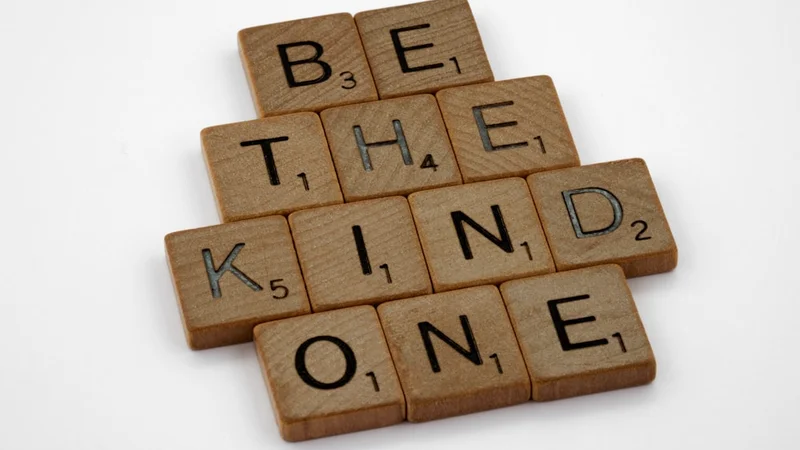
The Science of Kindness: Small Acts, Big Brain Rewards
The barista was crying.
Not sobbing — just that quiet kind of crying where someone keeps moving, wiping steam wands, making lattes, pretending nothing is happening. I was next in line at a café in London on a Tuesday morning, running late, already drafting three emails in my head. I almost said nothing. Then, for a reason I still can't fully explain, I slid a folded napkin across the counter with my order. On it I'd written six words: "Whatever it is, I'm rooting for you."
She read it. She laughed once, sharp and wet, and then she squeezed my hand for half a second before taking the next order. That's it. That's the whole story. But I walked out feeling like someone had reorganized my nervous system from the inside — lighter, more awake, slightly ridiculous with goodwill. I got more done that day than I had all week.
Why Your Brain Treats Giving Like Winning
Here's something most self-help books skip: the brain doesn't really distinguish between receiving a reward and giving one. Functional MRI research by neuroscientist Jorge Moll and colleagues at the National Institutes of Health, published in PNAS in 2006, showed that when people donate to causes they care about, the same mesolimbic pathways light up that fire when they eat chocolate or win money. The technical name for this is the "warm glow" effect, coined by economist James Andreoni back in 1990, but neuroscientists have since confirmed he was describing something biologically real.
Giving activates the ventral striatum. It releases oxytocin. It lowers cortisol. And it does all of this in amounts large enough to measure.
That's wild when you think about it. Evolution spent a few hundred thousand years wiring us to protect resources, and yet the reward circuit still fires hardest when we share them. Evolutionary biology suggests this is no accident: cooperative groups outcompeted isolated individuals for hundreds of thousands of years, which is why our reward circuitry responds so generously to generosity itself. You weren't designed to be selfish. You were designed to be the person who notices the barista is crying.
The science of kindness and brain benefits research keeps pointing to the same conclusion: your biology rewards generosity more reliably than it rewards consumption. Which means most of us are playing the happiness game with the wrong strategy.
The Compound Interest Almost Nobody Talks About
Jim Rohn used to say that successful people do what unsuccessful people refuse to do, and it's usually unsexy, invisible, and daily. Kindness fits that description perfectly. It's the most underrated evolution lever you have — not because it changes your life in one dramatic act, but because it compounds.
A 2020 meta-analysis of 201 independent samples on prosocial behavior, published in Psychological Bulletin by Hui and colleagues, found that people who perform small acts of kindness regularly report significantly higher life satisfaction and lower depression scores than matched controls. The effect isn't loud. It doesn't show up after one good deed. It shows up after six months of them.
You've probably felt this without naming it. The week you held the door for a stranger and complimented a colleague's work feels different from the week you kept your head down and your calendar full. One leaves you drained. The other leaves you with energy you can't quite account for.
That's not mysticism. That's biochemistry.
The Three Mechanisms You Should Actually Understand
Let me break down what's happening under the hood. Because when you understand why kindness works, you stop treating it as moral decoration and start treating it as an operating system upgrade.
1. The Vagal Tone Upgrade
Your vagus nerve is the longest cranial nerve in your body, running from your brainstem down to your gut. It regulates how quickly your heart calms down after stress. Researcher Barbara Fredrickson at UNC has shown that people who practice loving-kindness meditation — essentially mentally rehearsing goodwill toward others — measurably improve their vagal tone in under two months.
Higher vagal tone means faster recovery from stress, better emotional regulation, and a body that treats everyday challenges as solvable rather than threatening. You are literally calibrating your nervous system to handle life better by wishing other people well.
2. The Social Mirror Effect
Psychologists call this "emotional contagion," and it works in two directions. When you're kind, people around you become more likely to be kind too — researchers Nicholas Christakis at Harvard and James Fowler at UC San Diego mapped this across three degrees of separation in a 2008 study published in the BMJ, meaning your kindness reaches the friends of friends of friends you'll never meet.
But here's the part that benefits you directly: your brain doesn't track who started the chain. When you live in an environment of more kindness — even kindness you initiated — your stress baseline drops and your sense of belonging rises. You're building the world you want to live in, one exchange at a time.
3. The Meaning Engine
Viktor Frankl survived Auschwitz and built an entire school of psychology around one idea: humans don't primarily need pleasure, they need meaning. And meaning, it turns out, is mostly found outside yourself.
Studies by Sonja Lyubomirsky at UC Riverside show that acts of kindness boost happiness more than self-focused activities like buying yourself something nice or going out to eat. The effect is strongest when kindness is varied — different acts, different recipients, different contexts — rather than the same ritual repeated until it becomes automatic.
Which points to something important about designing a kindness practice: novelty matters. The seventh time you buy coffee for the person behind you, your brain has filed it under "errand." You need to keep the muscle moving in new directions.
The Problem With Most Kindness Advice
Most articles about random acts of kindness benefits psychology read like a Hallmark catalog. Smile at strangers. Hold doors. Compliment someone. Fine — but if that's the whole strategy, it flatlines fast.
Real kindness research points to something more specific: the most psychologically beneficial acts tend to be ones that cost you something. Not money, necessarily. Attention. Time. Emotional risk. A genuine compliment from a stranger is nice. A text to an old friend that says "I was thinking about you this morning, and I realized I never told you how much your encouragement in 2019 changed my career" — that's the kind that rewires both of you.
The general rule I've landed on after years of testing this: if there's a small flicker of awkwardness before you do the kind thing, that's usually a sign it's the right one.
Building a Daily Kindness Practice (Without Turning Into a Caricature)
You don't need to become the person who starts every meeting by naming something they're grateful for. Daily kindness practice for well-being adults works best when it's invisible — woven into your existing day rather than bolted on top.
Here's the architecture I'd recommend.
Start With a Kindness Ledger
The single highest-leverage tool is a small notebook where you track one intentional act per day. This isn't about self-congratulation — it's about pattern recognition. You'll notice which categories of kindness feel good, which ones felt performative, and which ones you keep avoiding (that last category is usually where your growth lives).
Clever Fox Habit Tracker Journal
Right after 'Start With a Kindness Ledger' — the article explicitly recommends keeping 'a small notebook where you track one intentional act per day.' The Clever Fox Habit Calendar is built for exactly this: track up…
As an Amazon Associate, we earn from qualifying purchases — at no extra cost to you.
Write it down at night. Two sentences max. Texted Marco about his book launch. Felt weird at first, then good. That's enough.
After three weeks, patterns emerge. You'll see that you light up around certain people, that you keep dodging a specific relationship, that written kindness works better for you than spoken. That's data. Use it.
Anchor Kindness to Something You Already Do
Behavioral designers call this habit stacking. You don't add a new habit to your day — you attach it to an existing one. I do my daily kindness act during my first coffee. You might do it during your commute, your lunch break, your walk home. The point is removing the decision from the moment. By the time you're drinking coffee, the kind thing is already happening.
My favorite variation: keep a small stack of blank cards on your desk. When you think of someone, write one sentence and mail it. The physical friction of a card — handwriting, stamp, trip to the post — is exactly what makes it land differently than a text.
Practice the Seven-Minute Generosity Audit
Once a week — Sunday works well — spend seven minutes asking three questions:
- Whose week would I want to make better if I had the energy?
- What specifically does that person need right now that I can provide?
- What's the smallest version of that gift I can actually deliver this week?
That's it. You now have a target and a minimum viable act. Most people fail at kindness not because they're cruel but because they never make it specific enough to execute.
Don't Forget Yourself
One of the quieter findings in kindness research is that people who are harsh with themselves tend to be less reliably kind to others over time. The tank runs dry. How kindness improves mental health and happiness isn't just about outward acts — it's about extending the same generosity inward that you extend outward.
Keep a short evening practice: three things you did well today, one thing you can forgive yourself for. Not because you're trying to be a better person. Because a well-regulated nervous system is more useful to the world than an exhausted one.
Invest in Reading the Research Yourself
I'm skeptical of anyone who tells you a habit will change your life without pointing you at the actual science. The happiness and kindness literature is surprisingly readable, and once you've read a few foundational books, the motivation becomes self-sustaining. You stop needing to be told kindness matters because you've seen the graphs.

Kindle Paperwhite (2024, 12th Gen)
The article explicitly name-drops Adam Grant, Sonja Lyubomirsky, and Barbara Fredrickson as foundational reading. A Kindle turns this implicit reading list into frictionless access — Give, Take, The How of Happiness,…
As an Amazon Associate, we earn from qualifying purchases — at no extra cost to you.
The three I'd start with: Sonja Lyubomirsky's research-backed work on sustainable happiness, anything by Barbara Fredrickson on positive emotions, and Adam Grant's work on giving in professional contexts. If you only read one, start with Grant — he'll convince you that generosity is the highest-return career strategy you can run, and the book reads like a good conversation.
The Contrarian Part: Kindness Is Not Niceness
Here's where I break from most writing on this subject.
Kindness and niceness are not the same thing. In fact, they're often opposites. Niceness is conflict-avoidance dressed up as virtue. Kindness sometimes requires telling someone a hard truth because you care about their evolution more than their comfort. It means firing a client who's destroying your team. It means telling your friend that the partner is a problem. It means saying no to the project that doesn't fit because a reluctant yes would poison the work.
Here's a line I think about often: the nicest thing you can do for someone is refuse to participate in their self-deception. That's a version of kindness most self-help books won't touch because it doesn't photograph well. But it's the version the brain rewards hardest — because it costs you the most.
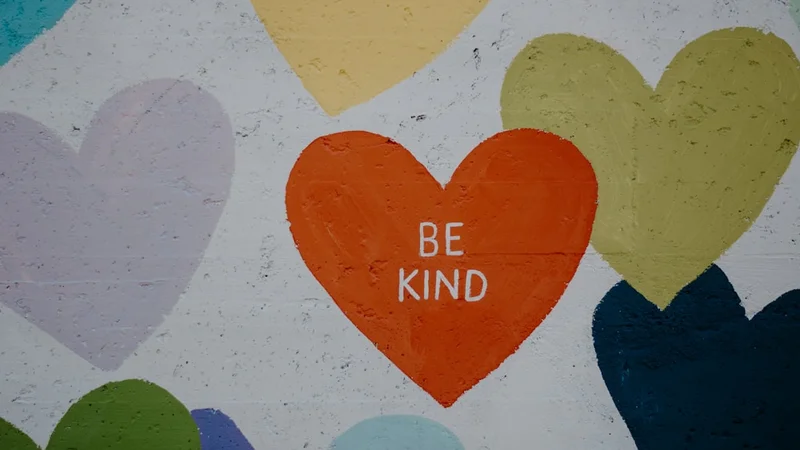
If your kindness practice never makes you uncomfortable, it's probably drifted into niceness. Niceness is a performance. Kindness is a discipline.
How to Start Today
If you've read this far, here's the smallest possible version of the practice. Don't overthink it.
This afternoon: Text one person something specific and true. Not "thinking of you" — something like "I remembered how you helped me draft that email in 2023 and I wanted you to know it shaped how I write pitches now." Specific gratitude costs more than generic gratitude. That's why it works.
This evening: Write down what happened. Their reply, if any. How you felt before and after. One sentence per point.
This weekend: Do the seven-minute generosity audit. Pick a target for next week.
This month: Repeat daily. Vary the acts. Track what compounds and what fizzles.
Atomic Habits — James Clear
The entire daily kindness practice architecture — tiny act, track, compound, anchor to existing habit — is lifted from Clear's framework. The article even uses the phrase "habit stacking" which Clear popularized. Clos…
As an Amazon Associate, we earn from qualifying purchases — at no extra cost to you.
That's the whole program. The research says you'll feel measurable shifts within a few weeks — better sleep, lower resting anxiety, a subtle sense that your days have gained weight and meaning you can't quite pin down. That's not placebo. That's your nervous system recalibrating in the direction it was designed for all along.
The Evolution Worth Designing
Bob Proctor talked about the difference between being busy and being effective. I'd add another distinction: the difference between being successful and being substantial. Substance is what's left of you when the scoreboard stops mattering. It's built in the small, uncelebrated decisions — who you noticed, who you helped, what you said when you could have said nothing.
The science is unusually clear on this one. Of all the habits you could install, a consistent kindness practice has among the highest returns on well-being, longevity, and relationship quality, and costs among the least. You don't need an app. You don't need a coach. You don't need to quit anything. You just need to keep a ledger, anchor one small act to your morning coffee, and let the compound do what compound does.
The barista in London — I never saw her again. But I kept the habit. Seven years later, the napkin kindness has turned into a quiet operating principle that shapes how I run a company, how I show up for friends, and how I think about what a well-designed life actually looks like.
What would you write on a napkin for someone this week — and who would you give it to?
Was this helpful?