Habits· 10 min read
The Science of Living Longer: 6 Habits That Extend Healthspan
Geroscience research reveals the six evidence-based behaviors that separate people who age well from those who don't — and they're simpler than you think.
The Science of Living Longer: 6 Habits That Extend Healthspan
My grandfather smoked unfiltered cigarettes for forty years, ate whatever he wanted, and lived to 91. My uncle, the health-conscious one who ran marathons and avoided sugar like it owed him money, had a heart attack at 58.
For a long time, stories like this made me suspicious of longevity advice. Genetics felt like the whole game. Either you drew a good hand or you didn't. But then I spent three months reading through geroscience research — the actual peer-reviewed papers, not the Instagram infographics — and something shifted. The data doesn't say what I expected it to say. It doesn't even say what most health influencers claim it says.
Here's the uncomfortable truth: your genes account for roughly 20 to 25 percent of how long you live. A landmark Danish twin study published in Human Genetics confirmed this decades ago, and more recent work from the UK Biobank has only reinforced the finding. The remaining 75 to 80 percent? That's behavior. That's environment. That's the stuff you actually control.
Which means my grandfather didn't live long because of his cigarettes. He lived long despite them — and he likely left a decade on the table. My uncle's heart attack wasn't proof that healthy habits fail. It was a reminder that one category of habits doesn't cover all six bases.
Because there are six. Not twenty. Not fifty. Six behaviors that, according to converging evidence from geroscience, epidemiology, and the Blue Zones research, consistently separate the people who age well from those who fall apart early.
Healthspan vs. Lifespan: The Distinction That Changes Everything
There's a word that most people outside of medical research have never heard, and it changes the entire conversation: healthspan.
Lifespan is simple — it's how many years you're alive. Healthspan is how many of those years you spend healthy, functional, and free of chronic disease. They're not the same number. In the United States, the average lifespan is about 77 years, but the average healthspan is closer to 63. That's a gap of roughly 14 years spent in decline — dealing with diabetes, cardiovascular disease, cognitive deterioration, or the kind of chronic pain that turns every morning into a negotiation.
Jim Rohn used to say, "Take care of your body. It's the only place you have to live." He wasn't being cute. He was pointing at something the geroscience community has now quantified: the quality of your later years isn't random. It's designed — whether you do the designing consciously or not.
The six habits below don't just add years. They compress morbidity. That's the clinical term for pushing disease and disability into a smaller window at the very end of life, instead of letting it sprawl across your final two decades. Think of it as the difference between a slow fade and a sharp cliff. The people who practice these habits tend to stay vibrant until very near the end.
morning routine habits
Habit 1: Move Every Day — But Not How You Think
You don't need to run marathons. In fact, marathon runners don't show up disproportionately in longevity data. The people who live longest move consistently at moderate intensity throughout the day.

Amazfit GTR 4 Fitness Smartwatch
The research is clear: the biggest longevity gains come from moving out of the sedentary category, not from going harder — 11 minutes of brisk walking beats a zero-movement day far more than a gym session beats 30 min…
As an Amazon Associate, we earn from qualifying purchases — at no extra cost to you.
A 2023 meta-analysis in the British Journal of Sports Medicine found that as little as 11 minutes of brisk walking per day — not running, not CrossFit, walking — was associated with a 23 percent lower risk of premature death. The largest gains came from moving out of the sedentary category entirely. Going from zero exercise to a small amount of daily movement was worth more than going from moderate exercise to intense exercise.
Dan Buettner, who led the Blue Zones research, noticed the same pattern. The longest-lived populations on earth — in Okinawa, Sardinia, Nicoya, Ikaria, and Loma Linda — don't have gym memberships. They walk to the store. They garden. They knead bread by hand. Movement is woven into the texture of their day, not quarantined into a 45-minute slot between meetings.
The practical takeaway: stop thinking about exercise as an event. Start thinking about it as a setting. Can you walk to that errand? Take the stairs? Stand while you take that call? These micro-decisions, repeated daily, matter more than your weekend warrior workout.
Habit 2: Sleep Like Your Life Depends on It (Because It Does)
Matthew Walker's Why We Sleep turned a lot of heads when it came out, but the research behind it has only gotten stronger since. A 2023 study led by researchers affiliated with Harvard Medical School analyzed data from more than 172,000 adults and found that those who maintained all five favorable sleep behaviors — adequate duration of seven to eight hours, few difficulties falling or staying asleep, no reliance on sleep medication, and feeling well-rested — were 30 percent less likely to die from any cause compared to those with poor overall sleep health.
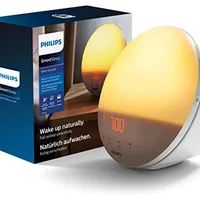
Philips Wake-Up Light HF3519
Sleep consistency — going to bed and waking at the same time every day — matters as much as total hours, and abrupt alarm sounds that jolt you awake are one of the fastest ways to disrupt your circadian rhythm in the…
As an Amazon Associate, we earn from qualifying purchases — at no extra cost to you.
Sleep isn't rest. That framing is wrong and it costs people years. Sleep is when your body runs its deepest maintenance protocols. Your brain clears beta-amyloid plaque — the protein associated with Alzheimer's — through the glymphatic system, which operates primarily during deep sleep. Your immune system produces cytokines. Your muscles repair. Your hormones rebalance.
Short-changing sleep doesn't make you tougher. It ages your cells faster. A study at UCLA found that just one night of four-hour sleep activated genes associated with biological aging. One night.
Here's where most people go wrong: they treat sleep quantity as the only variable. Sleep consistency matters just as much. Going to bed and waking up at roughly the same time — even on weekends — keeps your circadian rhythm calibrated. Irregular sleep schedules, even when the total hours are adequate, are linked to metabolic dysfunction and higher cardiovascular risk.
If you're reading this at midnight, put the phone down. Seriously.
nighttime routine for better sleep
Habit 3: Eat Mostly Plants, But Don't Obsess
The nutrition world is a war zone. Keto versus vegan. Carnivore versus Mediterranean. Intermittent fasting versus intuitive eating. Everyone's got a study, a before-and-after photo, and a supplement line.
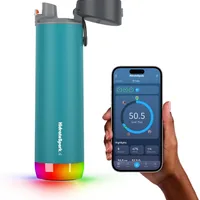
HidrateSpark PRO Smart Water Bottle
A plant-based diet rich in legumes, vegetables, and whole grains — the dietary pattern that consistently shows up in the longest-lived populations — works best when you're also well-hydrated, since fiber absorption an…
As an Amazon Associate, we earn from qualifying purchases — at no extra cost to you.
But here's what the long-view data actually shows: dietary pattern matters more than dietary ideology. The populations with the longest healthspans eat diets that are roughly 90 to 95 percent plant-based, but none of them are strictly vegan. They eat small amounts of fish, occasional meat, plenty of legumes, whole grains, nuts, and vegetables. They cook at home. They eat slowly, often with other people.
The Okinawan concept of hara hachi bu — eating until you're 80 percent full — might be the most underrated dietary advice on the planet. It's not a calorie-counting strategy. It's a relationship with satiety that most Western eaters have never learned.
What the research doesn't support is dietary perfectionism. Orthorexia — the obsession with eating "clean" — correlates with elevated cortisol and anxiety, which ironically accelerate aging. The stress of trying to eat perfectly may be worse for your healthspan than the occasional slice of pizza.
Bob Proctor once said, "Thinking is the hardest work there is, which is probably the reason why so few engage in it." The same could be said about eating mindfully. It's not complicated. It's just uncommon. Eat real food. Mostly plants. Not too much. Stop overthinking it.
Habit 4: Build and Maintain Real Relationships
This is the one nobody wants to hear, because you can't buy it in a supplement store or track it on a wearable.
The Harvard Study of Adult Development — the longest-running study on human happiness, now spanning over 85 years — concluded that the single strongest predictor of both health and longevity is the quality of your close relationships. Not the quantity. Not your follower count. The depth and reliability of a few genuine connections.
Loneliness isn't just emotionally painful. It's physiologically toxic. A meta-analysis by Julianne Holt-Lunstad at Brigham Young University found that chronic loneliness increases mortality risk by 26 percent — roughly equivalent to smoking 15 cigarettes a day. Social isolation triggers chronic inflammation, elevates cortisol, and suppresses immune function.

The Blue Zones populations all have strong social structures baked into daily life. Okinawans have moai — small, lifelong social groups that meet regularly and support each other emotionally and financially. Sardinians gather in the village square every afternoon. Seventh-Day Adventists in Loma Linda center their week around community gatherings.
Here's the counter-intuitive part: being busy isn't the same as being connected. You can have a packed calendar and still be profoundly isolated. The habit isn't "see more people." It's "invest more deeply in the people who matter." Call instead of texting. Show up instead of liking a post. Have the awkward conversation instead of avoiding it.
Habit 5: Find Something That Gives You a Reason to Get Up
The Japanese call it ikigai. The Nicoyans call it plan de vida. In English, we awkwardly translate it as "purpose" or "sense of meaning," but those words don't quite capture it. It's more specific than a grand life mission. It's the thing that pulls you out of bed on an ordinary Tuesday.
A 2019 study in JAMA Network Open followed nearly 7,000 adults over 50 and found that those with a strong sense of purpose were significantly less likely to die during the study period than those without one — individuals in the lowest-purpose group were more than twice as likely to die — after controlling for income, education, and health status.
Purpose doesn't have to be dramatic. It's not about saving the world. It can be tending a garden, mentoring a student, building furniture, writing letters. The key is that it requires your engagement and connects you to something beyond yourself.
Napoleon Hill wrote about purpose as the "definite chief aim" — the organizing principle that gives direction to your energy. Without it, people drift. And drifting, it turns out, is biologically expensive. Studies show that purposelessness correlates with higher rates of inflammation, weaker immune response, and faster cognitive decline.
If you don't have a clear answer to "what gets you up in the morning?" — that's not a character flaw. It's a design problem. And design problems have solutions.
finding your purpose and core values
Habit 6: Manage Stress Before It Manages You
Stress isn't the enemy. Chronic, unmanaged stress is.
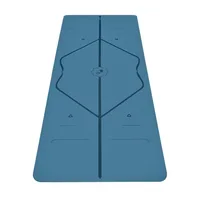
Liforme Yoga Mat
Chronic stress shortens telomeres by the equivalent of 10 years of aging — and the fix isn't dramatic, it's about building recovery into your daily rhythm. Ten minutes of breathwork or yoga in the morning, or a short…
As an Amazon Associate, we earn from qualifying purchases — at no extra cost to you.
Short bursts of stress — the kind you feel before a presentation or during a hard workout — are actually beneficial. They trigger hormesis, a process where mild stress makes your cells more resilient. It's why cold exposure and exercise work: they're controlled stressors that force adaptation.
But when stress becomes the wallpaper of your life — the constant low-grade hum of financial anxiety, relationship tension, work pressure, and information overload — it stops being a stimulus and starts being a poison. Chronic stress keeps cortisol elevated, which suppresses immune function, disrupts sleep, promotes visceral fat storage, and accelerates telomere shortening. Telomeres are the caps at the ends of your chromosomes, and their length is one of the most reliable biomarkers of biological aging.
Elizabeth Blackburn, who won the Nobel Prize for her work on telomeres, found that chronic psychological stress can shorten telomeres by the equivalent of 10 years of aging. Ten years. Not from smoking. Not from diet. From stress.
The fix isn't meditation retreats and spa days — those help, but they're not the core solution. The core solution is building recovery into your daily rhythm. That might mean 10 minutes of breathwork in the morning. A walk after lunch without your phone. A hard boundary on when work email ends. A practice of writing down what's bothering you before bed so your brain doesn't have to process it during sleep.
Bruce Lipton's research on the biology of belief reinforces this: your cells respond to the environment you create for them. If that environment is saturated with unprocessed stress, your biology ages faster regardless of how many supplements you take.

How to Start Today
You don't need to overhaul your entire life by Friday. That approach almost always backfires. Instead, pick one habit from the six and make it embarrassingly small.
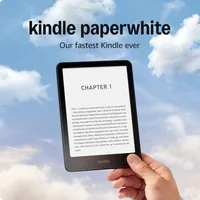
Kindle Paperwhite (2024)
If you want to go deeper on the science behind these six habits, the most rigorous longevity books — Peter Attia's *Outlive*, David Sinclair's *Lifespan*, Matthew Walker's *Why We Sleep* — are all available on Kindle…
As an Amazon Associate, we earn from qualifying purchases — at no extra cost to you.
Step 1: Identify the weakest link. Which of the six habits is most neglected in your life right now? Sleep? Movement? Social connection? Start there — not with the one that sounds coolest.
Step 2: Set a floor, not a ceiling. If sleep is your weak spot, commit to being in bed by 11 PM three nights this week. Not seven. Three. If movement is the gap, walk for 10 minutes after dinner tonight. The goal is a floor you can't fail to clear.
Step 3: Track the minimum. Use a simple tally — paper, not an app. A checkmark on a calendar works. The research on habit formation from University College London shows that the median time to automaticity is 66 days, but simpler behaviors lock in much faster.
Step 4: Stack onto an existing routine. Attach the new habit to something you already do. After your morning coffee, take a 10-minute walk. After brushing your teeth, write down three things you're grateful for. Behavioral scientists call this "habit stacking," and it dramatically increases the odds of follow-through.
Step 5: Audit monthly, not daily. Daily self-assessment breeds obsession. Monthly check-ins give you enough data to see patterns without drowning in noise. At the end of each month, ask: Am I doing this more than I was 30 days ago? If yes, you're winning.
The Longer Game
Here's what strikes me most about the longevity research: none of these six habits are expensive. None of them require a prescription. None of them demand extreme discipline or monk-like sacrifice. They're ordinary behaviors, practiced with unusual consistency.
That's what designing your evolution actually looks like in practice. It's not a single dramatic transformation. It's a series of small, deliberate votes for the person you want to be at 50, 70, 90. Every walk you take, every hour of sleep you protect, every real conversation you have with someone you care about — these are the materials your future self is built from.
T. Harv Eker once said, "How you do anything is how you do everything." He was talking about money, but it applies even more to health. The way you treat your body today is a statement about how much you value the years ahead.
So here's the question worth sitting with: if your future self could send you a message right now — about how you're sleeping, moving, eating, connecting, coping — what would they ask you to change first?
That answer is your starting point.
Was this helpful?