Habits· 10 min read
Social Connection: The Most Underrated Health Habit
Social isolation rivals 15 cigarettes a day in mortality risk. Here's what 85 years of Harvard data reveal about social connection as a health habit.

Why Social Connection Is Your Most Underrated Health Habit (85 Years of Data Agree)
My Oura ring showed an 89 readiness score that morning. Eight hours of sleep, resting heart rate of 52, 10,000 steps hit before noon. I'd meal-prepped on Sunday, taken my supplements, done the cold plunge. Objectively, I was doing everything right.
But I hadn't had a real conversation — the kind where you forget to check your phone — in almost three weeks.
I was optimizing all the wrong metrics. Social connection wasn't even on the list. And according to one of the longest-running studies in human history, what I was ignoring was quietly more important than everything else combined.

In 1938, researchers at Harvard began tracking the health of 268 college sophomores. They later added 456 inner-city Boston men. Eighty-five years on, the Harvard Study of Adult Development — the longest longitudinal study of human health ever conducted — has produced a finding so consistent and so clear that the current director, Robert Waldinger, can summarize it in a single sentence:
Good relationships keep us healthier and happier. Period.
Not income. Not professional achievement. Not genes. The quality of close relationships at age 50 is a stronger predictor of physical and cognitive health at age 80 than cholesterol levels, blood pressure, fitness metrics, or genetic markers.
That same conclusion arrived from a completely different direction in 2010, when Julianne Holt-Lunstad at Brigham Young University synthesized 148 studies covering over 308,000 participants. Her finding, published in PLOS Medicine: adequate social connection is associated with a 50% reduced likelihood of premature death — an effect size significantly larger than physical inactivity, obesity, or heavy drinking.
The comparison to smoking isn't clickbait. It's a precise finding. Social isolation carries roughly the same mortality risk as smoking 15 cigarettes per day.
Here's what makes this uncomfortable: you probably track your steps. You might track your sleep. You almost certainly don't track your relationships. We've built an entire wellness industry around the biomarkers we can easily measure — VO2 max, glucose levels, HRV — and almost entirely ignored the variable that predicts lifespan more powerfully than any of them.
daily habits of genuinely happy people positive psychology
Why loneliness feels like a physical threat (because it is)
John Cacioppo spent twenty years at the University of Chicago building the field of Social Neuroscience, and his central finding is this: loneliness activates your biological threat response.
When you experience perceived social isolation — and notice the key word here, perceived, not objective social contact frequency — your body interprets it as a survival emergency. Cortisol climbs. Inflammatory markers like interleukin-6 and TNF-alpha rise. Sleep architecture fragments, particularly the restorative slow-wave phases. And perhaps most insidiously, your perceptual system shifts: you start detecting social threat more sensitively, misreading neutral cues as potentially hostile. Cacioppo called this "social vigilance hyperactivation."
Your brain starts playing defense at the exact moment it needs to be playing offense.
This isn't a design flaw. In the evolutionary environment that shaped human cognition — the small, interdependent groups of roughly 150 people in which our social neurology developed — social exclusion represented a genuine survival threat. No food-sharing, no protection, no reproduction. The loneliness signal was adaptive: it drove you back toward the group with the same urgency that hunger drives you toward food.
The problem is that this finely calibrated alarm system didn't evolve for remote work, social media, or urban anonymity. It was built for a tribe where everyone knew your name. And it responds to modern isolation with the same biological severity as the ancestral version — because to your nervous system, there is no meaningful difference.

Amazfit GTR 4 Fitness Smartwatch
Loneliness drives cortisol, inflammation, and fragments sleep — the exact biomarkers (HRV, stress, sleep architecture) a smartwatch surfaces. A high-ticket anchor (£150) that ties the 'your body treats isolation as an…
As an Amazon Associate, we earn from qualifying purchases — at no extra cost to you.
What 85 years of data actually reveals about healthy aging
Most people assume the Harvard Study is about success or career achievement. It's not.
What the data shows — repeatedly, across both cohorts, over eight decades — is that the people who reported the most satisfaction in their relationships at midlife were the ones who aged most successfully into late life. Physically, cognitively, and emotionally.
The data gets specific in ways that surprise people. It's not the number of relationships that predicts health outcomes. It's the quality of the closest ones. Specifically: the presence of at least one relationship in which a person feels genuinely seen, and can count on the other person when life gets difficult.
The unhappiest — and least healthy — group in the study wasn't the people who were alone. It was the people who were surrounded by other people but still felt lonely. You can be in a long marriage, have three kids, maintain a packed social calendar, and still register as isolated by the measure that actually matters.
Robert Waldinger and his colleague Marc Schulz synthesized the study's findings in their 2023 book The Good Life — one of the most thorough demolitions of the "optimize everything solo" narrative I've encountered. Their core argument is blunt: if you want to invest in your long-term health the way you invest in a 401(k), the primary vehicle is your relationships. Consistently. Even when the returns aren't immediately visible.
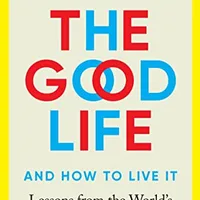
The Good Life — Robert Waldinger & Marc Schulz
The article explicitly cites this book and its authors (current director + associate director of the Harvard Study). The single most natural product placement in the entire piece — the reader is already thinking about…
As an Amazon Associate, we earn from qualifying purchases — at no extra cost to you.
The social connection crisis nobody predicted
Here's a number that should be jarring: time spent with friends in American adults has declined by approximately 20 hours per month since 2003. Time spent alone has increased correspondingly. The percentage of adults reporting no close friends has tripled over the same period.
In 2023, US Surgeon General Vivek Murthy published a formal advisory on loneliness and isolation — Our Epidemic of Loneliness and Isolation — calling for social connection to be treated with the same public health urgency as physical activity and nutrition. He used Holt-Lunstad's meta-analysis as the centerpiece.
This isn't a personal failing. The structural conditions of modern life have made casual, repeated, in-person contact — the biological requirement for genuine social bonding — systematically rarer. Remote work removed the ambient social texture of offices. Urban design built for cars rather than pedestrians. Smartphone-mediated leisure replaced the idle social time that once produced spontaneous conversation.
Robert Putnam documented the broader trend in Bowling Alone (2000), twenty years before smartphones finished the job: civic participation, informal socializing, and community membership had all declined sharply, taking the relational infrastructure that health, cooperation, and trust are built on with them.
What replaced it, partly, is digital connection. And here's an opinion that tends to irritate people: online social contact is not a biological substitute for in-person social contact as a health variable. Susan Pinker's research in The Village Effect identifies the mechanism: face-to-face contact with trusted people triggers oxytocin and serotonin release in ways that screen-mediated interaction does not reliably replicate. Text messages keep relationships alive. They don't build new relational depth. They're maintenance, not construction.

Kindle Paperwhite (2024, 12th Gen, 16GB)
The section discusses The Village Effect and Bowling Alone — a reading-friendly moment. Positions the Kindle as the vehicle for the relationship/connection literature referenced throughout. High-ticket conversion anch…
As an Amazon Associate, we earn from qualifying purchases — at no extra cost to you.

Quality over quantity: what the science actually says
The research is consistent on one structural distinction that most social advice misses: you don't need many relationships. You need a small number of relationships that have depth.
Robin Dunbar's social brain hypothesis establishes a cognitive ceiling of roughly 150 stable relationships, with genuinely close relationships typically numbering between 5 and 15. The mistake that modern social dynamics often produce is width without depth: hundreds of LinkedIn connections, thousands of followers, and no one to call at 2 a.m. when something falls apart.
What creates depth? Repeated, voluntary, in-person interaction over time. Self-disclosure — the willingness to be genuinely known. Responsiveness — the experience of being genuinely heard. Time in each other's presence without competing agendas.
Most adults are not investing in those variables intentionally. We consume social media, send congratulatory texts, like birthday posts, and call it connection while the biologically significant version quietly starves.
Arthur Aron's research at SUNY Stony Brook documented the precise behavioral mechanism for building closeness in compressed time frames: reciprocal, gradually escalating self-disclosure — the exchange of genuinely revealing questions and honest answers — produces measurably stronger closeness than the same amount of time spent in conventional small talk. This is the science behind his famous "36 Questions That Lead to Love," but the principle is far broader: the conversations that matter most are the ones most people avoid having.
how to build meaningful habits that actually stick in real life
How to build your social health habit starting this week
The failure mode here is treating this insight as inspiration rather than instruction. So here's what the research actually supports, in practical form:
1. Audit your relational portfolio. List the five people you most want to be closer to. When did you last see each of them in person? Schedule the next encounter now — not "soon," but with a specific calendar entry before you close this tab. Research consistently shows that the single strongest predictor of adult friendship maintenance is whether interactions are recurring and scheduled rather than left to spontaneity.
2. Concentrate before you diversify. Dunbar's data suggests that one genuine close friendship provides more health protection than twenty superficial connections. Resist the urge to spread effort thinly across a large network before you've built depth with even one person.
3. Design the conditions for real conversation. Priya Parker's work on gathering design, synthesized in The Art of Gathering, shows that unstructured parallel presence — watching TV together, being in the same room while on devices — doesn't produce relational depth. A 90-minute dinner with one person, phones turned over, with deliberate conversation, generates more relational investment than an evening of ambient co-presence. The container shapes what's possible inside it.

Kitchen Safe kSafe Time Locking Container (Phone Lock Box)
The text literally says 'phones turned over' and 'phones away' for real conversation (Priya Parker / The Art of Gathering). A time-lock box is the physical, behavioral enforcement of that exact instruction.
As an Amazon Associate, we earn from qualifying purchases — at no extra cost to you.
4. Use structured questions to go deeper faster. If genuine conversation feels forced or you tend to stay at the surface, a structured conversation card set removes the awkwardness of asking deeper questions cold. Aron's research shows that the right question, at the right moment, can compress months of gradual trust-building into a single evening. The format matters less than the willingness to actually answer.

We're Not Really Strangers — Conversation Card Game (Core, 150 cards)
Direct match to the slot: 'a structured conversation card set removes the awkwardness of asking deeper questions cold' (Arthur Aron / 36 Questions). WNRS is purpose-built around meaningful connection — broader and mor…
As an Amazon Associate, we earn from qualifying purchases — at no extra cost to you.
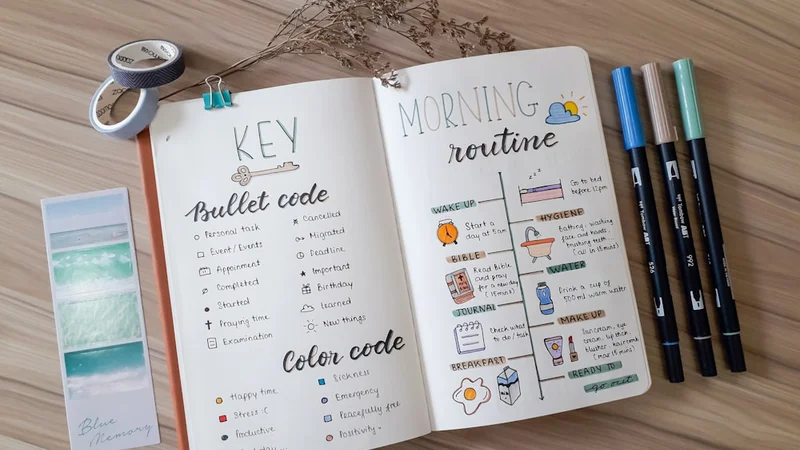
5. Track it like any other health behavior. If social connection is genuinely your most critical health habit — and the data says it is — treat it accordingly. Record who you connected with this week, how much time you spent in genuine face-to-face interaction, and whether any of it had depth. A dedicated journal, used weekly, is enough to surface patterns you'd otherwise miss entirely.

Clever Fox Habit Tracker Journal / Habit Calendar
The slot says 'a dedicated journal, used weekly, is enough to surface patterns.' A habit tracker is the literal tool for 'track it like any other health behavior' — record who you connected with and whether it had depth.
As an Amazon Associate, we earn from qualifying purchases — at no extra cost to you.
6. Examine your life architecture. This is the part nobody wants to hear: if your daily life is physically organized in a way that makes spontaneous in-person contact with people you care about structurally rare, the problem isn't your effort level. Where you live, where you work, and how you spend your transit time may shape your social health more than any specific friendship practice. Proximity is not everything, but it's more than we pretend.
This is the variable you can't afford to keep ignoring
There's a version of personal development that treats growth as a fundamentally solo project. Optimize yourself. Build your systems. Improve your metrics. Remove the friction between you and your goals. And it makes sense, up to a point.
But the Harvard Study puts 85 years of data against that framing and says, plainly: the people who thrived most were not the ones who optimized most efficiently in isolation. They were the ones who invested most consistently in their relationships with other people.
The good news is that social connection follows exactly the same compounding logic as every other meaningful habit. You don't need to overhaul your social life this weekend. You need to choose one relationship to invest in more deliberately, starting now. One dinner. One scheduled walk. One conversation that goes past comfortable and into real.
That's a design decision, not a personality trait. It's the kind of decision that, made consistently, shapes who you are at 80 more than almost anything else you could do with the same hours.
Designing your evolution isn't a solo endeavor. The longest study in the history of human health is quite specific about that.
What relationship in your life is most overdue for a genuine investment — and when, exactly, will you make the first move?
the science of habit formation and why relationship rituals are the most durable ones
Was this helpful?