Mindset· 9 min read
Why Waiting Beats Forcing a Decision: The Science
Dijksterhuis's 2006 Science study: unconscious processing beats deliberate analysis for complex choices. The real science of strategic waiting.
Why Waiting Beats Forcing a Decision: The Science
There's a specific kind of exhaustion that comes from a hard decision you can't resolve. You've written the pros and cons list. You've talked it through until your friends are tired of hearing about it. You've run the mental simulation at least a dozen times, and every time you think you've landed somewhere, a new variable surfaces — a concern you hadn't properly weighted, a trade-off you'd conveniently set aside.
So you push harder. More deliberation. More analysis. More trying to think your way to certainty.
What if that's exactly the wrong move?
The Study That Changed How I Think About Big Decisions
The conventional view of good decision-making looks something like this: gather information, weigh the pros and cons carefully, reason through the implications, and arrive at a conclusion through sustained deliberate effort. It's essentially the logic of a spreadsheet — more processing power, better output.
That view isn't wrong for simple choices. Should you order the chicken or the fish? More thought doesn't hurt. But it holds up surprisingly poorly for the kinds of complex, multi-attribute decisions that actually matter: which job offer to accept, whether to leave a long relationship, how to allocate your savings between competing priorities, whether to move to a new city.
In 2006, psychologist Ap Dijksterhuis at Radboud University Nijmegen published a paper in Science titled "On Making the Right Choice: The Deliberation-Without-Attention Effect." It built on years of research developing what he called Unconscious Thought Theory, and its findings genuinely surprised the field.
His experiments placed participants in front of a complex, multi-attribute decision — typically choosing between four apartments described across twelve different attributes, including price, location, noise level, size, and commute. One group decided immediately after reading the information. A second group was given a few minutes of careful, uninterrupted thinking time before choosing. And a third group was handed an unrelated puzzle — a distraction task designed to pull their conscious attention completely away from the apartment decision — before they made their final call.
The distracted group made objectively better choices.
Not marginally. Measurably, significantly better — judged against the actual attribute distributions of each apartment. Participants who weren't thinking about the decision at all were more likely to select the option with the most genuinely positive attributes overall.

Sony WH-1000XM5 Noise Cancelling Headphones
The distraction task in Dijksterhuis's experiments only worked because conscious attention was genuinely pulled away. Ambient noise keeps dragging it back — active noise cancelling is the cheapest way to make a redire…
As an Amazon Associate, we earn from qualifying purchases — at no extra cost to you.
Why Your Conscious Mind Is a Terrible Integrator
Here's what makes Dijksterhuis's finding counterintuitive: we tend to equate cognitive effort with quality. Work harder on a problem, get a better answer. It's a rule that holds beautifully for debugging code, solving a math problem, or editing a draft. But the brain doesn't process all tasks the same way.
Conscious, deliberate thought has a specific and quite narrow working capacity. You can hold approximately four to seven chunks of information in active awareness at one time. That's it. When you sit down to consciously analyze a decision with twelve distinct attributes and genuine trade-offs between them, your working memory is already at or near capacity within the first few items you're actively weighing.
What happens next is predictable: you over-weight a small number of highly salient attributes — usually whichever ones you happened to think about most recently, or the most emotionally vivid — and under-weight nearly everything else. The deliberate analysis feels thorough. It isn't. It's a narrow spotlight passing over a large room.
Unconscious processing works differently. According to Dijksterhuis's model, when conscious attention is redirected elsewhere, the brain continues to process information from working memory without the bottleneck of limited conscious capacity. It's less like a spotlight and more like a slow, diffuse light illuminating the whole room at once — integrating trade-offs across many attributes simultaneously, without the constraint of how many things can be held in active focus at one time.
This is the core of what Dijksterhuis called the Deliberation-Without-Attention Effect: for decisions with many competing attributes, unconscious processing — your brain working while you're not actively working — produces better outcomes than conscious deliberation precisely because it isn't constrained by the limited bandwidth of focused awareness.
This proposed mechanism maps onto something most people have experienced without being able to explain it: the answer that surfaces when you stop trying to find it.
Thinking, Fast and Slow — Daniel Kahneman (Paperback)
The article names Kahneman's System 1 / System 2 framework directly in this paragraph as the most widely cited adjacent model — the single most natural book placement in the entire piece.
As an Amazon Associate, we earn from qualifying purchases — at no extra cost to you.
There's a whole shelf of popular science books that touch on adjacent ideas. Daniel Kahneman's framework of System 1 and System 2 thinking in Thinking, Fast and Slow is probably the most widely cited. Malcolm Gladwell explored rapid, unconscious pattern recognition in Blink. Dijksterhuis's research — further formalized in his Unconscious Thought Theory overview — offers a more specific and testable claim than either: for complex decisions with many competing attributes, the quality of your outcome isn't primarily determined by how hard you think. It's determined by whether you create the conditions for unconscious processing to occur.
See also: How to Stop Overthinking and Start Taking Action
The Crucial Distinction Most Summaries Miss
Here's where Dijksterhuis's research gets genuinely practical — and where most popular summaries of this work fall apart.
The distracted group in his experiments didn't simply ignore the apartment information and guess randomly. They absorbed the full information first. They read each option's attributes carefully. They had the complete dataset loaded into memory. Only then were they distracted and pulled away from the decision.
This is a critical distinction that changes what the research actually recommends.
Strategic waiting is not the same as avoidance. Procrastination is retreating from a decision before you've genuinely engaged with it — skimming the surface, postponing the uncomfortable information, staying in ambiguity because entering it feels worse. What Dijksterhuis found actually works is the inverse: complete, serious immersion in the decision's information, followed by a deliberate period of non-deliberation.
You do the reading, the research, the conversations, the data gathering. You load up fully. And then you step away — on purpose — and let something less visible do the integration.
The period away also matters in terms of genuineness, not just duration. Dijksterhuis's lab experiments used minutes of distraction. In real-world decisions, the productive waiting period is likely longer — days sometimes, rather than minutes. The principle scales. The exact timeline from the laboratory probably doesn't.
When to Deliberate and When to Walk Away
One finding that often gets buried in popular accounts of this research: the Deliberation-Without-Attention Effect doesn't apply uniformly to every kind of decision.
For simple choices — few attributes, clear trade-offs, limited variables — Dijksterhuis's experiments found conscious deliberation performed just as well or slightly better than unconscious processing. The benefit of stepping away is proportional to the genuine complexity of the choice.
And "complexity" here means something specific. It's not about how much the decision matters emotionally. It's about the number of genuinely competing attributes your brain needs to integrate simultaneously. Choosing between two job offers at similar pay in cities you'd both enjoy might feel enormous but be structurally simple. Choosing which of seven apartments to rent — at different price points, in different neighborhoods, with different commutes, lease terms, landlords, and proximity to your current life — is genuinely complex in the structural sense Dijksterhuis's research addresses.
The practical test isn't your stress level. It's the number of dimensions actually competing. Three or fewer attributes with clear weights? Deliberate consciously. Twelve or more, with genuine trade-offs between each? Load up, then let go.
See also: Why Most Goals Fail Before You Start (And How to Fix Them)
It's also worth noting what this research is not. It isn't an argument for always trusting gut feelings about every decision. It isn't a case for avoiding careful thinking. It's a narrowly defined finding about a specific type of complex, multi-attribute choice where deliberate conscious analysis hits a capacity ceiling that unconscious processing doesn't share.
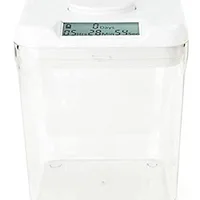
Kitchen Safe kSafe Time Locking Container (Medium, White Lid + Clear Base)
The article draws a hard line between strategic waiting and procrastination. A timed lock box is the physical enforcement of that line — you cannot 'just check' the decision back into working memory.
As an Amazon Associate, we earn from qualifying purchases — at no extra cost to you.
How to Actually Apply This to Your Next Hard Decision
Dijksterhuis's research isn't just theoretically interesting. It's actionable in concrete, specific ways. Here's what using it actually looks like.
Do the information work seriously. This is non-negotiable. The unconscious processing that produced better outcomes in the research was working on something — it had complete, carefully absorbed information to integrate. Skim the options, half-read the details, avoid the uncomfortable truths, and you're not giving your brain anything useful to work with. The quality of the output is bounded by the quality of the input. Before you step away, make sure you've genuinely loaded up.
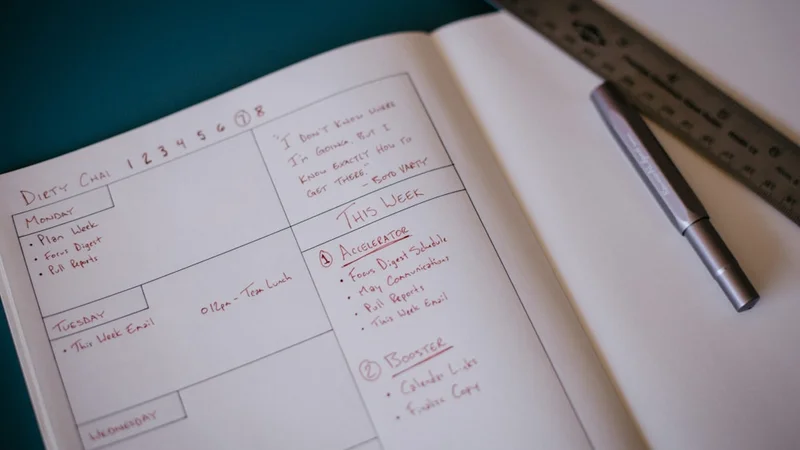
Write down everything you know before you leave. Before stepping away from a complex decision, externalize what you've taken in. Not a pros/cons list — those tend to artificially narrow what you're weighing to whatever fits cleanly on paper. More of a brain dump: every attribute, concern, piece of information, and nagging feeling you've encountered, in whatever order it comes. Getting it out of your head and onto a page serves two functions: it confirms you've actually engaged with the full scope of the decision, and it reduces the mental load of keeping everything in working memory, which may help free up resources for what happens next.

Clever Fox Habit Calendar Circle (24-Month Habit & Goal Tracker)
Placed on the 'write down everything you know before you leave' instruction — the article explicitly rejects pros/cons lists in favour of an unfiltered brain dump plus a longitudinal record.
As an Amazon Associate, we earn from qualifying purchases — at no extra cost to you.
Give yourself a genuine period of non-deliberation. Not "I'll think about it while I take a walk" — that's still deliberation, just with better scenery. A film you actually lose yourself in. A book you read purely for pleasure. An hour of cooking something slow. Something that genuinely redirects conscious attention away from the decision for an extended, uninterrupted stretch. The length matters less than the genuineness of the redirection.
Notice what surfaces when you return. When you come back to a decision after a real period of non-deliberation, don't immediately restart deliberate analysis. Pause. Write down whatever comes to you first — before the conscious editing process begins. That initial response after a waiting period is often what Dijksterhuis's research was measuring. It's not infallible. But it's worth capturing before the spotlight narrows again.

Kindle Paperwhite 2024 (12th Gen, 16GB, Black, Without Ads)
The article's own prescription for a real non-deliberation window is 'a book you read purely for pleasure'. This is the highest-ticket item in the set and the most literal fit in the whole article.
As an Amazon Associate, we earn from qualifying purchases — at no extra cost to you.
Track your decisions over time. If you're making complex decisions regularly — career, financial, relational — there's genuine value in keeping a record of which approach you used and how each played out. Not to build a rigid formula, but to develop your own calibrated sense of when deliberate waiting worked for the kind of complexity you tend to face. A simple decision journal is one of the most underused tools in this space, and the data you build over months is more useful than any general heuristic.

Philips SmartSleep Wake-Up Light HF3520 (Coloured Sunrise Simulation)
Sits on 'notice what surfaces when you return'. Sleep is the longest and most reliable non-deliberation window most people get — and the article's excerpt explicitly frames the mechanism as the real science behind 'sl…
As an Amazon Associate, we earn from qualifying purchases — at no extra cost to you.
The Uncomfortable Implication
There's something quietly difficult about taking Dijksterhuis's research seriously.
We feel, culturally, that hard work applied to a problem is always better than not working on it. That more analysis means more wisdom. That sitting with something intensely — leaning in, grinding through it — is more responsible than stepping away. And for a lot of domains, that's genuinely true.
But there's a specific category of problem — complex, multi-attribute, with genuine competing trade-offs — where the push to keep thinking may actually be degrading the quality of your answer. Not because thinking is bad. Because the particular cognitive tool you're reaching for is the wrong size for the task at hand.

Dijksterhuis himself has been careful to acknowledge the limits of his work. Subsequent replications have confirmed the effect is real but not universal. What it isn't is permission to avoid hard decisions indefinitely. It's something more demanding and more specific: the instruction to do the information work fully, absorb everything available, and then genuinely release it for a period — trusting that the processing will continue somewhere you can't directly observe.
Designing the Right Distance
Stephen Covey used to say that you can't talk your way out of a problem you behaved your way into. Dijksterhuis's research suggests something adjacent: for the hardest decisions, you can't always think your way to the best answer, either. You have to earn the right to step away by doing the information work first — and then trust that something capable of holding all of it, more than your conscious attention can hold, will do the integration while you're gone.
"Design Your Evolution" at Vanulos isn't only about the decisions you make. It's about building the kind of relationship with your own cognition where you know when to push and when to create deliberate space. Dijksterhuis's research gives that second skill a specific, testable foundation.
What's the hardest decision sitting in your queue right now — and have you actually absorbed the full information, or are you still trying to think your way to certainty before you've done the loading work?
Was this helpful?