Productivity· 10 min read
How to Do a Brain Dump for Mental Clarity
Your brain wasn't built to track 47 open loops. The brain dump clears that in 20 minutes. Here's the step-by-step method and the science behind it.

How to Do a Brain Dump: The Practice That Clears Your Overloaded Mind
It was close to midnight. I hadn't moved from my desk in four hours. My screen had nineteen browser tabs open. My notebook had fourteen half-finished lists scattered across six different pages. And I still couldn't tell you — not with any real confidence — what I was actually working on.
I was busy. Extremely busy. And completely, paralyzingly stuck.
That specific flavour of overwhelm — where there's so much to do that you end up doing almost nothing — isn't a productivity problem. It isn't a discipline problem. It's a cognitive architecture problem. And there's a single, almost embarrassingly simple practice that addresses the root cause directly. It's called a brain dump. If you've heard of it but never done it properly, or done it without understanding why it works, what follows is the full picture: the neuroscience behind why your mind races, the step-by-step brain dump method for mental clarity and calm, and the processing pass that transforms a pile of scribbled thoughts into a system that actually holds.
The Science of Why Your Brain Won't Stop (And It's Not Your Fault)
In the mid-1920s, Lithuanian psychology student Bluma Zeigarnik was studying at the University of Berlin under Kurt Lewin — a Gestalt psychologist who had noticed something odd about waiters in a Vienna café. They had remarkable memories for orders in progress — complex multi-person tables, intricate modifications, substitutions and additions — but could recall almost nothing about a table once the bill had been settled and the guests had left. Zeigarnik took Lewin's observation into formal experiments, published in 1927, and what she found has been replicated so consistently across cognitive science that it carries her name.
The Zeigarnik Effect: the human brain holds onto interrupted, unfinished, and unresolved tasks far more persistently than completed ones. Not through any deliberate effort. Because the memory system actively rehearses open loops as a completion-prompting mechanism. Your brain wants to finish things, and when it can't, it keeps tapping you on the shoulder.
This is genuinely useful when you have two or three open tasks. It becomes a slow catastrophe when you have forty.
George Miller's foundational 1956 paper on working memory capacity established the other half of the problem: your active processing system — the cognitive workspace that holds information while you're thinking about it — has a capacity of roughly 7±2 items at any given moment. Not forty. Not twenty. Seven, give or take.
When unresolved commitments, unmade decisions, creative ideas, vague worries, and half-formed plans accumulate beyond that threshold, the brain can't stop internally tracking them. It becomes the cognitive equivalent of running thirty applications simultaneously while trying to render video: everything slows down, everything gets choppy, and the system starts behaving in ways that feel irrational but are, in fact, completely predictable.
The scattered, unable-to-concentrate state isn't a character flaw. It's the precise and expected result of asking a system with real cognitive limits to track a volume of open loops it was never designed to hold.
What a Brain Dump Actually Is (Most People Get This Wrong)
A brain dump is a complete, timed, unfiltered externalization of everything currently occupying space in your working memory or generating background cognitive load. Not your priority list. Not the tasks you're currently working on. Everything: tasks, worries, creative ideas, vague intentions, half-formed plans, people you need to contact, things you want to buy, conversations you've been avoiding, projects you've been meaning to start, obligations you're dreading, and anything else that has been quietly pinging your attention from the background.
That word — everything — is the part most people skip. They write down the urgent tasks and call it done. But the Zeigarnik loops that drain the most cognitive energy are rarely the urgent, front-of-mind tasks. Those are already actionable. It's the vague, unresolved, ambiguous items — the email you need to send but can't find the words for, the decision you've been postponing, the project you're unclear how to begin — that generate the most persistent background noise.
A brain dump is not a to-do list. It's not journaling. It's not a planning exercise. It's an act of clearance: moving everything out of your head and into an external system so your brain can stop tracking it internally.
For this, you need a dedicated place to capture it. Many people find that writing by hand engages something the keyboard doesn't — the physical act of writing feels more final, more like genuine transfer. A quality notebook that lives permanently on your desk, always open, removes the friction of hunting for paper when the urge to capture is highest.

Moleskine Classic Notebook
The classic hardcover notebook — always open on the desk. Writing by hand engages something the keyboard doesn't, and the Moleskine becomes the one permanent home for every brain dump going forward.
As an Amazon Associate, we earn from qualifying purchases — at no extra cost to you.
If you prefer digital, any frictionless capture tool works: a single running document, a voice memo, a dedicated notes app. The medium matters far less than the commitment to completeness.
Why Your Brain Finally Lets Go: The Trust Mechanism
Here's the part that makes the brain dump a permanent practice rather than a one-time trick.
When David Allen developed his Getting Things Done methodology — still, over two decades later, the most systematic framework for managing cognitive load — he identified a specific and counterintuitive principle: your mind stops rehearsing an open loop not when you've written it down, but when it trusts that the external system holding it is genuinely reliable.
Atomic Habits — James Clear
The habit architecture book that makes a brain dump stick beyond one session. Clear's 'trust the system' principle is exactly what the Zeigarnik Effect requires — over 20 million copies sold worldwide.
As an Amazon Associate, we earn from qualifying purchases — at no extra cost to you.
This is a subtle distinction with enormous practical consequences. Write something on a Post-It note you might lose, and your brain knows it. It will keep the internal reminder running because it doesn't trust the external system to hold it. But when you consistently use the same capture system — when you've built the habit of both capturing and regularly returning to review — the brain begins to release the rehearsal. It offloads the tracking because the external system has demonstrated it can be trusted.
This is the real psychological function of a brain dump: not just getting things onto paper, but building the trust that allows your mind to genuinely let go.
The immediate effect, when done properly, is striking. The specific mental cacophony — the sensation that your brain is simultaneously trying to hold seventeen conversations — dissipates within minutes. What replaces it isn't emptiness but clarity: a quiet, single-threaded attention that feels almost unfamiliar if you've been running on cognitive overload for weeks.
Mihaly Csikszentmihalyi, whose decades of experience-sampling research produced the concept of flow, found consistently that clarity of intention — knowing precisely what you're doing and why, without competing mental concerns — is one of the most reliably reported correlates of psychological wellbeing in everyday life. The brain dump is the practice that creates the conditions for that clarity.
The 5-Step Brain Dump Method, Step by Step
Here's the process. Simple enough to start in the next thirty minutes. Specific enough to actually work.
Step 1: Choose your capture medium and set a timer.
Use one notebook, one document, one surface. Consistency matters more than quality at this stage — the ritual of returning to the same place builds the trust mechanism faster than variety. Set a timer for 20 minutes. This does two things: it creates a container your brain can commit to, and it introduces a mild urgency that bypasses the internal editor who wants to evaluate each item before capturing it.
Step 2: Write without filtering.
Start writing everything that's in your head. Don't evaluate. Don't prioritize. Don't solve. A complete sentence isn't necessary. Email Marcus re: contract and call dentist and what if the pitch angle is wrong? and gym membership renewal all belong here equally, with equal standing. Follow each thought to its natural end and then move to the next.
If you hit a blank, use category prompts: Work. Home. Health. Relationships. Money. Side projects. Things you're worried about. Things you're excited about. People you should contact. Decisions you've been avoiding. That last one usually produces the most material.
Step 3: Don't stop until the timer is up.
Even if you feel done at minute nine, keep writing. The captures that surface in the second half of a brain dump are typically the ones that have been generating the most background noise — the items your mind has been most successfully suppressing because they're uncomfortable or ambiguous. Those are the ones worth finding.
Step 4: Walk away for ten minutes.
Get up. Make coffee. Don't look at what you've written. This transition period allows the initial cognitive relief to settle and prevents you from immediately collapsing into analysis mode before the capture is actually complete.
Step 5: Return and do a single reading pass.
Read through everything once. Don't process or organize yet. Just add anything the reading itself surfaces — which it will. Reading your own captures tends to trigger associated items that didn't surface during the initial writing.
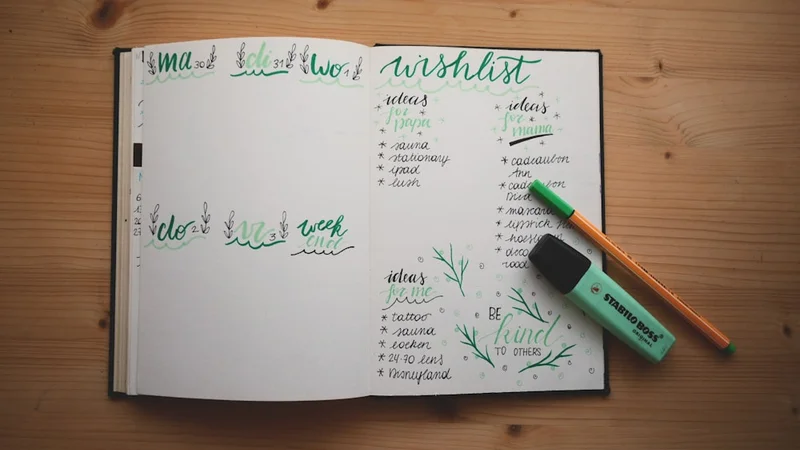
That's the brain dump. Twenty minutes, no filtering, everything out. What comes next is where most people stop — and where the real leverage lives.
How to Process What You've Captured (The Step Everyone Skips)
The brain dump creates clarity. The processing pass creates a system.
Without it, a brain dump is like clearing your desk by sweeping everything into a single pile on the floor. The pile is real, but the problem hasn't been solved — it's just been relocated.
Processing is a two-question pass through your entire capture: Is this actionable? And if yes, what is the very next physical action?
Not the project. Not the goal. The next single physical action. Call Dr. Patel's office to schedule appointment is a next action. Sort out health situation is not. This distinction — borrowed directly from Allen's GTD framework — is what separates captures that get done from captures that get reviewed indefinitely.
Everything you've captured falls into one of five categories:
- Do it now — Takes under two minutes. Do it immediately, then cross it off permanently.
- Schedule it — Requires dedicated time. Goes onto your calendar as a specific, protected slot.
- Delegate it — Belongs to someone else. Assign it and add a follow-up reminder.
- Incubate it — Not actionable now, but worth keeping. Goes onto a someday/maybe list you review monthly.
- Release it — Doesn't need doing, deciding, or revisiting. Let it go without guilt.
For the Bullet Journal system users, this processing pass maps naturally onto the daily migration ritual that Ryder Carroll built at the core of his method.

Clever Fox Habit Calendar Circle
Structures the processing pass over 24 months — the ongoing daily migration ritual Ryder Carroll built into Bullet Journal, in a low-friction format that doesn't require learning the full system.
As an Amazon Associate, we earn from qualifying purchases — at no extra cost to you.
The processing pass typically takes 20–30 minutes after the dump itself. Total investment for a complete session: under an hour. The cognitive return — the quality of attention, decision-making, and creative thinking that follows — is consistently disproportionate to that investment. It's one of those rare practices where the output-to-effort ratio just doesn't feel fair.
When to Do a Brain Dump (And How Often)
The most valuable brain dumps happen on a schedule, not only when things feel unbearable. By the time things feel unbearable, you're already operating well into cognitive debt.
Sunday evening. Clear the residue of last week before the new one begins. This single weekly practice correlates more consistently with productive Monday mornings than almost anything else.
Before deep work sessions. A 10-minute mini-dump before any extended focused work clears the background noise that interrupts concentration mid-session. Think of it as closing unnecessary applications before running demanding software — you want your system resources fully available.
During overwhelm. When you hit the feeling of there's too much and I don't know where to start, that's the Zeigarnik Effect in full operation. A brain dump is the appropriate first response. Not planning, not prioritizing — first, capture. Clarity before strategy.
Monthly. A longer 30-minute session at the end of each month catches anything that's been slowly accumulating beneath your standard threshold — the slow-burn open loops that never feel urgent enough to capture but quietly drain energy over weeks.
The frequency that works best depends on your cognitive load. But there's only one wrong answer: never.
How to Start Today
You don't need the perfect notebook or the perfect app. You need to start before the resistance to starting wins.
Here's your minimum viable brain dump:
-
Grab whatever is nearest to write on. A legal pad, the back of a printed email, an open text document. You can refine the system later. The first session is about proving to yourself that it works.
-
Set a 20-minute timer and write everything — following the steps above.
-
Do a quick processing pass using the five categories.
-
Take one next action on one captured item in the next five minutes. Not to get everything done. To build the early trust with your own capture system that makes the habit compound.
For the habit to stick, your capture system needs to be as frictionless as possible. A dedicated notebook that permanently lives on your desk — always there, always open — removes the activation energy of finding paper in the moment.
If you want a digital processing layer that can hold your categorized items across devices, a simple, well-designed task manager keeps everything organized once it's left your head.
Deep Work — Cal Newport
The architectural manual for designing the distraction-resistant digital task layer that holds your categorised captures across devices. Newport's four rules for focused work in the age of distraction.
As an Amazon Associate, we earn from qualifying purchases — at no extra cost to you.
For creative workers or anyone managing genuinely complex projects, a mind mapping tool can transform a list of raw captures into a visual map of connected thinking — particularly useful for the monthly brain dump where project relationships and dependencies become visible.

Weekly Dry Erase Whiteboard Planner
The analog mind-mapping surface for the monthly brain dump — captures project relationships and dependencies that a linear list can't show. Magnetic, wall-mounted, dry-erase with full mounting kit.
As an Amazon Associate, we earn from qualifying purchases — at no extra cost to you.
Your brain is extraordinary. It can hold entire symphonies, simulate complex social dynamics, generate novel solutions to problems that have never existed before. But it is a spectacularly poor task manager — and it was never designed to be one.
The racing, looping, unable-to-land feeling that most people accept as the unavoidable background condition of a busy life isn't inevitable. It's the natural and predictable result of asking a creative, associative, pattern-finding system to simultaneously function as a relational database. It does the database function badly on purpose. That function belongs elsewhere.
The brain dump is the practice of giving that function back to an external system, so your mind is freed to do what it actually does best: think clearly, create deliberately, and make decisions from a place of genuine awareness rather than reactive overwhelm.
Designing your evolution doesn't require grand transformations every season. More often, it requires the small architectural decisions — twenty minutes, one notebook, everything out — that free your best cognitive resources for the work that actually matters.
What's the loudest open loop in your head right now? Name it in the comments. Externalizing it is, as it turns out, the first step.
Was this helpful?
Continue Your Evolution
The Frozen Goal Problem: Why Tiny Wins Beat Grand Plans
Rejection Sensitivity: Why You Keep Assuming They're Upset
The Science of Nostalgia: Why Looking Back Helps
Sedikides and Wildschut found nostalgia boosts mood, meaning, and social connection — not mere sentimentality. Here's the science and how to use it.