Intentional Living· 11 min read
How to Simplify Your Life When Complexity Takes Over
Obligations pile up quietly until they own you. Here's the science-backed approach to simplifying your life without losing what matters.

How to Simplify Your Life When Complexity Takes Over
There's a specific kind of exhaustion that has nothing to do with effort. You're not lazy. You're not unorganized. You work hard, you show up, you manage it all — and yet by nine o'clock on a Wednesday you're staring at your ceiling wondering how your life got this full, and why being this busy feels nothing like what you imagined it would.
It's because complexity doesn't arrive in one dramatic moment. It accumulates. One reasonable commitment at a time, one polite yes at a time, until the aggregate is something you'd never have agreed to at the start. And the particularly maddening part? Nobody added that complexity to your life. You did — sensibly, for good reasons, in small increments you never totalled up.
Why Your Life Gets Complex Without Your Permission
People from radically different walks of life — author Anne Lamott, executive leader Claire Hughes Johnson, photographer David Yarrow, and conscious leadership coach Diana Chapman — tend to arrive at the same conclusion independently when reflecting on what it takes to build a life that actually works: complexity is not an accident. It's the default state of any life that's never been deliberately designed for simplicity.
That framing matters. Because most of us approach an overstuffed life as a discipline problem — I need to get better at saying no, I need to be more organized, I need better time management. But the research points somewhere else entirely.
Greg McKeown spent years studying why the most talented, high-achieving people often feel the least in control of their time. His answer, laid out in Essentialism, is that high achievers are disproportionately targeted for new commitments. The better you are at things, the more things people want you to do. Success, paradoxically, creates the conditions for complexity to flourish fastest.
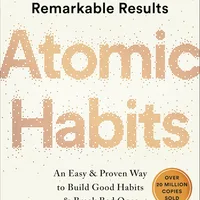
Atomic Habits — James Clear
If McKeown frames why complexity accumulates, James Clear gives you the operating system for redesigning the small daily defaults that keep producing it.
As an Amazon Associate, we earn from qualifying purchases — at no extra cost to you.
Diana Chapman's work in conscious leadership adds a sharper edge to this. She argues that complexity is often held in place not by circumstance but by identity. The person who can't simplify is frequently the person whose sense of worth is contingently attached to being needed, visible, and indispensable across many domains simultaneously. Stripping away obligations doesn't just change the schedule — it threatens the self-image. That's why it feels harder than it rationally should.
Here's the counter-intuitive truth that the simplification literature keeps circling: a simpler life doesn't require doing less of what matters. It requires doing much less of what doesn't — and most people have never actually inventoried which is which.
Step 1: The Full Inventory (See Everything on One Page)
The first step sounds mundane. It isn't.
Write down every recurring commitment in your life. Not the major ones — all of them. Every standing meeting. Every subscription. Every relationship obligation you maintain by inertia. Every project you're nominally involved in. Every promise you made and haven't yet delivered on. Every role you hold in any professional, social, or community context.
Most people have never done this. The result, when they do, is consistently disorienting. There are typically far more active commitments than the person had consciously registered — not because they were dishonest with themselves, but because the human brain is extraordinarily good at normalizing whatever the current state of affairs happens to be.
Once you have the full list, apply a simple evaluation to each item. Ask three questions:
One: What does this actually cost you — in time, energy, and attention — per week?
Two: What does it genuinely give you in return — functional value, relational value, income, growth, or meaning?
Three: If this wasn't already in your life, would you choose to add it today?
That third question is the sharpest tool in the inventory. It bypasses the sunk-cost reasoning that keeps most low-value commitments alive. The answer is often an immediate, unambiguous no — which tells you everything you need to know.
Gary Keller's The ONE Thing makes a related point about prioritization: not everything on your list deserves equal consideration. There are a small number of commitments generating most of the genuine value in your life, and a large number generating most of the noise. The inventory makes that ratio visible for the first time.

Clever Fox Habit Calendar Circle (24-Month Tracker)
Once the inventory makes the value-to-noise ratio visible, you need a low-friction tracker to make the surviving commitments visible every day — a 2-year habit canvas turns the ONE Thing principle into a structural ar…
As an Amazon Associate, we earn from qualifying purchases — at no extra cost to you.
the-power-of-saying-no-productivity
Step 2: The Cut (Start With the Bottom 20%)
Here's where most people stall. The inventory reveals the dead weight — and then the rationalizations start. But I committed to this. But they're counting on me. But what if I need it later. But it only takes an hour a week.
The research on life simplification converges on a specific entry point: don't start with what's most important. Start with what's least valuable. The bottom 20% of your commitment list — the things you'd answer that third question about with the most immediate, visceral no — are your target.
These are the commitments that are hardest to defend on paper but easiest to rationalize in the moment. Eliminate them first, before doing any deeper work. There are two reasons this order matters.
First, removing the obvious dead weight creates actual evidence that simplification is possible, which makes the harder subsequent cuts feel less threatening. Second, the psychological relief from removing even a few low-value obligations is disproportionately large — the brain registers the reduction in background cognitive load almost immediately, which makes everything else clearer.
David Allen's Getting Things Done — still the most rigorous framework for managing complex lives — makes a foundational point about this cognitive load: every open loop (every uncommitted commitment, every unprocessed obligation) consumes a portion of your working memory whether you're actively thinking about it or not. Reducing the number of open loops isn't just about your calendar. It's about the RAM your brain has available for everything else.
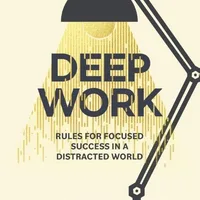
Deep Work — Cal Newport
Closing open loops gives back the RAM; Deep Work shows what to do with it — Newport's four rules for protecting the cognitive bandwidth that simplification frees up.
As an Amazon Associate, we earn from qualifying purchases — at no extra cost to you.
Cal Newport's Digital Minimalism extends this logic specifically to technology. The apps, notifications, and digital obligations accumulating on your phone and laptop create a class of micro-commitments that are individually trivial but collectively significant. A few hours with an honest inventory of your digital obligations — every group chat, every platform you maintain a presence on, every newsletter you receive — typically reveals a dozen or more low-value digital commitments that can be eliminated without any meaningful loss.

Kitchen Safe kSafe Time Locking Container
Digital minimalism on paper rarely survives the phone in your pocket. A timed lock box turns a willpower problem into a hardware problem — set the dial, drop it in, get back the hours subscriptions and notifications w…
As an Amazon Associate, we earn from qualifying purchases — at no extra cost to you.
Step 3: The Protection System (Staying Simple)
Eliminating complexity is the easier half of the problem. The harder half is preventing it from re-accumulating — because the same default dynamics that created the original complexity are still operating.
This is where a protection system becomes essential. Without one, most people who successfully simplify their lives find themselves back at full capacity within six months. Not because they made bad individual decisions, but because complexity re-accumulates through hundreds of small, individually reasonable decisions made without a governing framework.
The protection system has two components.
The first is a default-to-no policy for new commitments. This doesn't mean reflexive refusal — it means that the default answer to any new request for your time, attention, or energy is no until you have reason to make it yes. The burden of proof switches. You're not looking for a reason to decline; you're looking for compelling enough justification to accept.
how-to-stop-multitasking-focus-one-thing
The second is explicit criteria for yes. Before accepting any new commitment, ask: Does this align with the top priorities I've already identified? Does it generate a return worth the actual cost in time and energy? Would the person I'm intentionally becoming say yes to this? These aren't trick questions — they're a filter that makes the implicit criteria for your choices explicit and consistent.
Stewart Friedman's research at the Wharton School identified something that cuts even deeper: the highest-satisfaction people in his longitudinal research weren't the ones with the most balanced schedules. They were the ones who'd organized their lives around what he calls "four-way wins" — activities that simultaneously generate positive effects across work, relationships, health, and personal growth.
The practical implication is significant. When evaluating new commitments, the ones worth keeping aren't just those that score well in one domain. They're the ones that create multiple simultaneous returns. A weekly long run might look like time "taken from work," but if it provides physical recovery, mental clarity, creative thinking, and genuine solitude — it's generating returns in four domains simultaneously, making it a far more efficient use of time than a single-purpose obligation delivering value in only one.

Liforme Original Yoga Mat (Blue, 4.2mm)
Friedman's weekly run is one example of a four-way win — a 30-minute yoga session is another: physical recovery, mental clarity, breath-led nervous-system regulation, and protected solitude, all returning value across…
As an Amazon Associate, we earn from qualifying purchases — at no extra cost to you.
The Real Goal: Building a Life With Room in It
There's a scene in the film About Schmidt — Jack Nicholson adrift after retiring, genuinely unsure what to do with his time — that captures something about the wrong version of simplicity. Emptying your life isn't the goal. The goal is selective occupancy: a life that's occupied by the things that actually matter and protected from the things that don't.
Jim Rohn returned to one question throughout his career that makes this shift concrete: not "What am I getting?" but "What am I becoming?" Not shaped by who you've been, or by who others expect you to be — but the person you're becoming. That reframe shifts simplification from a defensive act (removing things) to an offensive one (protecting space for growth).
The people who simplify most successfully aren't minimalists by temperament. They're people who've gotten honest about the difference between the life they've accumulated and the life they actually want — and who've been willing to close the gap.
my-complete-second-brain-setup-pkm-guide
How to Start Today
You don't need to overhaul everything at once. Here's the specific sequence that works:
-
Set aside 60 minutes this week for the full inventory. Write every recurring commitment — professional, personal, digital, financial — in one place. Use a plain notebook, a Notion page, or any system you'll actually use. The medium doesn't matter; completing the list does.
-
Apply the three-question test to every item. What does it cost? What does it give? Would you add it today? Flag anything that fails the third question immediately.
-
Eliminate the bottom three to five commitments this week. Not next month. This week. The bar for elimination doesn't need to be high — if you wouldn't add it today, that's sufficient.
-
Use a structured planner to design your ideal week. Michael Hyatt's Full Focus Planner builds a weekly design process directly around your highest-priority commitments — making simplification structural rather than a willpower exercise you repeat daily.

Full Focus Planner — Michael Hyatt
The article names this product directly — Hyatt's planner builds the weekly design process around the small set of priorities that survive the inventory, making simplification a structural artefact instead of a willpo…
As an Amazon Associate, we earn from qualifying purchases — at no extra cost to you.
- Run a financial simplification audit alongside the commitment audit. Subscriptions, recurring services, and financial obligations accumulate with identical dynamics. A subscription audit tool like Rocket Money typically surfaces $50–$200 in monthly recurring charges most people have forgotten they're paying — small individually, significant at scale.

Kindle Paperwhite (16GB, Without Ads)
Once you've audited the subscriptions and digital noise, a single-purpose reading device replaces a dozen scattered apps with one quiet surface — a structural defence against the digital re-accumulation the article wa…
As an Amazon Associate, we earn from qualifying purchases — at no extra cost to you.
- Schedule a monthly ten-minute review. Once a month, revisit your commitment list and ask the same three questions. Complexity re-accumulates quietly and continuously; regular review is the only sustainable defense.
Designing your evolution doesn't start with adding more to your life. It starts with creating the space in which intentional growth becomes structurally possible. The commitments, obligations, and digital noise filling that space right now aren't neutral — they're actively consuming the time, attention, and energy that your most important work and relationships require.
Simplicity isn't the end state. It's the precondition for everything worth building.
What's the one commitment currently in your life that, if you're honest, you'd never add today? Drop it in the comments — sometimes naming it is the first real step.
Related read: Why Tiny Delays Feel Enormous, According to Science
Was this helpful?
Continue Your Evolution
The Frozen Goal Problem: Why Tiny Wins Beat Grand Plans
Rejection Sensitivity: Why You Keep Assuming They're Upset
The Science of Nostalgia: Why Looking Back Helps
Sedikides and Wildschut found nostalgia boosts mood, meaning, and social connection — not mere sentimentality. Here's the science and how to use it.