Mindset· 10 min read
How to Manage Daily Anxiety Without Medication
Anxiety affects 1 in 3 adults — but most management advice skips the science. Here's what research proves works for daily anxiety relief without pills.
How to Manage Daily Anxiety Without Medication: What Science Shows (And What I Actually Use)
It's 4:52 AM and the alarm hasn't gone off yet.
Your chest is tight. Your mind has already started its inventory — the conversation from Tuesday that landed wrong, the deliverable sitting half-finished, the vague but persistent certainty that something, somewhere, is about to go sideways. The only coherent thought in the room is an absurd one: you haven't done anything yet today to deserve this feeling.
If this is a morning you recognise, you're in enormous company. The World Health Organisation estimates that anxiety disorders affect 359 million people globally — and that number doesn't capture the far larger population living with elevated anxiety as a chronic background condition. Not a clinical disorder. Just a relentless, low-level hum of physiological activation that degrades decision quality, disrupts sleep, and quietly narrows the range of things you're willing to try.
Most of the advice aimed at this condition is well-meaning and mostly useless. Not because the people giving it are wrong, but because it targets the wrong mechanism. Telling an over-activated nervous system to "just breathe" is a bit like telling a car with a faulty thermostat to "try running cooler." Technically directional. Practically missing the entire point.
Here's what actually works — and the system I've built around it.
Why "Just Relax" Fails: The Neuroscience Nobody Explains
Your amygdala is a pair of almond-shaped structures buried deep in the limbic system. Its job — and it has been doing this job for roughly 300 million years — is to scan your environment for signals of threat and trigger your body's preparation cascade.
Elevated heart rate. Cortisol and adrenaline release. Shallow breathing. Narrowed sensory focus. Suppressed prefrontal cortex activity.
This system evolved to keep you alive when danger was physical and immediate. The problem is that your amygdala processes perceived threat, not verified threat. It cannot distinguish between a charging animal and an unanswered email. Both register as signals requiring mobilisation. Both produce the same cascade. And in a modern environment that delivers new threat signals — social, financial, professional, existential — at a rate our nervous systems were never designed to process, the alarm goes off constantly.
The critical detail most anxiety advice skips: when your prefrontal cortex goes partially offline under activation, your capacity for the kind of rational thinking that's supposed to calm you down is precisely what you lose access to. The advice to "think your way out of it" fails in the moment of peak anxiety because the neurological machinery required for that thinking is exactly what anxiety suppresses.
You're not anxious because you forgot to relax. Your nervous system has developed a calibration issue — a hair-trigger sensitivity that fires disproportionately, repeatedly, in response to perceived threats that don't warrant the response they receive.
Calibration issues don't respond to good intentions. They respond to systematic, repeated intervention at the physiological level.
The Fastest Tool Most People Aren't Using: The Physiological Sigh
You're in a meeting. Heart rate climbing. That familiar tightness spreading through your chest.
You have roughly 25 seconds to physiologically interrupt this response — without leaving the room, without saying a word, without anyone noticing anything.
The physiological sigh is a double inhale through the nose — inflate your lungs fully, then sneak in a second quick sip of air to maximally expand them — followed by a long, slow exhale through the mouth. Two to three repetitions. Andrew Huberman's lab at Stanford School of Medicine has identified this as the single fastest voluntary mechanism for activating the parasympathetic nervous system, what most people loosely call "rest and digest" mode.
Here's why it works on a mechanical level. Your lungs contain millions of tiny air sacs called alveoli. Under acute stress, these sacs partially collapse, which allows carbon dioxide to build up in your bloodstream. Your brain interprets rising CO2 as an additional threat signal — and escalates the anxiety response further. The double inhale re-inflates those collapsed alveoli. The extended exhale slows heart rate directly via the vagus nerve, the long cranial nerve that serves as the main communication highway between your gut, your heart, and your brain.
You're not just "taking a deep breath." You're deliberately activating a specific neural pathway that governs the shift from sympathetic activation to parasympathetic recovery.
This matters because sequence matters. Once you've physically lowered the acute activation level, you can access the cognitive tools. Before that, you're using words to fight biology — and biology wins that argument every time.
If you want to build a structured breathwork practice beyond the physiological sigh — something you train with daily rather than deploy reactively — that investment pays consistently across mood, focus, and sleep quality.

Liforme Original Yoga Mat
A premium grippy mat is the physical anchor for a daily structured breathwork practice. The Liforme alignment system supports slow, seated diaphragmatic patterns for parasympathetic conditioning.
As an Amazon Associate, we earn from qualifying purchases — at no extra cost to you.
The Cognitive Layer: Restructuring Your Relationship With Anxious Thoughts
Here's a distinction that quietly changes everything about how you experience anxiety.
There is a significant difference between having anxious thoughts and believing anxious thoughts. Most people experience these as the same thing. They're not.
Cognitive behavioural therapy — the most extensively researched psychological intervention in the history of clinical psychology, supported by an extensive evidence base built over decades of randomised controlled trials across multiple conditions — works from a premise that is deceptively simple: your emotional responses are not caused by events. They're caused by your interpretations of events. The event is neutral. The automatic thought your brain generates about it is where the emotional charge lives.
Cognitive reappraisal, the core CBT technique for anxiety, asks you to treat anxious thoughts as hypotheses rather than established facts. When "I'm going to fail at this" arrives, you don't suppress it or argue against it through brute force. You ask: What's the actual evidence for this? What's the most realistic outcome, based on what I actually know? What would I say to a friend who had this thought?
This works. But CBT has a practical limitation: you can't always reason your way out of an anxious thought, because the anxiety doesn't care whether the thought is logically valid. The amygdala fires regardless.
This is where Acceptance and Commitment Therapy offers something qualitatively different. Russ Harris, one of ACT's most accessible teachers, describes a technique called cognitive defusion: rather than trying to change or eliminate the anxious thought, you change your relationship to it. You notice it, name it at a slight distance ("I'm having the thought that something is about to go wrong"), and observe it without fusing with it — the way you might watch clouds cross a field of sky.
You don't have to believe every thought your nervous system generates. You don't have to act on every alarm it sounds. Defusion reduces the behavioural impact of anxious thoughts dramatically — not by making them disappear, but by making them lose their authority over your choices.
Use CBT for reappraising specific, assessable threats. Use defusion for the free-floating anxiety that doesn't attach to anything logical. Having both available means you're rarely fully at the mercy of your own nervous system.
Your Anxiety Baseline: The Environmental Inputs Quietly Running the Show
Most anxiety management focuses entirely on responses — what to do after anxiety arrives. That's working too late.
Your anxiety level at any given moment is the sum of dozens of inputs that have been accumulating throughout your day, week, and sleep cycle. Huberman's framework on autonomic nervous system regulation is the most practically useful lens I've found for this: anxiety is a state of physiological mobilisation without a directed motor action. The goal isn't only to manage acute spikes. It's to lower your baseline activation level, so that when specific triggers arrive, you're starting from a lower floor — and with more cognitive resources available to respond rather than react.
Here are the inputs most people never examine:
Caffeine timing. Caffeine blocks adenosine (your brain's sleep-pressure signal) and amplifies sympathetic nervous system activity. For most adults, caffeine consumed after 1 PM measurably degrades sleep architecture. And poor sleep is one of the most powerful anxiety amplifiers in existence. Matthew Walker's research at the University of California, Berkeley shows that a single night of total sleep deprivation increases amygdala reactivity by up to 60% the following day (Yoo et al., Current Biology, 2007). If you're chronically anxious and chronically caffeinating into the afternoon, you're not managing anxiety. You're manufacturing it.
Sleep quality. Not just duration — quality.
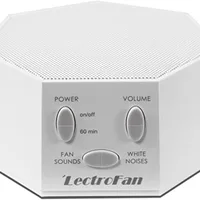
LectroFan Classic White Noise Machine
Non-looping white noise and fan sounds mask unexpected sleep-disrupting sounds, signalling the nervous system that the room is safe to fully discharge into recovery. No loops, no spikes.
As an Amazon Associate, we earn from qualifying purchases — at no extra cost to you.
Magnesium glycinate, taken at 300 to 400 mg before bed, is one of the most consistently evidenced non-pharmaceutical sleep aids in the current literature. It doesn't sedate you. It removes a physiological barrier to natural sleep onset by supporting the muscular relaxation and neural quieting that allow the sleep drive to actually work. If your evenings feature racing thoughts and prolonged sleep onset, this is typically the first practical intervention worth testing.
Notification density. Every unanticipated interruption is a micro-stress event. Your amygdala responds to unexpected input with a small activation cascade each time. Across 40 to 60 daily notifications, that accumulates into a machine that keeps your nervous system chronically primed — without any single large trigger. Many people who "can't figure out why they're anxious" haven't counted how many times per hour their attention is being hijacked by signals they didn't invite.
Dietary inflammation. The gut-brain axis research is still developing, but the signal is consistent: the gut microbiome significantly influences anxiety through vagal nerve communication and neurotransmitter production. Ultra-processed food consumption is associated with elevated anxiety markers across multiple study populations. This isn't about moral eating. It's about recognising that what you put in your body shapes the neurochemical environment in which your nervous system is running.
If you're not tracking these inputs, you're trying to manage the output of a system you don't understand.
The Long-Term Investments: What Genuinely Moves the Needle
These are the practices that compound over weeks and months. Not quick interventions — structural improvements to your nervous system's regulated baseline.
Cardiovascular exercise. The evidence gap between regular aerobic exercise and most popular "natural anxiety remedies" is not small — it's enormous. Thirty minutes of moderate-intensity cardio, three to four times per week, metabolises circulating stress hormones, upregulates GABA (the brain's primary inhibitory neurotransmitter — the same mechanism leveraged by certain anti-anxiety medications), and reduces amygdala reactivity over time. The effect doesn't arrive immediately; it builds over four to eight weeks of consistent practice. But it builds reliably, and it compounds.
Progressive exposure. Avoidance is the single behavioural mechanism most responsible for anxiety's persistence and growth. Every time you avoid a situation that triggers anxiety, your nervous system records a confirmation: "Avoided it — must have been genuinely dangerous." Avoidance trains anxiety to expand. Graduated, deliberate approach — doing the thing that makes you anxious, starting just above the edge of your current comfort zone and building incrementally — is the only thing that teaches your nervous system the threat isn't real. building healthy habits that stick
Cold exposure. Deliberate cold — cold showers, cold plunges, controlled cold water immersion — produces an acute, intense stress response that your nervous system learns to recover from. With repeated exposure, this hormetic adaptation increases what researchers call stress tolerance: the nervous system's capacity to experience activation without interpreting it as catastrophic. This isn't mysticism. It's physiological conditioning, and the data on its effects on baseline anxiety is increasingly solid.
Tracking what's actually happening. Without data, you're guessing. With data, you're adjusting. Heart rate variability — the variation in time between heartbeats — is one of the most reliable physiological indicators of your current stress and recovery state, and modern consumer wearables make it accessible daily. HRV data tells you whether your interventions are working, when you're approaching an overload state before the symptoms arrive, and how specific inputs (alcohol, sleep shortfalls, intense training, work stress) affect your nervous system in real, measurable terms.
How to Build Your Daily Anxiety Management System (Step by Step)
Individual techniques don't produce lasting change. A system does. Here's how to build yours without overwhelming yourself.
Step 1: Audit your baseline inputs first. Before adding any new practice, spend one week tracking three variables: your caffeine cutoff time, your actual sleep hours, and how many times per hour your phone or computer interrupts your attention. Many people discover at this step that a significant portion of their chronic anxiety is being generated by their inputs rather than their circumstances.
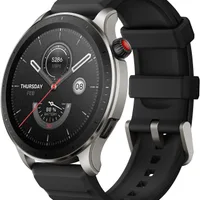
Amazfit GTR 4 Fitness Smartwatch
Monitors HRV, sleep architecture, blood oxygen, stress, and breathing rate daily. The realistic entry-point for tracking the baseline the article's Step 1 describes — fraction of the cost of premium wearables.
As an Amazon Associate, we earn from qualifying purchases — at no extra cost to you.
A wearable that tracks HRV, sleep quality, and daily stress trends gives you the objective baseline data that transforms vague lifestyle adjustments into evidence-based decisions.
Step 2: Add one physiological regulation practice immediately. The physiological sigh requires nothing and works in under 90 seconds. If you want a daily structural practice, Huberman's NSDR (Non-Sleep Deep Rest) protocol — 10 to 20 minutes of yoga nidra-style guided relaxation (a meditative practice originating in Indian tradition that systematically relaxes the body and quiets the mind) — is free on YouTube and produces measurably restorative effects on nervous system state. Commit to one practice. Not four.
Step 3: Start a three-minute anxiety reflection habit. Every evening: what triggered anxiety today, what the actual realistic probability of that fear was, and what you did to manage it. The act of writing this pattern down engages the prefrontal cortex and begins the process of converting automatic anxious responses into examined ones. Three minutes, pen and paper. The accumulation of this data over weeks is surprisingly revealing. why journaling improves your mental performance and clarity
Step 4: Add a structured CBT or ACT resource.
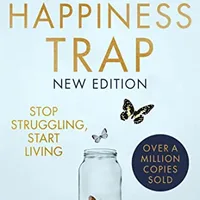
The Happiness Trap — Russ Harris
Russ Harris — named in the article — is one of ACT's most accessible teachers. This is his flagship book on cognitive defusion: how to stop anxious thoughts from running your behaviour.
As an Amazon Associate, we earn from qualifying purchases — at no extra cost to you.
The academic evidence for both approaches is extraordinary — and both are genuinely accessible without a therapist, though a therapist accelerates results significantly. Structured workbooks give you the exercises in sequence, which matters more than most people expect. Reading about reappraisal is not the same as practising it with prompts and worked examples.
Step 5: Build the physical infrastructure. Cardiovascular exercise, sleep optimisation, and reduction of dietary inflammation are not optional additions to an anxiety management system. They are the substrate everything else runs on. Cold exposure starts as a two-minute cold shower at the end of your morning routine — not a dramatic lifestyle overhaul.
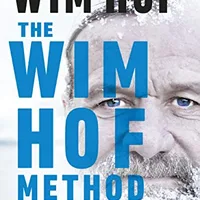
The Wim Hof Method — Wim Hof
The most evidence-cited cold + breathwork protocol at book price — validated by 8 university studies. Provides the progression protocol and the science behind cold exposure for nervous system conditioning.
As an Amazon Associate, we earn from qualifying purchases — at no extra cost to you.
A guided cold exposure programme gives you the progression protocol and the science behind what you're doing, which matters for adherence. how to build a morning routine that actually protects your mental health
The Calibration You Didn't Know Was Available
Here's what I want you to take from this.
That 4:52 AM chest tightness isn't a character flaw. It isn't proof of fundamental fragility. It's your nervous system doing exactly what 300 million years of evolution designed it to do — running a threat-detection algorithm in an environment that, from its perspective, is genuinely full of signals that look like threats.
But you have something evolution didn't account for: the capacity to deliberately design the inputs that calibrate how sensitive that alarm system is.
The research on this is not speculative or fringe. Breathwork, cardiovascular exercise, sleep quality, cognitive restructuring, progressive exposure, physiological monitoring — each of these has a substantial and growing evidence base. More importantly, they interact. The system compounds. Build the infrastructure and the techniques work better. Skip the infrastructure and the techniques underperform, which leads people to conclude that "nothing works" when what they mean is that an incomplete system doesn't close the gap.
Treating your anxiety baseline as a physiological parameter you actively manage — like cardiovascular fitness, like sleep, like nutrition — is one of the most practically consequential reframes available in personal development. You are not anxious because of who you are. You are anxious because of what your inputs, over time, have trained your nervous system to expect.
Change the inputs. Change the expectation. That is, in every meaningful sense, designing your evolution.
What does your current anxiety management system actually look like — and if you're being honest with yourself, where is the biggest gap between what you know and what you're consistently doing?
Was this helpful?
Continue Your Evolution
The Frozen Goal Problem: Why Tiny Wins Beat Grand Plans
Rejection Sensitivity: Why You Keep Assuming They're Upset
The Science of Nostalgia: Why Looking Back Helps
Sedikides and Wildschut found nostalgia boosts mood, meaning, and social connection — not mere sentimentality. Here's the science and how to use it.