Mindset· 10 min read
Stop Being the Victim of Your Own Story
Rotter's locus of control research shows your explanatory style predicts outcomes more than circumstances. Here's how to shift from victim to agent.

Stop Being the Victim of Your Own Story
The job wasn't the problem. My boss wasn't the problem. The economy, the timing, the team, the industry — none of them were the problem.
I was 28, working a role that felt like it was slowly vacuuming out my soul, and I had constructed an almost airtight case for why none of it was my fault. I was good at this case. I'd rehearsed it so many times it had started to feel like facts. Then I came across a single sentence about locus of control in a 1966 psychology paper, written by a clinical psychologist at the University of Connecticut named Julian Rotter, and it described me with the kind of uncomfortable precision that only really good science manages.
The Research That's Been Watching You for 60 Years
Rotter called it "locus of control." The concept is deceptively simple: people differ, consistently and measurably, in where they locate the primary cause of what happens to them.
People with an internal locus of control believe their outcomes are primarily determined by their own behavior, effort, and decisions. People with an external locus believe their outcomes are primarily determined by luck, fate, powerful others, or circumstances beyond their influence.
In the 60 years since Rotter published that paper — which became one of the most cited documents in the history of psychology — more than a thousand studies have tested his framework. The findings are consistent enough to be called a law. Internal locus of control predicts: higher academic achievement, better job performance, lower rates of depression and anxiety, greater income across matched samples, and better physical health outcomes. Not because internal people are smarter, luckier, or more talented. But because their explanatory framework preserves the one lever they have over their own experience: the belief that what they do matters.
Externality predicts the inverse.
You probably don't fall cleanly into either category. Almost no one does. Most people are internal about certain domains and external about others. You might be intensely responsible about your finances but completely external about your relationships ("she makes me feel this way"). The construct operates at the level of individual situations, domain by domain. But the aggregate pattern that emerges across a life is not random — and it's not fixed.

That's the part nobody tells you in the motivational content. The locus of control is learned. Which means it can be unlearned.
The Mechanism You Don't Know Is Running You
In the 1960s, Martin Seligman was a graduate student at the University of Pennsylvania, running experiments on dogs that have since become some of the most important — and most ethically troubling — studies in the history of psychology.
Seligman's team exposed dogs to electric shocks they couldn't avoid or escape. Then they moved the same dogs to a different apparatus where escape was simple: just jump a low barrier. Most animals, introduced to a new environment where escape is possible, figure it out quickly. These dogs didn't. They lay down and accepted the shocks. They had learned, in the previous environment, that their responses didn't affect outcomes — and that belief transferred. They stopped trying.
Seligman called this learned helplessness.
The critical finding, though, wasn't the helplessness itself. It was this: the learned component wasn't an absence of capability. It was a belief that capability was irrelevant. And when subsequent experiments disrupted that belief — by physically guiding the animals through the escape behavior multiple times until they "remembered" that their actions could work — the helplessness reversed.
The belief that you're helpless produces the behavior of someone who is helpless. The restoration of the belief that your responses matter produces the behavior of someone who can act.
Seligman spent the next several decades translating this into human terms. His book Learned Optimism
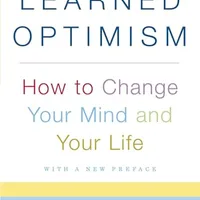
Learned Optimism — Martin Seligman
Seligman's core text on explanatory style — the mechanism the whole article hangs on (permanence, pervasiveness, personalization).
As an Amazon Associate, we earn from qualifying purchases — at no extra cost to you.
documents the specific cognitive patterns — what he calls the "explanatory style" — that determine whether a person processes setbacks in a way that produces resilience or shutdown. The three dimensions are permanence ("this always happens to me" vs. "this happened this time"), pervasiveness ("everything is going wrong" vs. "this area is struggling"), and personalization ("I'm the problem" vs. "I made a mistake").
The internal locus of control maps directly onto Seligman's optimistic explanatory style. The external locus maps directly onto the pessimistic one. Both, he showed, can be systematically audited and shifted.
How Smart People Build Their Own Cages
Here's the part that's genuinely counterintuitive: the external locus isn't a deficiency of intelligence. It often develops because someone is intelligent enough to generate compelling explanations.
Carol Dweck's four decades of research on attribution patterns in children and adults showed that kids who explain their failures with external or fixed attributions — "the test was unfair," "I'm just not a math person" — show progressive disengagement in challenging academic contexts. They don't lack intelligence. They often use their intelligence to construct increasingly airtight cases for why the situation is hopeless.
This is what Dweck came to call the "fixed mindset" in Mindset
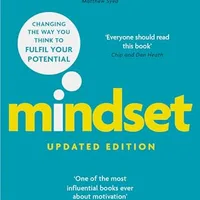
Mindset: The New Psychology of Success — Carol Dweck (Updated Edition)
Dweck's fixed vs. growth mindset — directly cited as how smart people build airtight cages with their own intelligence.
As an Amazon Associate, we earn from qualifying purchases — at no extra cost to you.
: the belief that qualities are fixed, that effort is evidence of inadequacy, and that setbacks confirm the fixed ceiling. The intelligence that might otherwise solve problems gets redirected toward defending the explanation. The cage is well-built because the person who built it is smart.
Albert Bandura at Stanford added a related but distinct piece to this picture. Where Rotter measured the global belief that one controls outcomes, Bandura measured self-efficacy — the specific belief that one can execute the required behavior in a given situation. These are related but separate constructs. You can believe, in principle, that effort matters (high locus of control) while believing you personally lack the capacity to execute (low self-efficacy). Both elements need to shift.
Low self-efficacy produces what Bandura called "behavioral avoidance" — withdrawing from challenges before they can confirm the feared inadequacy. High self-efficacy produces persistence, increased effort in response to obstacles, and more adaptive emotional responses to failure. The practical upshot: the intervention isn't just "believe effort matters." It's "generate small, genuine experiences of competence that produce the evidence your nervous system actually believes."
That's why Bandura was so insistent that self-efficacy develops primarily through mastery experiences — actually doing something difficult, even at a small scale — rather than through encouragement, visualization, or cognitive reframing alone. Your brain believes what it experiences more than what it's told.

The Edge Case That Breaks Every Excuse
It would be easy, at this point, to read the above and think: "Sure, but my situation is genuinely difficult. The obstacles aren't imaginary."
Viktor Frankl would agree. And then he'd make you feel a little uncomfortable.
Frankl was a Viennese psychiatrist who survived four Nazi concentration camps, including Auschwitz. What makes his account in Man's Search for Meaning

Man's Search for Meaning — Viktor Frankl
Frankl's 'space between stimulus and response' — the edge case that breaks every excuse and anchors the steward reframe.
As an Amazon Associate, we earn from qualifying purchases — at no extra cost to you.
so durable isn't its inspiration — it's its precision. Frankl was a scientist observing himself under the most extreme possible conditions. What he documented was not that suffering can be transcended through willpower. It was something more specific: that even when every external circumstance is removed — freedom, safety, family, possessions, health, dignity — one thing remains.
The space between stimulus and response.
He called it "response-ability" — not as a pun, but as a precise description of what the research would later confirm: the freedom to choose one's orientation toward conditions that cannot be changed is not taken by external circumstances. It has to be surrendered internally.
This isn't a call to pretend your circumstances are easy. It's a more demanding claim: that the suffering you're currently experiencing may be partly — not entirely, partly — generated by your interpretation of the circumstances, not just by the circumstances themselves.
The leader in the original Tiny Buddha piece that inspired this theme described discovering exactly this. His role was genuinely hard. The demands were genuinely excessive. But his suffering was being amplified, significantly, by the story he was telling himself about it — specifically the story that the difficulty was being done to him, rather than being a condition he was being called to navigate.
The word he landed on was steward. Not "accountable" (which can feel punitive) and not "responsible" (which can feel burdensome), but steward — someone who tends to something of value on behalf of something larger than themselves. Stewardship activates the internal locus without triggering the shame that can come when someone who has been blaming externals suddenly tries to take full responsibility for everything.
How to Audit Your Explanatory Style Right Now
The practical question is never "do I have an external locus?" Almost everyone does in some domains. The question is: where, specifically, is external attribution currently removing your ability to act — and is that attribution accurate?
Here's a four-step audit you can do today, without a therapist or a course:
Step 1: Identify the stuck place. Pick one area of your life where you feel genuinely powerless. Don't pick everything. One specific domain.
Step 2: Write out your current explanation. As honestly as possible — why is this stuck? Write it as if you're explaining to a friend. Don't censor. The unfiltered version is the one worth examining.
Step 3: Apply the three dimensions. Is your explanation permanent ("this always happens") or temporary ("this is happening now")? Is it pervasive ("everything is broken") or specific ("this area is struggling")? Is it global ("I'm the problem") or behavioral ("this specific approach isn't working")?
A CBT thought record journal

CBT Thought Record Journal — Morrell Clarke
The explanatory-style audit step explicitly recommends a CBT thought record to slow down automatic attribution enough to see (and challenge) it.
As an Amazon Associate, we earn from qualifying purchases — at no extra cost to you.
is genuinely useful here — not as therapy, but as a mechanism for slowing down the automatic attribution process enough to see it. The attribution happens fast, usually below the level of deliberate thought. Writing it out makes it visible. Visible things can be challenged. Invisible things run.
Step 4: Find the stewardship question. Not "whose fault is this?" and not "why is this happening to me?" but: "Given that this is where I am, what does intelligent stewardship of this situation look like?"
The stewardship question doesn't require the situation to be fair. It doesn't require you to pretend the obstacles aren't real. It just asks: given the actual conditions in front of you, what's the most effective response available?
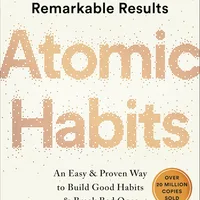
Atomic Habits — James Clear
Open action slot — the close argues you change the story by acting differently, repeatedly (Bandura's mastery experiences / small wins). Atomic Habits is the operational manual for that. Reused from catalog #36 (alrea…
As an Amazon Associate, we earn from qualifying purchases — at no extra cost to you.
That reorientation — from victim to steward — is not a one-time event. It's a daily practice. The mind returns to its habitual patterns like water to its channel. The external attribution is a well-worn channel, carved by years of use. The internal one requires deliberate re-routing, repeated enough times that it becomes the default.

The Belief That Changes the Behavior First
One of Seligman's most striking experimental findings is this: you can't restore helplessness through inspiration. Telling a person (or a dog) that their responses work doesn't shift the learned pattern. What shifts it is guided experience — literally moving through the behavior that was previously avoided, enough times that the evidence accumulates in the system.
This is why reading about locus of control doesn't change it. Understanding it doesn't change it. What changes it is doing something — anything — that produces a genuine, earned outcome.
Extreme Ownership by Jocko Willink and Leif Babin

Extreme Ownership — Jocko Willink & Leif Babin
Cited as internal attribution applied as operational discipline — the practice that rewires the default explanatory style through repetition.
As an Amazon Associate, we earn from qualifying purchases — at no extra cost to you.
approaches this from a military leadership context, but the psychological mechanism is identical: the practice of applying internal attribution to everything — not as a philosophical stance but as an operational discipline, applied repeatedly in real conditions — gradually rewires the default explanatory style. Not because blaming externals is morally wrong, but because the internal attribution is consistently more useful for generating effective action.
T. Harv Eker put it more bluntly: "If you want to change the fruit, you have to change the root." The behavior you're producing is the fruit. The locus — where you locate cause — is the root. Change the root and the behavior follows. Leave the root alone and no amount of fruit-level intervention holds.
You don't change your story by deciding to. You change it by acting differently, repeatedly, until the new behavior has generated enough evidence to support a new story.
That's what "design your evolution" actually means: not waiting for the circumstances to become favorable enough that agency feels safe, but building the evidence for agency one small, deliberate action at a time — until the story you're living stops looking like something that happened to you, and starts looking like something you're building.
What's one area of your life where you've been the author of the explanation, but not the author of the outcome? And what would stewardship of that situation look like, starting today?
Vanulos is dedicated to helping you design an intentional, evidence-based life. If this resonated, explore our articles on habit architecture, self-efficacy, and the daily practices that compound into lasting change.
Was this helpful?
Continue Your Evolution
The Frozen Goal Problem: Why Tiny Wins Beat Grand Plans
Rejection Sensitivity: Why You Keep Assuming They're Upset
The Science of Nostalgia: Why Looking Back Helps
Sedikides and Wildschut found nostalgia boosts mood, meaning, and social connection — not mere sentimentality. Here's the science and how to use it.