Mindset· 10 min read
The Effort Heuristic: Why Hard Work Feels More Valuable
Your brain rates high-effort work as higher quality — even when effort and quality have nothing to do with each other. Here's the science and the fix.

The Effort Heuristic: Why Hard Work Feels More Valuable
A friend once sent me two poems and asked which one I thought was better.
Before I'd read a single word, she mentioned that she'd spent six months on the first — revising, discarding, rebuilding whole stanzas from scratch. The second she'd knocked out in forty minutes on a Tuesday afternoon while waiting for a train.
I told myself I'd judge them fairly. I didn't.
The six-month poem felt weightier the moment I started reading it. More intentional. Like something with earned substance behind it. I pushed back on a few clunky lines in the second one that I probably would have let slide in the first. When I finished, I told her the six-month poem was clearly the stronger work.
She laughed. She'd swapped the labels. The train poem was the one that had taken six months. The other one was Tuesday afternoon.
What happened to me in that moment has a name. It's called the effort heuristic — and once you understand it, you'll find it operating quietly in an uncomfortable number of your own judgments.
The effort heuristic is the cognitive tendency to judge the quality of a product, creative work, or piece of writing as higher based on how much effort went into making it — regardless of whether effort and quality actually correlate in that instance. The bias fires automatically, without your awareness, and expertise alone doesn't switch it off.

What Kruger's Team Actually Found
In 2004, a team of psychologists — Justin Kruger, Derrick Wirtz, Leaf Van Boven, and T. William Altermatt — published a paper called "The Effort Heuristic" in the Journal of Experimental Social Psychology. It's one of those studies that quietly rearranges how you look at a large chunk of everyday life once you've properly sat with it.
The setup was elegant in its simplicity. Across three experiments, participants evaluated a poem, a pair of abstract paintings, and pieces of medieval armor. The work itself didn't change between conditions. What varied was a single piece of attached information — how much time and effort the researchers claimed had gone into creating each piece.
The results were stark. Participants consistently rated the same poem as better when they were told it had taken 18 hours to write rather than 4. Same words. Same line breaks. Same everything. But the one with the longer production story felt more accomplished, more carefully made, more worthy of praise. The pattern held for the paintings too: whichever of the two paintings a participant believed had taken longer to make, they rated as higher in quality and worth more money — even though the two groups simply had the effort labels swapped.
Here's the detail that makes it genuinely uncomfortable: this wasn't a bias limited to people who don't know any better. The researchers also tracked participants who identified themselves as art experts — people who presumably had the standing to judge a painting on its actual merits rather than its backstory. The self-identified experts didn't rely on effort information any less than the novices did. Their training bought them no immunity.
Knowing more about art, it turns out, doesn't automatically protect you from judging it by how long someone says it took to make.
If you want to understand why fast, automatic mental shortcuts persist even after we've consciously identified them, Daniel Kahneman's Thinking, Fast and Slow is the most thorough exploration of this exact problem — the distinction between the quick-and-automatic mind and the slow-and-deliberate one, and why the first so reliably overrides the second.
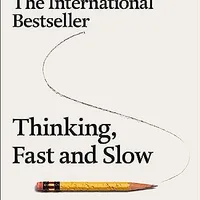
Thinking, Fast and Slow — Daniel Kahneman
The article explicitly names this book in-line as the definitive explanation of why fast automatic shortcuts override slow deliberate judgment. Highest-intent placement in the piece — reader has just learned that even…
As an Amazon Associate, we earn from qualifying purchases — at no extra cost to you.
the cognitive biases that secretly run your life — including the availability heuristic
Why Your Brain Shortcuts Quality to Effort
This isn't a bug in your reasoning. It's closer to a feature that misfires under specific conditions.
In most ordinary experience, effort and quality genuinely are correlated. A craftsman who spends thirty hours on a piece of furniture typically produces something better than the one who spent three. A surgeon who's practiced a procedure ten thousand times tends to execute it better than one at two hundred. A chef who trained for years usually cooks better food than someone who's just started.
So your brain — which is relentlessly efficient and largely uninterested in doing unnecessary work — learned a reliable shortcut: if something took a long time or a lot of visible effort, it's probably good. Use that as a fast judgment rather than expending the significant mental energy required for a fully independent quality assessment.
This shortcut works well enough, often enough, that it gets reinforced across thousands of small daily judgments. Effort becomes a decent proxy for quality. The brain locks it in.
The problem surfaces when effort and quality genuinely diverge — when a mediocre piece of work took a very long time, or when an excellent piece of work came quickly. In those moments, the shortcut keeps firing even though the signal it's responding to (visible effort) has become completely disconnected from the thing it's meant to predict (actual quality).
You end up rating the slow mediocre work as better than the fast excellent work. Not because you're unintelligent or careless. Because you're human, and your brain is doing exactly what it was shaped to do — it's just doing it in a context where that training doesn't apply.
The IKEA Effect Isn't the Same Thing
This is worth slowing down on, because the effort heuristic gets confused frequently with another well-documented bias: the IKEA effect.
The IKEA effect — documented by Michael Norton, Daniel Mochon, and Dan Ariely in a 2012 paper in the Journal of Consumer Psychology — concerns what happens when you personally build something. Your own labor, your own assembly, your own creative effort invested in an object inflates how much you specifically then value that object. The builder's personal attachment is the mechanism. It's about the relationship between your effort and your valuation of the direct result of that effort.
The effort heuristic works differently. It concerns judging someone else's output more favorably simply because you've been told — or have come to believe — that more effort went into its creation. You weren't involved. You didn't touch it. No personal labor is required on your part. Just the information — or the impression — that effort happened somewhere upstream.
Both effects involve effort and both inflate perceived value. But they run on entirely different machinery, for entirely different reasons.
Understanding the IKEA effect and the broader psychology of irrational value judgments is territory Dan Ariely explores in considerable depth in Predictably Irrational. If you haven't read it, it's one of the clearest and most enjoyable explanations in print of why we consistently value things in ways that make no rational sense — including why we pay for effort signals rather than quality itself.
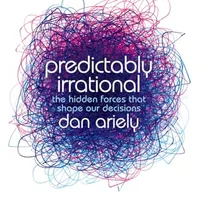
Predictably Irrational — Dan Ariely
Ariely is named in-body as the co-author of the IKEA effect research and the clearest writer on irrational value judgments. Placed immediately after the IKEA-effect distinction — the reader is actively curious about t…
As an Amazon Associate, we earn from qualifying purchases — at no extra cost to you.
Where This Actually Costs You

The effort heuristic shows up in enough places that listing them all could fill a book. But a few deserve specific attention because they affect decisions that genuinely matter.
What you pay for products. "Hand-crafted," "artisanal," and "small-batch" are not just product descriptions. They're signals of labor intensity. Related research on what's called the "labor illusion" — Harvard Business School's Ryan Buell and Michael Norton found in a 2011 Management Science study that simply making a service provider's effort visible (rather than hiding it behind an instant result) raised customers' willingness to pay and their rated satisfaction, even when the underlying output was unchanged. When you pay the premium for the thing that looks like it took longer to make, you're often not paying for better. You're paying for your brain's response to a visible effort cue.
How you evaluate your own work. This is the subtle one. When you've worked hard on something — really ground through it, struggled, revised extensively — your own perception of its quality gets contaminated by the effort you invested. You're simultaneously the producer and the judge, and the effort heuristic pushes your evaluation upward independently of the actual result. This is one reason getting an outside reader or reviewer for important work isn't just helpful — it's nearly essential. They don't know how hard you worked. They're responding to the output alone.
How you hire and choose contractors. When two proposals land on your desk and one is twice as long, with more exhaustive documentation of the research and process behind it — you probably favor that one. Even if the shorter proposal contains sharper thinking and a cleaner solution. Visible effort is doing the judging for you, and the person who wrote the longer document may have known that.
How you receive feedback. Napoleon Hill, in Think and Grow Rich, warned against mistaking sheer activity for genuine progress — pouring enormous effort into the wrong thing and calling it hard work. The effort heuristic is part of why that confusion is so persistent. We mistake the effort signal for the quality signal, and we protect work we've sweated over from criticism in a way we'd never protect quick work. The harder something was to make, the more a harsh critique of it feels personal.
How you frame your own creative output. Pay attention to how often you preface sharing something with "I've been working on this for months." That framing isn't neutral. It primes the listener's effort heuristic before they've encountered a single line. If the work is strong, it doesn't need the backstory. If it needs the backstory to seem strong, that's information worth having.
why two people can watch the same event and walk away with completely different memories of it
How to Start Judging Work Honestly
None of this means effort is irrelevant. It clearly correlates with quality often enough that your brain was right to develop the shortcut in the first place. What it means is that effort is not a reliable direct measure of quality — it's a proxy that deserves to be checked, especially when the stakes matter.
Here's a practical approach.
Step 1: Separate the product from its production story. When you're evaluating something, notice whether you already know how long it took or how hard it was to make — and where that information came from. If it came from the person whose work you're evaluating, deliberately set it aside before you form your judgment. Ask: What does this actually do? How does it actually perform? Judge the output. Then factor in context if it genuinely changes the picture.
Sony WH-1000XM5 Noise Cancelling Headphones
Step 1 asks the reader to set aside the production story and judge the output alone — a deliberate System-2 act that collapses under interruption. A sealed acoustic environment is the physical precondition for the slo…
As an Amazon Associate, we earn from qualifying purchases — at no extra cost to you.
Step 2: Pre-define quality before you encounter the work. Before evaluating something important — a proposal, a hire, a purchase — define in concrete, specific terms what a high-quality result actually looks like, independent of production. A good proposal answers these three questions clearly. A good design solves this particular problem. A good piece of writing makes this specific reader want to continue. Pre-defining quality protects you from retroactively letting the effort signal define it for you after the fact.
Step 3: Seek blind evaluations for high-stakes decisions. If you're making a significant hire, editing important work, or committing serious money to something, find a way to evaluate the output without knowing its production story. This is harder to engineer than it sounds — most creative work arrives packaged with its origin story — but it's worth the deliberate friction specifically for decisions that matter most.
Step 4: Build a brief review habit around your evaluations. Kruger's finding that even self-identified experts weren't immune to the effort heuristic means something practical: you need a process, not just expertise or awareness. The most useful version is a short retrospective habit — reviewing significant judgments you've made and asking honestly: was the effort signal the primary thing I was responding to? A dedicated judgment notebook, used consistently, makes this kind of audit concrete rather than theoretical.
Full Focus Planner by Michael Hyatt (Linen Hardcover)
Step 4 literally calls for 'a dedicated judgment notebook, used consistently' to make the retrospective audit concrete. The Full Focus Planner's built-in weekly and quarterly review templates are the exact structure t…
As an Amazon Associate, we earn from qualifying purchases — at no extra cost to you.
Step 5: Notice when someone is performing effort for your benefit. There's a difference between effort that produces quality and effort that's displayed to signal quality. Designers who show you extensive process documentation, consultants who deliver enormous slide decks, contractors whose proposals run to forty pages — sometimes this reflects genuine depth. Sometimes it's the effort heuristic being deliberately triggered. Learning to distinguish between the two is one of the more useful things you can train your judgment to do.

The Quiet Cost of Getting This Wrong
What stays with me about Kruger and colleagues' research is the part about the experts. These weren't people encountering art for the first time — they were participants who considered themselves knowledgeable, confident in their ability to judge a painting on its merits. And the effort heuristic ran through their judgment just as strongly as it did through everyone else's.
That's a humbling finding. It means expertise, on its own, isn't enough. You can know a great deal about a subject and still be running the effort heuristic full-speed in real time, in the next hire you make, the next piece of work you price, the next manuscript you read knowing the author's revision history.
Jim Rohn talked often about the value of developing genuine judgment — not just acquiring knowledge about a subject, but actually training the internal capacity to evaluate things with clarity and honesty. The effort heuristic is precisely the kind of shortcut that masquerades as judgment while actually replacing it. It feels like a thoughtful assessment. It presents itself as discernment. But underneath, it's your brain responding to a proxy signal and dressing the result up in the language of evaluation.
The work of designing your own evolution — at least in part — is learning to tell the difference between a real assessment and a shortcut wearing assessment's clothes.
Because the poems in my friend's exercise were genuinely different in quality. One was better. I just had no reliable access to which one until she told me which label was real — and even then, I had to read them again, this time without the story, to actually feel the difference.
What's a recent evaluation you made — a hire, a purchase, a creative judgment, a performance review — where visible effort might have been doing most of the actual judging? And how would your conclusion have looked if the effort signal had been removed entirely?
Drop your answer in the comments. I read every one.
Was this helpful?
Continue Your Evolution
The Frozen Goal Problem: Why Tiny Wins Beat Grand Plans
Rejection Sensitivity: Why You Keep Assuming They're Upset
The Science of Nostalgia: Why Looking Back Helps
Sedikides and Wildschut found nostalgia boosts mood, meaning, and social connection — not mere sentimentality. Here's the science and how to use it.