Mindset· 11 min read
Why You're Bad at Predicting What Will Make You Happy
Why You're Bad at Predicting What Will Make You Happy
You spent three months imagining the promotion. The raise, the title, the corner office with the better view. You rehearsed exactly how it would feel on the drive to work that first Monday. Then you got it.
For about a week, it was everything you expected. Then it faded. The commute was the same. The Sunday dread came back. You were you again — just with a fancier email signature.
This isn't a character flaw. It's one of the most reliably documented findings in psychology: we're surprisingly bad at predicting how future events will actually make us feel — both how intensely and for how long. Researchers call this affective forecasting. The gap between what you expect to feel and what you actually feel is called the impact bias. And it quietly shapes more of your choices than you probably realize.
Psychologists Daniel Gilbert and Timothy Wilson, with colleagues, began mapping this territory in the 1990s. A 1998 paper by Gilbert, Pinel, Wilson, Blumberg and Wheatley in the Journal of Personality and Social Psychology (Immune Neglect: A Source of Durability Bias in Affective Forecasting) ran six studies on how people forecast their reactions to events such as the end of a romantic relationship, being denied tenure, an electoral defeat and rejection by a prospective employer, and compared those forecasts with how people actually felt.
The pattern held across domains: people overestimated how long negative reactions would last. After events that had loomed enormous in the imagination, people were often closer to their emotional baseline than they had predicted. The rejection stopped feeling like a rejection. Life absorbed the event and moved on.
Another mechanism the same group named is focalism (Wilson, Wheatley, Meyers, Gilbert and Axsom, 2000). When you imagine a future event, your mind zooms in on it and edits out everything else. The promotion exists in isolation in your head. You picture the announcement, the first day, the reaction from people you respect. You don't picture the traffic that stays the same, the harder dynamics with a new manager, the added pressure that shadows the upgrade. Those will dilute the real experience. In your mental simulation, they don't exist.
Take something as common as moving to a new city. Before the move, the mind rehearses the highlights — proximity to the mountains, the cultural scene, the imagined version of yourself who finally fits. It edits out the lonely first year, the adjustment, the slow discovery that the problem you were carrying wasn't geographical. Focalism explains why so many quality-of-life decisions disappoint: not because they were wrong choices, but because the mental preview was a highlight reel. The new city was never going to carry all the weight your imagination loaded onto it.
A 2005 review Wilson and Gilbert published in Current Directions in Psychological Science fleshed out how widespread focalism is — career outcomes, purchases, social slights, relationship beginnings and endings. The bias appears across most life domains, not just in lab settings.
Worth saying plainly: how far off your predictions are depends on what kind of decision you're making. The core finding — that forecasts tend to overestimate emotional impact and duration — is a tilt, not a law. Your personal predictions might be more accurate than the average. The problem is you're unlikely to know which ones until after they've played out.
The Impact Bias: Why You Overestimate How Good or Bad Things Will Feel
The bias runs in both directions, and you've almost certainly felt each of them.
On the positive side: the new car, the flat you've saved toward, the city you've convinced yourself will finally feel right. You predict a sustained lift in how you feel day-to-day. Almost universally, that lift is shorter and flatter than expected. The novelty fades. Your nervous system habituates. Life absorbs the win, and the baseline resets.
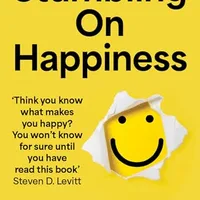
Stumbling on Happiness — Daniel Gilbert
As an Amazon Associate, we earn from qualifying purchases — at no extra cost to you.
On the negative side: the job loss, the breakup, the conversation you've been dreading for two weeks. You predict devastation. You imagine being stuck in that feeling for a long time. Here the research gets genuinely surprising: people almost always recover faster and more completely than they predict.
Certainty, it seems, can help adaptation. Once the decision is made and there's nothing to reverse, the brain stops hovering and starts integrating. The worst part of most bad outcomes isn't the outcome — it's the anticipation, which your imagination builds without access to the psychological tools you'll actually deploy once you're living it.
The Psychological Immune System You Never See Coming
This brings us to one of Gilbert's more practically useful ideas: the psychological immune system.
When things go wrong, the brain doesn't just absorb the raw experience and leave it there. It quietly deploys a set of cognitive defenses: reframing, rationalization, meaning-making. The colleague who got the role you wanted turns out to be a poor fit for it anyway. The relationship that ended cleared space for something you couldn't have seen from inside it. These aren't tricks the mind plays on you — they're the ordinary, largely unconscious ways human beings integrate setbacks into a livable story.

Kindle Paperwhite (12th Gen, 16GB)
As an Amazon Associate, we earn from qualifying purchases — at no extra cost to you.
The problem for affective forecasting is that you don't include this immune system when you simulate the future. When you imagine the worst-case outcome, you picture the raw, undefended version of it — and assume you'll stay there. You don't factor in that you'll adapt, find meaning, and eventually recover your footing. This is partly why people avoid decisions they'd actually handle well.
Why the Things You Fear Usually Hurt Less Than Expected
In the tenure study within the 1998 Gilbert and colleagues paper, junior professors predicted that being denied tenure would leave them far less happy than being granted it. But faculty who had actually been denied tenure reported being about as happy as those who had received it.
It doesn't mean the denial didn't hurt, or that professional setbacks are trivial. What it means is that the prediction of lasting damage was overcalibrated. The gap the professors imagined — between the two futures — turned out much smaller in actual experience. the arrival fallacy why success feels empty
Practically: when fear of a bad outcome is the main thing holding you back from a decision, that fear is almost always a magnification of what the actual experience will be — not just in intensity, but in duration. You've almost certainly seen this looking backward in your own life. The things you dreaded most rarely felt as bad as predicted, and they didn't last as long.
Liforme Original Yoga Mat
As an Amazon Associate, we earn from qualifying purchases — at no extra cost to you.
How to Make Better Predictions: Ask Someone Who's Already Living It
If your internal simulations are systematically biased, what's more reliable?
Gilbert, Killingsworth, Eyre and Wilson proposed a strategy in a 2009 paper in Science (The Surprising Power of Neighborly Advice, Science 323(5921)): instead of imagining how you would feel in a future situation, find someone already living in that situation and ask them directly.
It sounds almost too straightforward. It works because the person already living the choice has already adapted. They're not projecting through a fog of novelty or fear — they're reporting from experience that has had time to settle. Their answer is real data. Your mental simulation is a model with known structural bugs.
The standard objection is: "But I'm different. My version will feel better." Research suggests that's mostly the brain protecting its own forecasting confidence. In the 2009 Science experiments, a stranger's reported reaction predicted participants' own reactions better than their own forecasts did. We are more similar to each other than we assume.
Before a significant decision — a career change, a city move, a major purchase — find two or three people who've already made it. Ask them directly: was it what you expected? What surprised you most? Would you do it again?
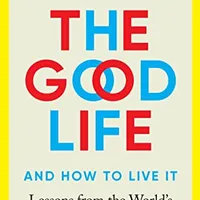
The Good Life — Robert Waldinger & Marc Schulz
As an Amazon Associate, we earn from qualifying purchases — at no extra cost to you.
That conversation is probably worth more than days of solo deliberation.
decision-making frameworks for major life choices
How to Start Today
Three moves to put this into practice:
-
Write the prediction down. Before a decision, record exactly what you expect to feel if it goes well — and if it goes badly — with a rough time estimate attached. A good journal makes this easy, and returning to check your accuracy six months later is genuinely instructive. Writing creates a small distance between the prediction and your sense of identity, which makes it far easier to revise when the evidence eventually comes in.
-
Apply the adaptation discount. Whatever emotional duration you've imagined, cut it roughly in half. Whatever intensity, assume reality will land somewhat lower. You're not lowering ambitions — you're upgrading your forecast model to account for a feature your brain ships with by default.
-
Find a surrogate before you commit. For any decision with real stakes, talk to someone already living the version you're considering. Not to borrow their answer — that's yours to reach — but to calibrate the emotional preview your brain is currently running.
These three moves won't eliminate forecasting errors. The imagination strips out context by design, and context is precisely what softens and complicates the real experience once you're inside it. But you can narrow the gap. And a narrower gap means decisions made with a more honest map of the emotional territory ahead.
Vanulos is about designing your evolution deliberately — which starts with accurate information. Right now, your most important source of inaccurate information might be your own predictions about how things will feel.
What decision are you currently overestimating — in either direction? And who do you know who's already on the other side of it?
Was this helpful?