Mindset· 16 min read
The Sunk Cost Trap: Why Quitting Feels Impossible

The Sunk Cost Trap: Why Quitting Feels Impossible
I once spent seven months building a podcast nobody was listening to. Not "not many people" — genuinely nobody, outside of my wife and one friend who I'm fairly sure listened out of loyalty rather than interest. By month four, the data was clear. By month seven, I was still recording.
Every week, I'd tell myself the same thing: I've put too much into this to stop now.
That sentence felt like discipline. It isn't. It's the sunk cost trap — one of the best-documented cognitive errors in behavioral economics, and in 1985, two researchers ran a series of experiments that explained exactly what's happening in your brain when you feel it — and why the feeling is almost always lying to you.
The Research Nobody Warned You About
Hal Arkes and Catherine Blumer published "The Psychology of Sunk Cost" in Organizational Behavior and Human Decision Processes in 1985. Not the kind of title that ends up on magazine covers. But the kind of research that quietly explains a significant chunk of human suffering.
Their core question was deceptively simple: when a person has already spent money, time, or effort on something, does that past, unrecoverable investment actually influence their decisions about whether to continue?
It shouldn't. Classical economic theory is unambiguous on this. A cost that has already been incurred and cannot be recovered — regardless of what happens next — is what economists call "sunk." It is, by definition, irrelevant to any rational, forward-looking decision. Whether you push on or walk away, that cost is already gone either way.
But you already know it doesn't work like that.
Arkes and Blumer designed a series of experiments to measure exactly how far real human behavior diverges from the theoretical ideal. In one scenario, participants imagined they had bought a $100 ticket for a weekend ski trip to Michigan, then came across — and also bought — a $50 ticket for a ski trip to Wisconsin they expected to enjoy more. Only afterward did they realize the two trips fell on the exact same weekend, and neither ticket was refundable. They could only use one.
The rational answer is the one they'd actually enjoy more: the $50 Wisconsin trip.
But in the original study, a slim majority of participants — 54% — chose the $100 Michigan trip, the one they themselves expected to enjoy less, simply because they'd spent more money on it. The already-spent, already-gone cost was actively distorting a forward-looking decision it had no logical bearing on whatsoever.
The sunk cost trap isn't a character flaw. It's a feature of how human decision-making is wired.
What Your Brain Is Actually Protecting
The ski-trip scenario is the famous one, but Arkes and Blumer also ran a field study, and the consistency across both is what makes this research worth sitting with.
At Ohio University's campus theater, Arkes and Blumer arranged for real season-ticket buyers to unknowingly pay one of three prices for the identical subscription — full price, or one of two random discounts. Nobody chose their price; it was assigned as they stepped up to the ticket window. Over the following six months, the researchers simply counted how many plays each group actually attended.
The patrons who paid full price attended significantly more plays than either discounted group — even though every seat and every performance was identical for all three groups. The only difference was how much each person had sunk into the ticket, and that difference alone predicted how hard people worked to make use of what they'd paid for.
That's the mechanism, and it's worth being precise about it.
Abandoning a path you've invested in doesn't just feel wasteful. It feels like an indictment of the person who made the original choice. You. Walking away forces you to confront the possibility that you made a call that didn't pan out — and that confrontation carries its own emotional cost, one that often feels heavier than the actual cost of continuing.
Arkes and Blumer's own explanation was that people aren't simply trying to honor the investment — they're trying to avoid feeling, or appearing, wasteful. Persistence becomes a strategy for psychological self-protection, dressed up as commitment.
A decision journal — one specifically designed to separate forward-looking reasoning from backward-facing justification — can make this distinction visible in real time. When you're required to write out the case for continuing using only future-facing arguments, the sunk cost rationale tends to dissolve rather quickly.

Full Focus Planner by Michael Hyatt (Navy Linen Hardcover)
As an Amazon Associate, we earn from qualifying purchases — at no extra cost to you.
Why the Sunk Cost Trap Isn't Just About Your Own Money
You might expect this pull to fade once your own money isn't on the line — that it would be easy to walk away from a sunk cost someone else paid for. Research aimed directly at that question found the opposite.
In a 2018 study published in Psychological Science, Carnegie Mellon researcher Christopher Olivola documented what he called the "interpersonal sunk-cost effect." Across eight experiments with over 6,000 participants, people kept favoring the option with the larger existing investment even when someone else — a friend, an acquaintance, even a stranger — had made that investment, not them. Whether the money belonged to the person or to someone else made little measurable difference.
That's a more uncomfortable finding than a purely self-protective one would be. It suggests the pull toward "honoring" a sunk cost isn't only about defending your own past decisions — it's a broader aversion to letting any investment go to waste, yours or not. Simply telling yourself "this isn't even my money" won't reliably break the pattern on its own.
Think about how this plays out in your own life. The business you started yourself. The relationship you've stayed in past its natural end. The course you bought impulsively at 1 a.m. In every case, the money and time already spent are gone no matter what happens next — and knowing that fact, on its own, rarely feels like enough to let go.
Naming the mechanism out loud — "I'm feeling compelled to continue partly because walking away would mean admitting this didn't work out" — creates just enough distance to make a cleaner call.
Sunk Cost Is Not the Same Thing as Loss Aversion
At this point, a reasonable question: isn't this just loss aversion? Didn't Kahneman and Tversky already explain this decades ago?
Not quite — and the distinction is worth holding carefully.
Kahneman and Tversky's prospect theory, published in 1979, describes a forward-looking asymmetry: potential losses tend to feel roughly twice as painful as equivalent gains feel pleasurable when you're evaluating a future risk. You're weighing what might happen next, and the fear of losing looms disproportionately large in that calculation.
The sunk cost effect is different. It operates on past, already-spent investment — something that, by definition, isn't available for comparison in any future scenario at all. The money is gone. The time is gone. The effort is gone. No future decision can change what's already been spent.
Loss aversion is about how you weigh a risk you haven't taken yet. Sunk cost is about how you let a cost you've already paid distort a decision you haven't made yet.
Two different errors. Two different parts of the same mental operating system.
Daniel Kahneman's Thinking, Fast and Slow covers both loss aversion and the sunk cost fallacy, and reading them side by side is one of the clearest ways to see how your brain's decision-making architecture actually works — and specifically where it consistently fails.
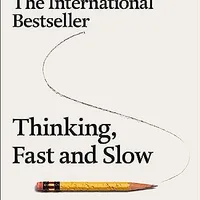
Thinking, Fast and Slow — Daniel Kahneman (Paperback)
As an Amazon Associate, we earn from qualifying purchases — at no extra cost to you.
Where the Sunk Cost Trap Hides in Ordinary Life
The ski trip and the theater subscription are clean, controlled studies. Real life is messier, longer, and considerably more expensive.
The career you've outgrown. You're eight years into a profession that made sense at 24 but makes you faintly miserable at 33. Every time the thought of switching surfaces, the math appears: eight years of experience, eight years of contacts, eight years of accumulated credibility. If you leave now, what was it for?
So you stay. The eight years becomes ten, then twelve.
The sunk cost trap doesn't just cost you the past. It costs you the future you're not building while you're busy honoring a past you can't recover.
The project that needed to end two years ago. Maybe it's a side business, a creative project, a software tool you're building alone on weekends. The market signals are clear. There's no traction, no revenue, no real reason to believe next quarter will look different from the last six. But you've put in real money and real weekends and a version of your identity. So you keep going.
The relationship that's been over for longer than you've admitted. You know it's not working. You've known it for a while. But you've been together for four years, and there's shared history, shared friends, plans already made, and leaving feels like abandoning something you built with your own hands. The sunk costs stack — time, emotional investment, the version of yourself that's become intertwined with this other person — and they present as reasons to stay, even when every forward-looking indicator says otherwise.
Seth Godin's book The Dip makes a related argument. He describes three curves people find themselves on: the dip, the cliff, and the cul-de-sac. The cul-de-sac — a dead end where things neither improve nor collapse, they just stay flat — is the one that most resembles a sunk cost trap. Godin's advice is blunt: when you recognize you're on a cul-de-sac, get off it fast, because staying doesn't cost you dramatically all at once, it costs you quietly, indefinitely.
The sunk cost trap is precisely what makes it so hard to see which curve you're actually on.

The Dip — Seth Godin
As an Amazon Associate, we earn from qualifying purchases — at no extra cost to you.
The One Question That Cuts Through the Trap
Here's the corrective that Arkes and Blumer's research implies, and it's both simple and uncomfortable:
What would you choose right now, if you were starting fresh with zero prior investment?
Not "given what I've put in, should I keep going?" That question has the sunk cost already baked in. The better version is: if a stranger walked up to you today and offered you this exact situation from scratch — the job, the project, the relationship, the plan — with no prior time or money attached, would you say yes?
That's the test. And for many people, in many situations, the honest answer is no.
A structured decision journal built specifically for this kind of analysis — with prompts that force you to write the forward-only case and set a concrete stopping criterion — is one of the most practical tools for running this test on paper rather than just in your head.

Clever Fox Habit Calendar Circle (24-Month, Dark Blue & Red)
As an Amazon Associate, we earn from qualifying purchases — at no extra cost to you.
How to Start: Five Steps Out of the Sunk Cost Trap
You don't need a major life audit. You need five minutes and honesty.
1. Pick one thing — a project, a job, a habit, a commitment — where you've been telling yourself "I've come too far to stop." Just one.
2. Write the forward-only case. Set a timer for 10 minutes. Write every reason to continue that does not reference what you've already invested. No "I can't waste what I've put in." No "I've already spent so much time." Only arguments about what realistically happens next. If you can't fill 10 minutes with genuinely forward-facing reasons, that tells you something.
3. Run the stranger test. Imagine explaining this situation to someone you trust who has zero context. They don't know how long you've been at it, how much you've spent, or how much of your identity is tied up in it. Would they say "this sounds worth pursuing" — or "why are you still doing this?"
4. Set a stopping criterion before you invest another week. Not a vague "give it a little longer." A specific, dated, concrete signal: "If X hasn't happened by Y date, I stop." A dated, written stopping rule is one of the most effective — and most skipped — tools in personal decision-making. Vague intentions to continue are how sunk costs compound.
5. If you stop, name what you learned. The exit isn't failure. The investment bought you information, experience, and a form of clarity you genuinely couldn't have gotten any other way. That's not nothing. That's exactly what you carry forward into whatever you build next.

Kindle Paperwhite 2024 (12th Gen, 16GB, Black, Without Ads)
As an Amazon Associate, we earn from qualifying purchases — at no extra cost to you.
Designing Forward, Not Backward
There's a version of commitment that's actually something else entirely.
It looks like persistence. It feels like discipline. But what it really is: a quiet, continuous sacrifice of your present and your future on the altar of a past you can't recover.
The sunk cost trap doesn't take anything from you all at once. It takes it slowly — one more month, one more investment, one more "let's give it until the end of the year." And each increment feels small, because you've already paid so much that a little more always seems like the reasonable choice.
Arkes and Blumer's research offers a different definition of rationality. One that is unapologetically forward-looking. One that asks not "how can I honor what I've already spent?" but "what would I actually choose right now, if I were starting with a clean slate?"
That question is how you design an evolution — not one built on honoring the investments of your past self, but on the clearest possible read of your present reality and your real, honest future.
What's the one thing you've been continuing mainly because of everything you've already put into it? And when you strip the history away — when you run the stranger test and write the forward-only case — what does the honest answer actually look like?
Drop it in the comments. You might be surprised how many people are sitting with exactly the same thing.
Was this helpful?