Habits· 9 min read
The Fresh Start Effect: Why September Feels Like a New Beginning
Dai, Milkman & Riis proved temporal landmarks like September spike motivation measurably. Here's the real science — and how to use it.
The Fresh Start Effect: Why September Feels Like a New Beginning
There's a thing that happens every year around late August. You start making lists.
Maybe it's a note on your phone. Maybe it's a fresh page in a notebook. Maybe it's just a mental inventory of things you said you were going to do and haven't yet. But the list appears. Psychologists call this the fresh start effect — and there's a specific reason it shows up when it does. Before the chaos of the school run, the inbox, the ordinary machinery of life takes over, there's a genuine feeling that this time will be different.
You're not imagining that feeling. It's real.

What Gretchen Rubin Got Right (And Why the Research Goes Deeper)
Gretchen Rubin has written about September as "the other January" — the sense that the start of autumn carries the same clean-slate energy as the turn of a new year. She's right. But the reason it happens isn't cultural habit or nostalgia for school supplies. It's structural.
In 2014, researchers Hengchen Dai, Katherine Milkman, and Jason Riis published a study in Management Science called "The Fresh Start Effect: Temporal Landmarks Motivate Aspirational Behavior". They weren't interested in vibes. They were interested in data.
They analyzed gym attendance records, commitment-device sign-ups, and the volume of goal-related searches on Google — looking specifically at whether certain calendar moments produced a measurable spike in goal-directed behavior compared to the days immediately before them.
They did.
Gym visits rose notably in the days after a Monday, a new month, a new year, or a birthday — compared to the ordinary days preceding those markers. The spike wasn't random. It tracked predictably with the psychological significance of the moment. A new year produced a larger effect than an ordinary Monday. A birthday outperformed a random midweek day. And the size of the spike scaled accordingly: the more meaningful the landmark, the bigger the motivational lift.
This isn't people saying they'll try harder. This is bodies actually showing up at gyms. That's a different thing.
Why Your Brain Needs a New Chapter
The mechanism Dai, Milkman, and Riis proposed is worth sitting with, because it explains a lot about how the human mind actually works.
A temporal landmark — September, a birthday, a Monday, even a personally chosen reset day — does something specific: it creates psychological distance between you and your past self.
Not distance in the sense of forgetting. Distance in the sense of categorization. The old you, the one who didn't follow through, who let the gym membership lapse, who kept meaning to start the project — that person gets mentally filed into the previous chapter. The you standing here now, on this side of the landmark, is writing a new one.
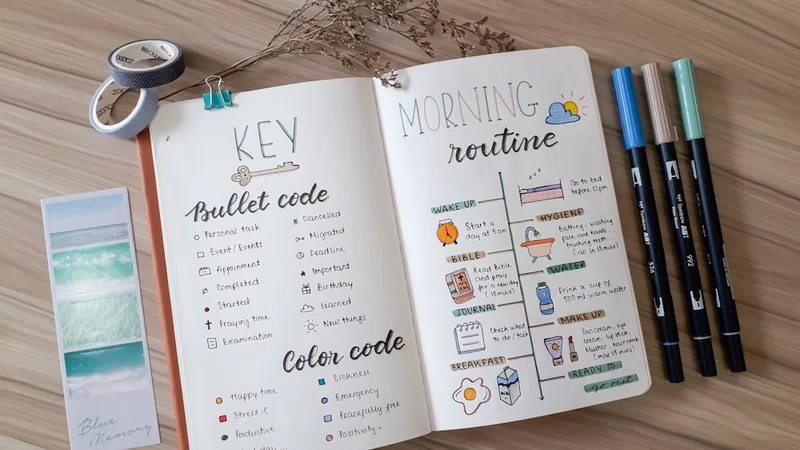
It's the mental equivalent of opening a fresh notebook. The page before it was messy. This page isn't.
What makes this finding more than motivational poster material is the implication: you don't have to wait for the imperfect record of the past to stop feeling relevant. A genuine temporal landmark does that work for you. It doesn't make you forget your failures. It makes them feel like they belong to someone slightly different — a version of you who was operating under different circumstances, in a different chapter.
That's a close cousin of another phenomenon worth understanding — why progress can feel invisible even when it's genuinely happening, which is part of why the "before and after" rarely matches how far you've actually come.
The Problem With January 1st (And Why It's Not the Only Option)
Here's where most people's understanding of this gets limited.
We understand January. We even understand September, especially if we were in school for a decade and a half and wired that rhythm into our nervous systems. But a lot of people treat temporal landmarks as things that happen to them rather than things they can choose.
Dai, Milkman, and Riis were careful on this point. The fresh start effect isn't limited to culturally mandated dates. It's available — genuinely, measurably available — whenever you treat a moment as a real psychological landmark.
What does that mean in practice? It means the Monday after you make a significant decision counts. The day after a health scare. The first day of a new job. The morning after a hard conversation you'd been putting off for months. If you anchor that moment consciously — decide that it represents a genuine dividing line in your story — you recruit much of the same motivational lift as a new year.
This is a different way of thinking about timing. Instead of asking "when will I feel motivated enough to start," you ask a different question: "what's the next real landmark I can use?"
The Scale of Significance: Not All Landmarks Are Equal
One nuance that tends to get lost when people talk about the fresh start effect is that not all landmarks produce the same size spike.
Milkman's team found the lift scaled with how psychologically significant the marker felt to the individual. This matters, because it means that manufactured landmarks — a Sunday night reset ritual, a deliberate "I'm starting fresh" declaration — work better when they're paired with something that genuinely carries weight.
A new journal isn't just a nice object. When you open a fresh one and write a specific, concrete commitment on the first page, you're encoding the landmark with meaning. You're making it real in a way that "I'll start Monday" doesn't quite do.
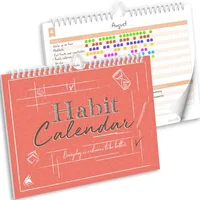
Clever Fox Habit Calendar Circle (24-Month, Dark Blue & Red)
A simple, visual way to track daily progress — proof, day by day, that the new chapter is actually happening.
As an Amazon Associate, we earn from qualifying purchases — at no extra cost to you.
That's why researchers in this space consistently find that the tools you use to mark a transition matter. Not because the tool has magic properties, but because the act of using it — deliberately, with intention — is part of how you tell your brain that a chapter has changed.
A habit tracker isn't just a logistical aid. It's evidence that the new chapter is actually happening.
Pairing that tracker with a concrete if-then plan is what actually makes it stick — see the if-then habit fix that keeps goals from getting abandoned for the specific technique.
What Happens When the Landmark Passes
September 15th is a real date that will arrive. The fresh start energy that September 1st carried will have diffused somewhat. And this is where the research gets genuinely useful rather than simply encouraging.
The fresh start effect is a launch mechanism, not a sustaining one. Milkman and her colleagues are clear about this in their broader body of work — you can read her summary of the research on her Wharton page. A temporal landmark gives you an unusually powerful moment to begin — a moment when the psychological cost of starting is lower, when the messy record of the past feels farther away, when the gap between intention and action is temporarily narrower. It doesn't do the maintenance work.
That distinction is worth taking seriously.
Zig Ziglar used to make a point that sounds obvious until you actually live by it. As he put it: "People often say that motivation doesn't last. Well, neither does bathing — that's why we recommend it daily." The fresh start effect is something like a spark. It's a genuinely better-than-average moment to light something. But if the structure you're building isn't capable of burning on its own, the spark isn't enough.
What this means practically: the most effective use of a temporal landmark isn't just to start something new. It's to build a system during the window when motivation is high, so that the system is doing work by the time the window closes.

Amazfit GTR 4 Smart Watch (46mm, Black, 150+ Sports Modes, GPS, Alexa)
A fitness tracker built to keep the momentum going once the initial motivation spike fades.
As an Amazon Associate, we earn from qualifying purchases — at no extra cost to you.
The Specific Research September Has Going for It
September isn't just "the other January" for nostalgia reasons. It has structural advantages.
Unlike the period around January 1st — when the cold is at its worst in the northern hemisphere, when the holidays have just ended and finances are strained, when the year feels simultaneously new and exhausting — September tends to arrive when most people have had some genuine rest. The summer is ending. The structure of autumn is visible on the horizon. And crucially, there are roughly four months left in the year: enough time to actually build something meaningful before December closes it.
If you have a goal you've been circling since January — one of those "this is the year" intentions that got shelved around March — September is a statistically better second chance than any arbitrary Tuesday in June. Not because of superstition. Because the freshness of the landmark is real, and because the remaining runway of the year is long enough to matter.
How to Use This Right Now
The research is clear about the mechanism. Here's how to translate it into something you can actually do before September is over.
Pick one real landmark, not several. The fresh start effect is most powerful when focused. If you're treating every Monday as a fresh start, you're diluting the signal. Choose the landmark you actually mean — September 1st has passed, but September is not over, and "starting this week" still carries weight if you treat it as genuinely significant.
Write the starting point down. Not the goal — the starting point. What's actually true right now, before you've done anything? Milkman's research suggests that creating a clear psychological before/after matters. The landmark needs a before.
Choose one goal, not five. The fresh start effect doesn't multiply across a list. Pick the goal that matters most — not the one that's easiest, and not the abstract one about "becoming a better person." The one with a specific behavior attached to it.
Anchor it with a physical object. A journal, a planner, a specific book you've been meaning to read that connects to this goal. The act of purchasing and starting something you'll use daily is its own form of encoding the landmark.
Atomic Habits — James Clear (Paperback)
The book that pairs naturally with a habit tracker — a practical companion for anyone building new routines.
As an Amazon Associate, we earn from qualifying purchases — at no extra cost to you.
Plan the first two weeks in detail, not the full year. The motivational boost is real but finite. Use it to build momentum and structure, not to sketch out a perfect 12-month arc. The 12-month arc follows from the first two weeks actually happening.
Schedule your next landmark now. If September is your launch pad, October 1st is your first checkpoint. Not in a punishing way — but your brain responds to temporal structure. Give it one.
It's also worth auditing what might be quietly working against you in the meantime — these four daily habits are quietly holding you back without you noticing.
The Quiet Lesson in Dai and Milkman's Data
There's something I find genuinely moving in this research, and I don't say that lightly about academic papers from Management Science.
The finding that gym visits spike after temporal landmarks isn't just evidence of a psychological mechanism. It's evidence that human beings are, at baseline, trying. The spike is already in the data. It was already happening before anyone wrote about it. People have been instinctively using September, Mondays, birthdays, the first of the month, as permission slips to try again — for as long as calendars have existed.
What Dai, Milkman, and Riis did was explain why it works. And by explaining it, they gave you something you didn't have before: the ability to use it on purpose, rather than waiting for it to happen to you.
The fresh start effect doesn't belong to September specifically. It belongs to any moment you decide is real.
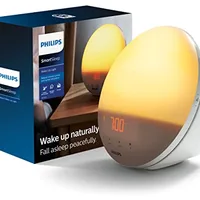
Philips SmartSleep Wake-Up Light HF3520 (Coloured Sunrise Simulation, 5 Natural Sounds, FM Radio)
A sunrise alarm clock that makes designing the first minute of your day a literal, physical choice.
As an Amazon Associate, we earn from qualifying purchases — at no extra cost to you.
What It Actually Means to Design Your Evolution
Bob Proctor used to make a point that sounds simple until you sit with it: most people spend their lives reacting. The wake-up call comes, the landmark arrives on its own, and they respond. That's not nothing. But responding to a landmark and choosing a landmark are different cognitive acts with different outcomes.
The fresh start effect is real regardless of which camp you're in. But people who choose their landmarks deliberately — who manufacture meaningful dividing lines when they need them rather than waiting for the calendar to hand them one — get more of them per year. They also get to point the launch window at something specific, rather than launching in whatever direction they happened to be already facing when January 1st arrived.
This is what "Design Your Evolution" means at the level of timing. Not forcing yourself to be motivated. Not grinding through the days when the calendar says nothing has changed. But learning when the architecture of your own mind is most cooperative — and building during those windows.
September is one of those windows. You didn't miss it.
The question is: what are you starting?
What's the one goal you've been circling since January that actually deserves a fresh start this September? Drop it in the comments — not to be held accountable, but because writing it down is the first act of the new chapter.
Was this helpful?