Productivity· 11 min read
Sync vs Async Work: When Live Collaboration Pays Off
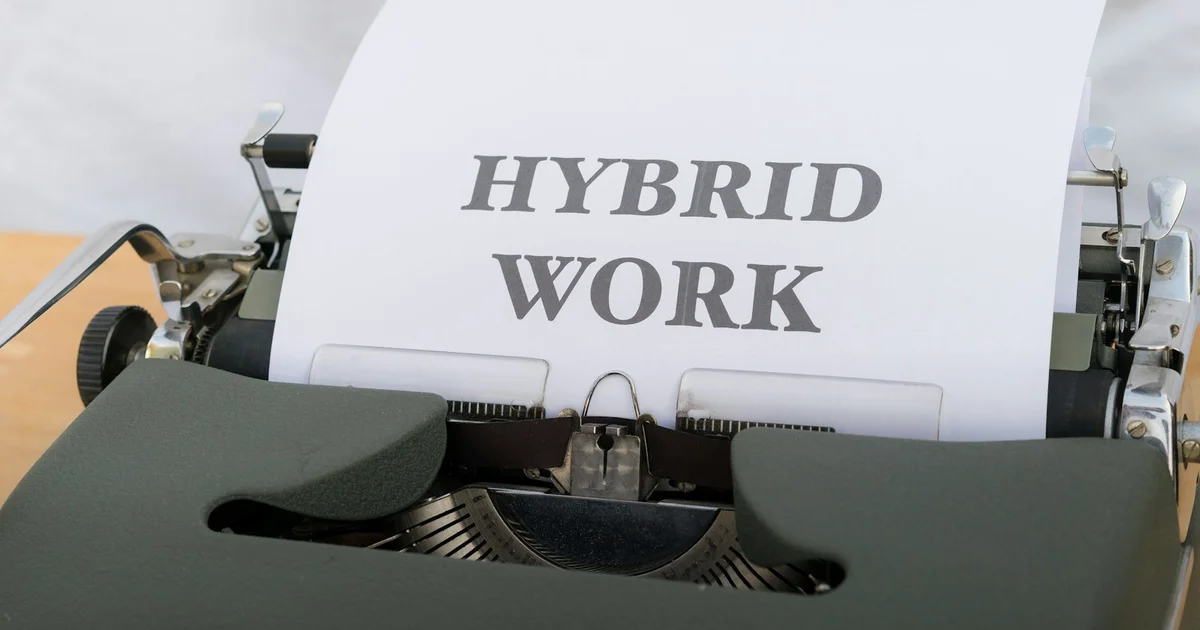
Sync vs Async Work: When Live Collaboration Pays Off
It was 2:47 PM on a Tuesday, and I hadn't produced a single thing that mattered all day.
Four meetings down: a standup that ran forty minutes, a "collaborative" planning session where three people talked and nine others typed quietly in Slack, an update call that was mostly a monologue, and then a debrief of the previous call. By the time the last one ended, the document I actually needed to write was sitting untouched on my screen. My brain felt like a browser with thirty tabs and no charge left.
You know this feeling. The calendar looks full. The day feels busy. But the thinking, the writing, the actual problem-solving — it never really happened.
Here's what took me a while to understand: I genuinely needed some of those collaborations. The planning session had real decisions in it. The project needed a few minutes of live context. The problem wasn't working together. It was doing all of it live, in real time, regardless of whether the work actually called for it.
The distinction between synchronous and asynchronous work — when to collaborate live versus when to work on your own schedule — turns out to be one of the most consequential design choices you can make about your week.
Synchronous work means all participants are present at the same time: a video call, an in-person meeting, a live back-and-forth in chat. Asynchronous work means each person contributes on their own schedule — a written document, a recorded walkthrough, a thoughtful voice note. Neither is inherently better. The question is whether you're choosing between them deliberately or defaulting to whichever is easier to schedule.
The Research That Reframed This (and Its Limits)
In 2024, Nicholas Bloom, Ruobing Han, and James Liang published results from one of the more carefully controlled experiments in this space. They ran a randomized controlled trial at Trip.com, a large technology firm in China, involving 1,612 employees. Employees were randomly assigned either to full in-office attendance or to a hybrid schedule of two days working from home per week (Bloom, Han & Liang, 2024, Nature). Hybrid workers reported higher job satisfaction, and their quit rates fell by about a third. Performance reviews over the following two years showed no difference from fully in-office colleagues, and neither did promotions.
That's the headline. Here's what most summaries drop: this was a two-day hybrid schedule, not unlimited remote work. It was also a single company, and one of the paper's authors, James Liang, is a co-founder of Trip.com.
A second study adds a cautionary note from the other direction. Longqi Yang and colleagues analyzed the communication patterns of more than 61,000 Microsoft employees during the sudden shift to full remote work in the first half of 2020 (Yang et al., 2022, Nature Human Behaviour). Collaboration networks became more static and siloed. Workers spent roughly 25% less time with colleagues who bridge different groups — the people most likely to carry new information across a company — and communication shifted away from live channels toward asynchronous ones.
Both studies have real limits worth naming. Bloom's trial was one company, one sector, one country. Yang's dataset was one firm at an extraordinary historical moment, and network correlations don't establish causation. Neither study hands you a formula for structuring your own day. But together they point at something reasonable: neither full isolation nor constant live contact looks like the whole answer. The productive territory is probably in between — and getting there requires a deliberate decision about which mode each type of work deserves.
What Synchronous Work Does Well
Synchronous work shines when a task requires rapid back-and-forth to refine something that's still unformed. When a disagreement has been circling in email and three live minutes would resolve what fifty messages couldn't. When you're meeting someone for the first time and the relationship itself is what you're building. When brainstorming genuinely requires people to riff off each other in real time — not to report their individual thinking in a group setting while everyone else waits.
There's also something the Yang study points at: cross-group contact is what carries new information through an organization. The colleague in a different department you'd never email. The five-minute conversation at the coffee machine that reframes something you'd been mulling all week. Those interactions are much harder to produce by Slack message.
Cal Newport's Deep Work makes the case for the other half of the equation: demanding cognitive work needs long stretches of undistracted concentration. The two modes aren't rivals. They're sequential partners. You need the conversation to find out what you're supposed to build. Then you need the quiet to build it.
Deep Work — Cal Newport (Paperback)
As an Amazon Associate, we earn from qualifying purchases — at no extra cost to you.
Three signals that a live meeting will pay off:
- Genuine disagreement has stalled over written messages — three live minutes often resolves what fifty messages could not
- The decision requires real-time nuance, where you cannot predict what will come up until you're in the conversation
- You are building a new relationship and trust, not just exchanging information
The mistake isn't scheduling meetings. It's scheduling them for work that doesn't need live presence: status updates that could be a one-paragraph note, decisions that involve only one person anyway, reviews of material that nobody has had time to read yet. These are async tasks wearing a meeting costume.
What Async Work Does Better
Asynchronous work tends to suit anything that benefits from genuine reflection.
Writing a first draft. Reviewing a proposal with enough care to give real feedback. Processing a decision that involves trade-offs you haven't fully mapped yet. Learning something that requires you to slow down, re-read, and think. These are tasks that live-meeting pressure can degrade. When you have to respond in the moment, you often say what comes first. Not what's right.
Three signals that async will serve you better:
- Everyone needs to review material before they can respond meaningfully — running a meeting before anyone has read the brief is expensive theatre
- The question is well-defined and does not require real-time judgment to work through
- Contributors are in different time zones and deserve meaningful thinking time, not just the last hour before a call
The practical version of this idea is protecting a calendar block you don't apologize for, not because you're avoiding collaboration, but because the work inside that block needs your full attention and not five-second pauses between other people's sentences.

Sony WH-1000XM5 Noise Cancelling Headphones (Black)
As an Amazon Associate, we earn from qualifying purchases — at no extra cost to you.
deep work and protecting your focus from digital distractions
How to Design Your Own Sync/Async Split
Before you schedule — or accept — any meeting, one question is worth asking: does this require real-time response, or just eventual response?
| Type of work | Better mode |
|---|---|
| Rapid, iterative decisions with unknown variables | Synchronous |
| Writing, editing, researching, analyzing | Asynchronous |
| First meeting with a new colleague or client | Synchronous |
| Status update that could be one paragraph | Asynchronous |
| Conflict that has stalled over written messages | Synchronous |
| Complex individual thinking with trade-offs to map | Asynchronous |
If the work involves live judgment calls, rapid iteration, or relationship-building that only exists when people are present together, make it synchronous. Keep it short. End it when you have what you came for.
Ticktime Pomodoro Timer Cube (Black)
As an Amazon Associate, we earn from qualifying purchases — at no extra cost to you.
If the work involves careful review, reflection, or contribution that people can do better without the clock running, make it async. Write a clear brief. Set an explicit deadline. A short video walkthrough, a document with a specific decision asked, a voice note — the format matters less than giving people room to think before they respond.
A concrete example: your team receives critical customer feedback on a product. The instinct is to call an immediate meeting. But if the feedback is a written report nobody has read, the smarter move is to share it with a 24-hour window, ask people to form initial thoughts, and then convene. The meeting takes 20 minutes instead of 90 — and produces an actual decision instead of a plan to schedule another meeting.

Logitech C920 HD Pro Webcam (1080p)
As an Amazon Associate, we earn from qualifying purchases — at no extra cost to you.
A meeting-free morning block isn't just a scheduling preference. It's cognitive infrastructure.
how to design a morning routine for deep work and sustained focus
A structure worth trying, as a starting point:
Monday, Wednesday, Friday mornings: No meetings before noon. This is where your best work happens — the thinking, writing, and problem-solving that the rest of the week depends on.
Tuesday and Thursday: Live collaboration. Stack your meetings here. Use the team energy for the conversations that actually need live presence.
It's not a prescription. It's a template. The point is making the split on purpose — not letting whoever books first make it for you.
The Work Week You Designed
Here's what the Yang study points at that most productivity writing sidesteps: you can protect your deep work so aggressively that you end up optimized and isolated. Excellent output. Narrowing circle. The cross-group ties that thinned out in fully remote settings aren't inefficiencies — they're the channels through which new information arrives.
Fully async work, taken to its logical extreme, produces a version of the same problem. You stop bumping into the people who think differently than you. Your inputs narrow. Your best work gets sharper and more self-referential at the same time.
The real design challenge is holding both. Protected solitude for the work that needs it. Deliberate, synchronous contact for the connections that only emerge when people are actually present together — in person, on a call, in the same moment.
You don't have to accept the default calendar that fills up by Tuesday morning because someone else booked first. You can decide — on purpose, in advance — which hours belong to live energy and which belong to quiet thought. Those two things don't compete. They compound.
The question worth sitting with: in your last five working days, which meetings actually needed to be live? And which ones just defaulted to it because scheduling a call is easier than writing a clear document?
Was this helpful?