Habits· 11 min read
The What-the-Hell Effect: Why One Slip Becomes Ten

The What-the-Hell Effect: Why One Slip Becomes Ten
Monday went perfectly. You ate well, got your workout in, went to bed at a reasonable hour. Tuesday? Not so much. One missed alarm, one skipped session, one "I'll start over tomorrow."
By Thursday, you'd somehow convinced yourself the whole week was a write-off. You didn't even do anything dramatic — no catastrophic failure, no injury, no crisis. Just a small gap, and then another, and suddenly you're negotiating with yourself about waiting until the first of the month to restart.
If that sounds familiar, you've run into a pattern researchers call the abstinence violation effect — or what dieting researchers Janet Polivy and Peter Herman have described as the what-the-hell effect. It's not a character flaw. It's a predictable cognitive trap, and once you understand how it works, you can step out of it in under a minute.
What exactly is the what-the-hell effect? It's the cognitive shift where a single rule violation — a missed workout, one meal off-plan, a skipped writing session — flips your mental frame from "I'm still on track" to "I've already blown it." Once that frame flips, the all-or-nothing logic takes over: since the commitment is already broken, there's no reason to hold back. One slip becomes ten. The mechanism isn't willpower; it's interpretation.
The Science Behind One Slip Becoming Ten
Starting in the 1970s, Herman and Polivy studied why dieters who broke their eating rules didn't stop at one slip. In their classic experiments, dieters who had been given a large milkshake went on to eat more ice cream afterward than dieters given a small one. What they found was counterintuitive: the slip itself wasn't the whole problem. The interpretation of the slip was.
Alan Marlatt and Judith Gordon formalized a close cousin of this idea as the abstinence violation effect in their 1985 relapse-prevention model, studying addiction relapse. They proposed two things that turn a single lapse into a full relapse:
- Attribution — the person attributes the slip to something internal and stable ("I'm weak," "I have no discipline") rather than external and temporary ("I had a stressful day," "I was unprepared")
- Emotional response — guilt and a sense of failure follow the first slip, and that emotional state makes continued failure more likely, not less
The cruel irony: the worse you feel about slipping, the more likely you are to keep slipping. Guilt becomes the accelerant.
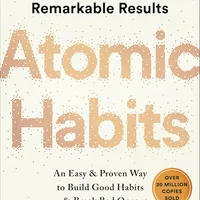
Atomic Habits — James Clear (Paperback)
As an Amazon Associate, we earn from qualifying purchases — at no extra cost to you.
Why Your Brain Treats a Missed Day as a Verdict
There's a reason the what-the-hell effect is so sticky. When you make a commitment — to exercise every morning, to write for thirty minutes, to stop eating after 8pm — you're not just making a behavioral plan. You're also constructing an identity. I'm someone who works out. I'm a person who writes.
That identity is fragile in a specific way. One violation doesn't just mean you missed a day. It feels like evidence that the identity was false all along.
Psychologist Carol Dweck would recognize this as fixed mindset operating at the behavioral level. The commitment was held as proof of who you are, so a failure isn't just a failure — it's a verdict on your character.
This is why "never miss twice" (a phrase James Clear popularized in Atomic Habits) is actually doing something more subtle than it sounds. It's not really about the streak. It's about not letting a one-time event become an identity update. When you treat the second day as genuinely optional — a fresh choice, not a continuation of yesterday's story — you strip the slip of its power to compound.
why-you-keep-restarting-instead-of-finishing
The Three-Phase Spiral (and Where to Break It)
The pattern tends to move in three predictable phases.
Phase one: The slip. Something disrupts the routine. It could be external — travel, illness, a bad night's sleep — or internal, like low motivation on a particular day. This is normal. It is not a signal about your character. The trigger is small. The amplification is what comes next.
Phase two: The story. This is where the damage actually happens. Soon after the slip, the brain starts constructing a narrative. That narrative is often global ("I always do this"), permanent ("I'll never stick with anything"), and personal ("this is just who I am"). These qualities — pervasive, permanent, personal — are what Martin Seligman identified as the hallmarks of a pessimistic explanatory style. Applied to habits, they're poison.
Phase three: The behavior. Once that story is running, the what-the-hell logic kicks in. The day is "already ruined," so why bother? The whole week gets written off. What was a 24-hour gap in your routine becomes a month-long break.
The good news: phase two is entirely in your hands. You cannot always prevent the slip. You can always interrupt the story.

Amazfit GTR 4 Fitness Smartwatch
As an Amazon Associate, we earn from qualifying purchases — at no extra cost to you.
Self-Compassion Isn't Letting Yourself Off the Hook
The most evidence-backed intervention at phase two is also the most misunderstood one: self-compassion.
If you hear "self-compassion" and picture someone excusing their behavior, the research disagrees with you. In a 2007 study published in the Journal of Social and Clinical Psychology, Claire Adams and Mark Leary had restrictive eaters consume an unhealthy food preload; those who were then given a brief self-compassion message ate less afterward and felt less distress than those who weren't. Kristin Neff's research at the University of Texas at Austin describes self-compassion as treating yourself with the same directness and warmth you'd offer a good friend. That said, most of this evidence comes from studies on dieting and self-criticism; the research specifically on habit slips is thinner, so apply it knowing the support is real but not vast.
Self-blame triggers a threat response — your mind moves toward avoidance and escape rather than repair. That's not the state from which good decisions get made.
Self-compassion, by contrast, includes what Neff calls "common humanity" — the recognition that slipping is universal, not evidence of your personal deficiency. It creates space for a clear, calm look at what actually happened and what actually needs to happen next.
One useful reframe: instead of "I failed," try "I slipped, and slipping is what people do when they're trying." That's not minimizing — it's accurate.
The 3-Step Reset: How to Get Back on Track After a Slip
Here's what this looks like in practice. When you catch yourself in phase two — when the narrative is already running — you have a small but meaningful window to redirect it.
Step 1: Name the effect out loud. Literally say (or write): "This is the what-the-hell effect." Naming a cognitive pattern creates distance from it. It moves the experience from first-person ("I am failing again") to third-person ("this is a known psychological trap"). That tiny shift in perspective can be enough to slow the spiral.
Step 2: State one true, specific thing about the slip. Not an excuse, not an absolution — just a factual account. "I didn't exercise this morning because I stayed up late watching a series." That's it. Specific. Situational. Not a verdict on your character. The goal is to prevent the brain from upgrading a situation into a trait.

Philips SmartSleep Wake-Up Light HF3520
As an Amazon Associate, we earn from qualifying purchases — at no extra cost to you.
Step 3: Make the smallest possible next move right now. Not "I'll make up for it tomorrow." Not "I'll start fresh on Monday." Right now, pick one tiny action that reconnects you to the habit. If you missed your run, put your running shoes by the door. If you skipped writing, open the document and type one sentence. The action doesn't need to be impressive. It needs to be real, and it needs to happen now. You're not rebuilding the streak — you're interrupting the narrative.
A habit tracker makes step three concrete. It turns "get back on track" from a vague intention into a visual act — you see the gap, and you see the chance to close it. That visibility matters far more than the aesthetic of an unbroken chain.

Clever Fox Habit Calendar Circle (24-Month)
As an Amazon Associate, we earn from qualifying purchases — at no extra cost to you.
How to Start Today
You don't need to wait for a slip to put this in place.
Consider writing a brief "slip protocol" somewhere you'll actually find it: what you'll do, specifically, the first time you miss a day on a commitment that matters to you. Something like: "If I miss a workout, I will put my shoes by the door within two hours of noticing. I will not negotiate with myself about the whole week."
why-consistency-is-so-hard-science-of-staying-on-track
Even the act of writing it in advance is a form of pre-commitment — you're deciding what the narrative will be before the slip creates its own. That's the difference between designing your behavior and just reacting to it.
The trap Polivy and Herman identified isn't about willpower. It's about how you've pre-decided to interpret a bad day — and that interpretation is entirely designable.
Design the Recovery, Not Just the Streak
Here's the angle that changes things: most people design the commitment. Very few design the recovery.
You spend time picking the habit, scheduling it, buying the equipment — and almost no thought into what you'll do when it falls apart.
The person who recovers quickly isn't more disciplined than you. They've already decided what a bad day means: a disruption, not a verdict.
That's the real work of "Design Your Evolution." Not the perfect streak. Not the unbroken chain. The quiet, practiced ability to meet a slip without drama, name it without shame, and take the smallest next step without needing a Monday to make it official.
One missed day is a data point. What you do with it is a decision.
Which habit are you most likely to spiral on after a slip — and what would your one-step recovery look like?
Was this helpful?