Habits· 8 min read
Why Knowing Better Doesn't Make You Do Better
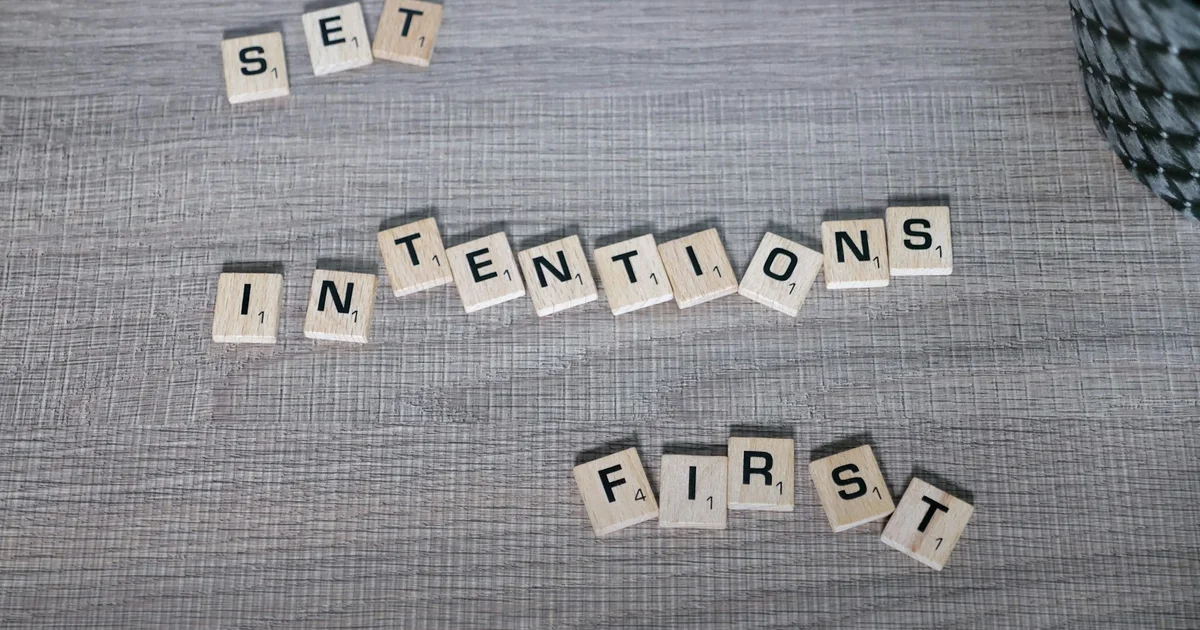
Why Knowing Better Doesn't Make You Do Better
You already know you should exercise more. You know the diet shift you've been meaning to make. You know that checking your phone first thing in the morning is working against you. You've known all of this for a while.
Maybe a long while.
That gap — between what you know and what you actually do — has a name in psychology. It's called the intention-action gap, and it turns out it's one of the most studied problems in behavioral science. What researchers have found about it changes the conversation entirely. The problem isn't willpower. It isn't discipline. It isn't even motivation in the way most people mean it.
The problem is that intending and doing are two different things, and most advice about behavior change addresses only the first.
The Science Behind the Intention-Action Gap
In 2002, psychologist Paschal Sheeran published a review that pooled 10 earlier meta-analyses, covering 422 studies and more than 82,000 participants. His conclusion was striking: intentions only moderately predict behavior. On average, intention accounted for about 28% of the variance in action. That means roughly 72% of what determines whether you act has nothing to do with whether you intend to.
A 2006 meta-analysis by Thomas Webb and Sheeran in Psychological Bulletin looked at the experimental evidence: 47 experimental tests in which researchers actually changed people's intentions and then watched what they did. Their summary: a medium-to-large change in intention led to only a small-to-medium change in behavior. In effect-size terms, intentions moved by about d = 0.66, while behavior moved by about d = 0.36.
Read that slowly. You can substantially strengthen an intention and see only a modest shift in behavior.
You can want it badly and still not do it. This isn't a character flaw. It's a documented gap in how people work. And once you understand what helps, you stop blaming yourself and start building something different.
why-you-keep-restarting-instead-of-finishing
Why More Insight Makes the Problem Worse
Here's the uncomfortable part. Most productivity advice leans heavily on insight. Read one more book. Watch one more video. Figure out your "why." Understand yourself better.
None of that reliably moves behavior on its own — because deciding what you want and doing it at the moment it matters are different problems.
Deliberate, goal-directed choice and well-practiced, cue-driven routines are often described as relying on different brain systems, with the prefrontal cortex more involved in the former and the basal ganglia in the latter. That's a simplification, but it points at something real. When you go to the gym on a Tuesday morning, you're probably not drawing on the memory of a motivational video you watched last week. You're responding to a contextual cue, running a routine, and following the path of least resistance.
Insight without a bridge to action produces nothing you can point to on a Thursday.
That bridge has a specific form. And it's not another idea.
Implementation Intentions: One of the Best-Tested Bridges in Behavior Science
One of the most consistently studied techniques in this space is the implementation intention, developed by psychologist Peter Gollwitzer in the 1990s. It sounds deceptively simple.
Instead of deciding "I'll go running this week," you write: "When I wake up on Tuesday and Thursday and my shoes are by the door, I will put them on before I look at my phone."
The format is: When [specific situation], I will [specific action].
It sounds small. The effects aren't. A meta-analysis by Gollwitzer and Sheeran (2006, Advances in Experimental Social Psychology) pooled 94 independent tests and found that implementation intentions had a medium-to-large effect on goal attainment (d = 0.65) compared with goal intentions alone. Later, larger syntheses have reported smaller average effects, particularly for behavior change itself, so treat this as a useful tool rather than a guarantee. The if-then structure links the action to a specific cue in your environment, so that the moment arrives with the response already decided.
The mistake most people make is writing goals instead of plans. "I want to meditate every day" is a goal. "When I finish my morning coffee, I will close my laptop and sit for ten minutes before I check anything" is an implementation intention. One lives in your aspirations. The other lives in your environment, waiting for its cue.
Environmental Design: The Variable Nobody Talks About Enough
If you've ever found yourself eating a bag of chips you didn't consciously decide to open, you already understand environmental triggers. Your behavior is constantly being shaped by what your environment makes visible, easy, and automatic — and most people haven't designed that environment deliberately.
Behavioral economist Richard Thaler — whose work on choice architecture earned him the Nobel Prize in Economics in 2017 — documented exactly this: small changes to the structure of choices, what's visible, what's easy to reach, what's the default, reliably shift behavior without mandates or instructions. The same mechanism applies to every behavior you're trying to build or break.
Want to read more? Leave the book on your pillow, not on the shelf. Want to work out in the morning? Put your gym bag by the door the night before. Want to stop scrolling before bed? Charge your phone in the kitchen.
You're not fighting your character. You're negotiating with your environment. And you can win that negotiation just by rearranging objects.
The principle is preparation over resolve: make the right action the path of least resistance, and you'll take it more often without spending a gram of willpower.
why-consistency-is-so-hard-science-of-staying-on-track
Friction: Small Barriers Matter More Than You'd Expect
Here's a counterintuitive idea from behavioral science: the size of a barrier can matter far more than people expect, often more than the size of the reward.
This is why the advice to "start small" isn't motivational padding. When the starting point requires minimal effort, your brain doesn't trigger an avoidance response. You bypass the decision point entirely.
Applied to real life: if you want to journal, don't commit to 20 minutes. Decide to write one sentence. The habit of opening the notebook is the real win. The session usually keeps going on its own. But even if it doesn't, the cue-routine-reward loop has fired — and that makes the next session easier to start.
A useful name for this is "minimum viable action," and the idea is simple: shrink the gap between intention and first step until there's almost nothing left to resist.
How to Start Today
These four moves don't require a new system or a fresh start on Monday. They work by inserting structure at the exact point where good intentions usually dissolve.
1. Write one implementation intention. Pick the one behavior you've been meaning to build. Write it as: "When [specific cue], I will [specific action]." Put it somewhere visible. That's it — one is enough to test whether the mechanism works for you.
2. Change one thing in your environment. Look at where the habit is supposed to happen. Is the cue visible? Is the first action easy to start? Move one physical object to reduce friction or increase visibility. One thing.
3. Define your minimum viable action. For the habit you're building, ask: "What's the smallest version of this I'd actually do without negotiating with myself?" That's your anchor. The session can grow, but the anchor is non-negotiable.
4. Track completion, not performance. Don't judge the quality of the session. Track whether you showed up. A habit tracker — even a physical calendar where you mark off each day — creates a visual streak that can become its own motivation. This echoes Teresa Amabile and Steven Kramer's "progress principle": in their diary study of 238 knowledge workers, noticing progress in meaningful work was the strongest driver of a good inner work life.
The Gap Is Where Your Evolution Lives
Here's the deeper point underneath all of this.
Most people assume that if they just understood themselves better — read more, reflected more, got clearer on their purpose — the knowing would eventually translate into doing. The research suggests that's backwards. Knowing better doesn't make you do better. Designing the conditions under which doing becomes slightly easier is what helps.
Many "motivation problems" are really design problems in disguise. The person who can't wake up early hasn't placed the alarm across the room. The person who can't stick to exercise hasn't scheduled it as a fixed appointment with a specific first action attached. The gap isn't in them. It's in the conditions.
That's what "Design Your Evolution" means in practice. Not more insight stacked on top of unchanged patterns. Not more understanding of the gap without building a bridge across it. It means choosing the trigger, designing the first step, and rearranging the setting — so that the next version of you has somewhere to walk.
The gap between who you are and who you intend to be isn't a character problem. It's a design problem. And design problems, unlike character problems, have specific solutions.
What's the one behavior you've known you should start for the longest — and what's one thing in your environment you could change this week to make starting a little easier?
Was this helpful?