Mindset· 10 min read
Why 'Possible Selves' Make Reinvention Stick
Markus and Nurius's research found imagining a vivid alternative self shapes real behavior change. Here's the real science of reinvention.
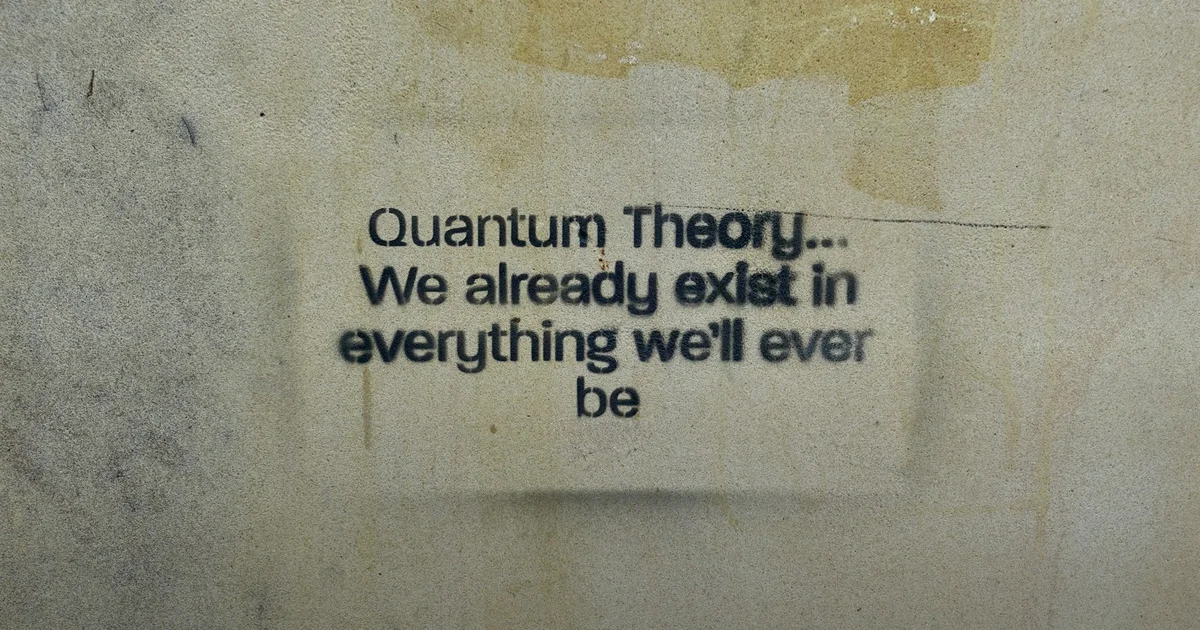
Why 'Possible Selves' Make Reinvention Stick

Starting around 2009, Matthew McConaughey began turning down every romantic comedy script that landed on his desk — including a $14.5 million payday. His agents watched the offers pile up and get refused, one after another. The industry went quiet. For nearly two years, he took almost no film work while he waited — deliberately — for roles that matched where he was going, not where he'd been. By 2011, that patience had a name: the "McConaissance."
Most people tell that story as one about willpower. He just really wanted it, they say. But that explanation misses the mechanics of reinvention entirely.
What McConaughey had — whether he consciously named it or not — was a vivid, specific picture of a different self. Not a vague goal to "do more serious work," but what researchers call a possible self: a concrete, detailed person he was moving toward, and an equally concrete person he was refusing to remain. That paired image organized his behavior when every short-term incentive was pointing in the opposite direction.
There's forty years of research explaining exactly why that works.
The Reinvention Problem Nobody Actually Names
Here's what happens when most people try to reinvent themselves.
They identify a gap — between who they are and who they want to be. They set a goal. They feel genuinely committed. And then, somewhere between day eight and day twelve, existing patterns reassert themselves, and the pull of the familiar turns out to be stronger than the pull of an abstract aspiration.
Not because they lacked discipline. Because the goal was a destination without a person.
You've probably felt this. You've had some version of "I want to be someone who reads more / exercises consistently / finally changes direction" that felt urgent in January and somehow less urgent by March. The desire was real. The intention was real. What wasn't real enough — vivid enough, specific enough — was the self doing those things.
Jim Rohn had a phrase he repeated in almost every talk: You cannot change your destination overnight, but you can change your direction overnight. What he understood intuitively was that direction requires a specific heading — not just a vague north. That gap between abstract goal and concrete behavioral reality is exactly what Hazel Markus and Paula Nurius were trying to understand when they published their landmark paper in 1986.

Clever Fox Habit Calendar Circle (24-Month Habit Tracker Journal)
Placed right after the section naming the reinvention problem — 'the goal was a destination without a person.' The pain is that intention evaporates between day eight and day twelve. A visible 24-month tracker is the…
As an Amazon Associate, we earn from qualifying purchases — at no extra cost to you.
What Markus and Nurius Actually Found
In their paper "Possible Selves," published in American Psychologist, Markus and Nurius proposed something that sounds almost too straightforward until you actually sit with it: your self-concept isn't just a static account of who you are right now.
It includes a repertoire. A full cast of possible selves — the people you hope to become, the person you expect to become, and the person you fear becoming. All of them running simultaneously, alongside your current self, all of them exerting real motivational force on what you do in any given moment.
The key word is possible. Not "my current self slightly improved." Not "a vague better version." A distinct, richly imagined person — with a context, with characteristics, with a life that differs meaningfully from the one you're living now.
What their research and the decades of work it launched found was this: possible selves function as concrete, personalized incentives and warnings. They don't work the way abstract goals work. A vague aspiration gives you a direction. A vivid possible self gives you something to actually become.
The mechanism is specificity itself. A vague goal — "I want to be healthier" — provides almost no concrete direction for any individual decision. When the alarm goes off at 6am, "healthier" is a concept. It doesn't help you choose. But a vivid possible self — specific details, a real imagined context, the felt sense of what that person's morning actually is — that's something your brain can orient toward. It's a target with coordinates rather than a compass with no map.
The Part of This Research Most People Miss
Here's what gets quietly dropped in most summaries of Markus and Nurius's work: it's not just about the hoped-for self.
The research found that possible selves work best when they're paired. An elaborated hoped-for self alongside a specific corresponding feared self showed measurably stronger behavior change than either one alone.
That's worth sitting with for a moment.
The hoped-for self supplies direction. It gives you somewhere to go. But the feared self supplies urgency. It makes the cost of not going there real — not as an abstract statistic, but as a specific, imaginable person you could plausibly become if you stop. If you keep choosing comfort. If you keep accepting the gap.
Most reinvention frameworks ask you to focus entirely on the positive vision. The inspiring destination, the compelling future, the person you're becoming. And those things matter. But if that vision has no corresponding specificity about what you're moving away from, you're only operating with half the mechanism.

Think about the last time you genuinely changed something difficult about your behavior. Not the resolution that lasted a week — the one that actually stuck months or years later. Somewhere in that story, chances are, you had a clear picture of who you didn't want to become. A concrete image of where you were headed if nothing changed. That wasn't pessimism at work. That was the feared self doing exactly what Markus and Nurius described.
The feared self isn't about catastrophizing your future. It's about making the downside of inaction as specific and concrete as you've made the upside of action, so both are operating as genuine motivators at the same time.
Atomic Habits — James Clear (Paperback)
Placed after 'The Part of This Research Most People Miss' — the hoped-for/feared self pairing. Clear's identity-based habits chapter is the closest popular-press treatment of 'become the person, not the outcome', whic…
As an Amazon Associate, we earn from qualifying purchases — at no extra cost to you.
This Is Not the Same as Visualizing Your Future
There's another body of research that sounds similar enough to possible selves theory that people often conflate them — and the distinction matters for how you use each.
Hal Hershfield's research on future self-continuity concerns how emotionally vivid and connected your single, actual future self feels to your present self. When that connection is strong, you make better long-term decisions. Hershfield's work has produced some of the most compelling findings in behavioral economics: people who felt high psychological continuity with their future selves consistently saved more money, treated future interests more seriously, and made choices that reflected genuine concern for who they'd become.
But that's a different mechanism from what Markus and Nurius were describing.
Hershfield is examining one specific future self — the actual person you'll be in twenty or thirty years — and asking how emotionally real it feels today. Markus and Nurius were examining an entire repertoire of hypothetical possible selves: the hoped-for, the expected, and the feared, none of which claim to describe your actual future with any certainty. It's a broader framework about identity and reinvention — not the emotional continuity with one specific self, but the motivational pull of holding multiple, richly imagined alternative identities simultaneously.
Knowing the difference lets you use both deliberately. Hershfield's research suggests making your future self feel familiar and real. Markus and Nurius's research suggests also having a specific, vivid feared self running alongside the vision. They're separate tools that happen to point in complementary directions.
Related read: Does Visualization Really Work? What Neuroscience Says
Why Vague Aspirations Fail the Brain
Here's a test you can run on yourself right now.
Close your eyes for thirty seconds and imagine "your best self." Don't add any detail — just hold the phrase in mind and notice what happens.
Chances are, not much. The concept floats. There's nothing for your behavior to actually organize around in a moment of decision.
Now try something different. Imagine yourself on a specific Tuesday morning, five years from now, having made the reinvention that actually matters to you. What time did you wake up? What does the room look like? What did you do in the first hour before anyone asked anything of you? What work are you doing? Who knows what you've built? What's the texture of that morning — not as an abstraction, but as an experience?
That's doing real cognitive work. You can feel the gap between the vague version and the specific one, because the specific version is occupying actual space in your mind. It's a person your brain is trying to simulate, not a concept it's trying to hold.
Now run the same exercise with the feared version. The specific person you could become if you keep doing what you're doing for the next five years. What does that Tuesday look like? What's still unresolved? What opportunities are five years gone?
The discomfort you feel doing the second exercise isn't a reason to avoid it. That's the mechanism working.

Philips SmartSleep Wake-Up Light HF3520 (Coloured Sunrise Simulation)
Placed after 'Why Vague Aspirations Fail the Brain' — the section that literally asks 'What time did you wake up? What did you do in the first hour before anyone asked anything of you?' The wake-up light is the one pu…
As an Amazon Associate, we earn from qualifying purchases — at no extra cost to you.
How to Start Today
You don't need to architect this perfectly. Markus and Nurius weren't describing a ten-step framework — they were identifying how the mind already works when real reinvention sticks. The goal is to make that natural mechanism conscious and deliberate.
Step one: Get specific about the hoped-for self. Not "more successful" or "healthier." A real person, in a real context. Write a detailed paragraph — or work through a dedicated reinvention journal built for this — describing a specific morning in the life of that self. Where are you? What did you build? What does that self already know that your current self doesn't? What choices did you make along the way that your current self is still debating?
Step two: Build the corresponding feared self. This isn't catastrophizing. It's honest specificity about the cost of inaction. What does the person you're moving away from look like five years from now if nothing changes? Describe a morning. Be specific about what's still unresolved, still deferred, still not yet done. Write it down.
Step three: Pair them deliberately. Keep both in view, not just the inspiring one. The research is clear that the paired structure — direction plus urgency, hope plus an honest reckoning with what staying put actually costs — outperforms either alone.

Kindle Paperwhite 2024 (12th Gen, 16GB, Black)
Placed in the 'How to Start Today' steps, after step three (pair them deliberately). The article's own arc — 'What does that self already know that your current self doesn't?' — is a reading argument. This is the tick…
As an Amazon Associate, we earn from qualifying purchases — at no extra cost to you.
Step four: Update both as you close the gap. Possible selves aren't fixed destinations. One of the underappreciated nuances in Markus and Nurius's framework is that the repertoire is meant to be dynamic — as you move toward a hoped-for self, the picture updates. What once required a bold move becomes the new baseline. New possible selves emerge. New feared selves sharpen into focus. The process doesn't end at the first reinvention. It just compounds.
That's not a complication. That's what it actually feels like to be designing your evolution rather than just planning it.

Related read: How to Shed Your Old Identity and Become Someone New
The Bigger Picture
There's something quietly important in what Markus and Nurius were actually claiming.
They weren't saying "visualize harder" or "want it more." They were saying that the self isn't a fixed thing you're stuck with — it's a living, motivationally active structure that already includes a whole ecosystem of alternative identities you're holding in mind, whether you're aware of them or not.
The question isn't whether you have possible selves running. You already do. The question is whether they're vivid enough, specific enough, and intentionally constructed enough to actually organize your behavior when the short-term comfort of staying put shows up — which it will, every single time.
McConaughey didn't survive nearly two years of turned-down offers on willpower alone. He survived them on a clear, specific image of someone he was becoming, and an equally honest reckoning with who he'd remain if he gave in. Both were real. Both were working.
That's not a story about discipline. It's a story about having something specific enough to move toward — and something specific enough to move away from.
So here's the question worth sitting with today: What does your specific hoped-for self look like on a Tuesday morning five years from now? And what does the version of you who doesn't make this move look like on that same morning?
Write both down. According to Markus and Nurius, the act of getting that specific is already the first — and most important — step the research actually recommends.
Related read: Self-Limiting Beliefs: The Psychology of Your Ceiling
Was this helpful?