Mindset· 10 min read
Does Visualization Really Work? What Neuroscience Says
Guang Yue's 1992 study found imagined contractions built real strength. But the brain isn't fully fooled. Here's what visualization science shows.
Does Visualization Really Work? Here's What the Neuroscience Actually Says
There's a version of the visualization story you've probably heard. You imagine something vividly enough, the brain can't tell the difference between what's real and what's imagined, and somehow the universe rearranges itself to match. It sounds almost magical — and it sells a lot of books.
Here's the thing: the science behind visualization is actually fascinating. But it's fascinating for completely different reasons than the ones being marketed. The real findings are more modest, more specific, and, once you understand them properly, far more useful than the overhyped version. Because when you know exactly what the research shows — not what someone's interpretation of someone's interpretation shows — you can use this tool in the precise, targeted way that actually produces results.
So does it work? Yes — with important limits. Research confirms that imagined movements activate real neural pathways and can produce measurable physical change. But the mechanism only applies to skills your brain already has some procedural blueprint for. General goal-visualization, the kind sold in self-help bestsellers, is a different beast with much weaker evidence.
The Study Nobody Quotes Correctly
In 1992, Guang Yue and Kelly Cole, researchers at the Cleveland Clinic Foundation, published a paper in the Journal of Neurophysiology that has since become one of the most cited pieces of evidence for the power of mental imagery.
Their setup was straightforward. They divided participants into three groups over several weeks. The first group physically trained a finger-abduction muscle — the kind of small, specific movement you can isolate in a lab. The second group didn't touch a weight or a resistance band. They simply sat and imagined performing maximal contractions of that same muscle. No movement whatsoever. The third group did neither, serving as the control.
The physical-training group gained roughly 30 percent in strength. Expected. What surprised people then — and still gets misquoted now — is that the imagery-only group gained approximately 22 percent. From thinking. From imagining contractions that never actually happened.
That's a real effect. Peer-reviewed, replicated across other muscle groups, and now a genuine tool used in physical therapy and injury rehabilitation. When someone can't move a limb due to injury, having them mentally rehearse the movement slows or even partially reverses muscle loss in ways that are measurable. You can read the original study at doi.org/10.1152/jn.1992.67.5.1114.

Sony WH-1000XM5 Noise Cancelling Headphones
Kinaesthetic imagery requires an uninterrupted internal sensory channel — external noise breaks the motor-simulation loop the article describes
As an Amazon Associate, we earn from qualifying purchases — at no extra cost to you.
So the claim that visualization "works" has a legitimate, reproducible foundation. But here's where the popular version quietly diverges from what Yue and Cole actually found.
The Part the Self-Help World Skips
The jump that gets made — constantly — is from "imagining a specific physical movement produced a measurable physical result" to "vividly imagining any goal will produce that goal."
Those are not the same claim. Not even close.
Neuroscientist Marc Jeannerod spent years through the 1990s and early 2000s mapping exactly what happens in the brain during mental imagery, developing what he called functional equivalence theory — the idea that imagining a movement activates the same neural circuits as performing it, making mental simulation functionally equivalent to physical action in important, measurable ways. His brain-imaging research found that vividly imagining a movement does activate overlapping regions with physical performance — the motor cortex, the supplementary motor area, the cerebellum. The overlap is real and meaningful.
But "overlapping" isn't "identical." And here's the detail that almost never makes it into the elevator pitch version: Jeannerod's research consistently found that additional prefrontal regions remain active during imagery that aren't active during actual movement. These regions function as monitors. They maintain the brain's awareness that the action is simulated, not real.
The popular claim — "the mind cannot distinguish between a vividly imagined experience and a real one" — is simply not supported by the imaging data. The brain appears to tag mental imagery as mental imagery. It knows. The distinction isn't total, but it isn't absent either.
If you want the deeper mechanics of how the brain's reward circuitry shapes what you actually feel like doing, the neuroscience of dopamine and motivation covers the same kind of myth-versus-mechanism territory.
This is worth understanding clearly, because it explains both why visualization works in the contexts where it works, and why it falls flat when applied outside those contexts.
Why the Brain's Self-Awareness Is Actually the Good News
It might sound like a limitation that the brain knows it's simulating. It's not.
The reason the brain can benefit from imagined movement without fully "believing" it's real is precisely because it doesn't need to be deceived. What mental imagery does — what makes Yue and Cole's result possible — is prime the neuromuscular pathways involved in a specific action.
Think of it like a rehearsal run. You're activating the same motor programs, firing the same neural sequences, warming up the same circuits at a lower intensity than actual physical execution would require. Over time, those circuits get more efficient. The coordination improves. The neural pathway that runs from "intention" to "execution" gets a little cleaner each time, even without the full physical performance.
This is why elite athletes have used mental rehearsal as a serious training tool for decades.

Amazfit GTR 4 Fitness Smartwatch (46mm, Black)
Placed at the elite-athlete mental rehearsal passage — pairing imagery with tracked physical practice is exactly the 'combined approach' the research supports
As an Amazon Associate, we earn from qualifying purchases — at no extra cost to you.
Olympic sprinters visualize their race. Gymnasts mentally rehearse a routine in precise, kinaesthetically detailed form before attempting it physically. Surgeons have been shown in studies to improve technical skill through mental rehearsal of procedures.
The key word in all of this: familiarity. Visualization shows its strongest, most replicated effects for skills and actions the brain already has some motor template for. You need existing neural circuitry to prime. If you've never thrown a football, imagining throwing it perfectly won't give you the mechanics — there's nothing yet to reinforce. But if you've thrown hundreds of times, imagining that throw in vivid detail does genuinely useful neuromuscular work.
Where Visualization Is Weakest (And Why This Matters)
If you've ever done a formal visualization practice — really committed to it — and felt a bit deflated when the outcomes didn't materialize, this is probably why.
The technique gets applied to contexts where the brain has no motor template to prime. Visualize becoming wealthy. Visualize the perfect relationship. Visualize a new career. The images may be vivid, the emotions may be strong, but there's no existing procedural knowledge for the brain to reinforce. You're not priming pathways — you're just generating pleasant mental imagery.
That's not nothing, to be fair. There's decent research on mental contrasting — a technique developed by Gabriele Oettingen at NYU — suggesting that visualizing a desired outcome combined with deliberately imagining the obstacles can improve goal pursuit compared to just fantasizing. But that's a different mechanism entirely. It works through expectancy and planning, not through neural pathway priming.
If mental contrasting sounds useful, pairing it with a goal-setting framework that actually works gives it the structure Oettingen's research says matters most.
The honest version of the science is this: visualization is a neuromuscular rehearsal tool that happens to also have some motivational benefit when used with structure. It is not a metaphysical manifesting mechanism. The brain's prefrontal monitoring, which Jeannerod's imaging revealed, suggests the system is more sophisticated and more bounded than the popular narrative allows.
Henry Ford once said that thinking is the hardest work there is, which is probably why so few people engage in it. He wasn't wrong — but the hard work of thinking that produces results is specific and procedural, not just vivid and aspirational.
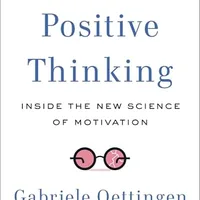
Rethinking Positive Thinking: Inside the New Science of Motivation — Gabriele Oettingen
Article explicitly cites Oettingen's mental contrasting as the honest alternative to fantasy-visualization — highest-intent book placement in the piece
As an Amazon Associate, we earn from qualifying purchases — at no extra cost to you.
The Research-Backed Way to Actually Do This
So what does using visualization correctly actually look like? Here's the framework that aligns with what Yue, Cole, Jeannerod, and the broader motor imagery research actually supports:
- Choose a skill you already have some neural foundation in — mental rehearsal works by reinforcing existing patterns, not creating new ones from nothing
- Use internal imagery, not external — feel the movement from inside your body, not watching yourself from a camera angle
- Be granular and sequential — run through each discrete step in correct order, not a vague positive haze
- Pair it with physical practice — imagery enhances learning, it doesn't replace it; the best results come from combined approaches
- Keep a rehearsal log — write down what you practiced and where the imagery went vague; vagueness maps directly to gaps in your actual skill
Here's what each of those looks like in practice.
First: identify a skill or action you already have some foundation in. This is the non-negotiable starting point. Mental rehearsal works by reinforcing existing neural patterns. The more precise your existing knowledge of the movement or action, the more useful the imagery. A beginner golfer visualizing a perfect swing gets less benefit than a scratch golfer doing the same, because the scratch golfer's brain has far more detailed circuitry to prime.
Second: make the imagery kinaesthetic, not just visual. The research distinguishes between external imagery — watching yourself from outside, like a movie — and internal imagery, where you feel the movement from the inside. Internal imagery activates the motor cortex more consistently. You want to feel the weight of the club, the tension in the muscles, the shift of your bodyweight. Visual-only imagery is less effective than the full sensory version.
Third: be specific and sequential. A general positive image of "doing well" doesn't activate the same motor sequences as imagining each discrete step in correct order. Elite-level mental rehearsal is almost meticulous. It runs through each phase of the skill the way a checklist does — methodical, granular, real-time.
Fourth: pair it with physical practice, not replace it. Yue and Cole's imagery group gained 22 percent versus the physical group's 30 percent. Imagery enhanced learning; it didn't replace it. The strongest results in athletic literature come from combined approaches — physical training plus structured mental rehearsal — not from imagery alone. Use it as an amplifier, not a shortcut.
Fifth: consider keeping a rehearsal log.

Clever Fox Habit Calendar Circle (24-Month Habit Tracker)
PERFECT-FIT PLACEMENT — the article's fifth step literally instructs the reader to keep a rehearsal log and notes that vagueness maps to skill gaps
As an Amazon Associate, we earn from qualifying purchases — at no extra cost to you.
Writing down what you practiced in your mental rehearsal — the specific skill, the specific sequence, what felt sharp and what felt uncertain — turns a passive practice into a diagnostic one. You start to notice the parts of the performance your brain simulates confidently and the parts where the imagery goes vague. Vagueness is useful information. It usually maps directly to the parts of the actual skill that need more physical repetition.

The practical application extends well beyond athletics, too. Mental rehearsal of difficult conversations — a confrontation with a manager, a boundary-setting moment with a family member — is a legitimate, research-supported preparation technique. Your brain has procedural knowledge for how conversations work. You can prime your responses, calm anticipatory anxiety, and walk into the situation having already run a version of it.
For a deeper walkthrough of that specific use case, see how to handle difficult conversations without making them worse.
Same for presentations. If you've ever stood in front of a room before, your brain has motor templates for pacing, for pausing, for managing a response when someone asks a question you hadn't anticipated. Mentally rehearsing the specific presentation you're about to give doesn't just help you remember what comes next — it primes the exact neural sequences involved in delivering it.
What This Means for How You Design Your Practice
The research doesn't tell you that visualization is overrated. It tells you it's misapplied.
Yue and Cole's study produced a result that should still impress you: the people who never touched a resistance band walked out 22 percent stronger. That's not nothing. That's a window into how powerfully the brain can rehearse its own capabilities in the absence of physical input. Physical therapists use this finding with post-surgical patients. Sports psychologists have built entire mental training frameworks around it.

Kindle Paperwhite 2024 (12th Gen, 16GB, Black)
Closing section on designing a precise practice — the motor-imagery literature (Yue, Jeannerod, Oettingen) is a reading rabbit hole worth going down
As an Amazon Associate, we earn from qualifying purchases — at no extra cost to you.
But the window has a specific shape. It's wide open for skilled motor rehearsal. It narrows considerably for brand-new skill acquisition. And it doesn't open at all for outcomes that have no procedural component — that involve no physical or behavioral pathway the brain can actually prime.
The version of visualization that's worth your time is not the one where you close your eyes and feel yourself living in your dream house until the universe delivers it. It's the one where you close your eyes and rehearse — in precise, sequential, kinaesthetic detail — the exact behavior or performance you're actually about to do.
That distinction sounds like a small shift in framing. In practice, it's the difference between a technique that occasionally produces a vague motivational buzz and one that measurably improves your performance on something specific, which is what Guang Yue actually demonstrated in 1992, and what the field of motor imagery research has been building on ever since.
Your brain is remarkably capable of doing real work in the absence of physical input. Marc Jeannerod showed us the mechanism. That's what it means to design your evolution: not adding more to your schedule, but sharpening the precision of what you're already practicing. The question isn't whether to use visualization — it's whether you're using it in the specific, targeted way that the mechanism actually supports.
What's one skill or recurring performance — a conversation, a presentation, a physical practice — that you've been rehearsing only physically and could start rehearsing mentally as well? Drop it in the comments. I'd genuinely like to know what this looks like in practice for the people reading this.
Sources:
- Yue, G., & Cole, K.J. (1992). Strength increases from the motor program: comparison of training with maximal voluntary and imagined muscle contractions. Journal of Neurophysiology, 67(5), 1114–1123. https://doi.org/10.1152/jn.1992.67.5.1114
- Jeannerod, M. (2001). Neural simulation of action: a unifying mechanism for motor cognition. NeuroImage, 14(1), S103–S109. https://doi.org/10.1006/nimg.2001.0832
- Oettingen, G. (2014). Rethinking Positive Thinking: Inside the New Science of Motivation. Current.
Related read: Why "Possible Selves" Make Reinvention Stick
Was this helpful?