Mindset· 10 min read
How to Handle Conflict Without Making It Worse
Most conflicts escalate because both sides forget the actual goal. Here's the strategic psychology of handling disagreements with clarity and skill.

How to Handle Conflict Without Making It Worse
The argument had been going for forty minutes before either of us said what we actually meant.
I remember the exact feeling — that particular kind of exhaustion where you're no longer sure what you're even fighting about, but stopping feels like losing. My partner said something I half-heard. I responded to the version I'd constructed in my head. She responded to that response. Within sixty seconds, we were deep inside an argument that neither of us had intended to start about anything.
We "resolved" it the way most conflicts resolve: one person went quiet, the room cooled down, and we agreed — through attrition, not understanding — to let it go.
But here's the thing about "letting it go": you don't. Not really. The unresolved core goes underground, adds sediment to the next disagreement, and resurfaces wearing different words. You keep fighting the same fight with different props.
If that sounds familiar, you're not dealing with a relationship problem or even a communication problem. You're dealing with a neuroscience problem — one with a specific structure, a well-documented trajectory, and a solution set that most people never encounter because it lives in academic conflict research rather than advice columns.
Why Every Disagreement Gets Harder Than It Has to Be
Carl von Clausewitz was a Prussian military strategist who spent his career thinking about conflict with unusual rigor. His posthumously published masterwork, On War (1832), introduced the concept of the "fog of war" — the principle that in any active conflict, combatants are operating with incomplete, unreliable, and systematically distorted information. The fog doesn't lift because you want it to. It's a structural feature of combat, not a correctable mistake.
He wasn't writing about marriage. But his insight maps onto interpersonal conflict with uncanny precision.
In an activated argument, you are not perceiving the other person accurately. You're perceiving a threat-filtered version of them — built from partial data, colored by your current emotional state, and shaped by every previous conflict you've had with them. Your interpretation of their expression, their tone, their silence is fast, automatic, and systematically biased toward threat detection.
You're in fog.
John Gottman spent four decades studying couples in conflict at the University of Washington and the Gottman Institute, producing one of the largest longitudinal datasets on relationship dynamics ever assembled. His most striking finding: by observing fifteen minutes of a couple's conflict interaction, his research team could predict with approximately 90% accuracy whether they'd be divorced within the decade.
Not because Gottman was unusually perceptive. Because the patterns that destroy relationships are identifiable, consistent, and — this is the part people always miss — correctable. Every destructive conflict pattern has a documented antidote. Every antidote, practiced consistently, produces measurable differences in relationship quality over time.
The question is whether you know what those patterns are before you're inside one.
Read next: How emotional intelligence can transform the way you show up in relationships
The Four Communication Patterns That Sink Every Conflict
Gottman named them the Four Horsemen — four specific behaviors that, when they become the default mode in conflict, predict relationship deterioration with the reliability of a controlled experiment.
Criticism attacks the person rather than the behavior. "You're so inconsiderate" instead of "I felt hurt when you didn't text me." The distinction sounds minor. It isn't. Criticism transforms a specific incident into a verdict on character, which means the other person isn't just defending the behavior — they're defending their entire identity. The stakes become existential. Resolution becomes nearly impossible.
Contempt is the single strongest predictor of relationship breakdown in Gottman's data. It's superiority expressed through sarcasm, eye-rolling, mockery, or dismissal. Contempt communicates "I am above you" — and it's nearly impossible to collaborate on problem-solving with someone who is simultaneously looking down at you. Nothing productive happens inside contempt.
Defensiveness denies responsibility and redirects blame. "That's not my fault — if you hadn't..." It closes the feedback loop entirely. Nothing the other person says can land because it's immediately deflected. Every defensiveness response escalates rather than de-escalates, without exception.
Stonewalling is complete withdrawal — silence, shutdown, physical exit — used not as a processing break but as a wall. It communicates rejection, which to the attachment system reads as something close to abandonment.
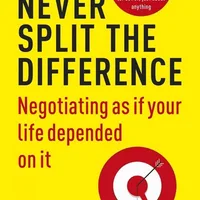
Never Split the Difference — Chris Voss
The tactical-empathy playbook written by the FBI's former chief hostage negotiator. The skills in this book must be learned before the conflict — they don't appear on demand.
As an Amazon Associate, we earn from qualifying purchases — at no extra cost to you.
Each has a specific antidote. Criticism yields to the "gentle startup" — beginning with your feeling and your need rather than the other person's failing. Contempt yields to active appreciation and building what Gottman calls a culture of fondness. Defensiveness yields to taking responsibility, even for a piece of the situation. Stonewalling requires genuine self-soothing — a real break of at least twenty minutes, agreed upon in advance, not a punishing silence.
The reason most people don't use these antidotes in the moment isn't that they're hard to understand. It's the next problem.
Why Your Brain Goes Offline Exactly When You Need It

Here is the biological fact that makes conflict resolution harder than it should be: the cognitive equipment you need to resolve conflict goes offline precisely when you're most in conflict.
Daniel Goleman, drawing on neuroscience research by Joseph LeDoux and others, coined the term "amygdala hijack" to describe what happens when the brain's threat-detection center overrides prefrontal executive function. Your prefrontal cortex handles impulse control, perspective-taking, long-term reasoning, and the capacity to pause before speaking. Your amygdala handles survival. When the amygdala registers threat — emotional threat, relational threat, threat to your sense of self — it can commandeer neural resources from the prefrontal cortex and reduce your executive function at the precise moment you need it most.
You become, in a measurable neurological sense, a temporarily less intelligent version of yourself.
Gottman's research added a physiological threshold: heart rate above approximately 100 beats per minute during conflict correlates with what he called "flooding" — a state of significant cognitive impairment in which accurate perception, creative problem-solving, and empathic attunement all degrade substantially. At flooding, people hear different words than those spoken, default to their worst conflict patterns, and become physiologically incapable of the nuanced communication that resolution requires.
The Clausewitz implication, applied to your nervous system: a conflict conducted while both parties are flooded cannot be resolved. The cognitive hardware required for resolution is offline.
The most evidence-backed intervention — the one that feels least like doing anything useful — is to stop. Twenty to thirty minutes minimum. Not a passive-aggressive silence. An agreed-upon break: "I'm getting flooded, I'm going to take a walk, I'll be back in twenty minutes." The break allows cortisol and adrenaline to metabolize. Executive function returns. The conversation that was impossible just became completable.

Liforme Original Yoga Mat
A grounding mat for the 20-30 minute physiological break the research actually prescribes. Stretching and breathing on a dedicated surface turns a pause from an exit into a protocol.
As an Amazon Associate, we earn from qualifying purchases — at no extra cost to you.
The hard part is that stopping mid-conflict feels like conceding. Your body is in fight mode, and stopping reads as retreat. That feeling is the amygdala talking. It's not accurate information about the situation.
Positions vs. Interests — The Move That Resolves What Logic Can't
Roger Fisher and William Ury at the Harvard Negotiation Project spent decades developing what became the most widely used framework for productive conflict resolution. Getting to Yes (1981) introduced a distinction so useful it belongs in every adult's cognitive toolkit: the difference between positions and interests.
A position is what you say you want.
An interest is why you want it — the underlying need, value, or concern that the position is designed to serve.
Most conflicts harden around incompatible positions. Each party argues their position; the positions conflict; the conflict appears zero-sum and unsolvable. What the positions-to-interests move does is step beneath the surface of the argument to find what each person actually needs — which is where the solvable problem actually lives.
Fisher and Ury's classic illustration: two sisters arguing over the last orange in the house. Each insists on having the whole thing. The positions are incompatible — you can't give two people one orange. But ask each sister why she wants it, and the situation transforms completely: one wants the juice; the other wants the peel for a cake she's baking. Their underlying interests are entirely compatible. The conflict that looked zero-sum was only unsolvable at the level of positions.
Most of your conflicts work the same way.
The argument about how to spend Saturday isn't really about Saturday. The argument about money isn't really about the specific purchase. The argument about the dishes, or the parenting decisions, or who calls whose parents first — beneath every hardened position is an underlying need for rest, for connection, for security, for feeling valued, for autonomy. And those underlying needs are almost never as incompatible as the surface positions suggest.
The operational question that makes the shift: "What matters most to you about this?"
Not "why do you think that?" — which can sound like a challenge. Not "what do you want?" — which restates the position. "What matters most to you about this?" invites the answer that's underneath, which is where resolution lives.
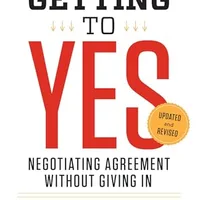
Getting to Yes — Roger Fisher & William Ury
The book that introduced the positions-vs-interests framework — and the one most directly cited in this article. The Harvard Negotiation Project's definitive guide to principled negotiation.
As an Amazon Associate, we earn from qualifying purchases — at no extra cost to you.
Read next: How to set healthy limits — without the guilt
Think Like a Strategist, Not a Combatant

Here is the most counterintuitive insight the conflict research offers: the goal of a productive conflict is not to win. It's to solve the problem.
That sounds obvious. In practice, it isn't. In the heat of an activated argument, the brain has already shifted objectives — from "solve the problem" to "not be wrong." The two objectives produce entirely different behaviors. The person trying to solve the problem is curious, collaborative, and willing to update their view. The person trying to not be wrong is defensive, persuasive, and allergic to any concession.
You can win every point in an argument and lose the relationship. You can be factually correct about every factual question and still end up somewhere neither of you wanted to go.
Chris Voss spent more than two decades as the FBI's chief international hostage negotiator before writing Never Split the Difference. His core finding: the fastest way to change someone's position in a high-stakes negotiation is not to argue against it. It's to demonstrate, with specific and accurate language, that you understand their emotional state and perspective — before you advance your own position.
He called it tactical empathy. Not agreement. Not validation. Accurate perception and labeling of the other person's emotional experience.
When someone feels genuinely understood — when they hear their own experience reflected back with accuracy and without judgment — something physiologically predictable happens: the threat response reduces. The amygdala partially disengages. The person becomes capable of actually listening to you, rather than simply preparing their next counterargument.
Safety, not logic, is the prerequisite for productive disagreement.
Most people get this backwards. They make their argument, expect to be heard, feel frustrated when they're not, and escalate. The reason they're not being heard is that the other person doesn't yet feel safe enough to listen — because they don't yet feel understood. Empathy in conflict is not a concession. It's the mechanism by which conflict becomes navigable.
The practical version: before stating your position, reflect back what you hear the other person experiencing. "It sounds like you're feeling dismissed." "It seems like this has been building for a while." If you're accurate, they'll confirm it and open up. If you're wrong, they'll correct you — which gives you more accurate information than you had before. Either way, the temperature in the room drops.
How to Apply This Before the Next Argument
The frustrating truth about conflict skills is that you can't learn them during the conflict. The amygdala hijack that degrades your cognition doesn't exempt skills you just read about. The window to practice is now — while the stakes are low and your prefrontal cortex is fully online.
1. Know the Four Horsemen by name. Gottman's research shows that couples who can identify the patterns in real-time — "I'm being contemptuous right now" — show measurably better outcomes than those who can't. Naming the pattern interrupts its automaticity. You can't correct what you can't see. Write down all four. Review them before they're needed.

Clever Fox Habit Tracker Journal
Write down the Four Horsemen. Track your flooding signals. A dedicated journal turns the article's action steps into a daily, visible practice — not just a good intention.
As an Amazon Associate, we earn from qualifying purchases — at no extra cost to you.
2. Agree on a flooding signal before you need it. Sit down with the important people in your life — when you're not in conflict — and agree on a signal that means "I'm flooded, I need twenty minutes." A specific phrase, a hand gesture, whatever works. This transforms the break from an aggressive exit into an agreed-upon protocol. The way it lands is completely different, because the meaning has been established in advance.
3. Practice the interest question in low-stakes moments. "What matters most to you about this?" gets easier with repetition and harder without it. Use it in small, low-stakes conversations — about weekend plans, about dinner, about logistics — until it becomes a reflex rather than a tool you have to remember under pressure.
4. Track your physiology. A basic fitness tracker with a heart rate monitor gives you information your perception can't. Knowing your resting rate and watching it climb during tension gives you an early-warning system for flooding — before you've said the thing you'll spend the next day regretting.

Amazfit GTR 4 Fitness Smartwatch
The literal implementation of action step 4. A continuous heart rate monitor gives you Gottman's flooding signal (~100 bpm threshold) before your perception does — an early-warning system for your own nervous system.
As an Amazon Associate, we earn from qualifying purchases — at no extra cost to you.
5. Read one book on conflict before you need it. Crucial Conversations, Getting to Yes, Never Split the Difference, Good Arguments by Bo Seo — any of them. The skills inside those books don't appear under pressure without prior practice. The best time to learn conflict navigation is when you're not in a conflict.
The Real Objective

Here's the thing about conflict that nobody tells you when you're young: the conflicts that matter most are almost always with the people who matter most.
Low-stakes relationships don't generate high-stakes arguments. It's the relationships where you're genuinely invested — where the outcome actually matters to you — that carry the most conflict risk, and the most damage when mishandled.
Which means developing these skills isn't a peripheral upgrade. It's a core capacity for anyone who wants to maintain the relationships they care about across a lifetime of genuine disagreement. And every relationship that matters will include genuine disagreement.
Clausewitz understood that the fog of war doesn't go away because you're tired of it. You plan for it. You build your approach around the reality of impaired perception, limited information, and the predictable ways that activation distorts judgment. The strategist who accounts for the fog functions well when conditions deteriorate. The strategist who expects clarity is surprised every single time.
The same principle applies to every meaningful conflict in your life.
You don't become someone who never fights. You become someone who fights with enough clarity about the actual goal — not winning, but resolving — that the fight ends somewhere worth being. With enough self-awareness to notice when you're flooded and enough respect for the relationship to pause rather than escalate.
That's what designing your evolution looks like when the stakes are highest.
What's one conflict in your life right now that's costing more than the surface issue warrants — and what might change if you knew the interest underneath the position?
Was this helpful?