Mindset· 11 min read
8 Investing Mistakes Beginners Make That Quietly Kill Wealth
8 investing mistakes beginners make — the predictable, quiet reasons smart people lose money, and the simple system that removes every single one.
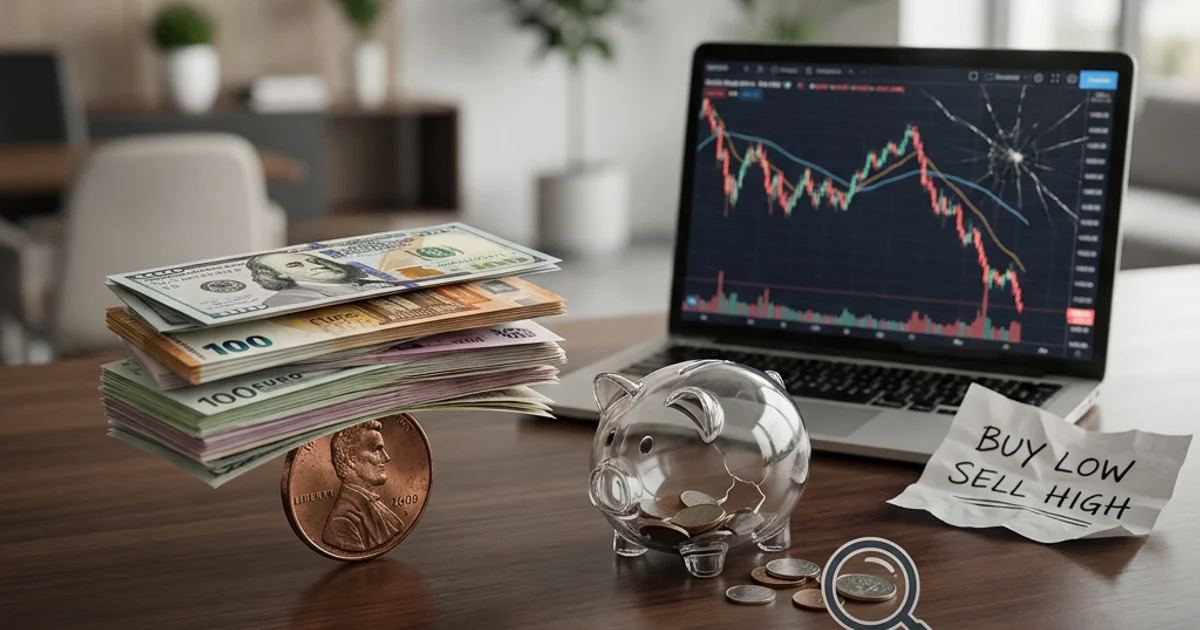
8 Investing Mistakes Beginners Make That Quietly Kill Wealth
The first time I lost money in the market, I lost it on a Tuesday afternoon while eating a sandwich.
It wasn't a crash. There was no headline. A small-cap stock I'd bought because a podcast host mentioned it had drifted down twelve percent over three weeks, and I sold it because I couldn't stand watching the red number anymore. Two months later, that same stock was up forty percent from where I'd panicked out. I refreshed the chart, closed my laptop, and sat there feeling something I'd later learn has a name in behavioural finance: regret aversion. The discomfort of having been wrong was so loud that I made a worse decision just to make it stop.
If you're reading this with any money in the market — or thinking about putting some in — you've probably already made one of the eight investing mistakes below, or you're about to. That's not an insult. It's the most predictable thing in the world. Morgan Housel writes in The Psychology of Money that doing well with money has very little to do with how smart you are and almost everything to do with how you behave. The people who quietly build real wealth aren't reading more research papers than you. They've simply stopped doing the eight things we're about to walk through.
Why Smart People Lose Money in Predictable Ways
Investing punishes intelligence in a way almost no other field does. A surgeon who's read every textbook will perform better than a beginner. A pilot with more flight hours is safer than one with fewer. But in markets, the relationship between effort and outcome breaks down in strange ways. The investor who reads every earnings report often underperforms the one who buys an index fund and forgets the password.
The reason is that markets reward behaviour, not knowledge. And behaviour is mostly emotional. According to the long-running DALBAR Quantitative Analysis of Investor Behavior tracking real investor returns versus market returns, the average equity fund investor underperformed the S&P 500 by several percentage points per year over twenty years — not because the funds were bad, but because investors bought high, sold low, and switched strategies at the worst possible moments.
You've probably felt this. The urge to "do something" when the market drops. The dopamine hit of checking your portfolio five times before lunch. The quiet voice that whispers, this time is different, right before you make the decision you'll regret in eighteen months.
The eight mistakes below aren't about IQ. They're about wiring. And the entire point of intentional wealth design is to build a system that protects you from your own wiring before it costs you a decade of compounding.
Mistake #1: Starting Without a Written Plan
Almost every beginner investor I've ever spoken to started the same way — they opened a brokerage account, deposited some money, and then asked the internet what to buy. There was no plan. No target asset allocation. No idea of what they'd do if the market dropped twenty percent next month. Just a vague feeling that "investing is a smart thing to do" and an app glowing on their phone.
A written investment plan doesn't have to be complicated. One page is enough. It needs three things: what you're investing for, how much you'll add each month, and what mix of assets you'll hold. That's it. Without it, every market headline becomes a reason to change strategy, and every change costs you fees, taxes, and momentum.
Leuchtturm1917 A5 Dotted Hardcover Notebook
The article explicitly prescribes a written plan — one page, three things. The Leuchtturm1917 A5 Dotted Hardcover gives you the structure without imposing it: dotted grid, 251 numbered pages, acid-free 80 gsm paper th…
As an Amazon Associate, we earn from qualifying purchases — at no extra cost to you.
If you can't articulate your plan in two sentences, you don't have one yet. You have hopes wearing a costume.
Mistake #2: Confusing Activity with Progress
There's a particular kind of investor who checks their portfolio four times a day, reads three newsletters, joins a Discord, and ends the year with worse returns than someone who never logged in. The activity feels like work. The brain confuses motion with progress. But in investing, motion is usually friction.
The principle is simple: activity without direction is just friction with a price tag. Every trade has a tax cost, a spread cost, and an opportunity cost. The most underrated investing skill is the ability to do nothing for long periods of time while still being convinced you're winning.
If you find yourself checking your portfolio more than once a week in the first year, that's a signal. Not that you're engaged — that you're at risk.
Mistake #3: Buying What's Already Up
The most expensive sentence in investing is "I should have bought this earlier." It's the sentence that makes you buy it now, at the top, after twelve months of headlines.
Beginners chase performance. It's almost involuntary. A fund returned thirty-eight percent last year? Money flows in. A sector is in every newspaper? Money flows in. The problem is that markets are mean-reverting over long horizons, which is a polite way of saying that whatever just had its best year is statistically more likely to disappoint you next.
This is why a boring, diversified, low-cost index strategy beats most active investors over twenty years. Not because indexing is brilliant. Because it removes the temptation to chase. The decision was already made. There's nothing to chase.
Mistake #4: Ignoring Fees Because They Look Small
A 1.5% annual fee sounds like nothing. It's not. Over thirty years of compounding, the difference between a 0.1% index fund and a 1.5% actively managed fund on the same portfolio can be more than a third of your final wealth. That's not a typo. That's the silent thief sitting in plain sight on every brokerage statement most beginners never read carefully.
The math is uncomfortable because it's invisible in any single year. You don't feel a 1.5% fee. You feel a market crash. So you optimise for crashes you can't predict and ignore fees you absolutely can. If you remember nothing else from this article, remember this: fees are the only variable in your portfolio that is one hundred percent under your control. Treat them accordingly.
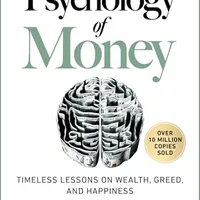
The Psychology of Money — Morgan Housel
Cited by name in paragraph 1 of this article. By the time you reach Mistake #4, you've been primed for this book twice. Housel's 19-story framework is the behavioural-finance thesis the entire piece compresses into on…
As an Amazon Associate, we earn from qualifying purchases — at no extra cost to you.
A simple fee audit takes twenty minutes. Open your statement. Find the expense ratio of every fund you own. Add them up. If the average is above 0.4%, you're almost certainly paying for performance you're not getting.
Mistake #5: Skipping the Emergency Fund
This sounds like personal finance advice, not investing advice. It is both. An investor without an emergency fund is structurally forced to sell at the worst possible moment, because the moment life breaks (car, boiler, job loss) is statistically correlated with markets being down. So the rule is brutally simple — three to six months of essential expenses in cash, ideally in a high-yield savings account, before you put a single pound or dollar into stocks.
This isn't conservative. It's offensive. The emergency fund is what gives you the psychological permission to stay invested through a thirty percent drawdown without panic-selling. Without it, you're not investing. You're gambling that nothing in your life will go wrong for the next forty years.
Mistake #6: Treating Investing Like Stock Picking
Most beginners think investing means picking individual stocks. It doesn't. Investing is choosing an asset allocation, funding it monthly, and rebalancing it occasionally. The "what stocks should I buy" question is the wrong starting point. The right starting point is "what mix of stocks, bonds, and cash matches my time horizon and how much volatility I can actually stomach."
A 25-year-old investing for retirement and a 58-year-old investing to retire next decade should not have the same portfolio. But they often do, because both copied a YouTube video. Asset allocation is the single largest determinant of your long-term return. Stock selection is a distant, distant second. Get the allocation right and the rest is mostly noise.
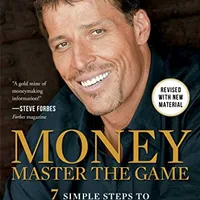
Money: Master the Game — Tony Robbins
The article cites Robbins by name in Mistake #6: "Tony Robbins, in Money: Master The Game, argues that the average investor's biggest blind spot is treating allocation as boring." The updated 2016 edition interviews B…
As an Amazon Associate, we earn from qualifying purchases — at no extra cost to you.
Tony Robbins, in Money: Master The Game, argues that the average investor's biggest blind spot is treating allocation as boring. It's not boring. It's where the majority of your long-term outcome is decided — a point backed by the landmark Brinson, Hood and Beebower (1986) research, which found that asset allocation policy explained over 90% of the variation in portfolio returns across pension funds.
Mistake #7: Letting News Drive Decisions
There has never been a single year in market history without a credible reason to be terrified. Wars. Inflation. Pandemics. Banking crises. Elections. Bubbles bursting. AI replacing every job. Every single year has a story, and every single year, the people who sold because of the story underperformed the people who didn't read it.
This isn't a defence of ignorance. It's a defence of separation. Read the news. Stay informed. Just don't let the cortisol of any given Tuesday drive a decision that will affect your wealth in 2046. As the philosopher and Holocaust survivor Viktor Frankl observed, between stimulus and response there is a space — and in that space lies the power to choose. Build that space deliberately, especially when markets are moving.
A practical rule: any major portfolio change has to be written down on paper, dated, with the reasoning. Then sit on it for seven days. The number of trades that survive that seven-day filter is shockingly small.
Mistake #8: Underestimating Time
The final mistake is the one that costs the most, because it can't be reversed. Most beginners massively underestimate the value of time, which is the only ingredient in compounding that actually matters.
A 22-year-old who invests £200 a month at a 7% annual return until age 65 ends up with approximately £655,000. That same person, starting at 32 instead, ends up with approximately £310,000. Same monthly contribution. Same return. Less than half the wealth. The ten years of waiting are not a small cost — they are the largest financial decision most people will ever quietly make.

If you're reading this and you're 25, the most valuable financial action you can take this week isn't reading another book. It's automating a small monthly contribution into a low-cost index fund. Today. Even £50. The amount almost doesn't matter. The date you started will matter for the rest of your life.
How to Start Today (Without Repeating Any of the Eight)
Here's the actual five-step playbook, in the order it should happen.
Step one — build the cash buffer first. Three to six months of essential expenses in a high-yield savings account. Boring. Non-negotiable. This is the foundation that lets everything else work.
Step two — write your one-page plan. What you're investing for, how much per month, what asset mix. Sign it. Date it. Tape it inside your wardrobe door. Re-read it every January.
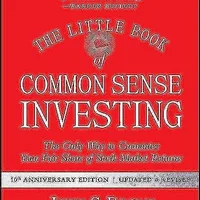
The Little Book of Common Sense Investing — John C. Bogle
This article's entire thesis — "a boring, diversified, low-cost index strategy beats most active investors over twenty years" — is the single-sentence compression of Bogle's life work. The Buffett-endorsed 10th Annive…
As an Amazon Associate, we earn from qualifying purchases — at no extra cost to you.
Step three — open a low-cost broker. Anything with sub-0.1% index fund access. Vanguard, Fidelity, iShares, Trading 212 — pick one and stop comparison-shopping. The differences between modern brokers are smaller than the cost of waiting another month.
Step four — automate the contribution. Same day every month. Money leaves the current account before you see it. The best investors in the world all have one thing in common: they removed themselves from the monthly decision.

Kindle Paperwhite (2024, 12th Generation) — 16GB
Automate the mechanical decisions — then free your attention to compound on learning. The Kindle Paperwhite carries the entire index-investing canon (Housel, Bogle, Robbins, Bernstein, Bogleheads Guide, JL Collins) fo…
As an Amazon Associate, we earn from qualifying purchases — at no extra cost to you.
Step five — set a quarterly review, and only a quarterly review. Once every three months, you check the allocation, rebalance if needed, and close the laptop. No daily checks. No mid-week panic. No exceptions for "this big news event." The discipline isn't in the decisions you make — it's in the decisions you stop making.

Kitchen Safe (kSafe) Time Locking Container — Medium
Step 5: "No daily checks. No mid-week panic. The discipline isn't in the decisions you make — it's in the decisions you stop making." The kSafe is the precommitment device that makes this rule physically enforceable.…
As an Amazon Associate, we earn from qualifying purchases — at no extra cost to you.
That's the entire system. Five steps. Most professionals charge thousands to deliver a more complicated version of the same thing, and the more complicated version usually performs worse.
The Quiet Truth About Wealth
Here's the part nobody tells beginners. The investors who finish wealthy aren't the ones who picked the best stock or timed the market or found the secret newsletter. They're the ones who avoided the eight mistakes above for thirty straight years. That's the entire game. Quiet, unglamorous, automatic.
Designing your evolution as a financial being isn't about getting smarter than the market. It's about engineering a system where smart is the default — where the temptation to panic, chase, or check is structurally removed from your week. The best financial decision you'll ever make is the one you'll never have to make again, because you set it up properly the first time.
What's the one mistake from this list you've made before — and what would your portfolio look like today if you hadn't? Tell us in the comments. The honest stories are the ones that help the next reader.
Was this helpful?