Productivity· 10 min read
Screen Addiction Science: Why You Can't Stop Scrolling
Your brain isn't broken — it's been designed against you. Here's what dopamine science reveals about digital compulsion and how to reclaim your attention.
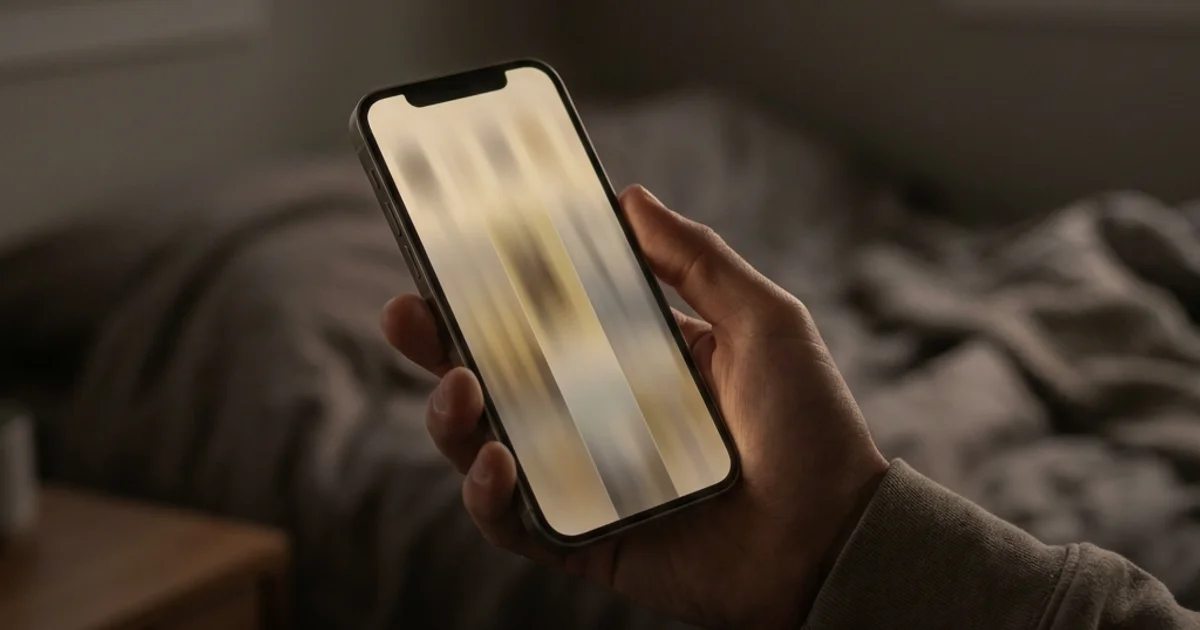
Screen Addiction Science: Why You Can't Stop Scrolling

It was 2:14 in the morning.
I'd already been through Instagram twice. Nothing new had appeared since my last check forty-five seconds before, yet my thumb moved to the app icon anyway. Some part of my brain had independently decided it needed to look. I hadn't made a choice. The choice had been made for me.
That moment bothered me more than the lost sleep.
Because if I hadn't chosen to pick up the phone — who had? And if something else was running my attention at 2 AM, what else was it running?
I spent the next six months reading the screen addiction research. What I found wasn't reassuring, but it was clarifying. And clarity, it turns out, is the only real starting point for any of this.
Why Scrolling on Your Phone Is So Addictive: The Architecture of Compulsion
Adam Alter, a behavioral scientist at NYU Stern School of Business, spent years mapping the difference between technologies people can walk away from and technologies they can't. His conclusion, published in Irresistible (2017), wasn't comfortable reading for anyone who owns a smartphone.
He identified six design features reliably associated with behavioral addiction. Not addiction in the casual sense. Behavioral addiction — the same diagnostic category as gambling disorder.
Those features are: compelling goals (there's always something to finish), escalating challenges (the infinite scroll eliminates the natural stopping cue that a finite list would provide), unpredictable positive feedback (you might see something that changes your day — or you might not), a sense of progress (streaks, follower counts, likes accumulating), social engagement (notifications wired to other people's approval of you), and cliffhangers (content engineered to end mid-thought, pulling you forward).
Every major social media platform. Every short-video app. Every email client. They hit all six.
That's not an accident. These features weren't discovered through happy coincidence. They were engineered deliberately by teams of behavioral scientists, designers, and product managers whose performance was measured in minutes of daily engagement per user. The metric that determined their bonuses was the same metric that determined whether you put your phone down.

Sony WH-1000XM5 Noise Cancelling Headphones
You're fighting a room full of people whose job is to stop you stopping — a physical focus barrier is a design response, not a willpower one.
As an Amazon Associate, we earn from qualifying purchases — at no extra cost to you.
You're not fighting an app. You're fighting a room full of people whose entire job is to prevent you from stopping.
Understanding that reframe — completely — is the first step. It removes the shame and replaces it with a more accurate question: if this is a design problem, what does a design solution look like?
The Wanting Without the Liking: What Dopamine Actually Does
Here's the piece of neuroscience that clarified everything for me.
The compulsive phone check isn't driven by the pleasure of what you find. It's driven by the anticipation of what you might find. Those are controlled by two completely separate neurological systems, and the apps are exploiting the more powerful one.
Kent Berridge at the University of Michigan has spent three decades distinguishing between what he calls wanting and liking. Wanting is dopaminergic — the anticipatory drive that gets you moving toward a potential reward. Liking is opioid-mediated — the actual pleasure of receiving it. The critical finding: these systems can fully dissociate.
You can intensely want something you don't particularly like when you get it.
Sound familiar? You pick up the phone. You scroll. You feel... vaguely unsatisfied. You put it down. Forty seconds later, your hand reaches for it again. Not because you enjoyed the last check. Because the wanting system didn't receive a reward, so it fires again. The notification is a cue that activates dopaminergic wanting. The content routinely fails to activate opioid liking. But the wanting drive doesn't care, because it was never about the content — it was about the anticipation of the content.
This is the neurological mechanism of doomscrolling. Not a bad habit you haven't fixed yet. A dissociation between wanting and liking, exploited by applications built by people who understood exactly how that dissociation functions.
B.F. Skinner identified the underlying mechanism decades before anyone had a smartphone. His operant conditioning research established that variable ratio reinforcement — reward delivered unpredictably rather than on a fixed schedule — produces the highest behavioral persistence rates and the most resistant extinction. Slot machines operate on variable ratio schedules. So does your Instagram feed. When the reward arrives randomly, you keep pulling the lever.
The slot machine metaphor isn't rhetorical. It's structural. The behavioral architecture is identical. The only difference is the lever is your thumb.
What This Does to Your Attention Over Time: The 47-Second Problem
Gloria Mark at the University of California Irvine has studied digital interruption and its cognitive costs for twenty years. Her 2023 book Attention Span contains a number that should be more famous than it is.
In 2004, the average time a person spent focused on a single screen before switching was approximately two and a half minutes. By 2023, that number had dropped to forty-seven seconds.
Read that again. Not because you didn't understand it — because the brain tends to process alarming statistics and then immediately move on, which is somewhat on-theme here.
The recovery cost compounds the problem severely. Every time you're interrupted — or interrupt yourself — it takes an average of twenty-three minutes to fully return to the prior cognitive state. Not to resume the task. To regain the level of concentration you were in before the interruption.
If you check your phone fifteen times during a focused work session, and each check triggers a twenty-three-minute recovery cost, you're not losing fifteen minutes to distraction. You're potentially losing the entire productive capacity of the session to a compounding fog of partial-attention states that never fully resolve.
Jenny Radesky at the University of Michigan documented the second layer of the problem. Compulsive device use doesn't just consume time — it displaces the specific activities that cognitive recovery requires: unstructured thought, physical movement, face-to-face conversation, creative engagement with physical materials. The phone doesn't just fragment your attention while you're using it. It blocks the conditions that would restore your attention after you've used it.
This is the double cost that most conversations about screen time miss. The problem isn't just the hours you spend on the phone. It's the hours after those hours, when you can't quite think straight and don't know why.
If you're waking up exhausted even after a full night's sleep, this pattern might explain why.
The Attention Economy: What Tristan Harris Found Inside Google
Tristan Harris was a design ethicist at Google before he became the most prominent public critic of the system he'd worked inside. His observation — shared in a 2016 essay and later expanded into the Center for Humane Technology's founding work — is worth sitting with.
The competition between apps for your attention is zero-sum. Every minute you spend on one platform is a minute you're not spending on another. This isn't metaphor. It's the literal economics of an industry where your attention is the product being sold to advertisers at scale.
What this means in practice: every design decision made by every platform team is evaluated against an engagement metric. Not your wellbeing. Not your productivity. Not what you said you wanted to do with your time this week. Engagement. And engagement structurally rewards whatever holds you longest, regardless of whether what holds you longest serves your interests at all.
Here's the counterintuitive take I think most people aren't ready for: you cannot solve this with willpower.
Willpower is a finite cognitive resource being pitted against an optimization engine running continuously on your behavioral data, updated by billions of daily user interactions, and backed by hundreds of millions in research funding. Bringing willpower to this fight is like showing up to a Formula 1 race on a bicycle because you've been training. The mismatch isn't in your effort. It's in the category of the contest.
The right tool isn't willpower. It's design.
Digital Minimalism: What It Actually Means (And What It Isn't)
Cal Newport at Georgetown University coined digital minimalism in his 2019 book Digital Minimalism, and the concept has been misunderstood almost as widely as it's been read.
Digital minimalism is not a digital detox. A detox is temporary abstinence that returns you to your prior relationship with the technology the moment it ends. Most people who take a phone-free week feel dramatically clearer and calmer — and are back to the same compulsive patterns within seventy-two hours of returning. The underlying architecture never changed.
Newport is describing something structurally different: a deliberate redesign of your relationship with technology from the foundation up, starting from your actual values rather than from platform defaults.
The process: identify the technologies that genuinely serve things you care about deeply. Optimize your use of those technologies so they serve those values better. Decline everything else — not with a sense of sacrifice, but with clarity about what you're protecting and why.

Kindle Paperwhite (2024, 16GB)
Newport's 'high-quality leisure' made physical — a shelf of long-form reading where the phone used to sit lowers the decision cost of the better alternative.
As an Amazon Associate, we earn from qualifying purchases — at no extra cost to you.
The hardest part of this isn't the technology reduction. Newport calls the critical step "high-quality leisure" — replacing compulsive digital use with activities that provide genuine restoration and engagement. The behavioral design insight behind this is important: an absence without an alternative creates a vacuum that compulsion fills. Before you reduce screen time, you need to know what you're making room for.
This is where the physical environment becomes the tool. A phone left in another room is a phone that requires an active decision to retrieve. A shelf of books where your phone used to sit reduces the decision cost of the better alternative. A journal and a decent pen placed on your nightstand are a behavioral implementation intention — a technique from behavioral science that reduces the activation energy for the preferred choice at the precise moment temptation arrives.
The analog alternative has to be physically ready before the digital void exists. Otherwise you'll fill the void with the thing you were trying to leave.
Building an intentional morning structure using these behavioral design principles creates the foundation for that daily redesign.
How to Stop Doomscrolling: What Behavioral Science Shows Actually Works
Here's what the research actually supports. Not what sounds motivationally satisfying. What the behavioral evidence says produces lasting change.
First: measure before you modify. Research consistently shows that people significantly misjudge their daily screen time — both over- and underestimating their actual usage by hours. Your phone's usage report exists for a reason. Spend one week looking at the actual data without any attempt to change it. You can't design against a problem you're not accurately seeing.
Second: redesign the environment, not the resolve. The variable reward loop requires a physical cue — the phone within reach — to activate. Remove the cue. The most effective intervention is the simplest: keep your phone out of the room where you do your deepest work, and out of your bedroom at night.
If you need a harder constraint, a physical phone lock box creates a time delay between impulse and action. That delay is enough to interrupt the automaticity of the compulsive check.

Kitchen Safe kSafe Time Locking Container (Medium)
The article explicitly recommends a physical phone lock box — it inserts a time delay between impulse and action that interrupts the automaticity of the compulsive check.
As an Amazon Associate, we earn from qualifying purchases — at no extra cost to you.
Third: build the analog alternative first. Identify what you're making room for before you make the room. The specific activities that cognitive restoration research consistently points toward: physical movement, face-to-face conversation, reading long-form content, and creative engagement with physical materials. Have the materials physically ready — not as an aspiration, as a present-tense arrangement.
Adult coloring books, puzzle sets, sketchbooks — these aren't childish. They're specific implementations of the environmental design principle that places a compelling, restorative alternative at the exact moment the compulsive alternative would otherwise win.

Clever Fox Habit Tracker Journal / Calendar
A specific analog alternative placed ready before the digital void exists — creative engagement with physical materials that restores rather than fragments attention.
As an Amazon Associate, we earn from qualifying purchases — at no extra cost to you.
Fourth: read one thorough treatment of this problem. Not because you need more information, but because spending an hour at a time with a single sustained argument retrains attention on the longer timescale that digital use contracts. Johann Hari's Stolen Focus is the structural account — the economic and political forces that created the attention crisis as much as the personal ones. Catherine Price's How to Break Up with Your Phone is the thirty-day practical program backed by behavioral science.
Stolen Focus — Johann Hari (Paperback)
The article names this book directly — one thorough, sustained treatment of the attention crisis retrains focus on the longer timescale digital use contracts.
As an Amazon Associate, we earn from qualifying purchases — at no extra cost to you.
Fifth: use paper more. This sounds almost embarrassingly simple, but the research on analog writing and cognitive function is consistent across multiple labs. A physical notebook used for thinking — not just recording — provides an alternative to the stimulation-seeking that compulsive scrolling provides, while producing the cognitive outputs that scrolling doesn't: clarified thought, memory consolidation, creative connection between ideas.
The physical act of writing also has an interesting temporal quality. It's slower than typing. Slower than scrolling. And that slowness is not a bug — it creates the processing time that your fastest digital tools eliminate.

Full Focus Planner by Michael Hyatt
'Use paper more' — a physical notebook for thinking (not just recording) is the analog cognitive tool the article closes the action section with.
As an Amazon Associate, we earn from qualifying purchases — at no extra cost to you.

The Attention You Have Left Is the One That Builds You
One thing worth sitting with — something that's been at the center of everything above.
Your attention isn't just a productivity resource. It's the substrate from which your character is continuously constructed. What you attend to, consistently, over weeks and months and years — that's what you become familiar with, what you develop intuitions about, what shapes your beliefs and your responses to the world.
The person who spends four hours a day on curated social feeds is building a particular kind of mind: calibrated for rapid surface evaluation, social comparison, and reactive emotional response. That's not a moral judgment. It's a neurological one. The brain reorganizes itself around the patterns of attention you repeat — a principle that neuroscientists call Hebbian plasticity, summarized loosely as: what fires together, wires together.

Philips SmartSleep Wake-Up Light HF3520
Keeping the phone out of the bedroom needs a replacement for its alarm function — a sunrise light removes the single biggest reason the phone stays on the nightstand.
As an Amazon Associate, we earn from qualifying purchases — at no extra cost to you.
"Design Your Evolution" means something specific in this context. You can't intentionally design anything — yourself, your work, your relationships — in forty-seven-second attention increments. Intentional design requires the kind of sustained, directed focus that the phone, as currently configured, is systematically preventing.
Reclaiming your attention isn't a productivity optimization. It's a prerequisite for being the one who decides what you're becoming.
The same cognitive architecture that creates those biases is what makes the dopamine loop so effective — and what makes design solutions more reliable than willpower.
What would you do with two extra hours of genuinely clear attention every day? And what's the one change to your physical environment you could make before tonight that would start creating it?
Was this helpful?