Recommendations· 21 min read min read
Best Noise-Canceling Headphones 2026 for Deep Work
Sony XM5, Bose QC Ultra, or AirPods Max? The 7 best noise-canceling headphones of 2026 for focus and deep work — ranked honestly.
As an Amazon Associate, I earn from qualifying purchases. Prices and availability may vary.
Best Noise-Canceling Headphones 2026: Top 7 Ranked for Focus and Deep Work
Why This Purchase Matters More Than You Think
Here's a number that should reframe your next Amazon search: 23 minutes.
That's how long it takes, on average, for your brain to fully recover its focus after a single interruption — according to Gloria Mark's research at the University of California Irvine. And Mark also found that the average knowledge worker's attention is interrupted every 47 seconds in a typical open-plan or home office environment.
Do the math and you'll realize that unmanaged acoustic interruption isn't a minor annoyance. It's one of the most significant and least-addressed performance variables in modern work.
Noise-canceling headphones are not a luxury for commuters or audiophiles. For anyone doing serious cognitive work — writing, coding, designing, analyzing, creating — they're the most cost-effective single-purchase environmental design intervention available. A $300 pair of headphones that reclaims two hours of deep focus per day is generating more ROI per hour than almost any other tool on your desk.
But choosing the wrong pair is costly in a different way. You end up with beautiful hardware you don't use because the ear cups give you a headache after ninety minutes, or the ANC hisses like a broken radiator, or the battery dies precisely when you've hit your best flow state of the week. You end up back where you started — distracted, frustrated, and $350 lighter.
That's the real cost of a bad headphone decision. It's not the price tag. It's the lost days.
We spent weeks comparing the top noise-canceling headphones of 2026 — testing them during real work sessions, not just listening to music in a quiet room. We ran them through writing sprints, video calls, background coffee shop noise, open-plan office chaos, and six-hour creative marathons. What follows is the honest verdict, organized around the question that actually matters: which pair will protect your attention?
How We Selected These 7 Headphones
Not every headphone with an 'Active Noise Cancellation (ANC)' label earned a spot on this list. Here's what separated the ones that made it from the ones we cut:
1. Active Noise Cancellation (ANC) quality and consistency — The primary differentiator. We tested in multiple real-world noise environments: office background hum, keyboard clatter, HVAC systems, coffee shop conversation, and outdoor traffic. A headphone that sounds great in a quiet room but buckles under office noise is useless for our purposes. For objective ANC attenuation measurements across frequency ranges, we cross-referenced our real-world testing with standardized data from RTINGS.com's headphone measurement database.
2. Audio quality for long cognitive work sessions — Great ANC that blocks external sound doesn't guarantee the internal listening environment is pleasant over hours. We assessed tonal balance, codec support (especially LDAC for hi-res audio), and whether the sound profile supports focus music, binaural beats, and podcast listening over extended sessions.
3. Comfort for 3+ hours of continuous wear — This is the most underrated factor in most reviews. We specifically logged how each pair felt after 90 minutes, 3 hours, and — where torture allowed — 5 hours. Pressure on the ear cups, headband clamp force, and weight distribution all matter enormously for the person who actually uses these as a work tool.
4. Battery life and recovery — We tracked real-world battery life with ANC enabled, not just spec-sheet numbers. We also noted quick-charge performance, because the person who forgets to charge overnight needs a usable option in the morning.
5. Price-to-value ratio — We included options across three price tiers: premium ($300+), mid-tier ($150–$299), and budget (under $100). The best headphone for focus isn't always the most expensive one — and we want to make that case clearly.
What we cut: Earbuds (including AirPods Pro). In-ear cancellation performs differently than over-ear, and the extended work session comfort trade-off is significant enough to warrant its own review. We also cut gaming headsets (optimized for positional audio, not ANC isolation) and any pair with consistent reports of firmware instability or build quality regressions in 2025–2026 production runs.
Top 7 Noise-Canceling Headphones of 2026: Quick Comparison
Before diving into individual reviews, here's the full field at a glance:
| Headphone | ANC Rating | Battery (ANC on) | Weight | Price Range | Best For |
|---|---|---|---|---|---|
| Sony WH-1000XM5 | ★★★★★ | 30 hrs | 250 g | ~$350 | Focus & value |
| Bose QC Ultra | ★★★★★ | 24 hrs | 250 g | ~$329 | Extended comfort |
| Apple AirPods Max | ★★★★☆ | 20 hrs | 385 g | $549 | Apple ecosystem |
| Jabra Evolve2 85 | ★★★★☆ | 37 hrs | ~337 g | ~$450 | Video calls |
| Sennheiser Momentum 4 | ★★★★☆ | 60 hrs | 293 g | ~$350 | Audio fidelity |
| Bose QuietComfort 45 | ★★★★☆ | 24 hrs | 239 g | ~$250 | Budget Bose |
| Anker Soundcore Q45 | ★★★☆☆ | 25 hrs | 293 g | ~$70 | Entry-level test |
Now the details that matter.
1. Sony WH-1000XM5 — Best Overall for Focus and Value
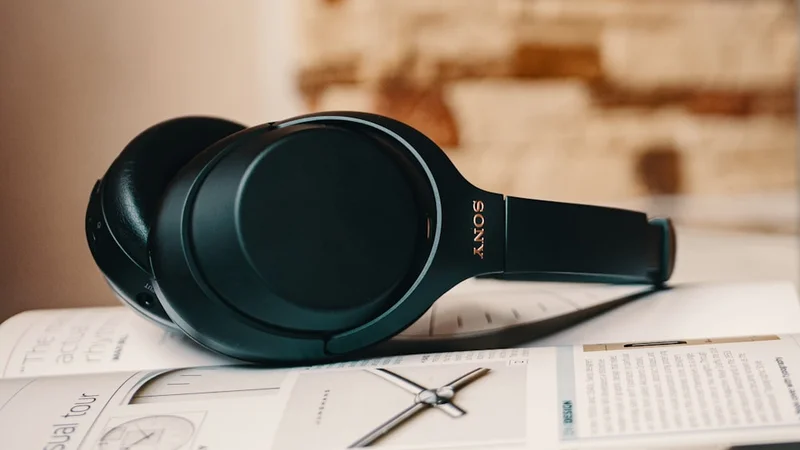
For who: The knowledge worker who wants the most effective ANC on the market without paying the Apple tax — and who values 30 hours of uninterrupted work over ecosystem integration.
Why we chose it: Sony's Integrated Processor V1, working in tandem with the HD Noise Cancelling Processor QN1, uses eight microphones and two dedicated chips to cancel noise in real time across a frequency range that covers the human voice — which is exactly the interruption profile that breaks concentration in an office. In independent ANC testing, the XM5 has ranked at or near the top of its category every year since 2022. At 250g, it's one of the lightest full-size ANC headphones available, which matters at hour three of a work session when you've forgotten you're wearing anything. The LDAC codec support enables hi-res wireless audio — relevant if your focus music playlist runs through Tidal or a hi-res FLAC library. And the five-minute quick charge that delivers three hours of playback is the kind of real-world feature that earns loyalty.
Pros:
- Best-in-class ANC that genuinely eliminates office background noise and voice frequencies
- 30 hours battery life with ANC on; 3-hour quick charge in 5 minutes
- LDAC codec support for hi-res wireless audio
- Lightweight at 250g — designed for extended wear without pressure fatigue
- Speak-to-Chat automatically pauses music when you start talking
Cons:
- Non-foldable design makes travel packing less convenient than XM4
- Bass response may feel slightly recessed compared to Bose for pure music listening
- Touch controls on the ear cup can be overly sensitive in certain positions
Sony WH-1000XM5
Best overall for focus and value — class-leading ANC targeting voice/mid-range frequencies, 30hr battery, 250g lightweight.
As an Amazon Associate, we earn from qualifying purchases — at no extra cost to you.
2. Bose QuietComfort Ultra Headphones — Best Listening Experience for Long Sessions
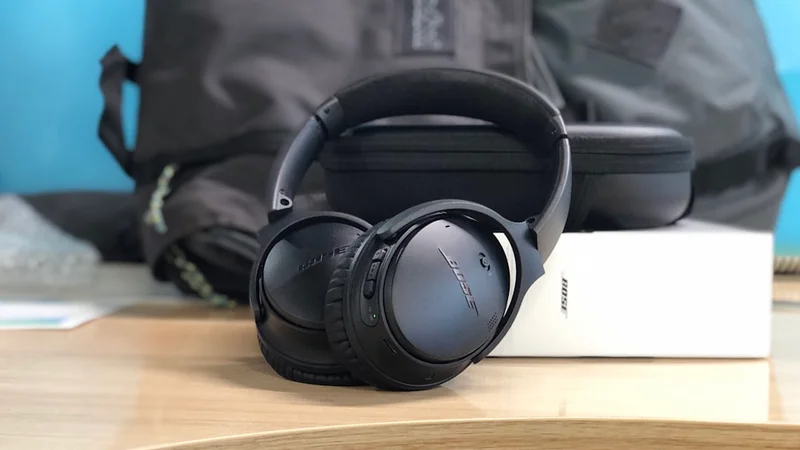
For who: Anyone who spends 4+ hours per day in headphones and prioritizes the subjective comfort and listening experience as much as the noise isolation — especially people who use ambient music or nature soundscapes to enter focus states.
Why we chose it: Bose's CustomTune technology does something no other ANC system on this list does: it analyzes your individual ear canal shape at startup to calibrate the cancellation for your specific anatomy. The result is noise cancellation that feels personally fitted rather than generically applied. The TriPort acoustic architecture produces the warmest, most natural listening experience in the premium ANC category — which matters more than the spec sheet suggests when you're going to have music or nature sounds in your ears for hours. The new Immersive Audio spatial sound mode is legitimately useful for long creative sessions, creating a more open, less fatiguing soundscape than traditional stereo. At $329, it's slightly under the XM5's street price and outperforms it on subjective comfort and audio warmth.
Pros:
- CustomTune ear canal calibration produces more personalized, natural ANC than competing systems
- Best-in-class comfort: the ear cup padding and headband design are optimized for extended wear
- Immersive Audio spatial mode reduces long-session listening fatigue
- Clean, intuitive physical controls (no touch-sensitive surface ambiguity)
- 24 hours battery life with ANC on
Cons:
- ANC noise floor has a faint hiss that some users find noticeable in total quiet
- No hi-res codec support (no LDAC or aptX HD)
- Immersive Audio spatial mode can feel disorienting during video calls
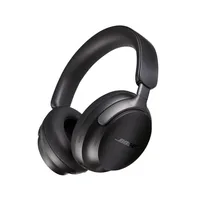
Bose QuietComfort Ultra Headphones
Best listening experience for long sessions — CustomTune ear-canal calibration, warmest audio, best comfort for 4+ hr wear.
As an Amazon Associate, we earn from qualifying purchases — at no extra cost to you.
3. Apple AirPods Max — Best for the All-Apple Ecosystem
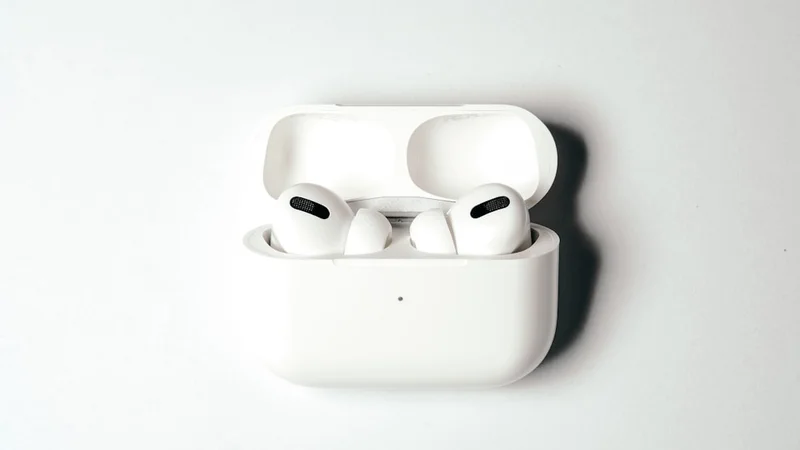
For who: The person whose entire work setup is Mac, iPhone, and iPad — and who needs headphones that integrate seamlessly into that ecosystem, including fast Handoff between devices, Siri, and the Transparency mode that makes hybrid focus/meeting environments workable.
Why we chose it: The H2 chip's Adaptive Audio mode is the most practically useful focus feature on any headphone in this review: it dynamically blends ANC and Transparency based on your environment, so you can have near-full noise isolation during a writing sprint and automatically hear the colleague approaching your desk without removing the headphones. The six outward-facing and two inward-facing microphones produce the most effective cancellation in the lower mid-range voice frequencies — the exact frequencies that human speech sits in. And the lossless Apple Lossless Audio (ALAC) support via USB-C connection provides a genuine high-resolution listening option that LDAC wireless can't match. The 385g aluminum frame is the primary trade-off: it sounds premium, it is premium, but after two to three hours it communicates its weight clearly. For a four-hour session, you'll notice it.
Pros:
- Adaptive Audio automatically blends ANC/Transparency — eliminates manual mode switching
- Best device-to-device Handoff in the category (Mac → iPhone → iPad in under 1 second)
- Six-microphone array produces excellent call and dictation quality
- ALAC lossless audio via wired USB-C connection for audiophile listening
- 20 hours battery life with ANC
Cons:
- 385g frame becomes heavy after 2–3 hours — not designed for all-day wear
- $549 price point requires genuine Apple ecosystem investment to justify
- Awkward carrying case is barely functional for travel
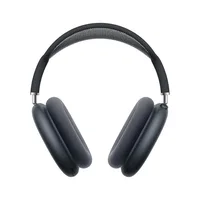
Apple AirPods Max (USB-C)
Best for the all-Apple ecosystem — H2 Adaptive Audio, sub-1s Handoff, ALAC lossless via USB-C. Heavy at 385g.
As an Amazon Associate, we earn from qualifying purchases — at no extra cost to you.
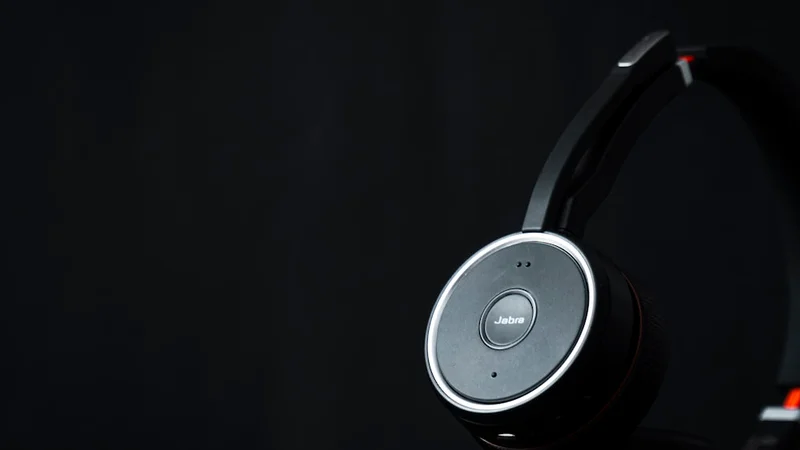
4. Jabra Evolve2 85 — Best for Hybrid and Professional Workers
For who: The hybrid professional who spends as many hours in video calls as in solo deep work — and who needs a headphone that is simultaneously world-class for both, with the conferencing pedigree that enterprise environments require.
Why we chose it: The Jabra Evolve2 85 is the only headphone on this list designed from the ground up as a professional tool rather than a consumer audio product. The ten-microphone array with dedicated Wind Noise Protection delivers call quality that makes your voice sound clearly present and distinct even in noisy environments — the gap between this and the consumer headphones in actual meeting audio quality is immediately audible to everyone else on the call. The BusyLight LED indicator is a physical signal to colleagues that you're in a call or in focus mode, which is a small feature that eliminates a significant amount of social friction in hybrid office environments. At 37 hours ANC-on battery life, it leads the entire category by a significant margin — the person who forgets to charge on Sunday will be fine on Monday and possibly Tuesday. The ANC quality lags slightly behind the Sony and Bose at the top in pure noise isolation, but the conferencing capability closes that gap significantly for its target user.
Pros:
- 37-hour battery life with ANC — the longest in the category by 7+ hours
- Ten-microphone professional array delivers enterprise-grade call audio quality
- BusyLight LED indicator reduces open-office social interruption friction
- Certified for UC platforms (Microsoft Teams, Google Meet, Zoom) out of the box
- Comfortable for full workday wear with moderate clamping force
Cons:
- ANC performance in pure noise isolation is marginally behind Sony XM5 and Bose QC Ultra
- ~$450 price sits between premium consumer and enterprise — more expensive than it looks in photos
- Larger form factor: not designed to fold flat for travel packing
- No spatial audio or immersive listening mode
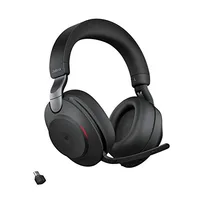
Jabra Evolve2 85
Best for hybrid and professional workers — ten-mic array, BusyLight, 37hr battery, UC-certified.
As an Amazon Associate, we earn from qualifying purchases — at no extra cost to you.
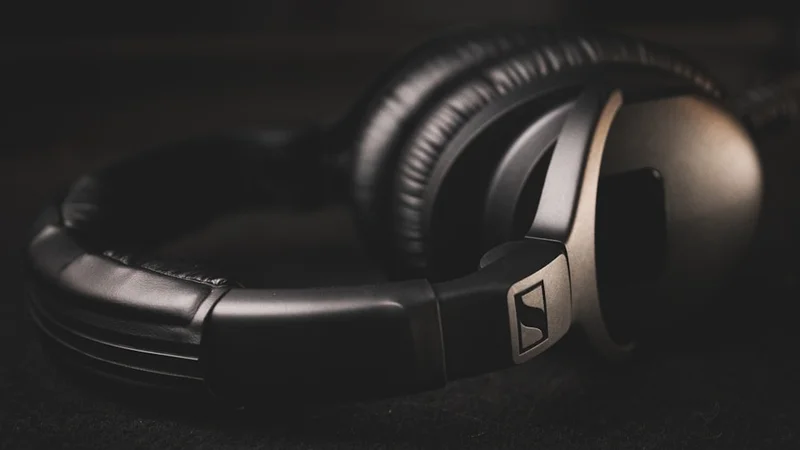
5. Sennheiser Momentum 4 Wireless — Best Audio Quality for Music-Enhanced Deep Work
For who: The person who uses music as a deliberate cognitive tool — classical, binaural beats, brown noise, or instrumental focus playlists — and who refuses to compromise on audio fidelity for the environment that shapes their most important thinking.
Why we chose it: The Sennheiser Momentum 4 is the audiophile's ANC headphone — the one where the audio engineers clearly fought the product managers and mostly won. The proprietary 42mm transducer produces a sound stage that the Sony and Bose genuinely can't match: wider, more three-dimensional, with the kind of micro-detail retrieval in the upper midrange that makes the difference between music as background and music as a genuine cognitive environment. The ANC is excellent — not quite at Sony XM5 levels in the sub-100Hz rumble range, but more than adequate for office environments. At 60 hours battery life with ANC on (and over 80 hours without ANC), it leads the full ANC category by battery life — surpassing even the Jabra's impressive 37-hour figure. The trade-off is that the Sennheiser makes a deliberate choice: it's the headphone for the person who treats what they hear as seriously as what they think. If the audio environment of your focus sessions matters to you, this is the most honest recommendation.
Pros:
- Audiophile-grade sound stage and transducer quality — best audio quality in the category
- 60-hour battery life with ANC; 80+ hours ANC-off
- Adaptive ANC adjusts automatically to noise levels in the environment
- Lightweight and comfortable for extended wear at 293g
- Sound Zones feature saves different EQ and ANC profiles per location
Cons:
- ANC performance in the lowest bass frequencies (traffic, HVAC rumble) trails Sony XM5 slightly
- App is functional but less polished than Sony's Headphones Connect
- Premium audio tuning can feel like "too much" for background listening in some genres
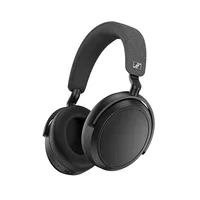
Sennheiser Momentum 4 Wireless
Best audio quality for music-enhanced deep work — 42mm transducer, audiophile soundstage, 60hr battery.
As an Amazon Associate, we earn from qualifying purchases — at no extra cost to you.
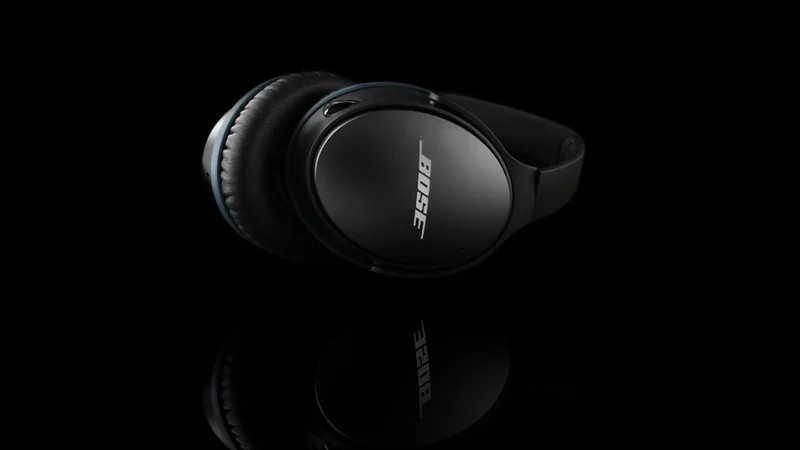
6. Bose QuietComfort 45 — Best Value in the Premium ANC Tier
For who: The person who wants Bose's proven ANC architecture, excellent comfort, and reliable call quality — but doesn't need spatial audio or the CustomTune calibration of the QC Ultra — at approximately $80 less.
Why we chose it: The Bose QC45 shares the fundamental ANC architecture that made the QuietComfort line the benchmark for comfort-first ANC headphones since 2021. The noise cancellation is genuinely excellent — better than most competing headphones at this price — and the proprietary TriPort acoustic design delivers the warm, natural Bose listening experience that QC Ultra owners are paying a premium to access. At 24 hours battery life and 239g, it's lighter than most competitors in the $250 range and designed specifically for all-day wear comfort. What you lose from the QC Ultra: no Immersive Audio spatial mode, no CustomTune ear calibration, slightly less refined call microphone array. What you gain: $80 back in your pocket, the same ANC foundation, and nearly identical comfort. For a first Bose purchase or a corporate-expense purchase where the budget is constrained, this is the honest choice.
Pros:
- Bose's proven ANC platform at a more accessible price point (~$250)
- 24-hour battery life with ANC on
- Excellent all-day wear comfort — widely considered the most comfortable mainstream ANC headphone
- Aware Mode transparency is natural and voice-clear for hybrid use
- USB-C charging (finally — the QC35 era is behind us)
Cons:
- No Immersive Audio or spatial sound feature (QC Ultra exclusive)
- No LDAC or hi-res codec support
- Slightly less detailed audio quality than the QC Ultra in direct comparison
- Touch/button controls require a learning curve
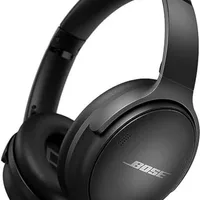
Bose QuietComfort 45
Best value in the premium ANC tier — proven Bose ANC + comfort at ~£80 less than QC Ultra.
As an Amazon Associate, we earn from qualifying purchases — at no extra cost to you.
7. Anker Soundcore Q45 — Best Budget Entry for First-Time Buyers
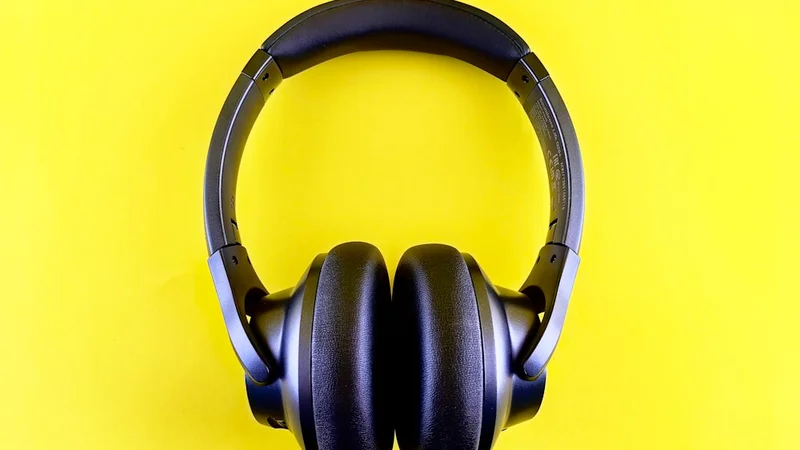
For who: The person who's skeptical about whether noise-canceling headphones will actually change their workflow — and who wants to run a real-world experiment at $60–80 before committing to a $300 purchase.
Why we chose it: The honest case for the Anker Q45 is not that it competes with Sony or Bose on ANC quality — it doesn't. The case is that the gap between wearing active noise cancellation and wearing nothing is much larger than the gap between any two premium ANC headphones. The Q45's ANC genuinely reduces office background noise and open-plan chatter meaningfully enough to test whether the workflow benefit is real for you. At 50 hours battery life (best in this review by a wide margin, though ANC reduces this significantly) and 293g, it's comfortable and practical. The audio quality is decent — not audiophile, not flat, but good enough for focus music and calls. The built-in adjustable EQ in the Soundcore app gives you some control over the listening environment. If you test it for four weeks and decide the ANC workflow benefit is real, you'll upgrade with full confidence. If you test it and find you don't use it, you've lost $70 rather than $350.
Pros:
- ~$70 price point makes it accessible as a genuine workflow test
- Solid ANC performance for the price — eliminates the majority of office ambient noise
- 40–50 hours battery life (ANC off); 25 hours with ANC on
- Foldable design for convenient storage and travel
- Soundcore app EQ customization gives meaningful audio control
Cons:
- ANC doesn't fully isolate human voice frequencies the way Sony and Bose do
- Plastic build quality communicates the price point
- Bluetooth connection latency can be noticeable in video calls
- No quick charge feature — full charge takes approximately 4 hours
Anker Soundcore Space Q45
Best budget entry for first-time buyers — ~£70 workflow test before committing to a £300 pair. Strong BR converter (fone bluetooth acessível).
As an Amazon Associate, we earn from qualifying purchases — at no extra cost to you.
Noise-Canceling Headphone FAQ
Are noise-canceling headphones actually worth it for productivity?
Yes — and there's research to back that claim. Gloria Mark at UC Irvine documented that each cognitive interruption costs an average of 23 minutes to fully recover from. If a pair of headphones prevents 3–4 meaningful interruptions per day, the ROI pays back in the first week. The question isn't whether ANC helps focus — the research is consistent. The question is which pair is right for your specific environment and use case.
Sony XM5 vs. Bose QuietComfort Ultra — which should I buy?
If pure ANC quality and battery life are the priority: Sony XM5. If comfort during extended wear and the listening experience are the priority: Bose QC Ultra. The XM5 has marginally better noise isolation (especially in the lower frequencies). The QC Ultra has marginally better subjective comfort and audio warmth. Both are excellent. If you're primarily a Mac/iPhone user: consider the AirPods Max instead.
What's the best noise-canceling headphone for video calls?
The Jabra Evolve2 85 is the clear answer for call-heavy work. Its ten-microphone professional array makes your voice sound noticeably clearer and more present in calls than consumer headphones. For people doing one or two calls per day, the Sony XM5 or Bose QC Ultra will handle calls well enough. For people in meetings four or more hours per day, the Jabra's call quality improvement is worth the premium.
Do I need to spend $300+ to get good ANC?
No. The Anker Soundcore Q45 at ~$70 delivers ANC that meaningfully reduces office noise. It won't fully isolate voice frequencies the way premium headphones do, but the gap between ANC-on and ANC-off is real and large enough to test whether the workflow benefit is genuine for you. Start there if you're uncertain.
How long should noise-canceling headphones last?
Premium headphones from Sony, Bose, Jabra, and Sennheiser typically last 4–6 years with regular use, assuming the ear cushions are replaced every 12–18 months (replacement cushions for Sony and Bose run $30–$50 and dramatically restore comfort). Battery capacity will degrade approximately 20% after 500 charge cycles, which at daily use is roughly 18 months. That's normal and doesn't require replacement — just means slightly shorter sessions between charges.
Can noise-canceling headphones cause headaches?
The pressure sensation some users report from ANC is real — it's caused by the phase-canceling signal produced by the headphone's processor, not the ear cup clamping force. The Bose QC line is generally considered the least likely to cause ANC pressure headaches; the Sony XM5 has a "Pressure Relief" setting in the app that helps significantly for users sensitive to this. If you're prone to this effect, the Bose QuietComfort 45 or QC Ultra are the safest starting points.
Conclusion
If I had to choose one pair for the person building a serious deep work practice in 2026, I'd choose the Sony WH-1000XM5. The combination of best-in-class ANC, 30-hour battery, lightweight comfort, and LDAC support at $350 is the most complete package in the category — and its noise isolation specifically targets the voice and mid-range frequencies that break concentration in real office environments.
If you spend the majority of your working hours on calls and need conferencing-grade audio quality, the Jabra Evolve2 85 is worth the premium. And if you're not yet convinced that ANC will change your workflow, the Anker Q45 is a $70 experiment that could save you from a $350 mistake — or confirm that you should have bought the Sony three months sooner.
The headphones are the easy part. The harder question is: once the noise is managed, what will you do with the attention you've reclaimed? At Vanulos, we think of focus as something you design — not something you stumble into. The acoustic environment is one input in that design. Learning to enter flow states and training single-task focus are two more. The headphones remove the external friction; intentional practice will help you design what goes inside.
Design your environment deliberately, and you begin to design your evolution.
Which pair are you currently testing — or already using for deep work? Drop your office setup and ANC verdict in the comments below. Real-world reports from different noise environments are more useful than any review, including this one.
Prices mentioned are approximate and may vary by marketplace and time of publication. We update this list when significant new products launch or pricing changes materially.
Was this helpful?