Productivity· 12 min read
Does Your Phone Hurt Focus Even When It's Silent?
Does Your Phone Hurt Focus Even When It's Silent?
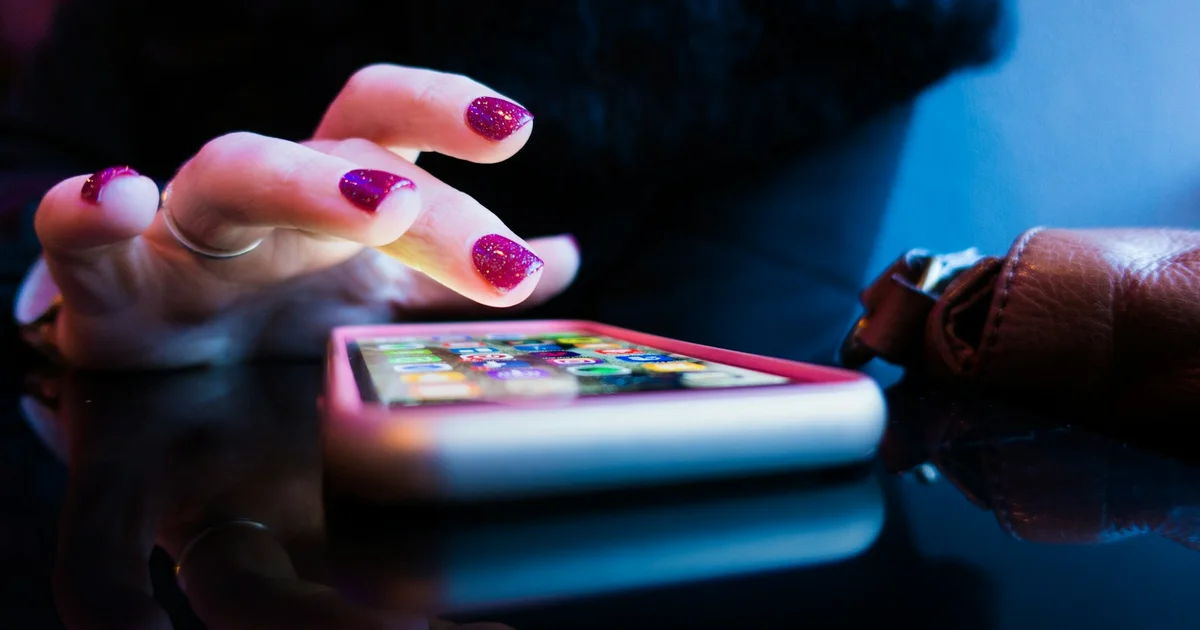
You've silenced it. You've flipped it face-down. You've told yourself you won't check it.
But it's still there — sitting in your peripheral vision like a question you haven't answered yet. That quiet pull on your focus is subtle, almost invisible. Which is exactly what makes it worth examining.
That feeling prompted a group of researchers at the University of Texas at Austin to run a study in 2017. Adrian Ward and his colleagues recruited nearly 800 participants and had them complete cognitive tasks — working memory exercises and fluid intelligence tests — under different conditions. Some had their phones on their desks face-down. Others had phones in their pockets or bags. A third group left their phones in another room entirely.
The result that made headlines: cognitive capacity was measurably lower when the phone was on the desk. Even when it was silent. Even when it was face-down. The phone didn't need to ring, buzz, or light up. Its mere presence appeared to consume part of the brain's available attention — what the researchers called a "brain drain."
It's a compelling idea. And like most compelling ideas in psychology, it turned out to be more complicated than the headlines made it sound.
The Study That Started the Debate
Ward et al.'s 2017 paper in the Journal of the Association for Consumer Research proposed a mechanism they called the "brain drain hypothesis." The idea is that suppressing the impulse to check your phone — even when you're not consciously fighting it — uses cognitive resources. You're not ignoring your phone. But some background process is, and that process has a cost.
The effect was strongest in people who reported being most dependent on their phones. If the device felt central to your life, having it nearby hurt your performance more than it did for lighter users.
This landed neatly into the growing conversation about deep work and digital attention. Within a few years, "put your phone in another room" had become standard productivity advice, repeated in books, podcasts, and workplace wellbeing guides.

Deep Work — Cal Newport
As an Amazon Associate, we earn from qualifying purchases — at no extra cost to you.
There was just one problem: other researchers couldn't reliably reproduce the results.
When the Replication Doesn't Land
In 2022, Ana Ruiz Pardo and John Paul Minda published a direct replication attempt in Acta Psychologica. They followed the original methodology closely and found no significant effect of phone placement on cognitive performance. Phone on the desk, phone in another room — it made no measurable difference in their sample.
This isn't unusual. The replication crisis of the past decade has touched findings across social cognition, priming research, and attention science. The Ward et al. result is real evidence, but it's contested evidence. One study found an effect; one didn't. The honest position is that we don't yet know how large the effect is, who it applies to, or whether it holds outside a controlled lab setting.
That's not a reason to stop caring. It's a reason to stop treating a single study as a law of nature.
how to build a distraction-free workspace
What the evidence does support more consistently is the cost of actual phone use — the interruptions, the context-switching, the way a two-second check stretches into six minutes. That cost is substantial and well-documented across multiple studies. The question Ward's paper raised is whether the device's presence alone adds something extra on top of that.
What We Can Still Say With Confidence
Here's what we know without relying on contested proximity effects.
-
Interruptions are expensive. Research by Gloria Mark at UC Irvine found that, after an interruption, workers took an average of about 23 minutes to get back to the task they'd been working on — often after handling other work in between. Every notification that pulls your attention, even one you dismiss in three seconds, risks starting that detour.
-
Your environment shapes your behaviour. Behavioural research consistently shows that friction works. If something is harder to reach, you do it less. A phone across the room isn't just physically further away — it's psychologically further from the default action of reaching for it.
-
Visible cues activate associated habits. When you see your phone, it's easier to remember everything you could be doing on it. The device becomes a cue that activates the whole behaviour chain — apps, messages, the conversations you haven't responded to yet. That's cognitive noise whether or not it shows up cleanly in a lab performance test.

Atomic Habits — James Clear
As an Amazon Associate, we earn from qualifying purchases — at no extra cost to you.
Subsequent meta-analyses have reached conflicting conclusions — some finding a significant negative effect of smartphone proximity on cognitive performance, others finding no significant effect for passive presence alone. What that tells us is this: the signal exists but its magnitude is genuinely contested, and it probably varies by person, task type, and level of phone dependency.
The 3-Day Desk Test
Rather than waiting for the science to settle, run your own experiment. It takes three days and a notebook.
Day 1 — Baseline. Work the way you normally do. Phone wherever it usually sits. At the end of a 90-minute block, note two things: roughly how many times you checked your phone, and how deep your focus felt on a 1-to-5 scale.
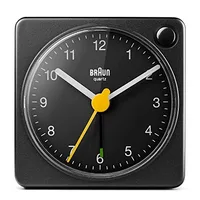
Day 2 — Phone in another room. No phone at your desk at all. If you rely on it as an alarm clock, swap it out for a dedicated one.
Braun Classic Analogue Alarm Clock BC02XB (Snooze + Light)
As an Amazon Associate, we earn from qualifying purchases — at no extra cost to you.
Use a separate timer to manage your work blocks.
Same two notes at the end of your session.
Day 3 — Phone in a lockbox. Some people find that "phone in another room" still leaves a low background pull — an awareness that it's there, reachable, if they decide to get up. A physical lockbox removes the option without requiring willpower every ten minutes.

Kitchen Safe kSafe Time Locking Container
As an Amazon Associate, we earn from qualifying purchases — at no extra cost to you.
Record your focus score one more time.
You're not trying to prove or disprove the Ward study. You're collecting data on you, in your environment, doing your work. That's more actionable than any university lab result.
The Variable No Lab Study Can Capture
Here's what controlled experiments can't easily measure: the cumulative effect of your interruption patterns across weeks and months.
A lab test runs for an hour or two with strangers completing abstract tasks. Real focused work — the kind that produces things worth producing — develops across long, uninterrupted sessions that compound. Even a modest drag on your attention, repeated daily, adds up to a meaningfully different set of results over a year.
Jim Rohn is widely credited with saying that success is a few simple disciplines, practised every day. The reverse is equally true: distraction is a few easy errors, repeated every day. Reaching for your phone once during a work session is nothing. Reaching for it seventeen times before lunch, across hundreds of working days, starts to show up in what you make, what you finish, and how much you trust your own concentration.
building a deep work practice
That's the reason the phone-placement question is worth taking seriously regardless of where the replication science eventually lands. Even if the passive presence effect turns out to be zero, the habits clustered around your phone are very much alive.
Design the Environment First, Decide the Details Later
One principle from behavioural research that has held up well is this: don't rely on willpower when you can change the environment instead. If you have to consciously decide not to check your phone at the start of every focused session, you'll exhaust that decision budget before lunch. If the phone simply isn't there, there's nothing to decide.
This isn't about performing digital minimalism or signalling virtue. It's about recognising that attention is the raw material of almost everything you want to build — a project, a skill, a business, a relationship. Anything that depletes it costs you something real.
The practical move is straightforward. During your most important work block of the day, give your attention the cleanest possible start. Phone somewhere else. A dedicated timer on your desk rather than the clock app on your phone.

Sony WH-1000XM5 Noise Cancelling Headphones
As an Amazon Associate, we earn from qualifying purchases — at no extra cost to you.
Not because the science has settled the question, but because you've decided what your focus is worth.
What Shifts When You Run the Test
Many people who try a version of this experiment describe something they didn't anticipate: the first day without the phone feels mildly uncomfortable, the second feels surprisingly normal, and by the third the work itself gets easier to start. Your experience may differ — that's what the notebook is for.
Not because the phone was secretly sabotaging their cognition in some clinically measurable way. But because removing it changed the ritual around sitting down to work. It became a clear signal: this block is for thinking. The absence of the device wasn't a punishment; it was a clarification.
The Ward study may or may not hold up under further scrutiny — the debate will continue. But the question underneath it — how do I give my best thinking a fair chance? — is one you can start answering today with three days, a notebook, and a slightly different place for your phone to spend the morning.
What would you lose if your phone lived in another room for your next focused session?
Was this helpful?