Mindset· 11 min read
Fast or Slow Decisions? How to Tell Which Choices Deserve Time
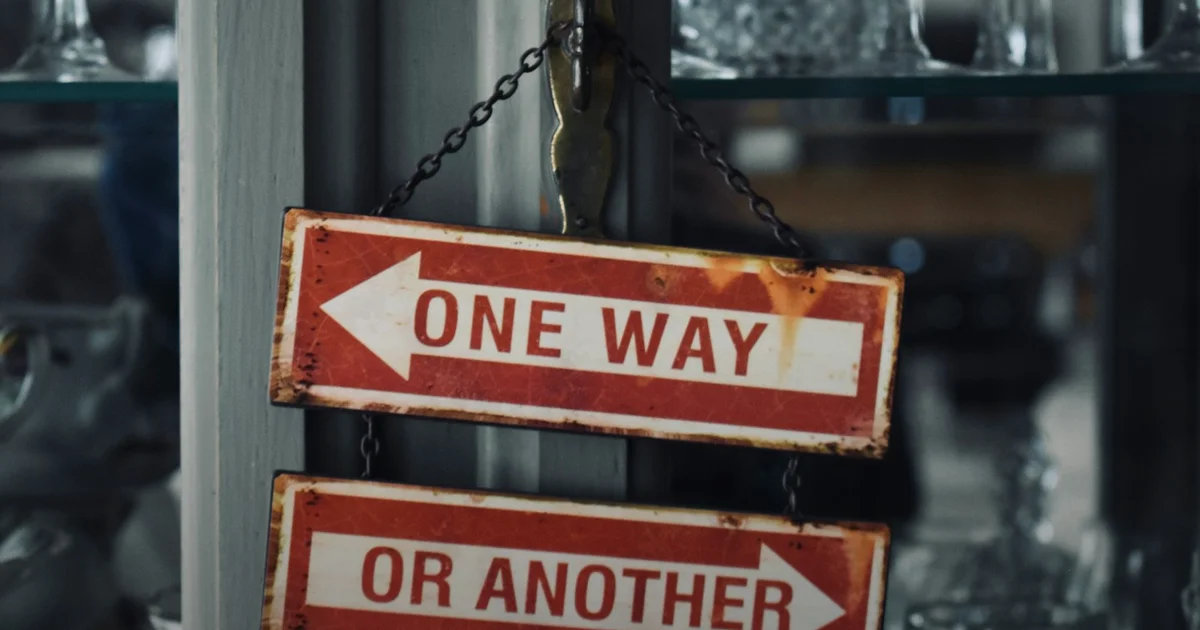
Fast or Slow Decisions? How to Tell Which Choices Deserve Time
My friend spent three weeks researching kitchen blenders. He compared blade speeds, jar volumes, and noise decibel ratings. He made a spreadsheet. He interviewed his neighbors.
Meanwhile, he'd been sitting on a job offer for six months — a role that would have doubled his salary, moved him to a city he'd always wanted to live in — because it felt like "too big a decision to rush."
The blender he bought was fine. He returned it after a month anyway.
The job offer expired.
Here's the problem nobody talks about: it's not just bad decisions that cost you. It's misallocated deliberation. We overthink the choices that barely matter and underthink the ones that do. The difference between those two categories is simpler to spot than most decision frameworks would have you believe.
Why Every Decision Feels Equally Heavy
Your brain doesn't come with a built-in triage system for choices. A trivial option (which restaurant tonight?) and a consequential one (should I leave this job?) both show up in conscious awareness demanding attention. The demand feels roughly equivalent: some mixture of uncertainty, stakes, and discomfort.
This is partly by design. Kahneman's research on human judgment shows we default to cognitive shortcuts — fast, automatic patterns — whenever a problem doesn't clearly flag itself as "hard." But the flag is imprecise. Some easy decisions feel hard because they're unfamiliar. Some hard decisions feel easy because they're familiar. The result is cognitive energy spent in the wrong places.
A 2009 paper by Kahneman and Gary Klein in the American Psychologist explored the conditions under which fast, intuitive judgment can be trusted. Their conclusion was more nuanced than "gut feeling is good" or "gut feeling is dangerous." It depended entirely on the kind of environment you're making the decision in — which we'll come back to.
Thinking, Fast and Slow — Daniel Kahneman (Paperback)
As an Amazon Associate, we earn from qualifying purchases — at no extra cost to you.
The One Test That Sorts Almost Any Decision
Before you commit serious attention to any choice, ask yourself one question:
Can I undo this — and at what cost?
Reversible decisions don't need to be perfect. They need to be good enough to generate new information. If you can try the thing, learn from it, and change course — the cost of a suboptimal first choice is low. Time spent grinding over that choice is time borrowed from something that actually can't be undone.
Irreversible — or costly-to-reverse — decisions are the opposite. These deserve the full weight of your deliberation. Not because you need certainty (you won't get it), but because the feedback loop closes behind you. You can't cheaply course-correct once you've committed.
Here's a rough sorting guide:
High reversibility — decide within 24 to 48 hours:
- Software tools, subscriptions, and apps
- Books, courses, and content you consume
- Low-cost purchases under a threshold you set for yourself
- Short-term commitments: a month-long routine, a one-week experiment
Low reversibility — take deliberate time:
- Job changes, especially ones involving relocation or identity
- Major financial commitments: mortgages, significant investments
- Relationship transitions of any significant kind
- Anything that closes other options for more than a year
The sorting question isn't just "how big is this?" Big can be reversible (a career sabbatical is big, but most things that follow are reopenable). Small can be irreversible (quietly cutting someone out of your life can be nearly permanent). The right question is always: what does the correction cost if I'm wrong?
When You Can Trust Your Fast Brain
Gigerenzer and Gaissmaier's 2011 review in the Annual Review of Psychology examined something that challenges the "always slow down and think things through" school: in some real-world situations, simple heuristics — fast, rule-of-thumb reasoning — can match or outperform complex analytical models.
The catch is specific. Fast judgment works well only in what Kahneman and Klein describe as regular environments: situations where the signals are consistent, where you've had genuine feedback on past judgments, and where the decision type has repeated enough to build real pattern recognition.
A seasoned nurse who can "feel" when a patient is about to deteriorate hours before the numbers show it has seen hundreds of similar cases. Her feedback loop between judgment and reality is tight and fast.
You picking a restaurant in a city you've never visited based on "the vibe" of the photos online? You're not in a regular environment. You have no feedback history with that signal. The confidence of your intuition here is cosmetic.
Kahneman and Klein's key finding: expert intuition is reliable when two conditions are met — there's been enough exposure to allow real pattern recognition, and you've received fast, clear feedback after each judgment. Without both conditions, intuition is just confidence wearing a lab coat.
The practical question isn't "do I feel confident?" It's: "Have I been here before, and did I find out whether I was right?"

Kindle Paperwhite (12th Gen, 16GB)
As an Amazon Associate, we earn from qualifying purchases — at no extra cost to you.
The Overthinking Trap and What It Actually Signals
Here's something worth knowing: when you can't stop deliberating on a decision, the problem is often that the decision itself isn't the actual problem.
If you've been agonizing over a job offer for six weeks, something deeper is usually going on — fear of change, an unspoken commitment to your current life, a gap between what you think you should want and what you actually want. The deliberation becomes a holding pattern, a way of staying near the question without having to answer it.
This matters because no amount of additional information will resolve a decision that is fundamentally a values conflict. Collecting more data points on a question you've already processed analytically is usually just anxiety management pretending to be research.
The signs are worth learning to recognize: you've essentially already decided in private but haven't told yourself yet; the two options represent different versions of who you want to become; you keep generating new questions not because they'd change your view, but because staying in the question feels safer than leaving it. These aren't decision problems. They're identity problems — and the right tool is reflection, not research.
decision fatigue and morning deep work
If you've been circling a decision for more than a week without meaningful new information changing your view, shift from researching to asking better questions. What would you choose if you weren't afraid? What would you tell a close friend to do in your situation? What does your reluctance to decide actually tell you about which direction you're already leaning?
A Working Protocol for Sorting Decisions
The following isn't a complicated system. It's a mental habit you can run in under two minutes.
Step 1: Name the reversibility. Ask "how costly is it to change my mind after?" If the answer is "not very," give yourself a 24- to 48-hour window and decide inside it with the best information you have. Don't wait for certainty that isn't coming.
Step 2: Check your domain experience. If this is a type of decision you've made before with real feedback, your first strong instinct deserves weight. If it's unfamiliar territory, don't mistake confidence for calibration.
Step 3: Look for the real blocker. If you've been circling the same decision for more than a week without new information, the question isn't "what's the right choice?" It's "what am I actually avoiding?" Name that thing honestly.
Step 4: Set a decision date. For high-stakes, low-reversibility choices, set a hard deadline — not to rush, but to prevent indefinite postponement from masquerading as due diligence. Gather what could genuinely shift your view, then commit.
What you're designing here isn't just a better answer to this one choice. It's a process — the habit of sorting first, then deciding. That process is the actual skill. And like most skills worth having, it gets faster and quieter with practice.
pre-mortem planning technique
How to Start Today
The next time a decision surfaces — big or small — before you do anything else, write one sentence answering this: What is the cost if I choose wrong and want to change course?
If the cost is low, give yourself 24 hours and decide.
If the cost is high, ask: have I gathered information that could actually shift my view? Or have I been replaying the same thoughts in a loop?
For decisions that feel stuck, write out the two or three scenarios you're weighing — not to compare them on a spreadsheet, but to notice which one you feel relieved describing when you say out loud "I decided." That response tells you something a pros-and-cons list genuinely can't.
This isn't about optimizing every choice. It's about spending your cognitive resources where they actually matter — on the calls that can't easily be taken back.
The Decisions That Define the Pattern
There's a version of productivity culture that treats every decision like a problem to be solved with more information, more frameworks, more time. That version exhausts people. The research suggests something simpler: match your deliberation to the reversibility of the choice, trust your pattern recognition only where you've genuinely earned it, and notice when prolonged indecision is an emotion problem wearing a logic costume.
The decisions that change the arc of a life are fewer than you think. Protecting your deliberation for those — and moving faster everywhere else — is itself a form of intentional design.
The blender was returnable. The job offer wasn't — not really, not after the window closed. That's the whole game: not making every choice perfectly, but knowing which ones you can afford to get wrong on the first try.
Ticktime Pomodoro Cube Timer (Black, USB-C)
As an Amazon Associate, we earn from qualifying purchases — at no extra cost to you.
What's one decision you've been overthinking that might actually be more reversible than it feels?
Was this helpful?